Item is a white circular button. The front reads "EMU" written in Hebrew in green font. The back is silver in color with a silver needle fastener system.
Item is a white circular button. The front of the button reads "I care. Awareness Prevention Sexual Assault Sponsored by the Campus Peer Program, Eastern Michigan University." The back is silver with a silver needle fastener system.
Item is a green circular button. The front of button reads "From girls to Women A Celebration of Women's History Eastern Michigan University." The back of the button is silver with a gold needle fastener system.
Item is white circular button. The front of the button reads "EMU March 25 is coming Don't miss out!" in green font. The back is silver with a straight needle fastener system.
Item is a white circular button. The front of the button reads "Customer Service Awareness Week EMU thanks YOU!" The back is silver with a straight needle fastener system. The back of the button reads "Badge A Minit 1-800-223-4103."
Item is a silver circular button. The front of the button reads "WE CELEBRATE EXCELLENCE AT EASTERN MICHIGAN UNIVERSITY." The back is silver with a straight needle for fastening.
Item is a white circular button. The front of the button reads "I heart Alpha Xi Delta." The heart is expressed with a heart symbol. Alpha, Xi, and Delta are written using the Greek alphabet. The back is silver in color with a straight needle for fastening.
Item is a green and golden lapel pin that is made of two components. The first component is a circular plate. The front reads Eastern Michigan University Ambassador Society around the perimeter. The center is an embossing of the Michigan flag. The second component in a golden circular fastener.
Item is a green, white and golden lapel pin that is made of two components. The first component is a circular plate. The front reads Eastern Michigan University around the perimeter. The center has the abbreviation ASL. The back has a straight needle. The second component is a golden circular fastener.
Item is a white circular button. The front of the button reads "HUMANITARIAN DAY JAN. 12" with the text wrapping around the perimeter of the button. The back of the button is silver in color. The back of the button contains a straight needle for fastening.
Item is a yellow circular button. The front of the button reads "2nd Annual All Campus All EMU Party October 28" in black font. The back of the button is silver with a straight needle parallel to the button casing.
Item is a small golden pin made of three components. The first is a octagonal plate with the abbrevation on the front. On the back is straight needle to attach to clothing. The second component is a fine chain. The third component is a letter N with another needle on the back.
Item is a small golden pin made of three connecting parts. The first is a shield with the abbrevation ZTA on the front. On the back of the shield is a two part fastening system. This shield connects to fine chain. The final part of the pin is a letter A with a small needle on the back.
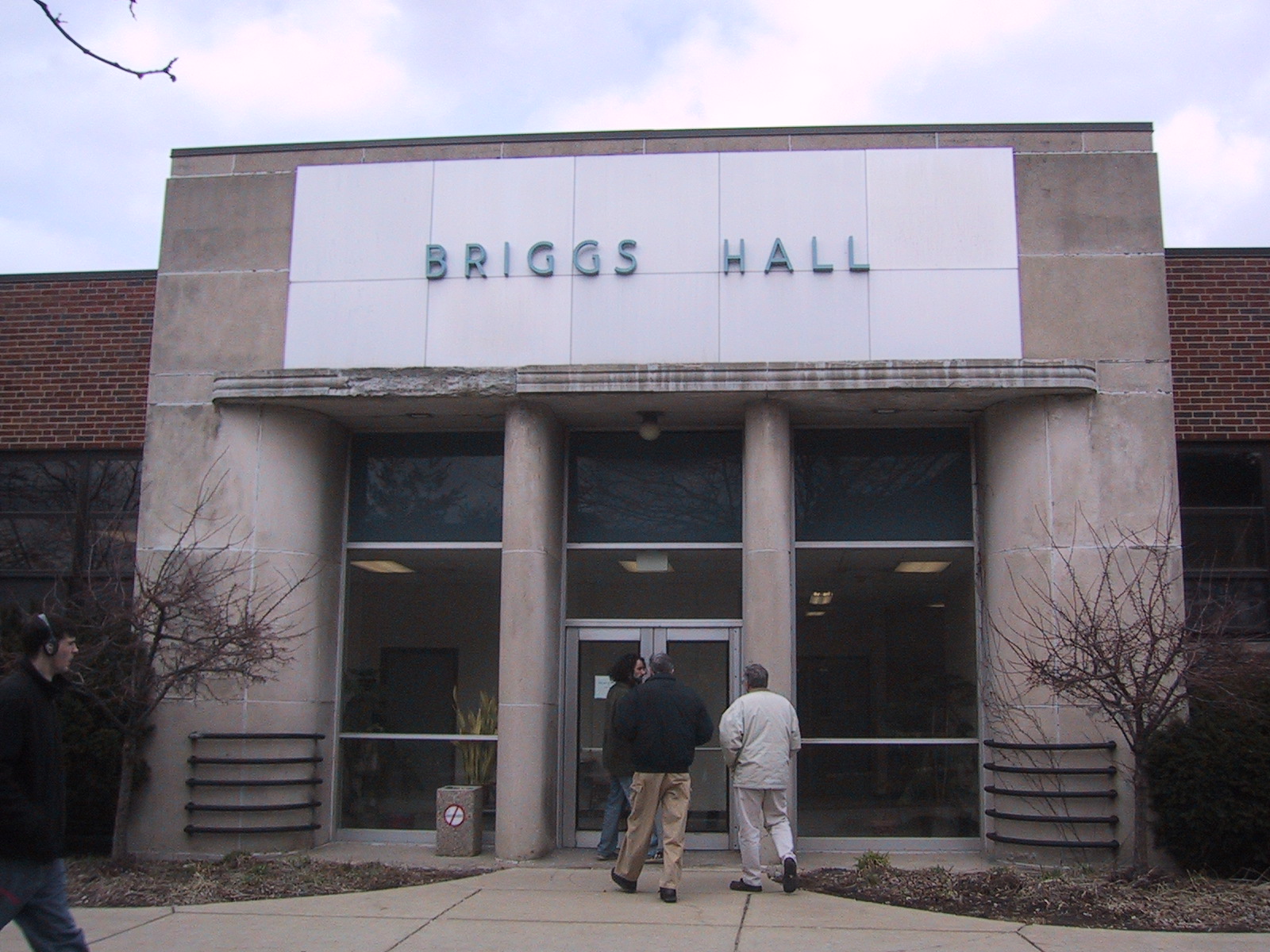
Work on the Walter O. Briggs Field began almost immediately after $150,000 was donated by Walter O. Briggs, a native of Ypsilanti and owner of the Detroit Tigers. Workmen revamped the ball diamond, erected two new grandstands, and added modern football bleachers to replace wooden stands on Alumni Field. Two wings were constructed which included on the west wing, lockers, showers, property rooms, and offices. Quarters are provided for men for both home and visiting teams, the accommodations were the same for both. The east wing contained a 50 x 110 foot practice room with a dirt floor. The roof was high enough for pole vaulters to not become tangled in the girders. Indoor practice would take place primarily in the winter months for track and field events. The entrance gates faced Forest Avenue, and also included ticket-selling windows and turnstiles. Also featured was a 3,000 person baseball grandstand which was covered to protect spectators from rain and overhead sun rays. The stands faced directly west. The revamping of the baseball diamond resulted in the construction of a ball park with home plate 370 feet from the left field fence at the foul line. Right and center field fences were about 300 feet from home plate. Construction was directed by the Barton-Marlow Company under the supervision of Walter O. Briggs. The improvements were fully funded by Mr. Briggs, whose gift of $150,000 was announced by his son Walter O. Briggs, Jr. at the Michigan Centennial Dinner which was held at McKenny Hall, January 8, 1937. Approximately, 3,000 people attended the baseball game dedication of Briggs Field on May 6, 1938, when Michigan State Normal College played the University of Michigan. The Huron's played their final season at Briggs Field in 1968, as Rynearson Stadium was completed the next year. The football and baseball fields were razed in 1972 to make space for new campus buildings.
The Ypsilanti Water Tower was designed by William R. Coats and constructed as a part of an elaborate city waterworks project that began in 1889. Located on the highest point in Ypsilanti, the tower was completed in 1890. It is 147 feet high and has an 85-foot base constructed of Joliet limestone. The substructure walls taper from a thickness of forty inches at the bottom to twenty-four inches at the top. The reservoir holds a 250,000 gallon steel tank. To protect themselves from injury the builders made three stone crosses; one is visible over the west door. The Ypsilanti Community Utilities Authority has operated and maintained the structure since 1974. In 1975, this tower was designated by the American Water Works Association as an American Water Landmark. It was restored in 1976. Day laborers constructed this water tower which was completed in 1890 at a cost of $21,435.63. The tower and the city waterworks supplied 471 customers in the first year. An ordinance passed on April 14, 1898, established a yearly rate schedule. Rates were based on the number of faucets in use, the type of business that customers operated and the livestock they owned. A residence with one tap was charged $5.00; a private bathtub cost an extra $2.00. Saloon keepers paid $7.00 for one faucet, $3.00 for each additional faucet and $1.00 for each billiard table. Each cow a person owned cost $1.00. People who failed to pay their bill were subject to a $50.00 fine and ninety days in the county jail. Until 1956, this structure was the only water tower in the Ypsilanti water system. The Ypsilanti Water Tower was listed on the National Register of Historic Structures October 26, 1981, listed on the state register in September 1988 and a state historic marker was erected in August of 1989.
The facility is located on Westview Drive, off Huron River Drive, at the northeast corner of Rynearson Stadium. The building allows EMU's collegiate athletic teams and the Ypsilanti community to continue playing and practicing despite inclement weather. The facility is available to EMU's collegiate teams as well as intramural, club teams, and local sports leagues. The facility is 410 feet long, 210 feet wide, and stands 75 feet tall. Also included are a welcome center and convertible space that can be configured for a football field, an international soccer field, or four youth soccer fields.
Originally, this gable front Queen Anne home at 415 Perrin Street was used as the Health Cottage for ailing students. When the new health clinic opened the health cottage became a co-ed practice house where students were able to try their hand at home making. Under the direction of Miss Eula May Underbrink, associate professor in the Home Economics Department, students spent a semester living in (and caring for) the house . A group of six women resided in the home each semester, and the home duties were divided amongst the girls. With each woman fulfilling two weeks of service under each division. As an article in the Normal News (now the Eastern Echo) dated December 14, 1941 described: "The housekeeper is in charge of the lower floor and acts as the host at table, with the assistant housekeeper in charge of the upper floors and the bed-making duties. No one chances to offend the cook, for with her lies the control of the girls' appetites, and before a cook graduates from her position she must have successfully baked cakes, pies and yeast bread. The unpopular task tasks of washing dishes and making salads go to the assistant cook. To the hostess goes the cares and worries of shopping, keeping accounts, entertaining, and inviting for guest night once a week. The one remaining position is with the waitress who waits at table, dries dishes and does the ironing." The building was demolished in 1973.
Built in 1963, the EMU's Children's Institute was originally an elementary school adjacent to the EMU Campus; EMU purchased the school from city of Ypsilanti in 2009 for $2.2 million.
The EMU Children's Institute offers early childhood education for the children of EMU students, faculty, staff and surrounding communities. The Institute serves approximately 150 children ages 18 months to six years old. Originally, the building was known as Elizabeth Fletcher Elementary School housing grades Kindergarten through 5th.
For many years the building was also home to EMU's Autism Collaborative Center (ACC), which provided support to individuals with Autism Spectrum Disorder (ASD) and their families. It provided assessment, intervention and referral services including but not limited to speech and language therapy, occupational therapy, academic support, sibling support groups, social groups, and parent support groups. The ACC is now permanently closed.
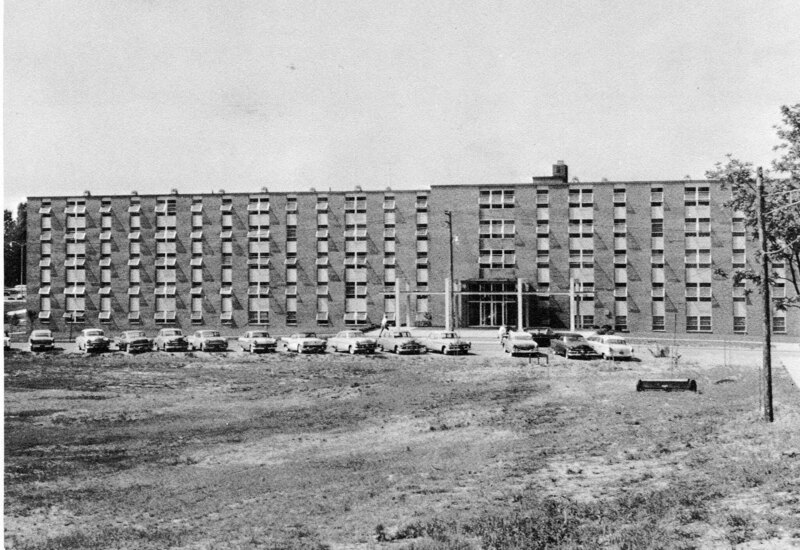
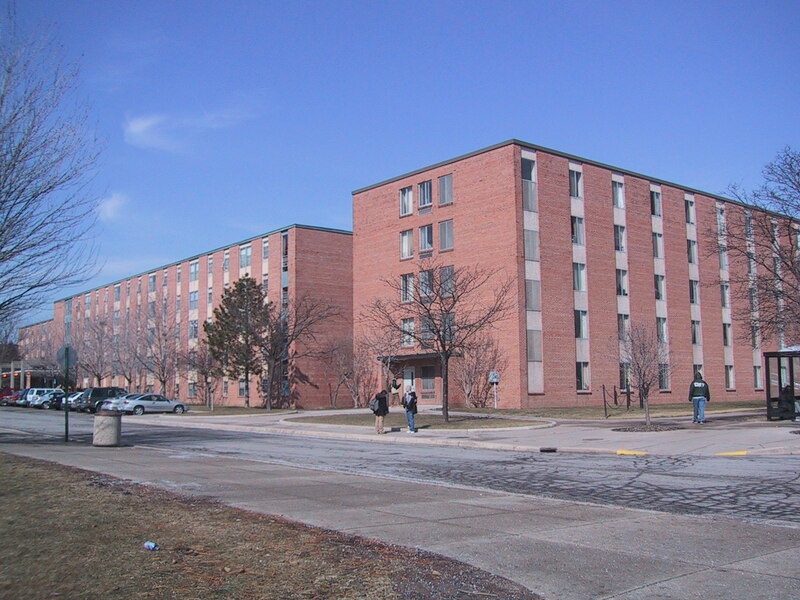
Eastern's enrollment grew rapidly in the post-World War II years, resulting in high demand for campus housing. Construction plans called for four buildings surrounding a central dining facility. When completed, the new housing would contain space for approximately 1,200 students in the center of campus. The new housing was originally intended for women, and builders hoped to complete the complex by 1958. Downing opened first in 1957, followed by Buell in 1958, then Wise and Best opened in the 1960s. Wise was able to house 322 students and included meeting rooms, laundry facilities, and recreational areas. Wise Hall received an $11.5 million renovation in 2016, receiving necessary modern updates including installation of A/C units and Wi-Fi. Wise still serves as a residence hall for undergraduate students.
Additionally, the Brotherhood and Sisterhood Scholars Programs are housed in Wise. These programs are designed to increase retention and graduation rates for students identifying as people of color. Through collaborative university partnerships, the Brotherhood and Sisterhood Scholars programs guide students in their transition to college by providing an extended orientation, a residential community, designated courses, mentorship and workshops.
Westview is located about two miles west of campus next to Rynearson Stadium and the George Gervin GameAbove Center where many University athletic events take place. The original structure was built in the townhouse style, and offered 71 one-bedroom units and 71 two-bedroom units. The original Westview apartments were demolished in the summer of 2022 as apart of the "Welcome Home" initiative to improve on-campus housing. The new Westview opened for new residence Fall 2024. In addition to offering one and two-bedroom apartments like the old building, the new Westview also has studio and four-bedroom apartments available for students.
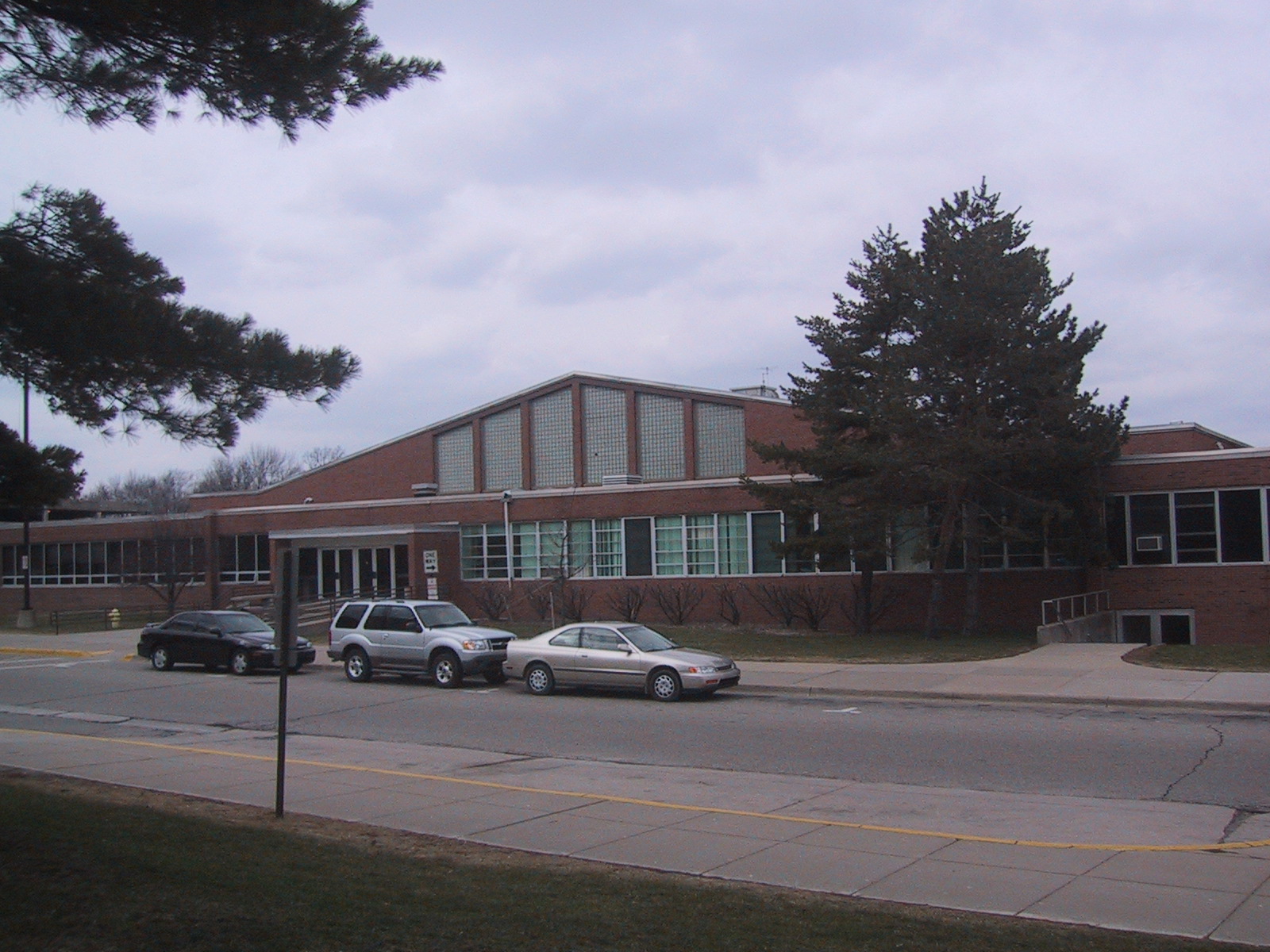
Warner is located within the Olds/Robb Rec/IM complex, and is largely utilized as office and classroom space for the Physical Education Department. Until 2017, Warner was the home of the EMU Gymnastics program, and the Eagles used the facility for practice and meets, including the 2002 and 2008 Michigan Classic. The Eagles took home third place honors both years, recording a team score of 192.650 in 2002, and a 192.625 in 2008. Warner Gymnasium was also the annual home of the Eagle Invitational, which the Eagles have won every year since 2006.
This residence hall was originally constructed in 1968, and was renovated in 2023 to include central A/C, updated bathrooms, and study and lounge areas.
The Village provides quality, affordable, housing for Eastern Michigan University's growing student population while creating a unique environment that supports the demands of the academic community. A total of 276 beds were added with the project. Each of the six housing units is three stories in height, with four apartments per floor. Each apartment unit houses four students, with two bathrooms, a kitchenette, and study space. The layout was developed to help students adapt to independent living, while at the same time promoting group interaction. The Community Building provides a central location for large gatherings, including a lounge and auxiliary study space.
The University House, built in 2001; serves as the President's residence and as a location for events pertaining to university functions. The multi-functional facility featured 6,500 square feet for entertaining and 3,500 square feet for residential living. The construction cost for the University House was $6 million, which caused controversy as it was $1.6 million over-budget. The controversy led to the termination of President Kirkpatrick, who, along with his wife Pamela, made many detailed decisions that inflated the cost of the home. The Kirkpatrick's also charged $34,465 worth of home-furnishings to university credit cards, in addition to their change orders which exceeded $130,000.
After almost fifty years of service, the greenhouse at Hover Laboratory had become too old and antiquated for further use, leading the university to build a new one. Changes in design and location of the proper contract caused repeated delays in the building. At last, plans called for a 1,158 square foot building comprised of three separate, climate controlled, rooms. Funding for the greenhouse was provided in part by a $365,565 grant from the National Science Foundation. EMU pledged an additional $222,000. The rest of the money came from donations and fundraisers assisted by the University's development office.
The three major rooms in the greenhouse each serve a different purpose. The first is called the Research Room, where plants are grown for research, classes, and sales purposes. The second room, the Propagation Room, is where various types of plants are sold with prices ranging from $1-$20. The third room, the Conservatory, is where the majority of the plants are houses, and students are able to come in to relax and study. The Conservatory was originally designed as a plant library for professors to borrow plants for use in labs and lectures.
Since November 6, 2006, the Student Center has been the hub of activity at EMU. In April 2007, it was voted the "Best Place to Hang between Classes" by Eastern Echo readers. The building offers meeting, conference and banquet spaces; an auditorium; eatery; bookstore; bank; wireless internet access; a 24/7 computer lab; two art galleries and houses offices for student government and student life.
Strong Hall was planned to replace Sherzer as the home of science on campus. With rapidly expanding enrollment in the post-World War II period, the college needed more classroom space and better science equipment. The new science building was constructed for $1,500,000 on the site of the old powerhouse. When the building was opened in 1957, only half of the original plan had yet been implemented. The lecture and laboratory wing, which stands today, contained nine labs each for chemistry and physics plus ten additional labs for faculty research. Five large lecture halls, offices, and nine classrooms completed the building. The plan called for a planetarium wing and a classroom wing to be built at a later date. Strong Hall's design placed most of the classrooms and laboratories in the central core of the building. Rooms in the central core did not have windows were all artificially lighted and air-conditioned. The core was designed to maintain uniform environmental conditions regardless of Michigan's changing weather conditions. Regardless of the intentions of this windowless design, the building was known as the campus eyesore and most people felt as though the building was cramped, stuffy, and generally unwelcoming. As a result, between 2017 and 2019 Strong Hall received a much needed $40 million renovation that emphasized natural lighting and open inviting spaces. This was the largest renovation project in EMUs history, as the building had hardly been touched since it was originally constructed. Today Strong Hall is the home of the Geography and Geology Department.
The Student Christian Association (SCA) was organized in 1853, the same year EMU opened. Over the next forty years, the SCA continued to grow and by 1892, its members were looking for a building of their own. The students asked local philanthropist Mary Anne Starkweather for financial assistance. Mrs. Starkweather had planned to donate $10,000 to the Michigan State Normal School (MSNS) for a new science facility in her will; however, following the appeal of the SCA, she offered to provide the funds to erect a building for them. The MSNS was the first teachers college in the United States to have a building designated for religious activities. Starkweather Hall, as it came to be known, was fully outfitted for the students. The first floor contained rooms for receptions or dining, a dressing room, a library, and a few classrooms. These rooms were separated by rolling partitions that could be opened to enlarge the space. A kitchen was also installed so that students could cook meals for the dining area. Upstairs, plans called for a large assembly room and a keeper's room rented to a student who looked after the building. All of the hardware was custom made for the building. Today original doorknobs remain in certain parts of the building, bearing the in initials of the Student Christian Association (SCA). The building housed the Honors College until December 2015. Starkweather is the oldest remaining on-campus and is currently (2024) not utilized by EMU in any capacity.
Located in the Judy Sturgis Hill Building, the Legacy-Sponberg Theatres are the main home for the theatrical arts on campus.
The Legacy Theatre is the larger of the two mainstage houses. The 36' x 58' stage, fronted with a 35' x 20' proscenium arch, is the 327-seat home for faculty-directed mainstage productions. Legacy's stage boasts an additional 11' deep forestage apron, which includes a lift that can be lowered for use as an orchestra pit. The fly loft grid extends the full width and depth of the stage, housing a counterweight system of 31 line sets. The costume shop is located in the basement of the Legacy Theatre.
The 202-seat Sponberg Theatre is the more intimate of the two mainstage houses. It is located just beyond the Judy Strugis-Hill building's main lobby. It offers a 18' x 40' modified thrust stage. Part of the stage can be removed to accommodate a small band. A system of catwalks allows access to areas over the stage and the auditorium for effects and lighting.
Snow Health Center replaced the old building in the context of a rapidly expanding university. The building cost $750,000 and was financed through funds the University borrowed against student fees. Architects designed it to facilitate the practice of preventative medicine on campus. Snow Health Center contained three times the number of beds as the old health center. In normal circumstances, it could house 30 patients in quarters on the third floor but it had space for up to 150 in a disaster situation. A brightly colored abstract mosaic decorates the entryway of the otherwise sober International style exterior. In 1958, the school held a competition in which it invited fine and industrial arts faculty to present ideas for a mosaic. The winning mosaic decorates the wall outside the main entrance to the health center and adds color to the stark international style building.
After 60 years in operation, Snow Health Center officially closed on November 1, 2019. The same year, a private health center, IHA Health Center @ EMU, opened on November 4th.
The Smart Physical Plant houses offices, the grounds, custodial, carpentry, plumbing, welding and electrical offices and a warehouse for delivery and storage.
Sill Hall was designed to house the Fine and Industrial Arts programs in the high style of the 1960s. It cost approximately $1.5 million dollars to complete. The two-story wing designed for the Fine Arts Department included classrooms, studios, and offices. The one-story wing housed industrial arts classrooms including a variety of shop facilities and offices. In 2021, Sill Hall underwent a $40 million renovation in order to accommodate the expansion of engineering programs in the College of Engineering and Technology. In this renovation, Sill was also expanded by 16,000 square feet to support numerous collaborative lab spaces for the engineering programs.
This building was named for Dr. William H. Sherzer, professor of geology and head of Department of Natural Sciences (1892-1932), and construction was finished in 1903. According to legend, Dr. Sherzer sketched a plan for the new Natural Science Building on the back of an envelope based on the science buildings he saw when he studied in Germany. Sherzer Hall is one of four buildings that comprise the Eastern Michigan University Historic District, and is listed in the National Register of Historic Places. Sherzer has survived two separate fires, a small one in 1973 that caused $10,000 in damages, and another in 1989 that nearly burned the building to the ground. The building was reconstructed in just eighteen months, and Quinn Evans Architects and EMU received recognition for reproducing the masonry techniques used in the original structure. Many scientific specimens and artifacts connected with the school’s early history were destroyed in the fires.
Sherzer was originally utilized as a Natural Sciences building, and while it does not hold many science classes today, it maintains its connection to the sciences with its rooftop observatory. The Sherzer Observatory was established in 1878, and moved from the top of Pierce Hall to the Sherzer building in 1903. In 1997, a radio telescope was installed on the roof to collect radio waves created by celestial objects. The observatory has been connecting the EMU community to the cosmos for over 100 years, and remains an important and popular fixture on campus.
This residence hall was constructed in 1966, and named after Professor John Sellers who was the head of the Department of Chemistry between 1958 and 1964. Sellers is open to both first year and upperclass students, and was renovated in 2024 to provide modern amenities to student residents.
Nicknamed “The Factory”, the stadium was constructed in 1969 to replace Briggs Field as the home of Football and Track at EMU. The first game played in Rynearson Stadium happened on Sept. 27, 1969, when EMU upset the University of Akron, 10-3. Despite having seating for 30,200 people, Rynearson has never reached capacity. The largest attendance for an EMU football game occurred on November 28, 2008 when 26,188 fans watched EMU beat Central Michigan University 56-52.
In the winter of 2014, the football team was challenged to an outdoor practice on the snow-covered Rynearson Stadium field rather than the warm confines of their indoor practice facility. Throughout each drill of the bitter cold practice, Head Coach Chris Creighton delivered the message that EMU Football has the will to compete against "anyone, anytime and anywhere" even on a parking lot covered with broken glass." Inspired by his team's toughness and commitment that day, Creighton's idea of an "EMU Gray" field was born and soon shared with administrators. Rynearson’s turf was then replaced with gray FieldTurf, which made EMU the third Division I school to have a non-traditional field color.
Continuing its legacy as a teacher training school, in 1924 the Michigan State Normal College had Roosevelt High School constructed on campus to serve as a laboratory school where student teachers gained experience teaching real students. When the school opened in 1925, it provided instruction for grades 7-12. Roosevelt opened during a time when high school education was becoming more common in the United States. Speaking at a conference culminating in the dedication of Roosevelt High School, Dr. Charles Judd stated that, "In 1890 one out of ten American young people were in high school. By 1926 there were one out of three boys and girls in secondary schools." By 1930, 400 students were already attending Roosevelt, and the decision was made to make the laboratory school K-12. 1930 was also the year the school was officially named Roosevelt School, after Theodore Roosevelt, 26th President of the United States.
When it opened, Roosevelt School was exceptionally designed. Like nearby Pease Auditorium, architects designed the exterior of brick and terracotta but they used a modified Georgian Revival idiom. Inside, the building contained all the amenities of a modern high school. The north wing contained the high school offices, clinic rooms and a library. The first floor of the west wing housed a 430-seat auditorium that included a stage, orchestra pit, projection booth, and restrooms. The ground floor had a swimming pool, shower room, locker rooms, cafeteria, and labs for home economics and natural and physical science departments were located on the ground floor. Upstairs on the second floor, the Junior High School had classrooms, while the Senior High School had classrooms on the third floor.
The library, located in the north wing, opened in 1926. It housed 2,000 volumes and could seat approximately 85 students. The upper parts of the walls were painted white while the lower walls were of greenish-brown stained woodwork. Roosevelt did not have an easy time remaining open. It was first threatened with closure in 1929, but it weathered the threat and continued to grow for the next two decades. During the 1950s, however, education trends began to shift away from university maintained laboratory schools. Roosevelt was again threatened with closure; it survived, but time was running out. In 1966, the Educational Appropriation Act (Public Act 285) passed the state congress. It required that Roosevelt School be completely phased out by June 1969. Roosevelt School's use as a university high school had come to an end, as had the tradition of university laboratory schools. One student, saddened by the closure of the school, published this eulogy in the Rough Rider, Roosevelt School student newspaper: "Since it must go, let it go out in a style typical of Roosevelt, with dignity. The school is dead. Long live the school."
Currently, Roosevelt is used for classroom space, and also houses the ROTC program.
The Michigan State Normal College established the Special Education Department in 1915 and was originally housed in Welch Hall. The department received a building of their own in 1938 with a donation of $350,000 was made by the Horace H. and Mary A. Rackham fund to commemorate the work of Charles M. Elliot in the area of Special Education. Rackham was the first facility in the nation built specifically for teacher training in special education.
Horace Rackham, the lawyer who drew up the contract that incorporated Ford Motor Company, had died leaving a fortune of $12 million dollars from Ford stock. Following his death in 1933, his will directed that the trustees of his fortune use the money to "promote the health welfare, happiness, education, training, and development of men, women, and children, particularly the sick, aged, young, erring, poor, crippled, helpless, handicapped, unfortunate, and underprivileged regardless of race, color, religion or station." The new building met the criteria set by Rackham's will, and contained impressive facilities for the study and practice of special education. The new building not only housed the Special Education Department, but also a Laboratory School where teachers learned techniques for educating students with disabilities. Student teachers taught classes for the deaf and hard of hearing, blind and partially-sighted, cognitively impaired, and physically handicapped. The building also contained a speech and hearing clinic.
The Rackham school could accommodate more than two hundred children. A dormitory attached to the building could house twenty-four students as well as a housemother, and was open to students who lived too far for the daily commute. The ground floor contained six classrooms as well as a gymnasium and auditorium. Separate recreation rooms for boys and girls, laundry room and incinerator were also located on the ground floor. The first floor housed classrooms for the deaf, physiotherapy and orthopedic therapy rooms, office space, and a clinic. The building also included a lunchroom that could house all two hundred pupils.
The laboratory school closed in June 1982 because of Michigan's mandatory special education act that delegated administrative responsibilities for special education programs to local school districts. The Special Education department, however, continued to use the building for classroom space. Today, most of the Special Education classes are housed in the Porter College of Education. Rackham was home to the Children's Center until 2011 when it underwent renovations, and now houses the recently established physician assistant program, whose inaugural courses were held in May 2014.
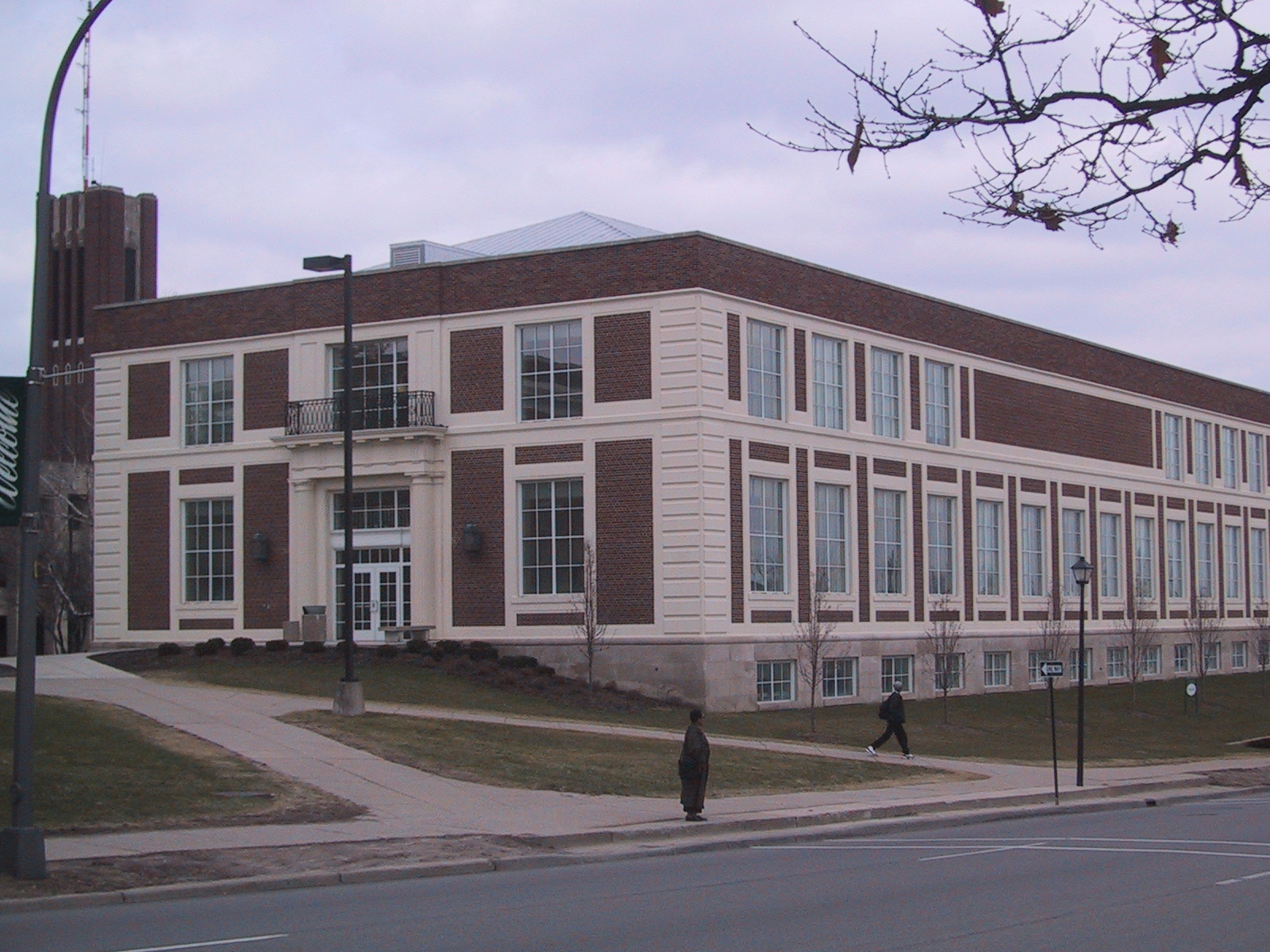
This building was originally constructed as the Quirk Dramatic Arts Building was named for Daniel L. Quirk, Jr., a member of one of the founding families of Ypsilanti, and also a philanthropist who not only supported EMU but also was patron of the little Theater movement in Ypsilanti. When it opened, newspapers called Quirk Dramatic Arts Building the "most modern building of its kind." The theater was originally built for the Department of English and Speech and included a theater with seating for 400, classrooms, television and radio studios, and an outdoor amphitheater.
In 2021, Quirk was renamed as the Judy Sturgis Hill building in honor of the late Emeritus Professor of Communication, Media, and Theatre Arts, Dr. Judy Sturgis Hill. The theatre's located in the Hill building were also renamed from the Quirk-Sponberg Theatre to the Legacy-Sponberg Theatres.
In 1948, seventy year old President John Munson was looking to retire. The State Board of Education asked the long-time president of Normal College to begin plans for the building of a new president's house for the campus. President Munson had boarded at the Huron Hotel throughout his presidency. His predecessor, President Charles McKenny, had lived in the Post Mansion, located where King Hall now stands. McKenny died in office leaving his widow without a home of her own except the president's house on campus. Munson allowed Mrs. McKenny to remain in the house until her passing in 1939. Following Mrs. McKenny's death, President Munson decided that the location of the Old Post Mansion, situated in the heart of campus, would be better used for residence halls. The Post Mansion was demolished and the residence halls of King and Goodison were built. The school board elected to build the new house on an old farm site adjacent to Jones Residence Hall. Prior to the completion of the new house, incoming university President Eugene Elliot and his family were unable to settle in Ypsilanti due to lack of housing. President Elliot lived in an apartment in the Business and Finance Building for a brief period of time while the new house was being completed. the new house was completed in 1949, and Mrs. Elliot had asked that a garden be cut in the backyard to provide flowers for university functions. The large house contained 4,850 square feet with an attached breeze-way and garage.
When it opened in 1969, Pray-Harrold was one of the largest classroom buildings in the United States. It had been built with an appropriation from the State Legislature for $5.6 million. The exterior was designed to match the architecture of the University Library and other buildings around the center of campus. The seven-story building accommodated 4,500 students each hour in its 75 classrooms and four lecture halls. Fully air-conditioned, the structure provided office space for 407 faculty members. Functionally, the building was designed with the most heavily used areas, the classrooms and lecture halls, on the first four floors while the offices were located on the top three floors. Today, the building remains devoted to classroom and office space, housing the Office of the Dean of the College of Arts and Sciences, Department of African American Studies, Department of Computer Science, Department of Economics, Department of English Language and Literature, Department of History and Philosophy, Institute for Diversity and Business Services, Department of Mathematics, Department of Political Science, Department of Sociology, Anthropology, and Criminology.
In May of 1967, the new library building, five times the size of the former Clyde Ford Library, opened on the campus of Eastern Michigan University. Built with a combination of federal and state funds for the cost of $2.68 million, it contained 133,500 square feet of space for collections, services and study. By the late 1980s the student body was asking for a new library to be built. Once the Bruce T. Halle Library was opened in 1998, the old library building was remodeled to house the College of Education and was renamed the John W. Porter building for Dr. Porter who had a distinguished career as a teacher and administrator in the K-12 schools of Michigan before becoming the Michigan State Superintendent of Schools, and then President of Eastern Michigan University from 1979-1988. The renovated building was designed to provide a variety of teaching/learning environments, including extensive technology capability, for the preparation of school personnel and professionals in related areas. The College of Education's move to the renovated building created a new environment for students in the disciplines of Teacher Education, Special Education and Leadership and Counseling. The John W. Porter Building was reopened on October 8th 1999. The total cost of renovation was $13.8 million.
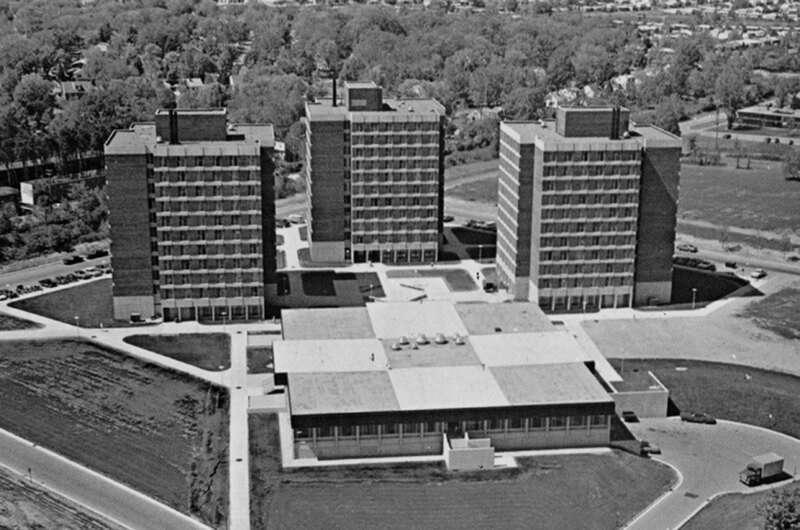
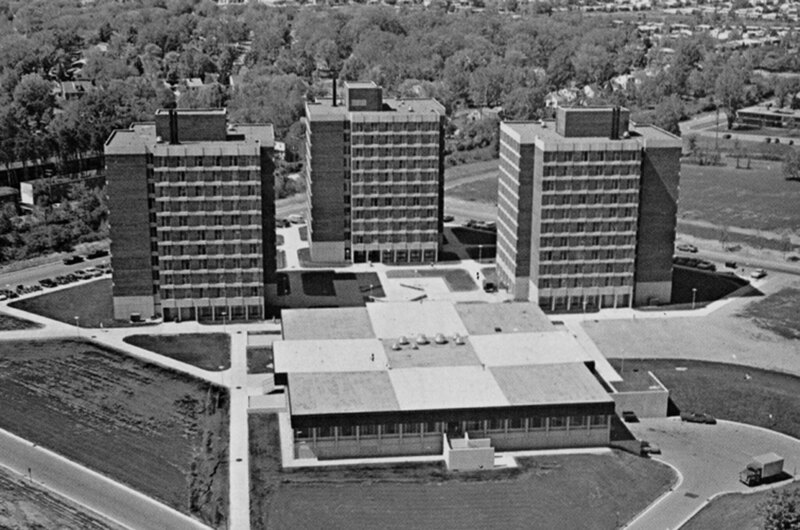
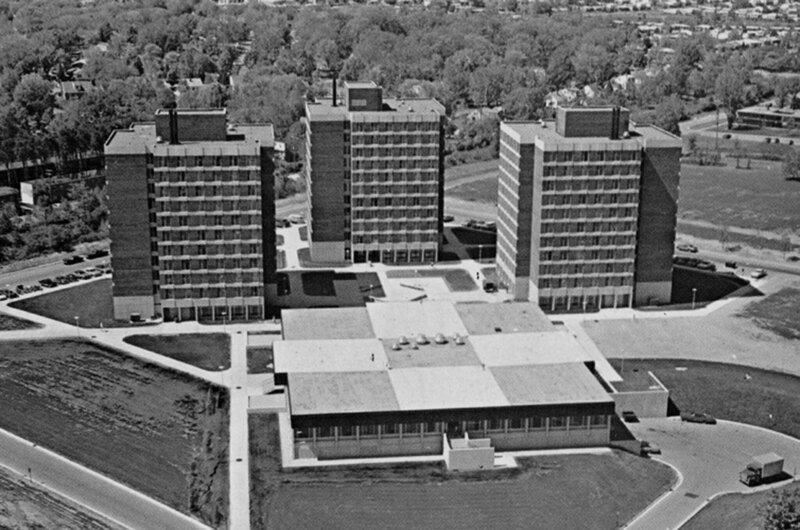
Hill, Hoyt and Pittman halls were constructed in 1969 to house ever-growing numbers of students at the university. The University funded the $6.25 million project through the sale of self-liquidating bonds. These 11-story structures stand taller than anything on or near campus except the city water tower. Designers built the residence halls to house a total of 1,404 across the three dormitories. Hill and Hoyt were originally dedicated to women while men lived in Pittman. Like many of the other dormitories on campus, the buildings surround a courtyard. The fourth side of the court is closed by the Conference Center which contains Dining Commons #3.
President Eugene B. Elliott constructed Pine Grove Apartments as part of his expansion plans. The apartments were reserved for married housing, housing that would appeal to GIs with families returning from the Korean War (1950-1953). Pine Grove #1 opened with thirty-six completely furnished apartments earmarked for married students. A one-bedroom apartment cost $60 a month and a two-bedroom apartment cost $70 a month. Furnishings included a Youngstown kitchen in dawn yellow and meridian blue with a gas range and an electric refrigerator. A living room, bedroom, bathroom, and heating unit were all included in individual units.
Pierce Hall replaced Boone Hall as the central administrative headquarters for the university when it was constructed in 1948. Pierce Hall was completed in 1948 as part of President John M. Munson's building campaign. Munson, oversaw the building of 13 buildings on campus during his tenure from 1933-1948. Pierce was among the last buildings to be completed before Munson left the presidency in 1948. Pierce Hall was dedicated as part of the centennial celebrations of the Normal College in 1949.
Even the name fits with this retrospective theme. Pierce Hall commemorates John D. Pierce who was the first State Superintendent of Public Instruction (1836-1841). The design of Pierce Hall was a modern interpretation of the Old Main Building. Though very different in design, the building retained certain nostalgic features including the large bell tower that dominates the facade. The residents of Ypsilanti donated money to construct the 120-foot tower, in the tradition of Old Main. In June 1950 the school installed the Alumni Memorial Chimes, donated by the alumni and dedicated to those who died in World War II.
Pierce served as the administrative building on campus until those services were moved to Welch Hall in the late 1980s. Pierce now houses several different student support services, including Swoops Food Pantry which provides free food to students in need.
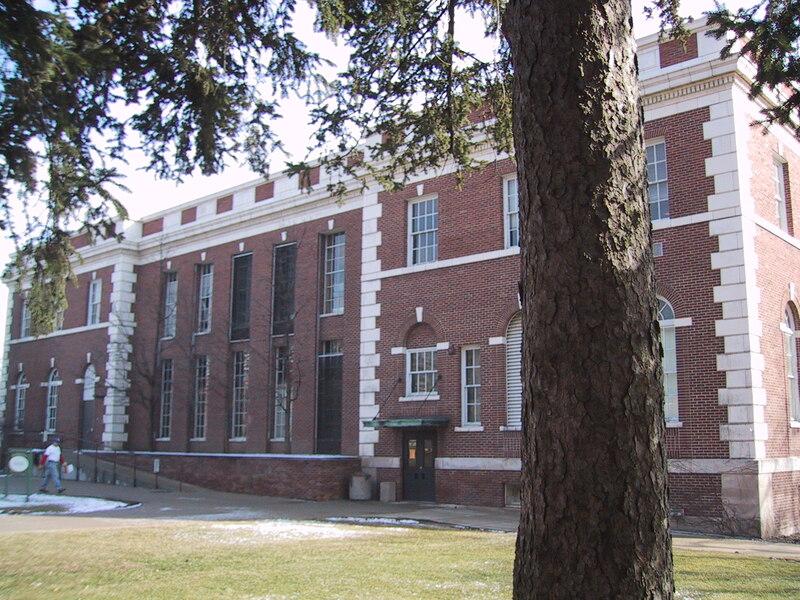
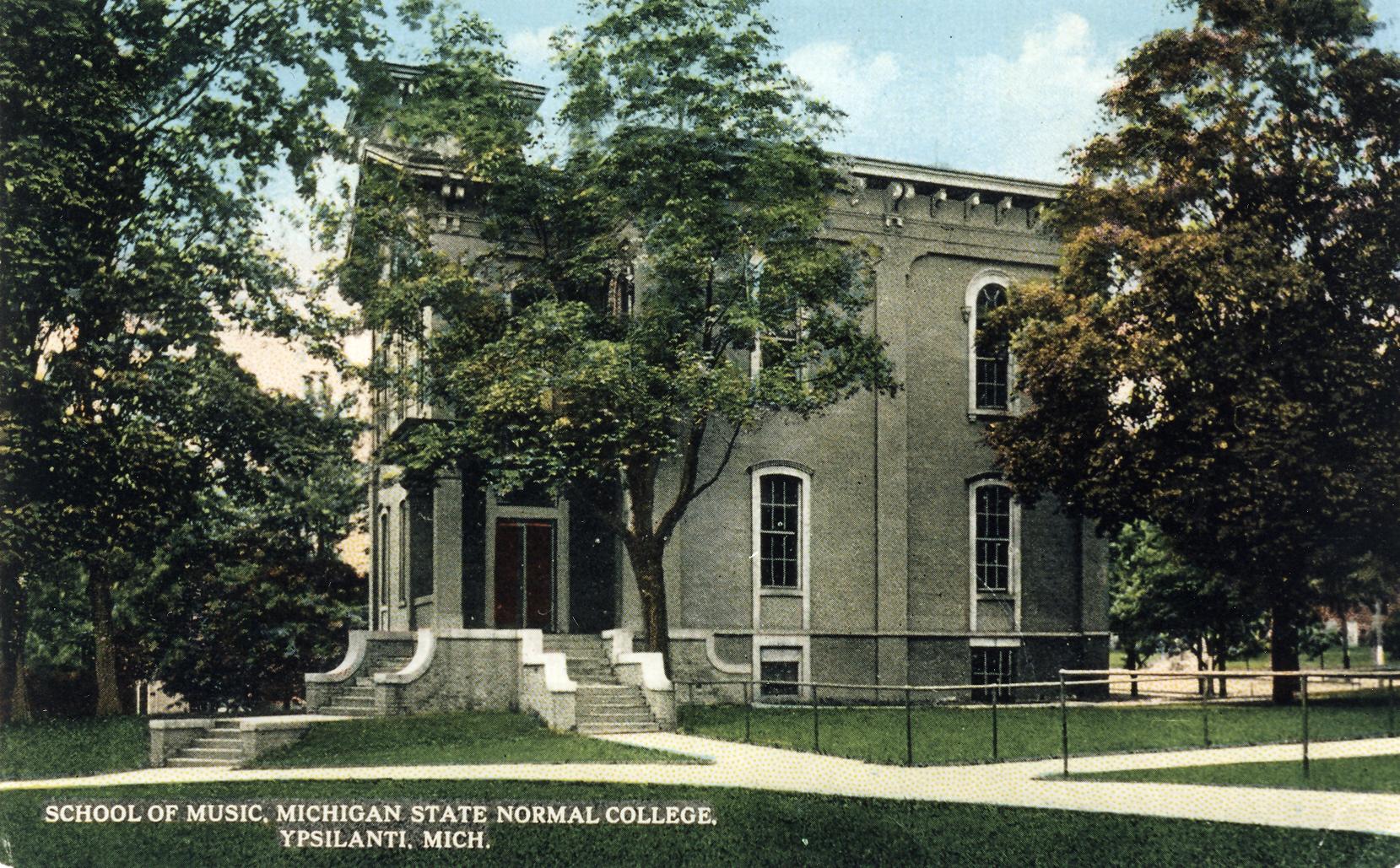
Music has held an important place at Eastern Michigan for over one hundred years. In 1881, Michigan State Normal School established the Normal Conservatory of Music; the program grew rapidly and by the beginning of the twentieth century was in need of further facilities. The new auditorium was constructed in 1914. Originally, the building was named after John D. Pierce, but in 1915 was renamed Pease Auditorium after Frederic H. Pease, who served the Normal between 1858-1909 as a Professor of Music and the Director of the Normal Conservatory once it was established.
Frederick Alexander, a Professor of Music in the first decades of the twentieth century, had hoped to have an organ installed when the auditorium opened in 1915. Due to lack of funds, the school could not afford to place an organ in Pease, so, upon his death, Alexander donated $85,000, for the university to build a new organ. Erich Goldschmidt, EMU Professor of Organ (1955-1978) designed and voiced, or tuned, the Frederic Alexander Memorial Organ for its home on the stage of Pease Auditorium. It took Goldschmidt an entire year to tune the pipes properly in his workshop, located in the basement of Pease. Its first performance took place in 1960. The organ was restored between 1993 and 1999.
Pease has been renovated on several occasions, but received its most extensive remodel between 1993-94 so the building could be brought up to code, and made accessible for people with physical disabilities. Performances are still held in Pease Auditorium to this day, and comfortably seats 1,700 people.
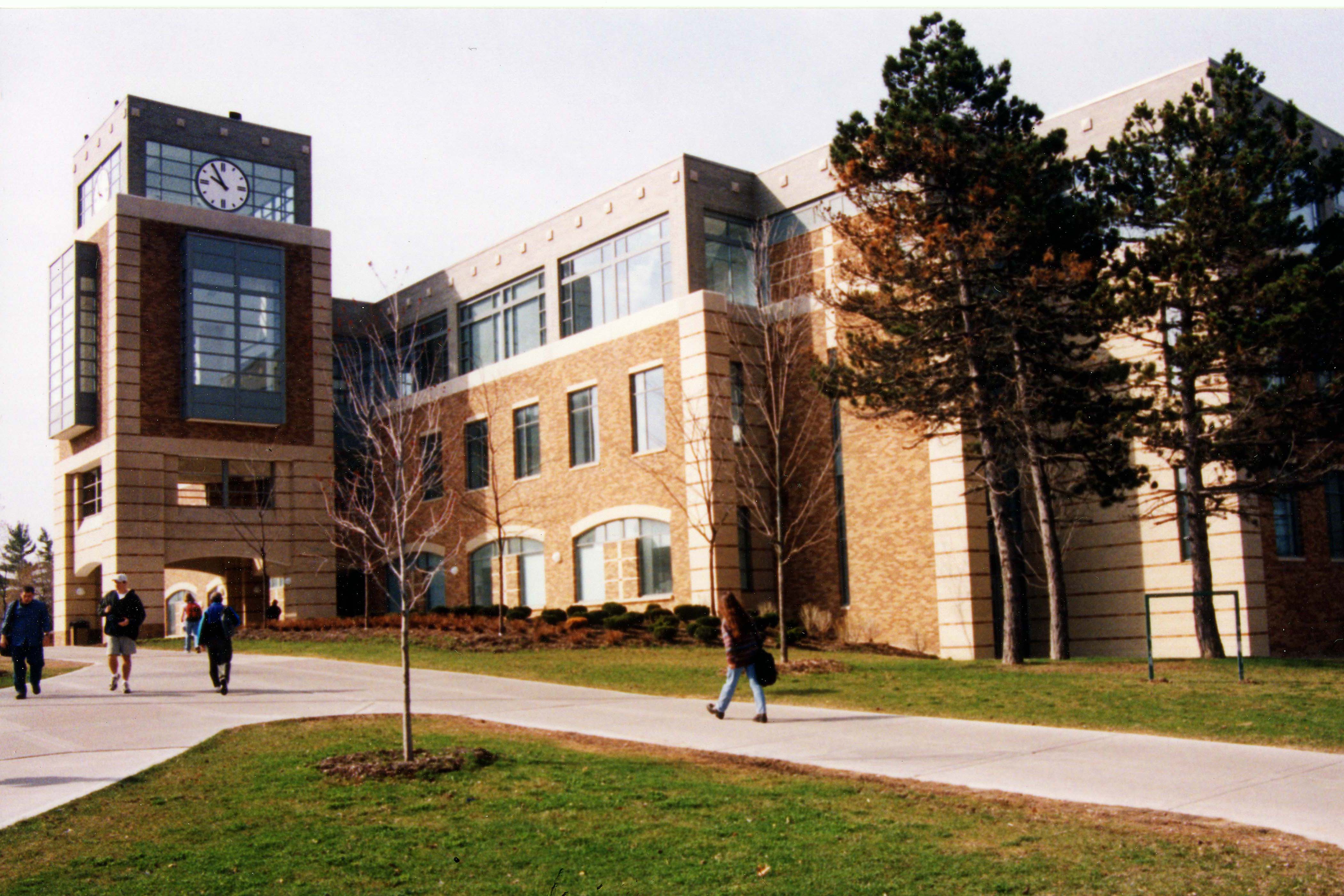
Beginning in 1911, the Board authorized a Business Education Degree at the Michigan State Normal School. By 1929 the school offered a Bachelor of Arts in Business Administration. The College of Business (COB) moved to its current location in 1991. Today, the COB serves approximately 3,400 students. The COB offers thirteen majors and minors and five graduate degrees, and thirteen graduate certificate programs. The COB was initially located south of the main campus closer to downtown Ypsilanti, but returned to the main campus in 2019. At one point, students were able to take a shuttle from the main campus to the COB one way in under five minutes.
When graduates from Eastern Michigan University gather and reminisce about teachers and coaches who influenced their lives, one of the first names to be mentioned is that of Lloyd Olds. Olds taught at Eastern Michigan University from 1921 to 1963. Recollections and stories of Olds usually revolve around his career as a track coach and director of the intramural program.
Olds-Robb Student Recreational/Intramural Complex was first named for Lloyd W. Olds. Student tuition and bond sales paid for the $16.5 million construction of the building. When it was built, the building contained the largest indoor swimming pool in the state, pool depth varied from 3 to 17 feet. The old varsity pool was converted into a club pool with a sauna facility connected. Today, the building serves about 500,000 people each year and offers swimming, racquetball, volleyball, basketball, aerobics, billiards, table tennis, free weights, and other fitness machines. On the third floor is a gymnasium able to accommodate four basketball courts or twelve volleyball or badminton courts. Viewers can see it from the fourth floor track that runs around the perimeter of the room.
The Old Post Mansion was built by Dr. Lewis H. Jones between 1899 and 1909. Dr. Jones purchased the property around 1900, from Samuel Post, a Detroit soup manufacturer. Dr. Jones lived in the home until the property was purchased by the state in 1915 to serve as the president's house. Dr. Charles McKenny, President 1912-1933, was the first and only president to reside in the home. McKenny died while in office, leaving his widow with out a home of her own. Incoming President John M. Munson, allowed Mrs. McKenny to remain in the house for the rest of her life. Munson chose to live in the Huron Hotel. Following Mrs. McKenny's death in 1939, Munson decided that the location of the president's house would be better used for residence halls, due to its central location.
Originally used for all administrative functions until Boone Hall was built, also provided classroom and library space. The original building was a brick structure three stories high, with a recessed front door and an ornamented cornice. All windows feature simple upper and lower pediments. The first floor provided a room for the model school, one for the department of Physics and Chemistry, a small reception room and library. The second floor features were the recitation rooms and the main school room. One large room and a number of smaller rooms were on the third floor.
Named after EMU Hall of Fame Coach Ron Oesterike, Oestrike Stadium was constructed in 1971, the year following Eastern Michigan's NAIA Collegiate National Championship and four years before its back-to-back NCAA Worlds Series appearances. Improvements to the stadium have been ongoing since 1988 to ensure it is always up to excellent playing standards. On October 6, 2008, musician Bruce Springsteen performed here in support of Presidential Candidate Barack Obama. To this day, Oestrike Stadium remains the home of the EMU Eagles baseball team.
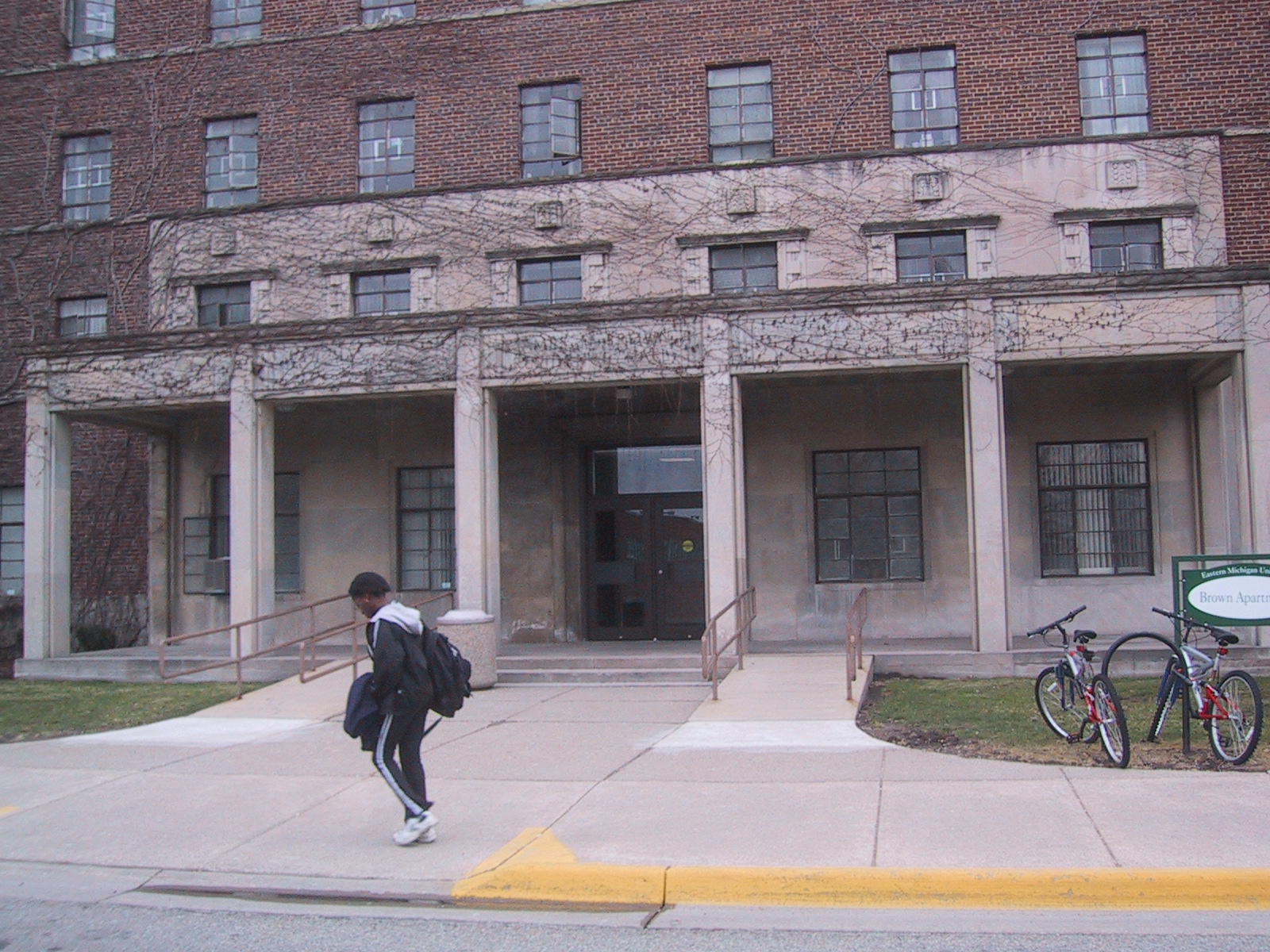
Munson Residence Hall was built during the construction campaign of President John M. Munson. The new building was intended to be the men's residence hall and named for President Munson. Munson contained 200 student rooms when it was built and the adjacent residence hall, Brown, contained 250. In 1943, Munson began to house soldiers in the Army Specialized Training Program. These 300 soldiers, selected from camps around the nation, collected at Michigan State Normal College to form Company H of the 3651st Unit of the A.S.T.P. At Normal these soldiers were given basic academic training, called Basic I, which would allow them to enter more advanced leadership roles in the military. Munson was demolished in 2024, and is set to be turned into green space.
Michigan State Normal College was the first teachers' college with a social center. In 1924, President Charles McKenny proposed the idea of a Union to student leaders. That year the Alumni Association set out to raise $500,000. For the first time the university funded a building campaign by soliciting money from alumni. Later on, money was pledged by the Student Council and by faculty. By 1928, the school had pledges for $350,000, unfortunately due to the Stock Market Crash of 1929 and the following Great Depression, the school had only collected $130,000 in cash by 1930. Construction began in 1931 with less expensive, plan. Difficulties in paying bonds on the building lead the state to take control in 1937, drawing the cost of the debts from the student programming fees. The building was named for Charles M. McKenny, President of EMU 1912-1933 and the man who first proposed the idea of a student union. During the housing crunch of the 1950s, the third floor and basement of McKenny became student housing, dorm rooms were set up for those who worked in the student union.
Today, McKenny houses a wide variety of resources, such as classrooms, transfer admissions, and the University Advising and Career Development Center, or UACDC. The UACDC provides resume building, mock interviews, job and interview placement assistance, and advising for all of our students in the Exploratory major. McKenny is also home to our on campus Chick-fil-A.
Architects designed the new building for the College of Health and Human Services to be environmentally friendly. Tables are made of soybeans, newspapers, and wooden pallets. Chairs and fabrics are made from recycled pop bottles; floors from straw cork, recycled tires and bamboo; ceiling tiles inhibit harmful molds; and low-odor, solvent-free paints help ensure air quality. Following the principles of universal design, the building has wider doors and adjustable desks among other modifications to ensure that everyone, regardless of age, size or disability can be comfortable in the building. The building was funded by state and university matching funds, including a donation from Professor Emeritus Everett L. Marshall.
The pond and Lake house were constructed as part of an 11-acre, $1.5 million project to create an outdoor recreation area connected to the Olds-Robb center. The man-made pond is six feet deep, and intended for year-round enjoyment. In the winter, the pond was designed to be used as an outdoor ice skating rink. The Lake house provides a place for students to relax. The outdoor complex, of which the pond and Lake house are a part, also includes volleyball courts, running trails, and a picnic area with horseshoe pits. The project also featured an 800-seat amphitheater. Based on student requests for a safe outdoor area for jogging at night, the designers lighted the one-mile long jogging trail.
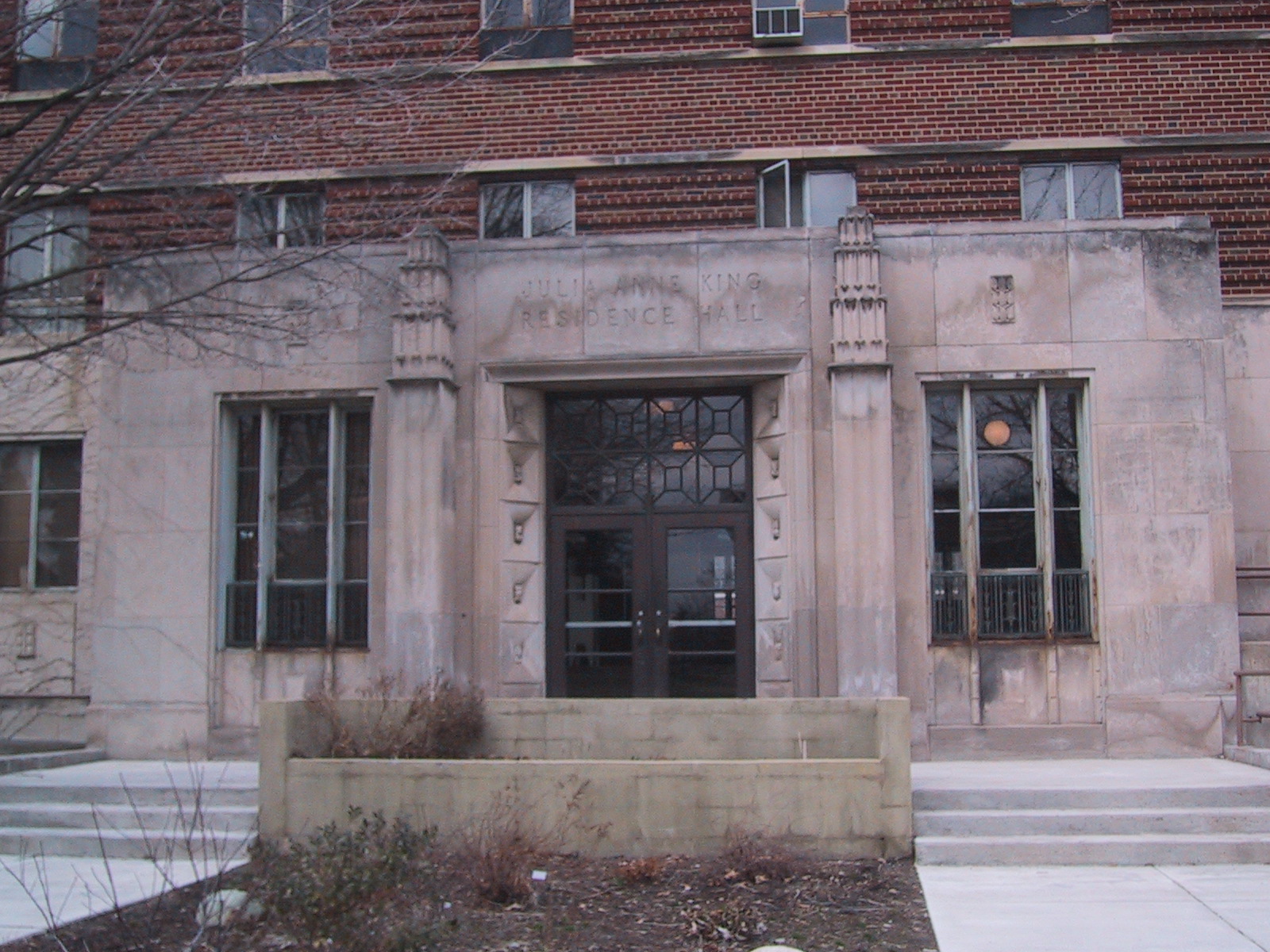
King Hall and its companion building Goodison (now demolished), constructed in 1939, were among the first dormitories built on Eastern Michigan's campus. Photographs of the work in process show that they were built with Public Works Association (PWA) labor. The PWA had been established as a method to bring the unemployed back to work during the Great Depression. These architects and laborers were instrumental in developing the brick and pale stone style popular on the southern side of the campus.
These two dormitories, constructed as women's housing were designed in the shape of two opposing Us enclosing a private courtyard for recreation. In the ground-breaking floor plans, architects created the first two-room dormitory suites in the state. Each suite included a bedroom with an adjoining study. Furnishings included a twin-sized maple bed for each student with mattress, box spring, and pillow; a built in dresser and closet; a bedside rug; and dressing table. The study room contained a double desk with a shelf for a typewriter or books, a bookcase, study chair, and easy chair. Halls shared bathrooms that included an electric hairdryer. Other conveniences included five date parlors, and a laundry room with tubs, ironing boards and clothes dryers. The complex included a cafeteria and dining room for meals. Lunch was served cafeteria style but dinner was a more elaborate affair with assigned tables and a student hostess to oversee the meal. The school attempted to create a sense of gentility in their dormitories. For all these amenities, room and board cost $144 per semester, payable in two installments of $72.00 each.
King Hall was renovated in 1971, and converted from a dormitory to a multipurpose building with classrooms, offices, and practice rooms (as it was originally renovated to house the Music Department). Today, King serves as the home of our award-winning NPR radio station, WEMU, and the campus newspaper the Eastern Echo.
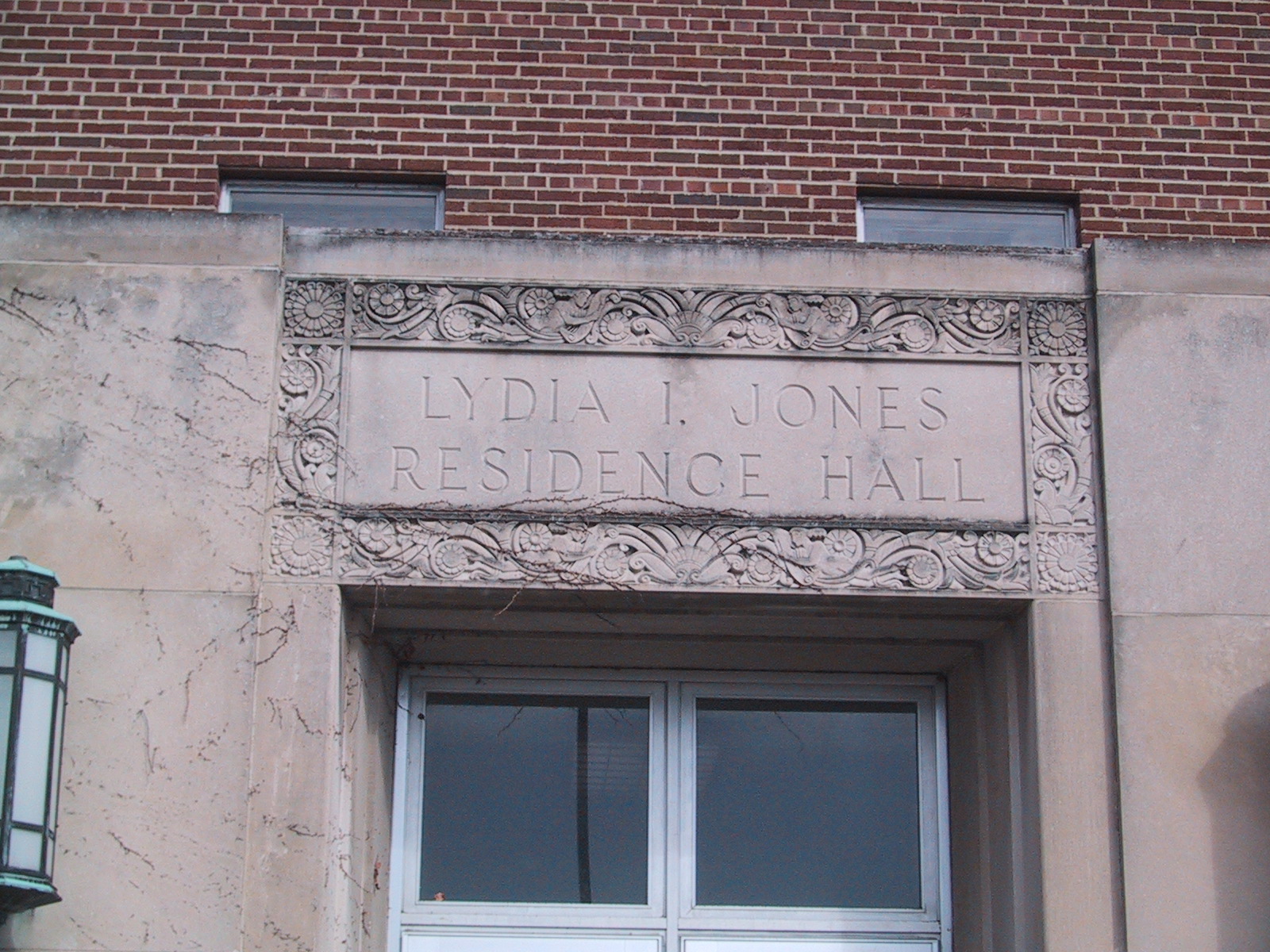
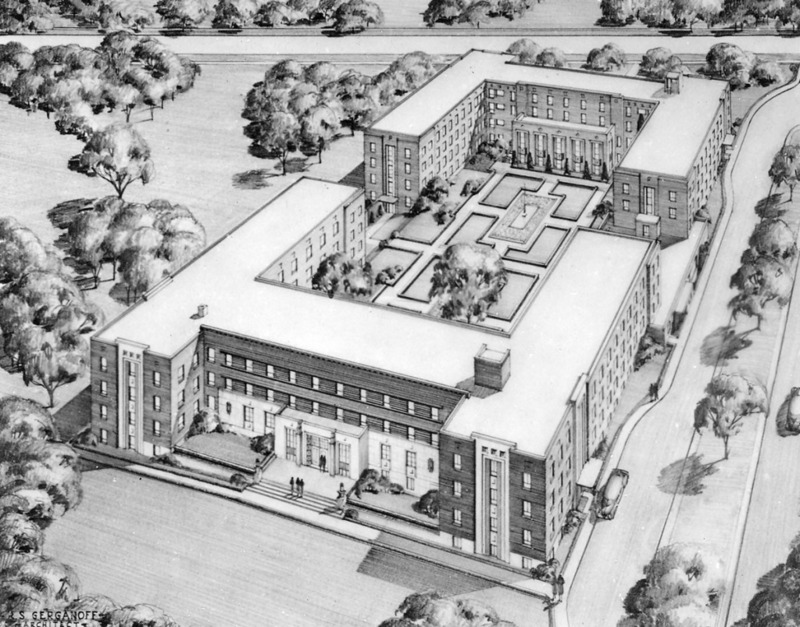
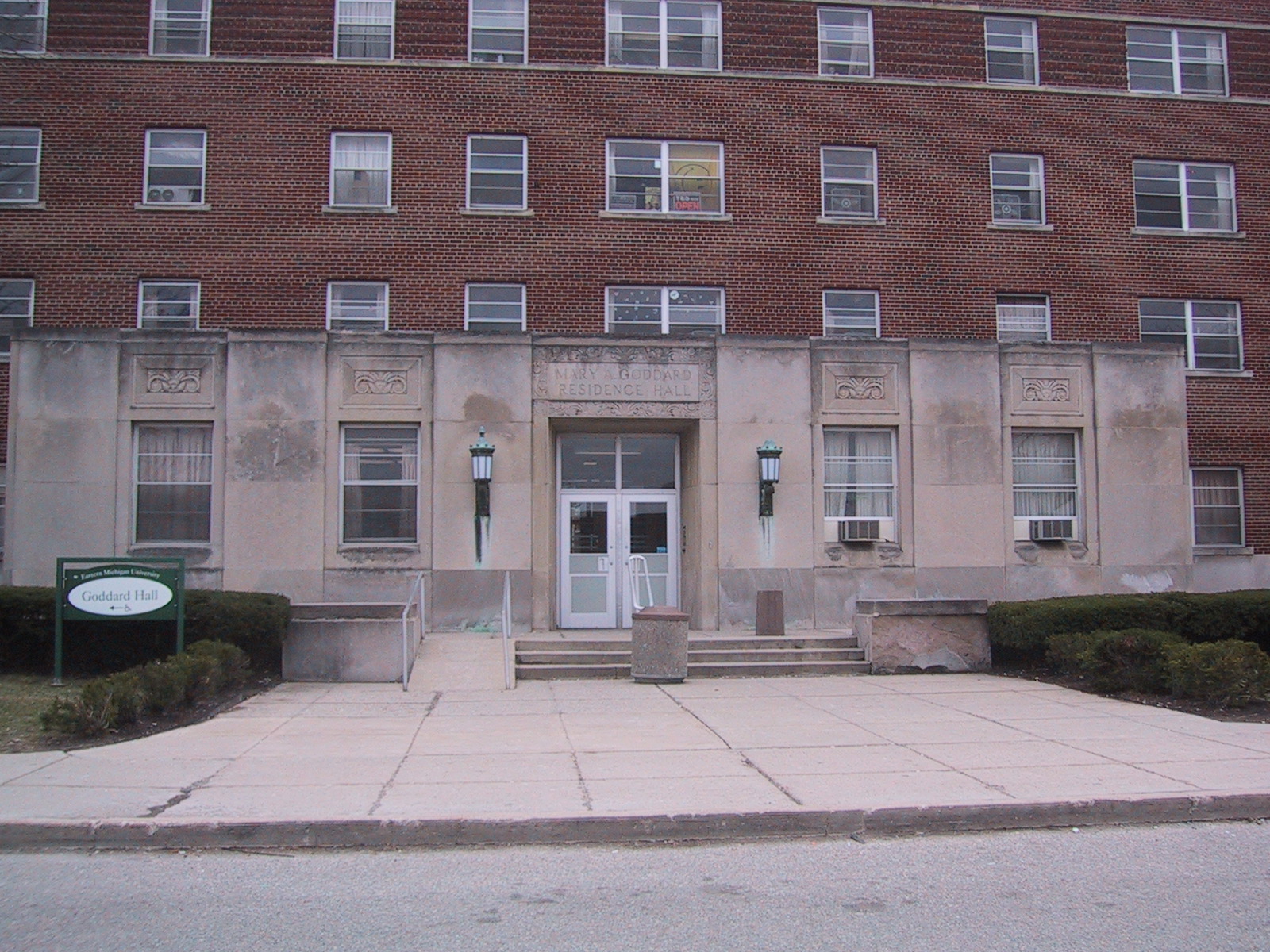
As the student body continued to grow following the second World War, the University realized the need for more housing. At the same time, funding remained tight. A slight increase in rent would cover the building of new housing. Jones and Goddard were built as part of the college's self-liquidating campaign and intended to be paid for and sustained by the revenue from dorm room rental. Combined with King and Goodison, Goddard and Jones accommodated 1,200 women, enough to make the new payment program viable. Like other residence complexes on campus, two dormitories formed a square around an enclosed central courtyard; however the interiors were slightly different. The architectural team, based room designs in part on the preferences shown by students who viewed sample plans of dorm rooms on display the winter before. Each suite of rooms held four students and included a private bath for each unit along with wood paneling as ornamentation.
Goddard and Jones were both made honors dorms in the 1980s. In 1988, a resident advisor (who worked in a different dormitory) set fire to Jones Hall, causing $10,000 in damages. This was one of several fires that broke out in the dorms around this time. The perpetrator was convicted of arson and sentenced to 1.5-10 years in prison. Jones stopped being used for student housing in 2005, and over the summer of 2024 Jones and Goddard were demolished and the site will be transformed into green space.
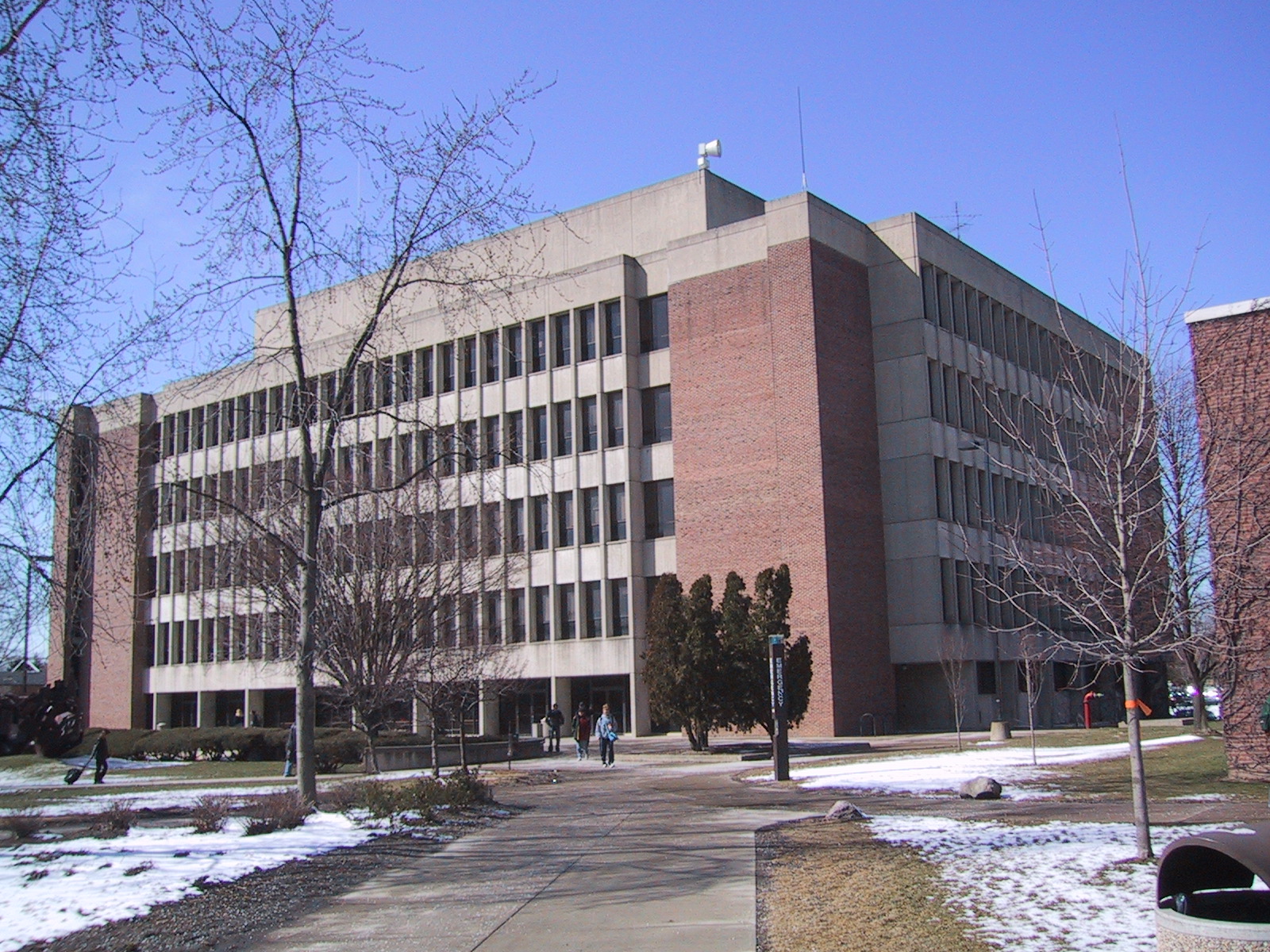
EMU's continued growth during the 1960s drove building projects under Presidents Elliott and Sponberg. In 1967, Sponberg arranged for the construction of a new science building. An appropriation from the state legislature provided the funds for the $8.25 million building. The new building contained 180,000 square feet of space divided among five stories plus a "penthouse" and basement. It was constructed of poured-in-place concrete with exterior walls of brick with stone trim. Inside, Mark Jefferson was fully air-conditioned, and the main floor contained four lecture halls and six large classrooms. Other floors had modern laboratories and facilities for research as well as faculty offices, reading rooms, and on the third floor, a museum. When it was built, the Mark Jefferson Science Building was intended to provide space for crowded departments.
In 2011, The Mark Jefferson received a major renovation and a 5-story, 86,000 sqft. addition. The project linked Mark Jefferson with Strong Hall creating the Mark Jefferson Science Complex. The Complex includes a variety of classroom layouts including traditional classrooms, labs, lecture halls, a planetarium, a green house, and an observatory deck complete with telescopes.
Hoyt Residence Hall was constructed in 1968 as one of three 11-story structures known as “The Towers”. Hoyt was originally a women only dormitory. There were fires in all three of “The Towers” buildings in 1987, and Hoyt was the most heavily damaged resulting in a $1.5 million remodeling project which spanned five floors. As of 2024, Hoyt is no longer utilized as a residence hall and is likely going to be demolished.
Originally built as the Hoyt Conference Center, the Public Safety building and Towers Residential complex were constructed in 1969. The construction cost approximately $6.25 million to construct. Prior to 1976, Eastern had to apply for a 24-hour permit in order to serve alcoholic beverages. In 1977, the state legislature enacted a new law granting restricted licenses a measure championed by State Representative Gary Owen, (D) Ypsilanti. That year, EMU received the first Class C liquor license at a university in the state. Then new license allowed EMU to serve beer, wine and liquor at its regularly scheduled conference center activities. The University was enthusiastic about these possibilities, but was emphatic that the license did not extend to over the counter liquor sales.
Today, the building houses the Public Safety department, housing the EMU Police Department, Environmental Health and Safety, and Emergency Management.
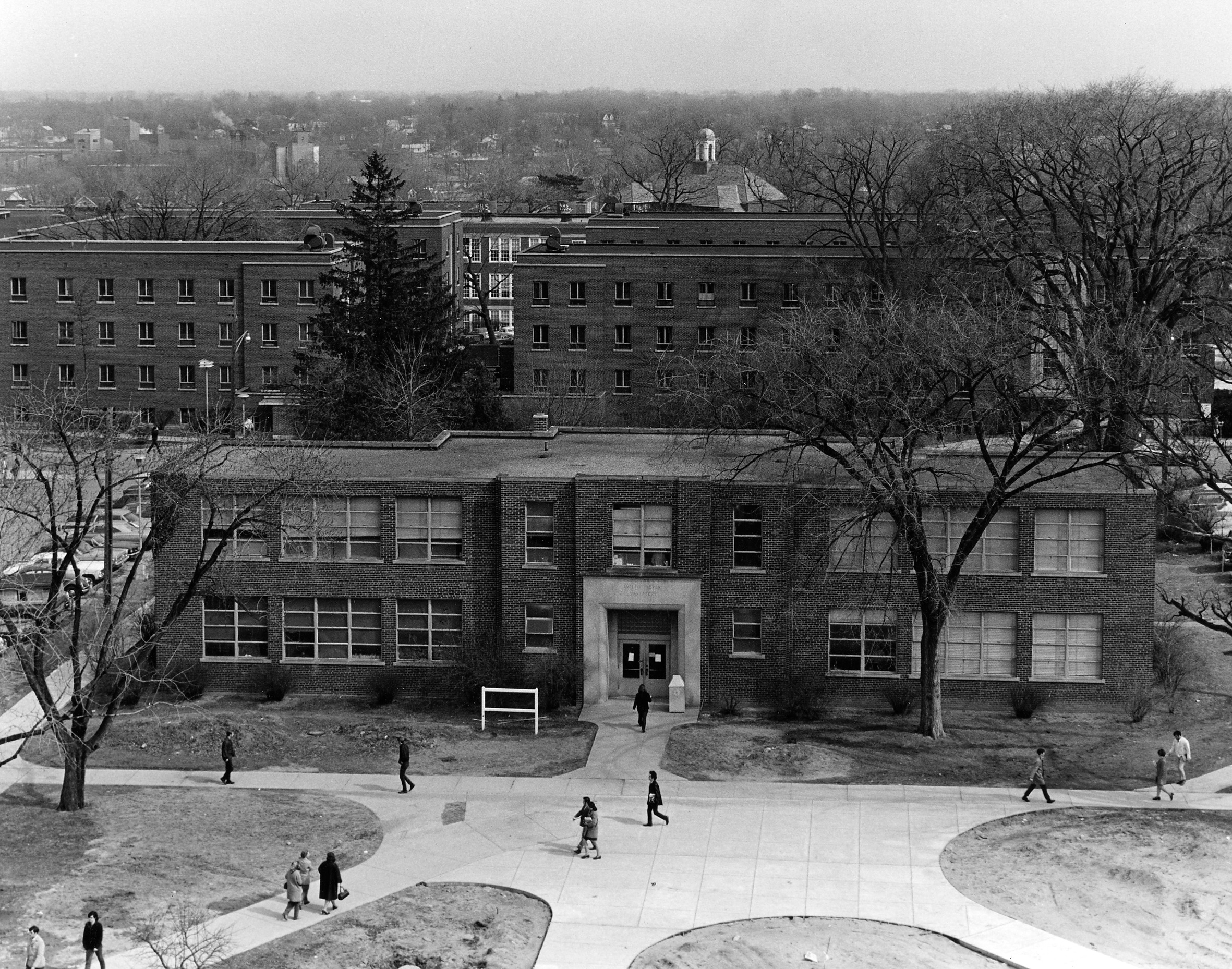
Hover laboratory was built during the Munson era building project. Munson was able to use Works Project Administration (WPA) labor to build a new laboratory building for $53,000. The WPA was a Depression Era program run by the federal government in an effort to give jobs to hundreds of unemployed workers. Using his broad influence, Munson was able to get WPA labor to construct not only the laboratory, but also hundreds of miles of pipes under the campus of EMU. The building was designed to house the Department of Biology laboratories, a greenhouse, and a plant laboratory and Biology Career Center. The brick building had classrooms on either side of entrance, with workrooms behind them, and offices connected to the workrooms. A green house was connected to the back. Currently, Hover contains single rooms that are available for upperclassmen to live in during the school year. Offices of Business and Finance are also located here.
The Hill-Hoyt-Pittman complex was constructed in 1969 to house ever-growing numbers of students at the university. The University financed the $6.25 million project through the sale of self liquidating bonds. Standing 11-stories tall, the residence halls in the complex stand taller than anything on or near campus except the city water tower at Cross and Washtenaw. Designers built the residence halls to house a total of 1,404 students. Hill and Hoyt were originally dedicated to women while men lived in Pittman. Like many of the other campus dormitories, the buildings surround a courtyard. The fourth side of the court is closed by the Conference Center which contains the Eagle Market and Einstein's Brothers Bagels. As of 2024, Hill is no longer utilized as a residence hall.
The Halle Library is the third library building on campus following R. Clyde Ford Hall, and what is now the Porter College of Education Building. The earliest library on campus was a single room in the administration building, known as Old Main. Ford Hall was built as the first library building in 1929 and Porter was built in 1966 - 1967 as a replacement. By the early 1990s, the library in Porter had become over-crowded, and strong student activism in 1992 provided the impetus to begin a drive to build a new and larger library. The new library, built on the site of the old physical plant, was designed and built to state-of-the-art specifications and cost $41 million to complete.
The dedication program described the Halle Library as a library pointing to its close ties to modern information technology. The library is 270,000 square feet and contains close to a million volumes split between a browsing level and an automated retrieval system (ARC). The ARC was the second of its kind to be placed in a university library, but was part of a national trend towards condensed shelving and automatic access storage systems. Books that have not been checked out in the last five years are placed in the ARC.
The carillon, donated by E. Gregg Liechty, has been brought into the 21st century through digitization. A computer produces the sounds of cast bells, but without the $1 million price tag and the stress of cold winters on fragile cast-iron bells. Instead, two keyboards, an auto bell console, and an organ console, are played and the songs saved on a sound card for later replay. Four speakers in the tower can send the sound 1.5 miles on a misty day. The library is not solely a computerized wonder; more traditional collections include the University Archives, the Map Library, a traditional periodicals collection, and a browsing collection on the third floor.
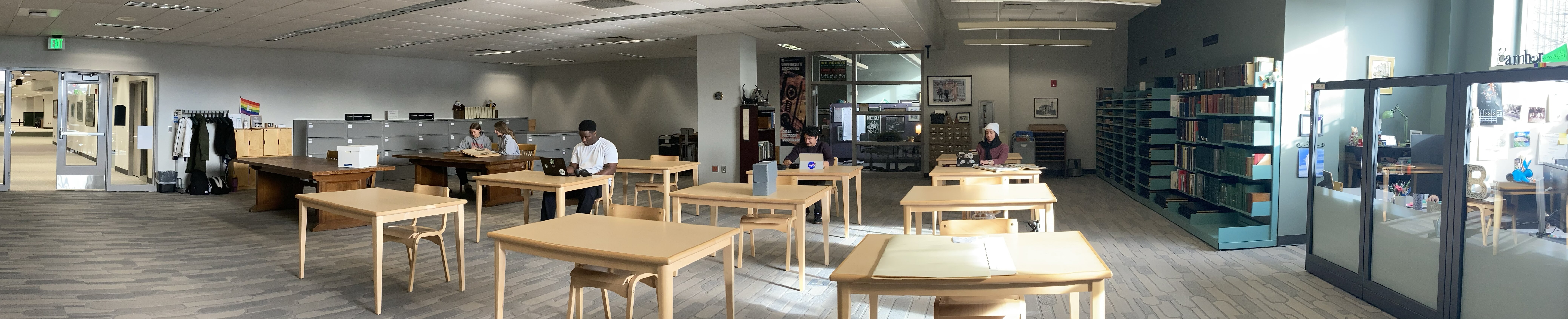
Over the summer of 2024, the first floor of the Halle Library was renovated as a result of Eastern Michigan University receiving a generous gift from the Diane & Bruce Halle Foundation to upgrade and modernize the library. The goal of the renovation is to create spaces for the campus community to gather for collaboration and instruction. The renovation brought the University Archives down to the first floor, and provided office spaces for the Center for Jewish Studies and the Center for Social Justice. There is also a gallery space available for students and the community to showcase exhibitions.
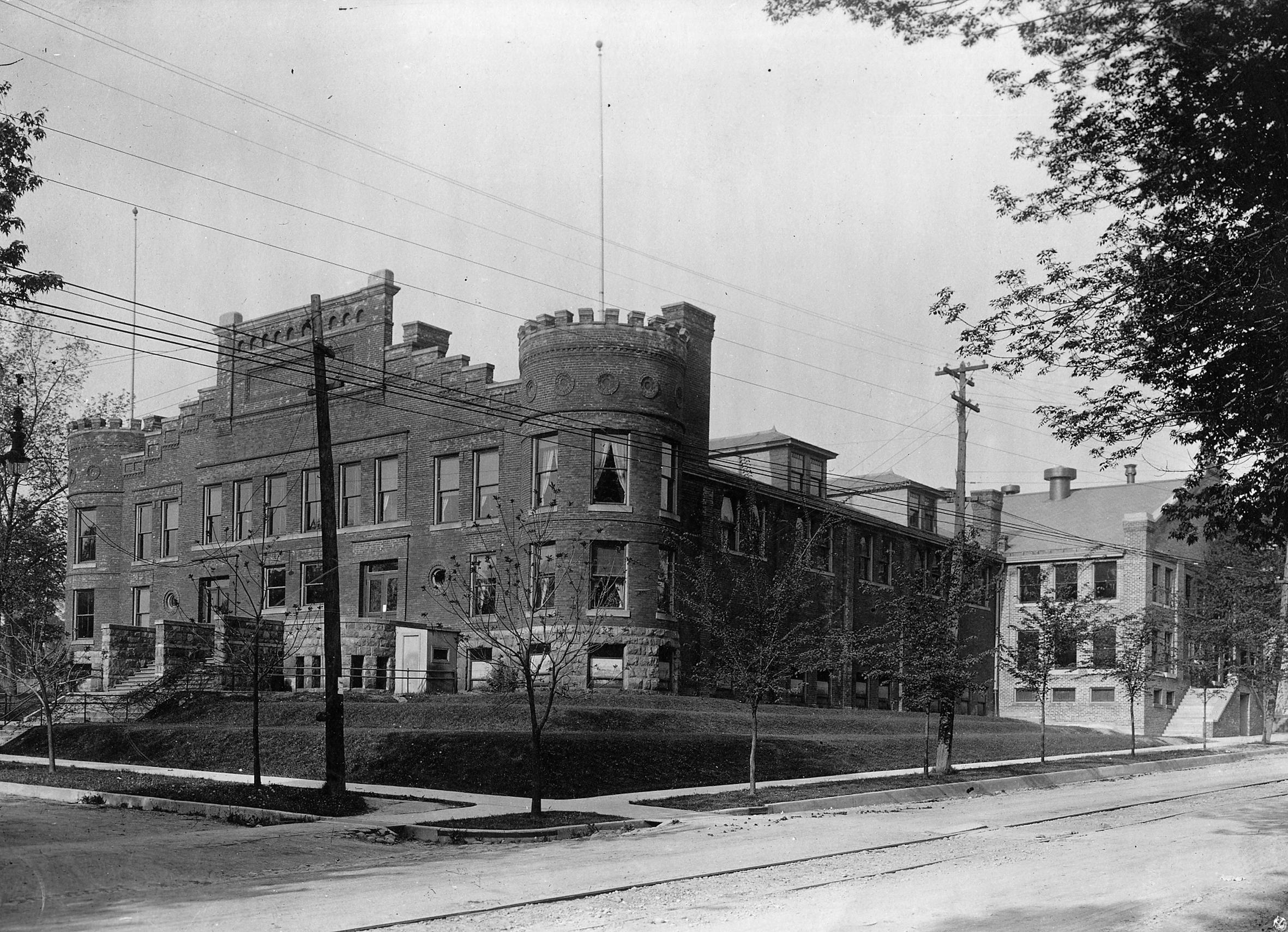
The Normal Gymnasium was constructed in response to the 1871 fire of the school's original gymnasium and the formal addition of a department of physical training. The groundbreaking took place in October of 1892, after appropriations of $20,000 were used for the construction cost. The building was on a 250 x 275 ft lot on Cross Street across from Welch Hall. Originally built with two main rooms, one for men and another for women, one was equipped with a running track, the other with a gallery on three sides. The basement included a swimming pool and locker rooms equipped with showers.
Goodison Residence Hall and King Residence Hall were among the first dormitories built on Eastern Michigan's campus. According to a brochure describing the new housing, the buildings had been designed so that students may enjoy not only the modern conveniences, but also the atmosphere of a cultured home and a program of worthwhile activities. Photographs of the work in process show that they were built with Works Progress Administration labor. The WPA was established to bring the unemployed back to work during the Great Depression. Because of his influence, President John M. Munson was able to use WPA labor for a number of the necessary improvements on campus. These architects and laborers were instrumental in developing the brick and stone style popular on the southern side of the campus. These two dormitories, constructed as women's housing were designed in the shape of two opposing Us enclosing a private courtyard for recreation, similar to the one surviving in the Munson-Brown Apartments. According to the floor plans, architects created the first two-room dormitory suites in the state. Each suite included a bedroom with an adjoining study. Furnishings included a twin-sized maple bed for each student with mattress, box spring, and pillow; a built in dresser and closet; a bedside rug; and a dressing table. The study room contained a double desk with a shelf for a typewriter or books, a bookcase, study chair, and easy chair. Halls shared bathrooms that included an electric hairdryer. Other convinces included five date parlors,? and a laundry room with tubs, ironing boards and clothes dryers. The complex included a cafeteria and dining room for meals. Lunch was served cafeteria style but dinner was a more elaborate affair with assigned tables and a student hostess to oversee the meal at each one. The school attempted to create a sense of gentility in their dormitories. For all these amenities, room and board cost $144 per semester, payable in two installments of $72.00 each.
Goddard and Jones Residence Halls were designed on the same plans as King and Goodison Residence Halls. Once again, two dormitories formed a square around an enclosed central courtyard. The interiors of King and Goodison, however, were slightly different. The architectural team based room designs in part on the preferences shown by students who viewed sample plans of dorm rooms on display the winter semester before. Each suite of rooms held four students and included a private bath for each unit. Wood paneling decorated the halls. Goddard and Jones accommodated 1,200 women, enough to make the new payment program viable. On February 1, 1964, the University opened the Instructional Computing Center in Goddard Hall. By 1980, it also contained classrooms for Industrial Education. Goddard and Jones were both made honors dorms in the 1980s. As of fall 2005 Goddard Residence Hall was closed as a student residence hall. Jones and Goddard have both been demolished as of 2024, and is set to be replaced with green space.
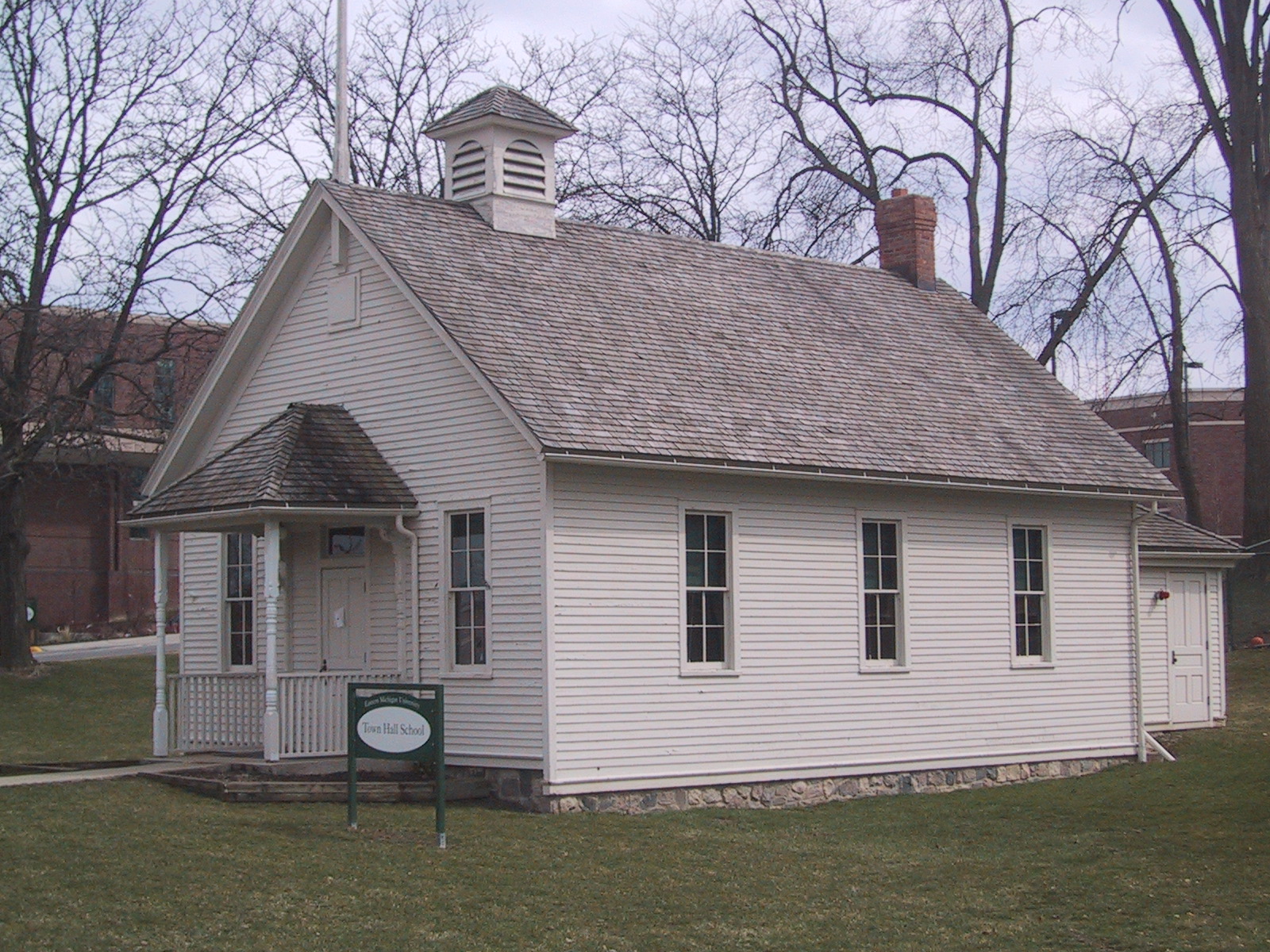
The Town Hall School, built on the Geddes farm, carries with it a rich family and educational tradition. The first Geddes came to this area in 1824 and the family possesses the 1827 deed to the farm signed by President John Quincy Adams. In 1852, William Geddes leased land for a term of 99 years at the corner of Morgan and Thomas roads to build a school. The Pitt (now Pittsfield) district paid six cents per year for the lease.
The first Town Hall School was a brick building constructed in 1852. The existing wooden structure was built in 1895, at a cost of $677.50. This one-room school served as a social center for families in the community. Holiday celebrations were highlights of the year for all. From the 1880s, until its doors closed in 1957, student enrollment remained in the 30-40 range. One year, during the Depression there were only two students in attendance. At least 97 teachers taught here during the 105 years that the school was in session.
The Geddes Town Hall Schoolhouse was donated to EMU in 1987, and the university originally planned to furnish it with contemporary teaching implements and use it as a working classroom as a testament to the schools founding as a teaching training institution. The schoolhouse was also intended to be a repository for collections and preservation of educational history. When the building arrived on-campus, it was largely bare containing only the original bell and piano. Donations from the Washtenaw community have furnished the remainder of the building.
The schoolhouse is still consistently utilized by the university for various classes and social functions, bringing history to life for the EMU community.
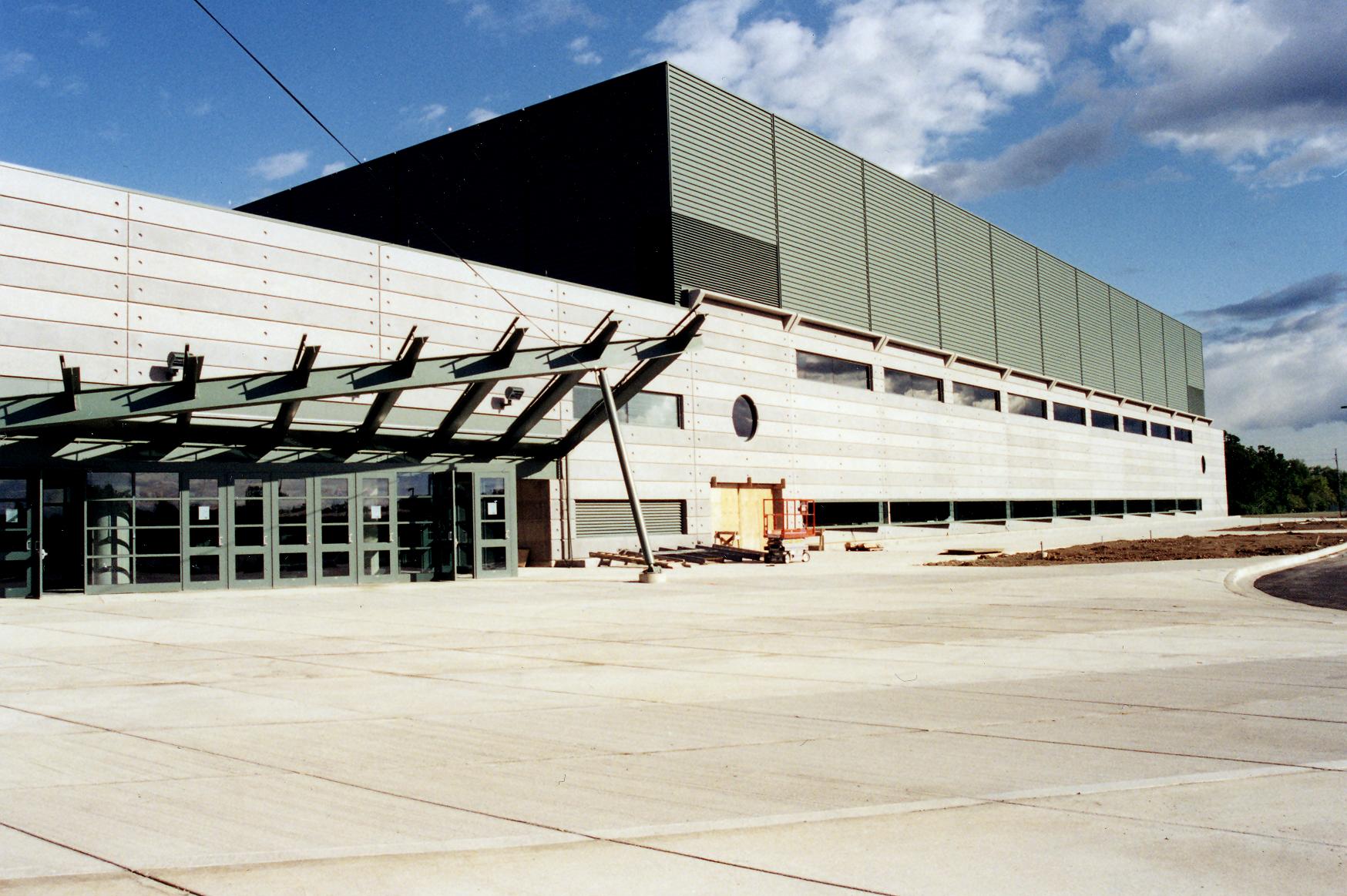
Ford Hall opened as the first college library back in 1929. Normal College had grown considerably since its founding in 1849. The small collection of books housed in one room of the Old Main Building no longer served the needs of the college community. President Charles McKenny (1912-1933) recognized the profound need for a larger library. Under his guidance, the school had become the largest teacher training program in the United States. A one-room library was no longer sufficient. Originally called The Library, it was later renamed Mark Jefferson Library in honor of the head of the Geography Department, 1901-1939. In 1967, when the second library (now Porter College of Education) opened, it became a classroom building. On May 17, 1967, it was rededicated as Richard Clyde Ford Hall. Ford had been head of the Modern Language Department from 1903-1940. The rededication took place on the 90th anniversary of Ford's birth.
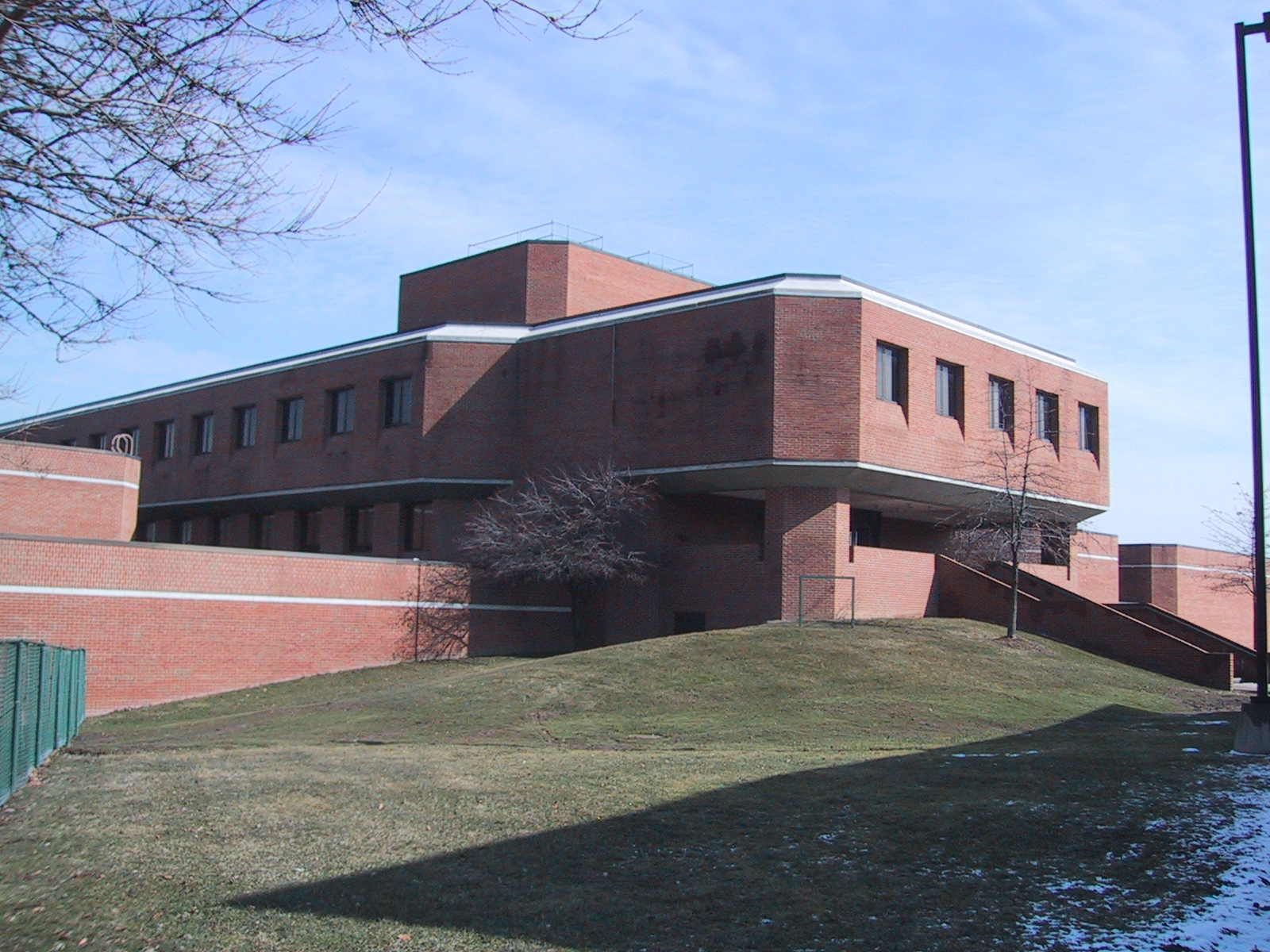
The building has been remodeled several times over the years to meet the needs of the various academic departments that held classes in Ford Hall. In 1980, a small fire broke out in one of the film studios in Ford, but there was only $4,000 in damages. Today, Ford is primarily used as classroom space for film and design classes, and it is the starting location for EMU’s annual Art Walk.
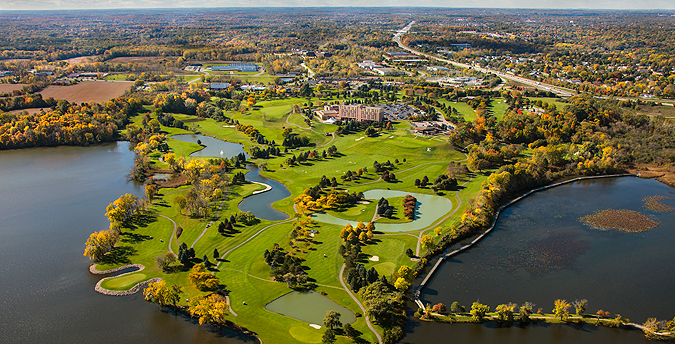
The golf club features an 18-hole championship golf course overlooking the picturesque Ford Lake in Ypsilanti Township. The par 72 course provides any golf enthusiast with one of the most challenging courses in Southeastern Michigan. The layout of the course - designed by Karl Litten of Boca Raton, Florida - challenges both novice and seasoned golfers with several holes bordering the banks of the lake. The clubhouse was designed by Wakely Associates of Warren, MI. The golf course has four sets of tees that provide a variety of choices for all golfers, stretching 6,750 yards from the championship markers. The Eagle Crest Golf Club possesses a USGA course stroke rating of 72.9 and a slope rating of 140 from the championship tees. The golf course is owned by Eastern Michigan University and is open to guests of the adjoining Ann Arbor Marriott Hotel, Eagle Crest Resort, the university community, as well as the golfing public. This multi-dimensional golf operation offers all the luxuries of a resort facility - a full service golf shop, a spectacular practice range, The Grille providing food and beverage, expansive locker rooms for both men and women, and private dining rooms with a view which are available for group meetings, banquets and social functions.
Part of the four-building complex of Downing, Best, Buell and Wise Halls; surrounding the dining commons. Originally Downing Residence Hall, constructed in 1957, was an all-female dormitory. Today, the residence hall accommodates male and female students which are divided into same-gender suites.
In 1986, the EMU Board of Regents authorized plans to construct Huron Golf Club and entered a 99-year grounds lease with Ypsilanti Township for 136-acres adjacent to Ford Lake at $1 per year. In 1989, the Huron Golf Club, designed by golf course architect
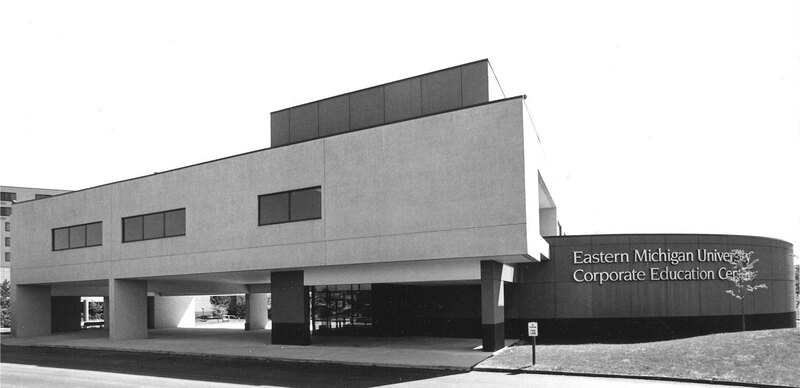
Karl Litten, opened along with the Radisson Hotel and Corporate Education Center. The name changed to Eagle Crest Golf Club in 1991. The golf clubhouse was named the Eastern Michigan University Roy E. Wilbanks Eagle Crest Golf Resort Golf club in 2013. In addition, the Marriott named the ballroom the Roy E. Wilbanks Ballroom that same year. Due to a 2020 donation from GameAbove, EMU is working to construct a performance center for the EMU golf teams.
In 2019, EMU sold the the Corporate Education Center at Eagle Crest to MFS Ypsilanti Holdings, Inc, which operates the Marriott Hotel adjacent to the center. University administration cited changes in corporate education instruction delivery as the reason for the sale. This sale did not change EMU's partnership regarding the Eagle Crest Golf Resort.
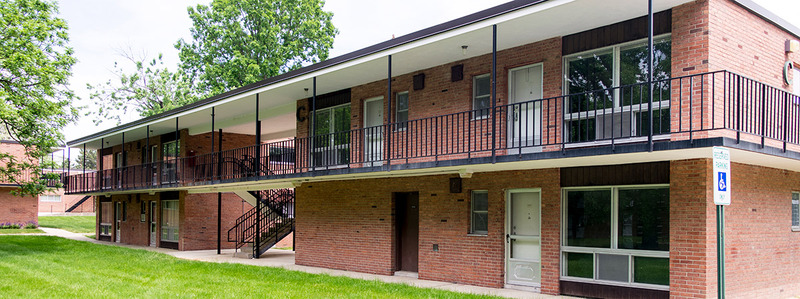
In 1960, 90 units were built to serve as married housing. The one bedroom units originally rented for $67, and the two bedroom units rented for $77. The units were available beginning September 1, 1960. The second phase of Cornell Court Apartments began in 1966; expanding the capacity of married housing. Cornell Courts still offers one and two bedroom units, now available for all upperclassmen over the age of 20 regardless of marital status.
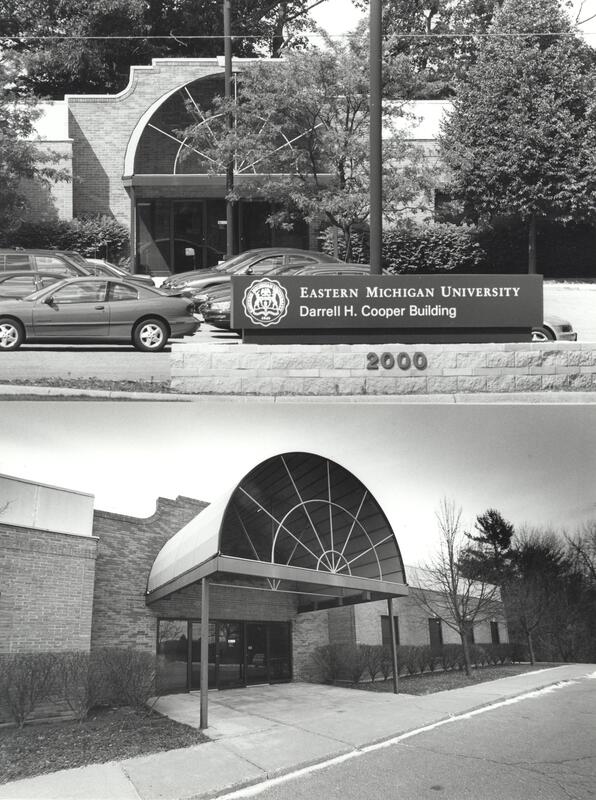
The Cooper Building was a 12,796 square foot office facility built in 1984. It was located immediately across the street from Westview Drive, with a view of Rynearson Stadium and EMU's athletic facilities. Originally known as Riverbend Office Building, EMU purchased the property in January. A lease agreement between EMU and The EMU Foundation was signed in 1996 stating that The Foundation offices will occupy approximately 5,648 square feet at an annual cost of $66,153. The Foundation made necessary improvements to the office space at their cost. Additionally, The Foundation was responsible for payment of utilities, custodial services and other related operating costs. When improvements to the office space were completed, the Foundation relocated the University's Give Records and Receipts operations there. The Cooper Building is no longer utilized by Eastern Michigan University.