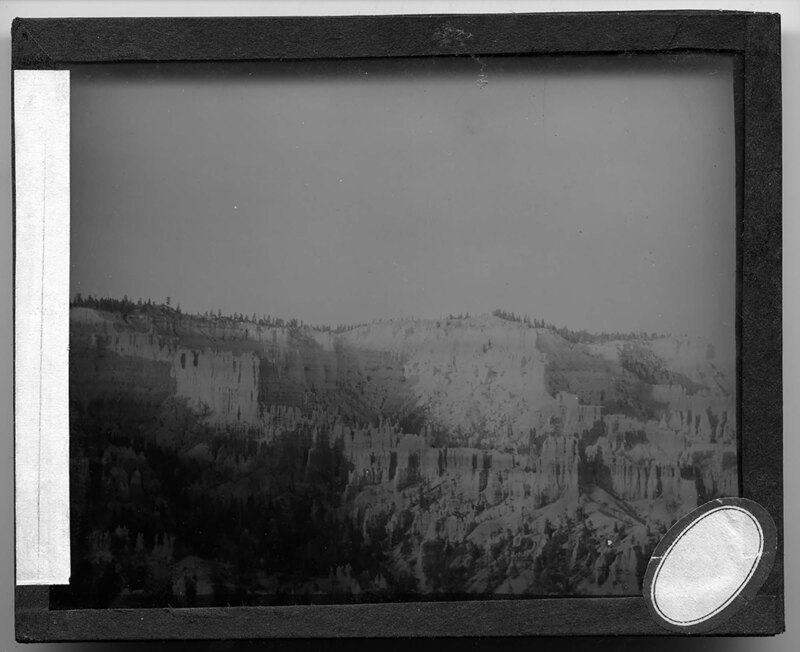
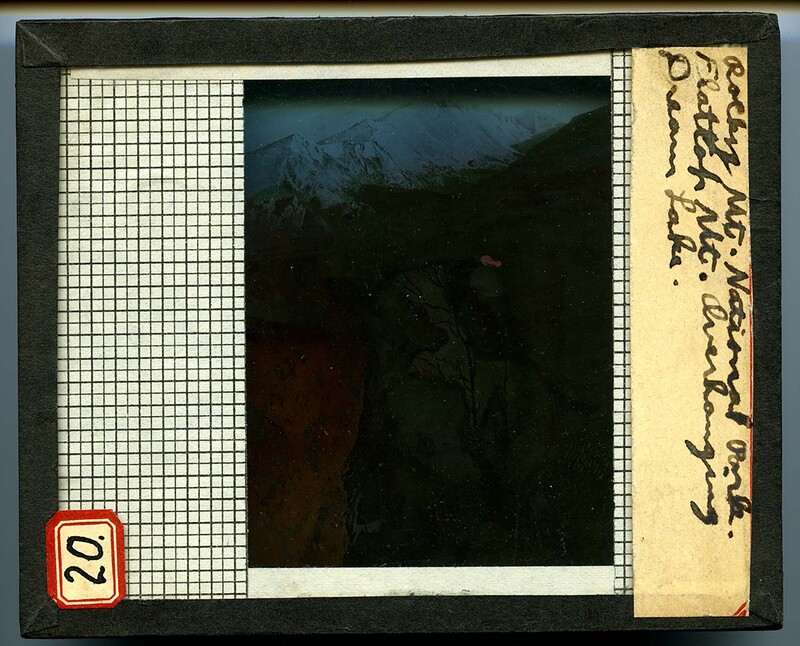
Landscape of an interesting canyon with unique rock formations. It is noted this picture was possibly taken in Bryce Canyon National Park in Utah. The spire-like rock formations stick up from the bottom of the canyon and the soft rock walls are slowly being eroded, exposing more of the spires. Trees grow in the bottom of the canyon and on top of the rock wall in the background. Rock layers can be seen in the rock wall and on the spires.
The bottom of an iron trellis bridge being constructed into a rocky cliff wall. A large ladder allows access down the rock face to the bottom of the iron girder. Vegetation grows out of the side of the rock wall, obscuring portions of the striated rock beneath.
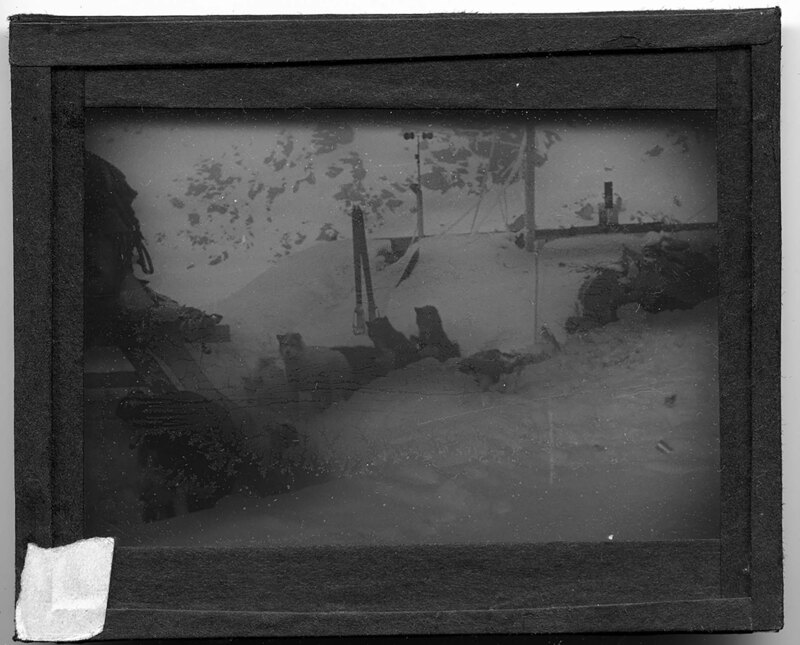
A dog sled team and their owner in a snow covered, mountainous area. The dogs watch their owner work under a wooden platform which sticks up above the snow that mostly covers the shelter behind the dogs. Snow covered mountains can be seen in the background.
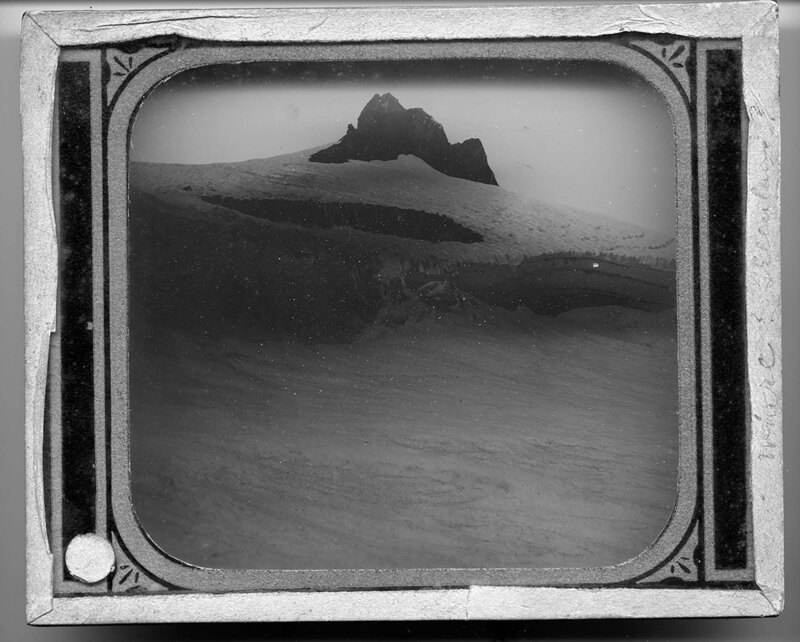
Landscape of a glacier moving across an exposed rock face. The thick layers of ice that form the glacier have been partially melted, exposing the rock face below. The glacial field is icy and pitted from sun exposure and melting.
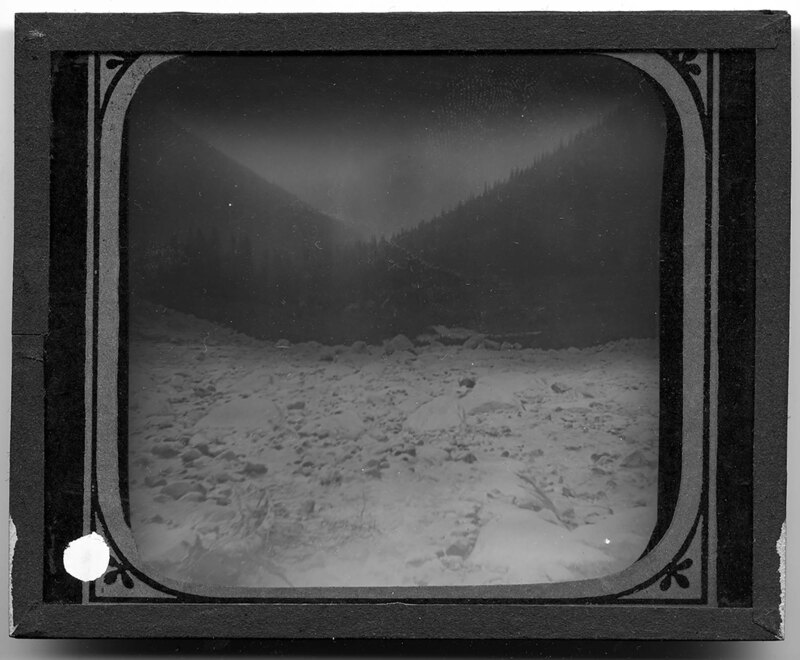
Landscape of a river valley with very rocky terrain. Large boulders cover the land in the foreground and stands of trees spread out across the valley in the background. Steep mountain cliffs rise on either side of the river.
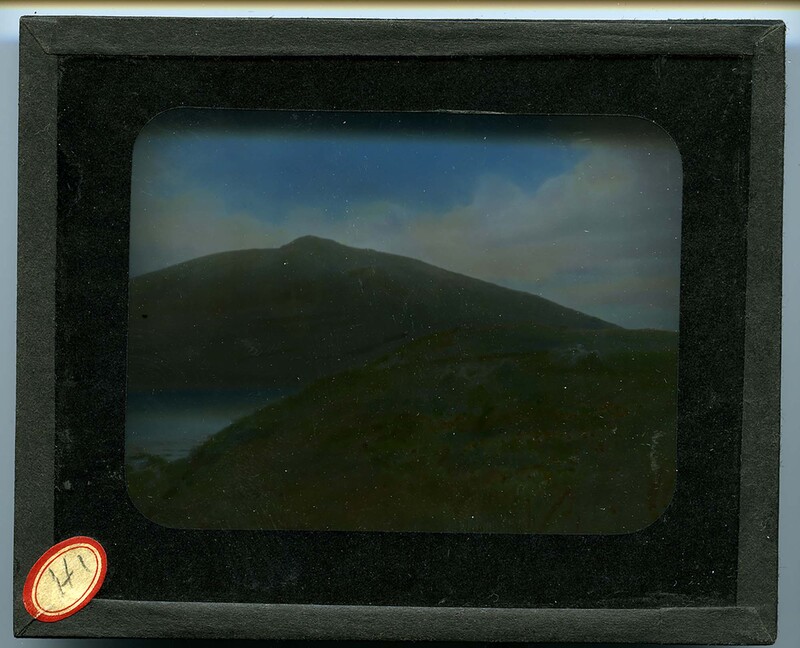
Hand-colored slide of grassy mountaintops. A small lake sits in the middle of the mountains, which are covered with grass and wildflowers. There are no trees and no buildings.
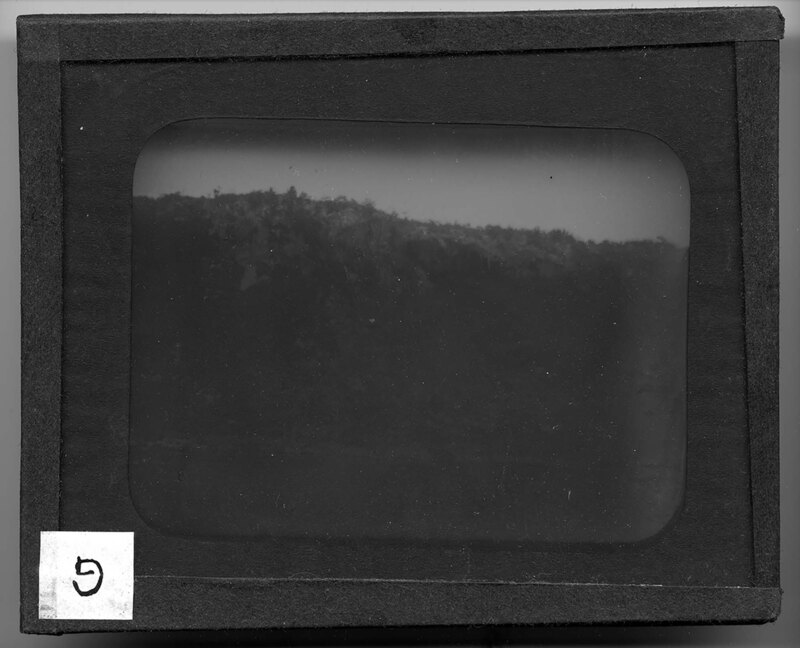
Landscape of a "high desert" mountainous area. Little vegetation grows here and scrub brush covers the mountains in the background. Rock layers can be seen on the sides of the mountains and the base of the mountains turns into a flat plateau. Slide labeled with text, "Made by G.R. Swain, 713 E. University Ave., Ann Arbor, Michigan." Swain was staff photographer at U of M from 1913 to 1947.
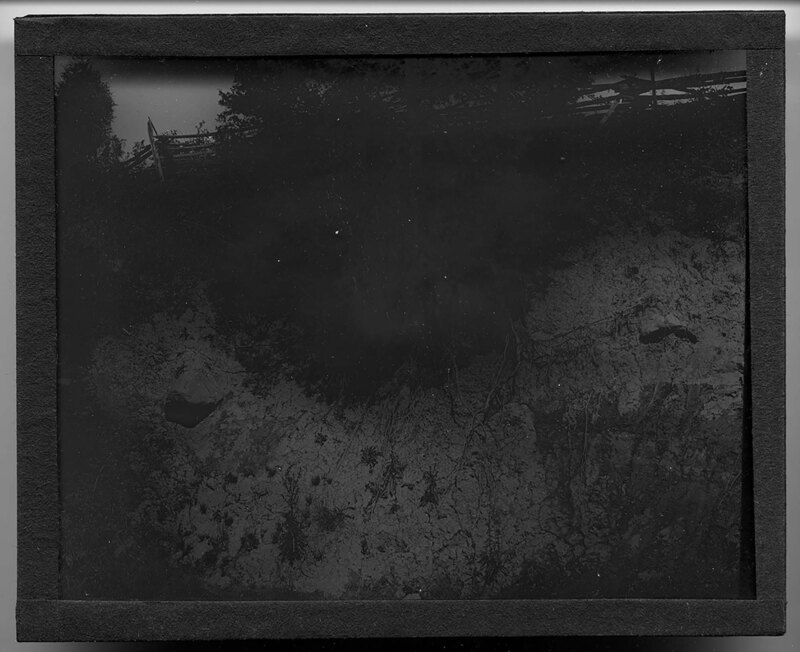
Image of a tree growing out of a rock cliff. The trees roots reach down to the bottom of the cliff which has been eroded away. Grass covers the top of the rock wall and a wooden fence divides the property above.
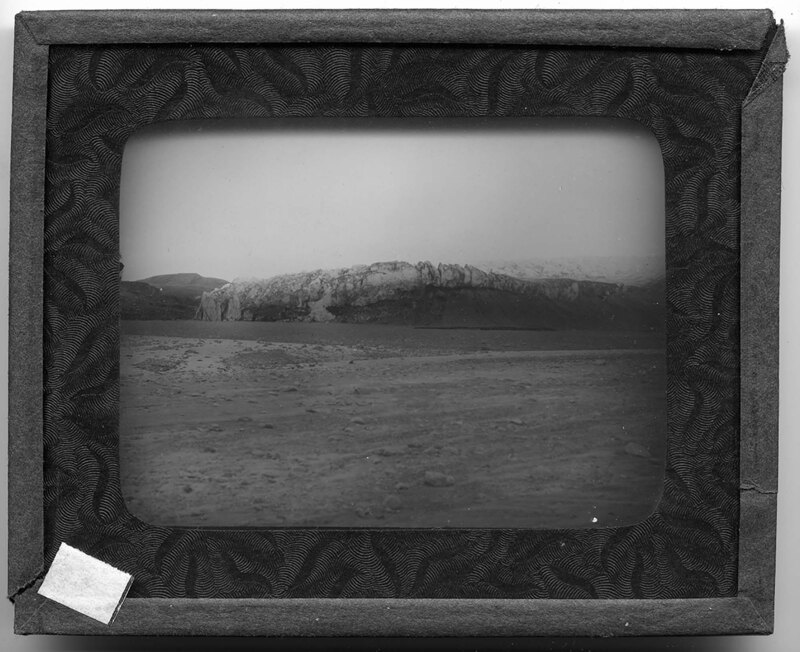
Landscape of a glaciated rock formation. The plateau in the foreground has been tilled by the retreating glacier in the background. Massive ice layers sit on top of the rock cliff in the background and as the ice moves, more rocks and boulders are picked up. There is no vegetation on the plateau or the glacier. Slide labeled with text, "Made by G.R. Swain, 713 E. University Ave., Ann Arbor, Michigan." Swain was staff photographer at U of M from 1913 to 1947.
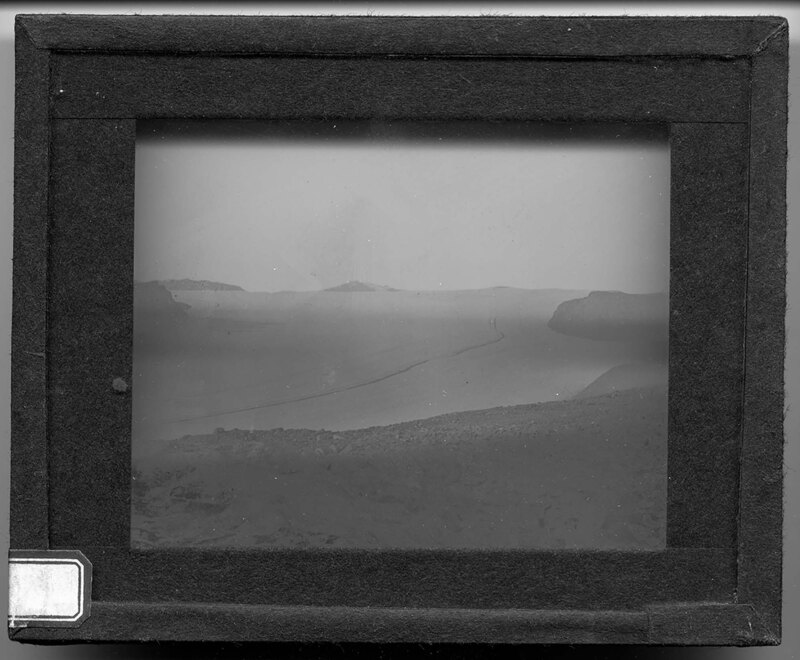
Landscape of a snow covered mountain top. The snow field is flat and has a single ski trail left behind from a skier. The landscape in the foreground is rock and barren, and several other rock formations stick up out of the snow in the background and look like islands.
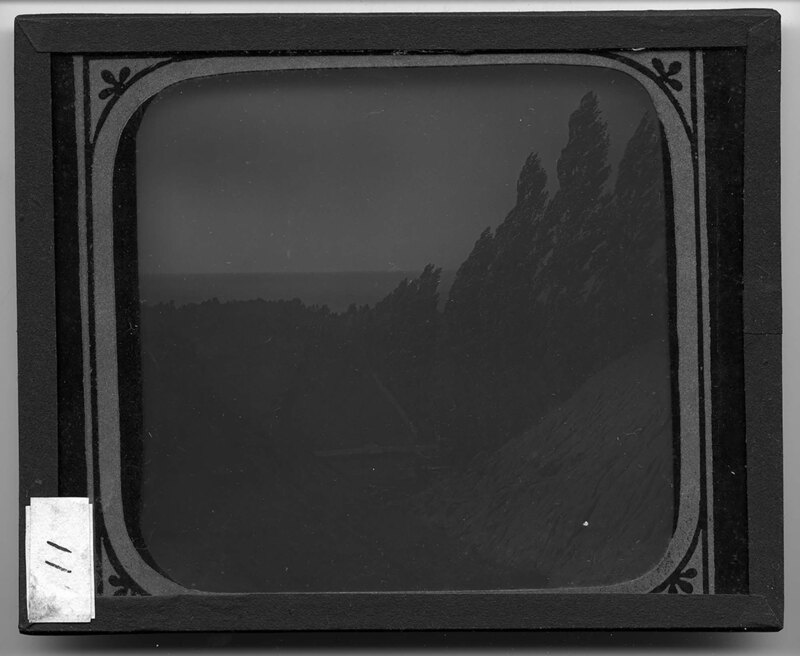
aerial view of a valley near the sea. It appears to have been extremely windy when the picture was taken based on the tree movement. It is noted that the rectangular fenced off area at the base of the cliff in the foreground could potentially be an airstrip.
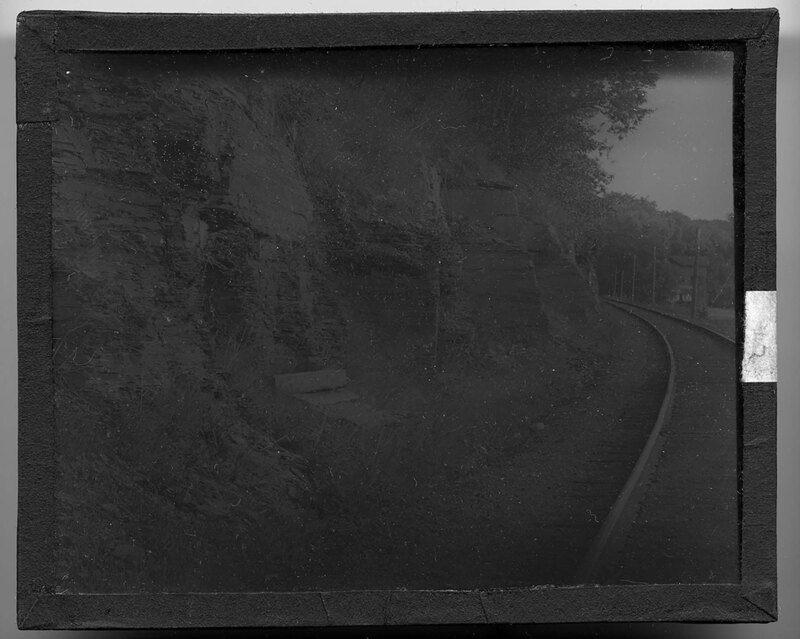
Landscape of a rail line that is constructed next to a rock wall. The steep bank of the cliff has been eroded over time and striated layers of the rock bed have been exposed. Trees and other vegetation grow on top of the cliff. A house can be seen in the background and power lines run beside the train tracks.
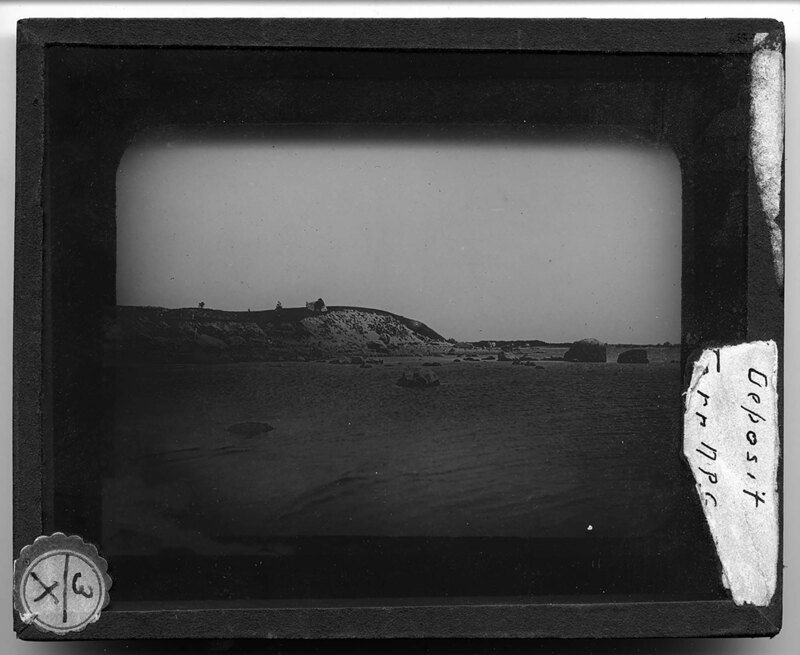
Landscape with large boulder and rock deposits. Several huge boulders stick up out of the shallow water and are littered on the small beach at the waterline. A sandy bluff rises in the background and is covered with grass and rocks. A portion of the bluff has been eroded and has a bare side that faces the water.
Wooded rock cliffs showing different rock layering. The jagged cliffs have been eroded over time and now have striations in the rock. Trees and other vegetation grow on top of the cliffs.
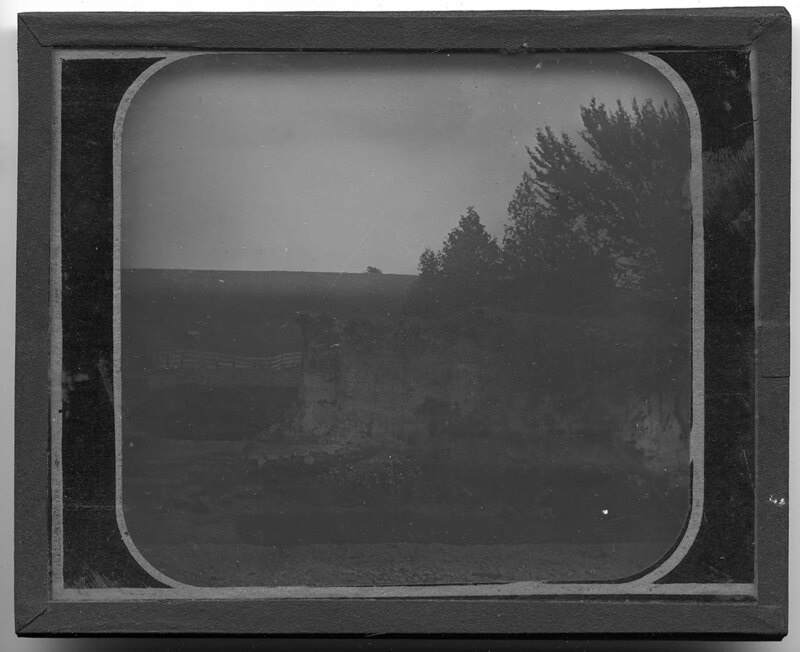
Landscape of a rocky cliff and a small pond. It is noted that this area is primarily used for farming but this rock cliff sticks out of the ground. After years of erosion, the striated layers of the rock bed have been exposed and vegetation grows on top of the cliff. A wooden fence divides property lines and a cow can be seen grazing on the hill in the background.
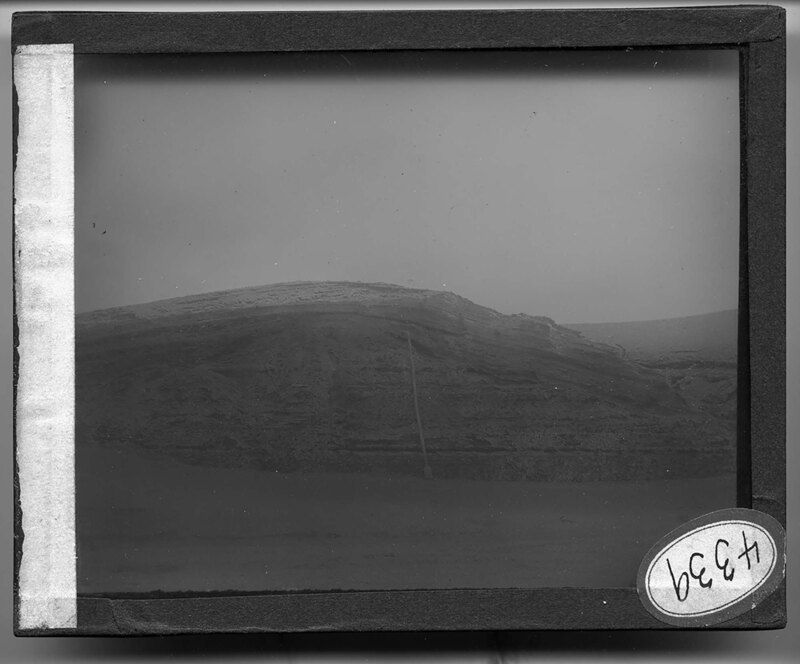
Landscape of a curved hillside. A long shovel has been placed next to the side of the cliff to give perspective to its height. The sediment layer formations have become curved over time as a stronger force pushed up on the bed rock. The landscape is barren and rocky with no vegetation.
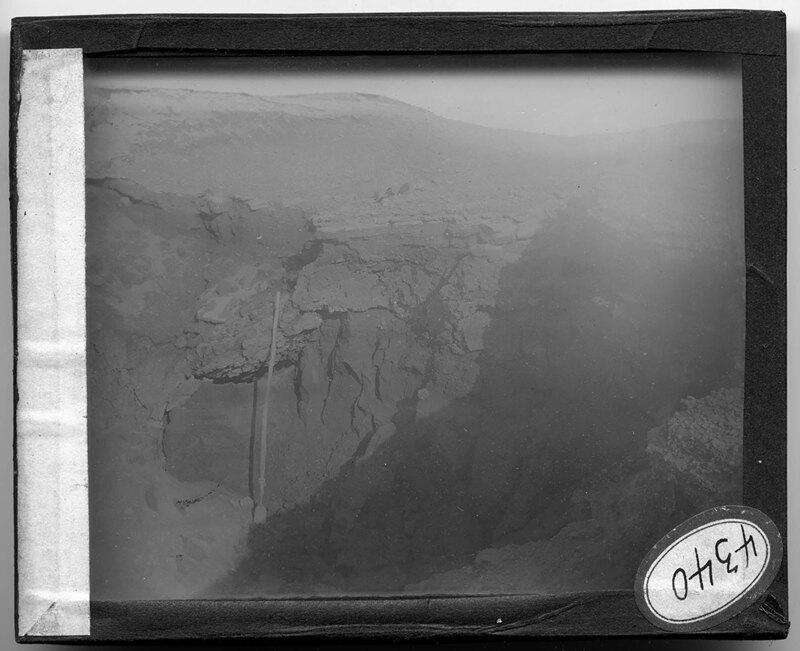
Landscape of a mountain crater gorge. A wooden-handled pick has been placed in the bottom of the crater to show the depth. The walls are rocky and the sediment layers have been partially exposed after years of erosion. The landscape is barren and arid, with no vegetation.
Landscape of a lake and rocky cliffs. The base of the steep cliffs touches the water of the lake and vegetation grows on the banks. The cliffside is covered in vegetation, but has few trees.
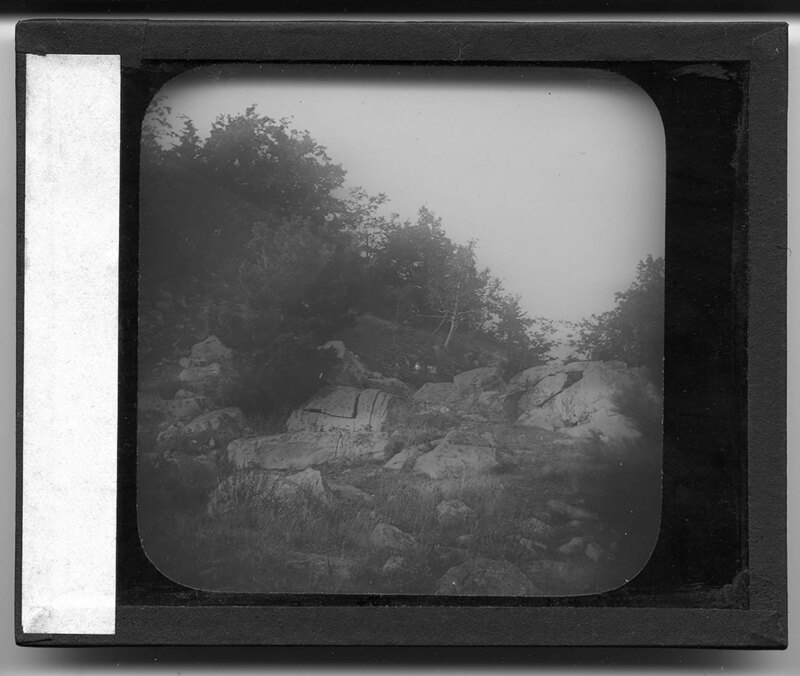
A rocky landscape that is covered with boulders and small rocks. Grasses and trees grow up between the rocks, and some of the boulders have cracked due to erosion and are falling apart.
Hand-colored slide of a "high desert" that is surrounded by small mountains. The landscapes is barren and arid with little vegetation. Cone-shaped hills rise out of the desert plateau.
Hand-colored slide of a "high desert" that is surrounded by small mountains. The landscapes is barren and arid with little vegetation. Cone-shaped hills rise out of the desert plateau.
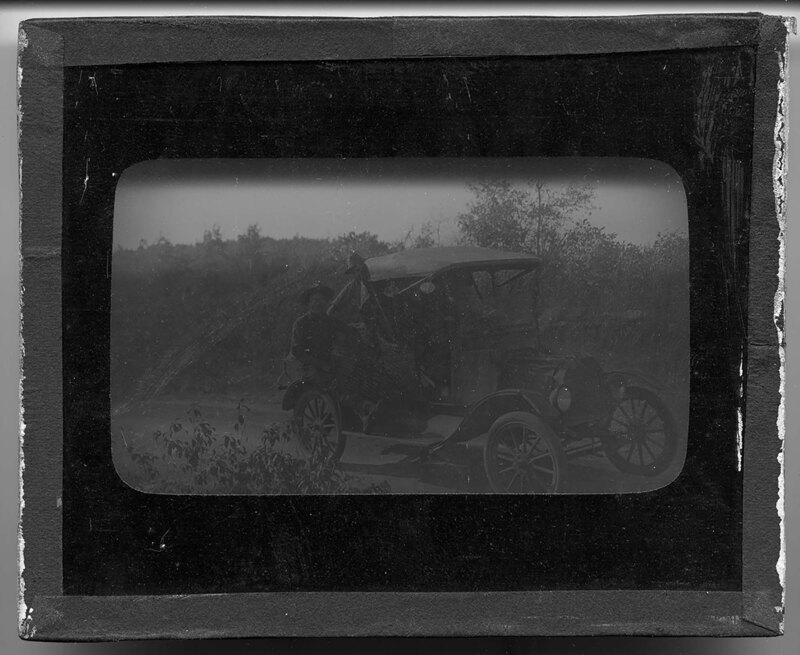
Three men make up the North Dakota fish survey outfit in the Turtle Mountains in September of 1922. The men are sitting in an open-side car that has a canvas cover over the seat. The landscape is hilly and covered with vegetation.
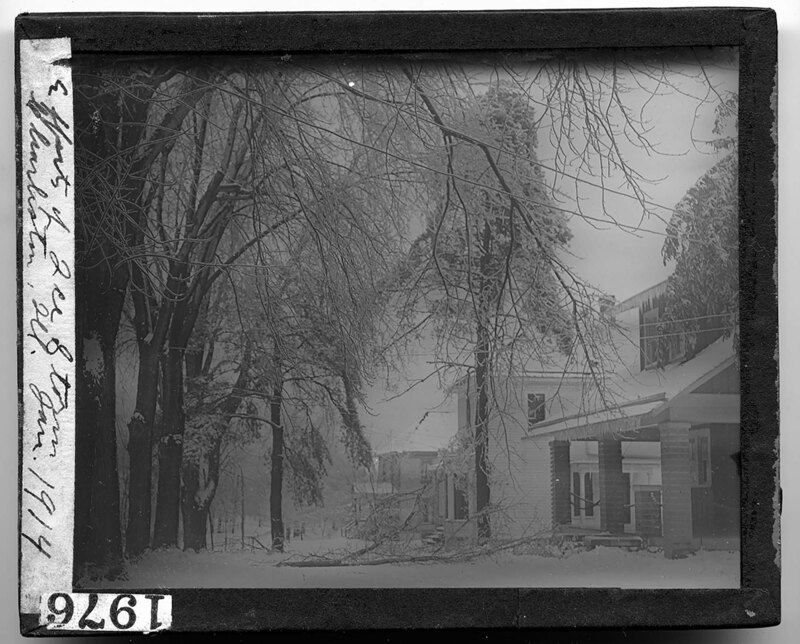
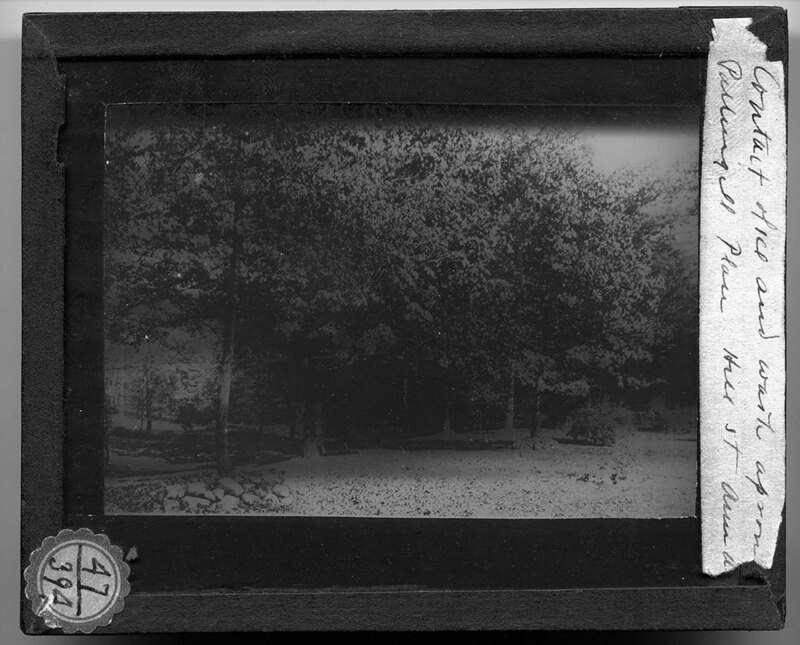
Streetscape of houses after an ice storm in Charleston, Illinois in January 1914. A layer of ice covers the powerlines and the tree branches in the foreground, while the houses are covered in snow and icicles. Several tree branches are littered in the front yards of the houses.
Hand-colored slide of the Lauterbunen Valley in Switzerland. The landscape is mountainous and the Swiss Alps rise in the background. A rock ledge and a tree can be seen in the foreground and the mountains appear to be covered with vegetation.
Landscape of a stand of trees in a grassy field. The trees are all relatively the same age based on their size, and rocks have been piled at their bases to protect their trunks and roots. Several bushes dot the landscape to the right and a shallow embankment can be seen to the left. Power lines run through the tree branches.
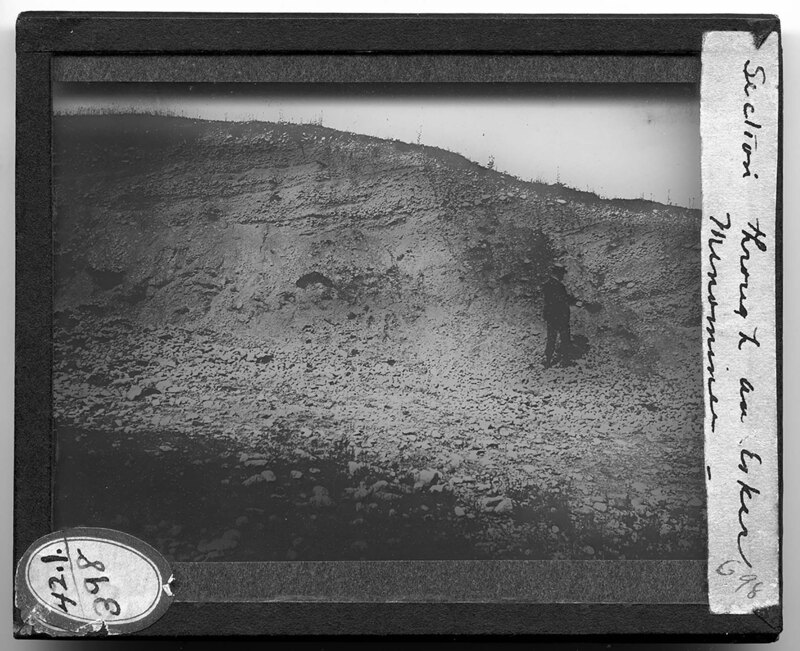
A man stands at the base of a rocky esper. The large dirt embankment has been partially exposed, showing the striation lines of the sediments and rocks. A large amount of the rocks have fallen over time, and are piled at the base of the hill. Grass grows on top of the embankment.
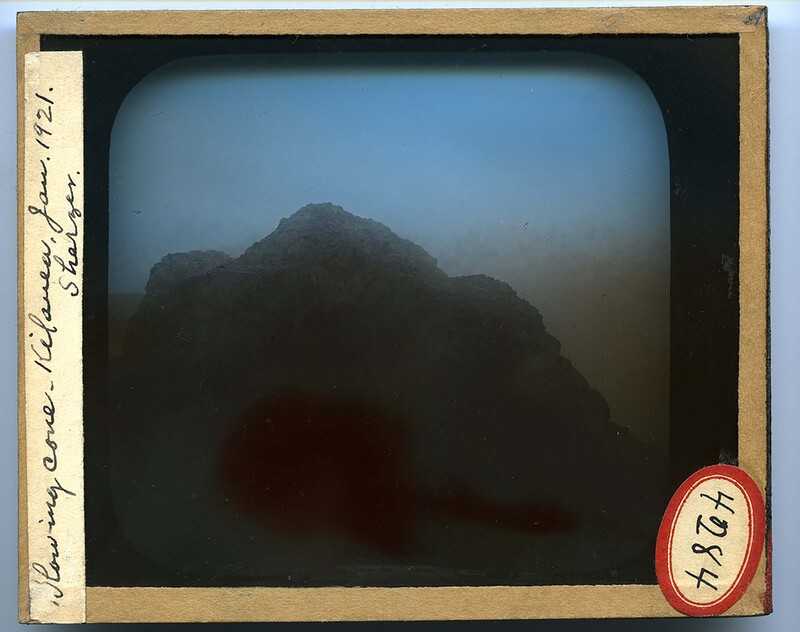
A hand-colored image of a volcanic cone of Mount Kilauea in Hawaii. It is noted that the cone is erupting and the photo was taken in 1921. The rocky cone has been formed after years of volcanic eruption settlement. Steam can be seen in the background.
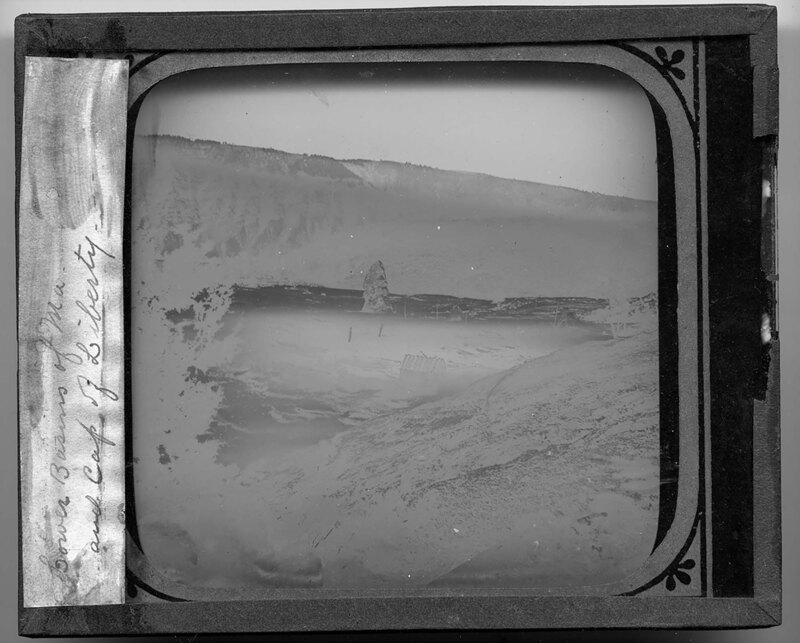
Landscape view of the lower basin of Mammoth Hot Springs in Yellowstone National Park in Wyoming. A small hut has been constructed on the edge of the mineral field and tourists can be seen climbing on the mineral formations behind the house. The Liberty Cap formation sticks out of the center of the basin and overlooks the mineral deposit hill in the background. Striated cliffs rise in the background.
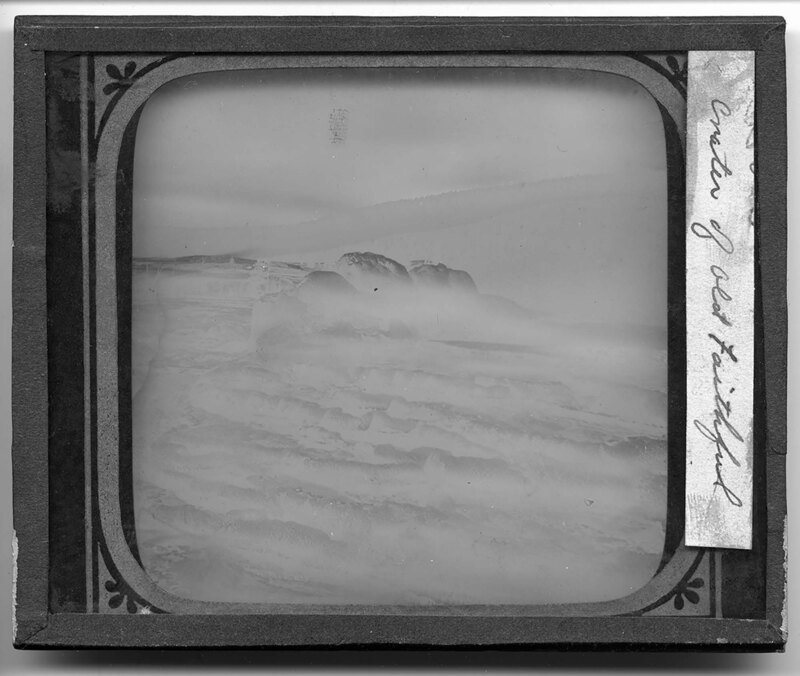
Up-close view of the crater of the Old Faithful Geyser in Yellowstone National Park in Wyoming. Heavy mineral deposits create steps and formations around the mouth of the geyser, and water fills the pools created by the deposits. The landscape is barren due to the high levels of minerals in the water, but trees grow on the edge of the mineral field in the background.
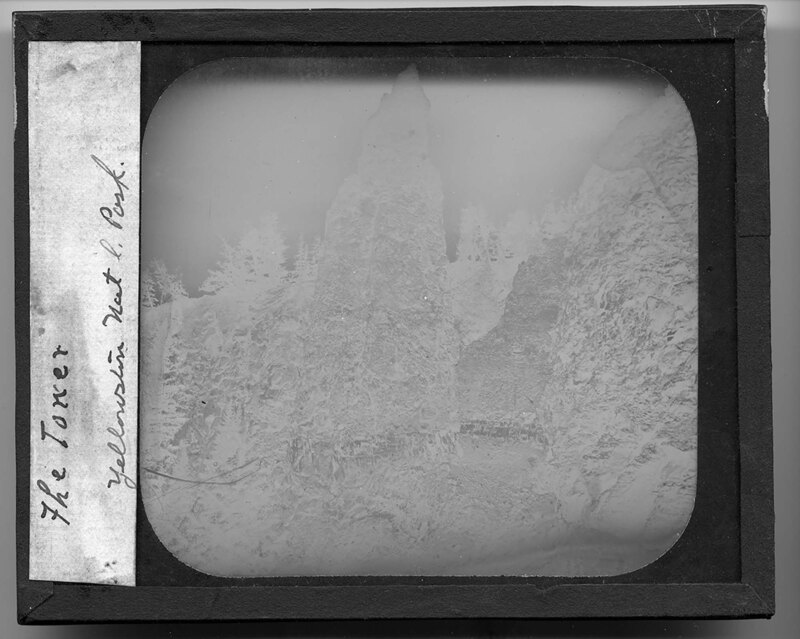
Rock formation identified as, "The Tower," in Yellowstone National Park in Wyoming. It is possible this rock formation is located at the top of Tower Falls, but it is unclear. Likely made of granite, the spire formation sticks up out of the landscape and is surrounded by other formations. Trees grow on the hills in the background.
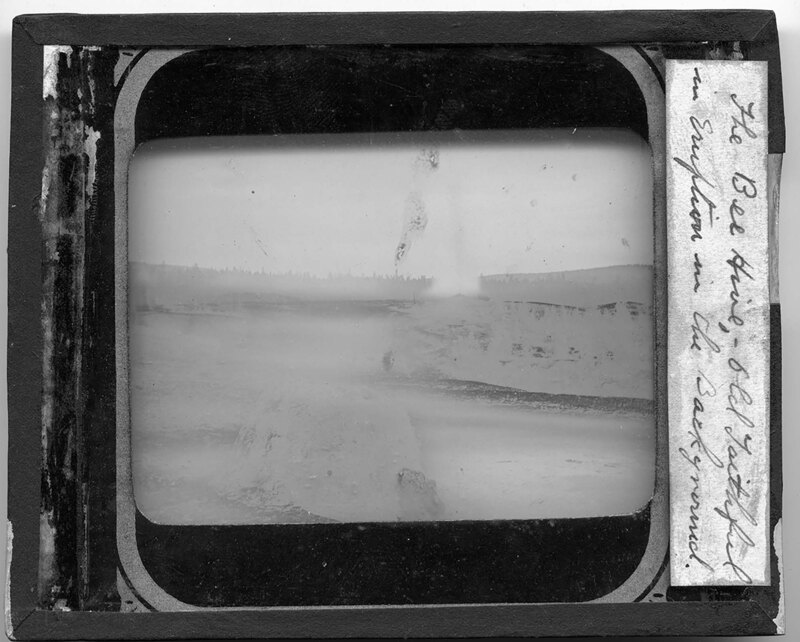
Beehive Geyser in Yellowstone National Park in Wyoming. The geyser has a 4 ft. cone, giving it the appearance of a beehive. It erupts every 10 to 20 hours, but eruptions can be erratic during the summer. The landscape is barren around the geyser due to the high levels of minerals in the water, but a stand of trees can be seen on the edge of the mineral field. Old Faithful is erupting in the background.
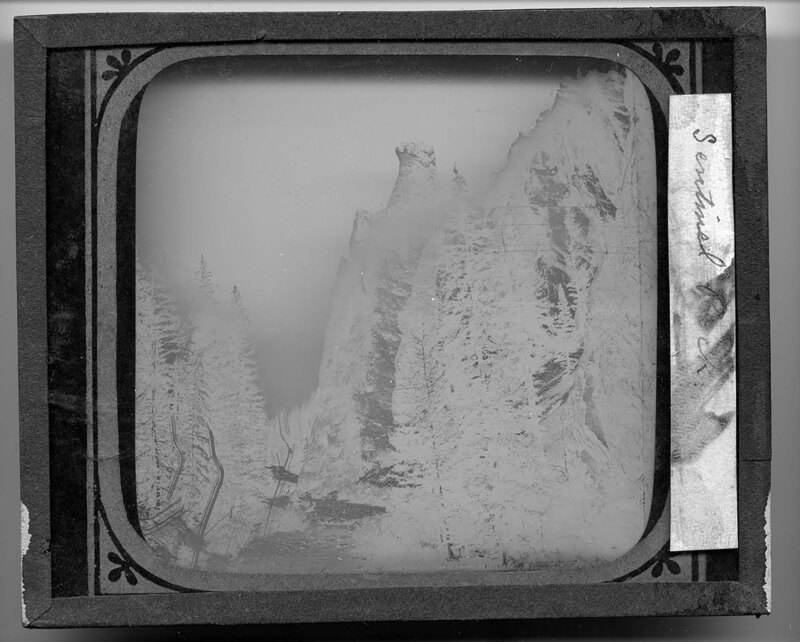
The Sentinel Rock formation in Yosemite National Park in California. The peak towers over Yosemite Valley and is opposite the Yosemite Falls. Completely made of granite, the peak is at 7,038'. Trees grow at the base of the cliff and obscure the view of the other granite rock faces. A small stream can be seen at the base of the peak.
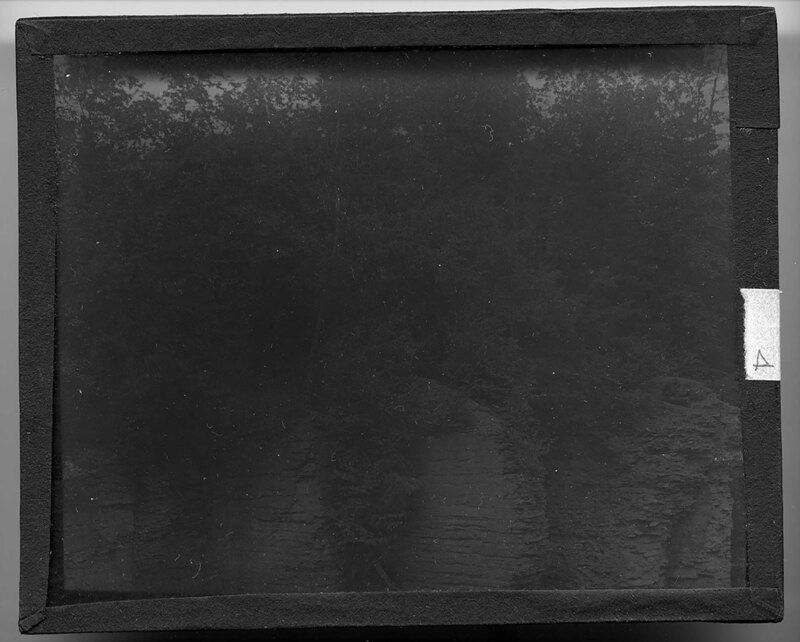
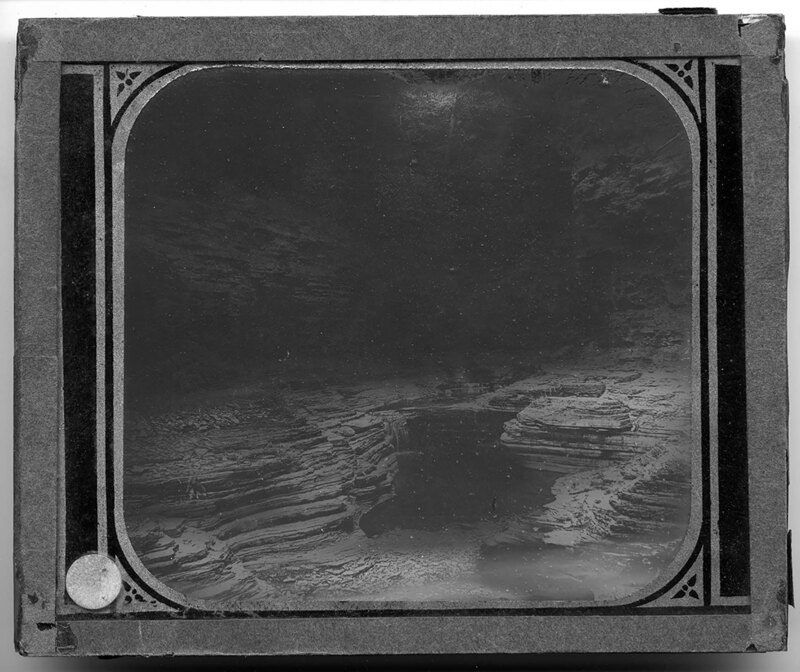
The rocky landscape of Natkuis Glen in New York. The slide is labeled, "Natkuis Glen," but is likely this was taken in Watkins Glen State Park. The steep walls of the canyon have been eroded by the river running through the bottom of the gorge, leaving behind striated walls of sandstone, shale, and limestone. Vegetation grows at the top of the gorge and a ladder has been placed against the back wall near the river, to allow for access down into the gorge.
Looking across Kilauea in 1921. The landscape of the volcano is barren and stream rises out of the ground. Ash deposit walls can be seen in the foreground. Kilauea is an active shield volcano that has a high frequency of eruptions.
Ash deposits after an eruption of Kilauea in Hawaii in 1921. An umbrella has been placed next to a rock in the soil layers to show size perspective and how the rock caused a crater in the top soil until it was eventually filled in with more ash. The ash layers have been compounded and now appear to have loose, rocky striations. A tree grows on top of the embankment.
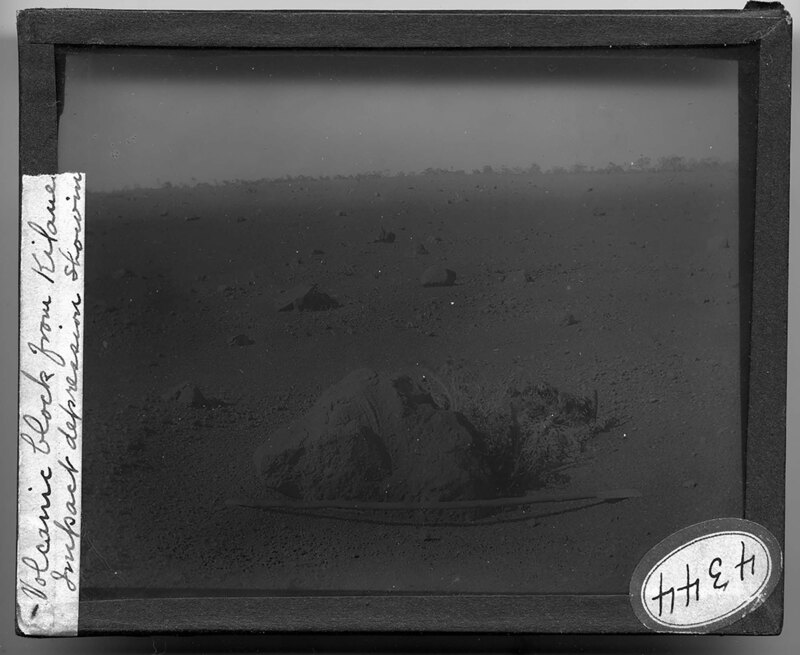
A large volcanic boulder displaced after an eruption of Kilauea in Hawaii. It is noted that the wooden pick in the picture is showing the impact depression from when the boulder landed in the dirt. The landscape is barren and the ashen soil is loose. Other rocks and boulders are scattered on the ground in the background.
Lava and hardened magma deposits from Mauna Loa in 1920. The landscape is barren and the ashen soil is very loose. Trees can be seen in the background.
Ash deposits on the north side of the Kilauea pit in 1921 in Hawaii. It is noted that the deposits are resting on a bed of hardened lava, which can be seen at the bottom of the picture. Vegetation grows out of the ashen soil and covers the top of the embankment.
Landscape of ash deposits in a pit from volcanic eruptions of Kilauea in Hawaii. It is noted this is the trail to the fire pit and the picture was taken on the north side in 1921. The landscape is hilly with vegetation on either side of the trail. Ash walls are on either side and rocks are scattered on the ground.
A broken volcanic block from an eruption of the volcano Kilauea in Hawaii. The landscape is barren and rocky, with several boulders in the foreground. A canteen is draped over one of the rocks to show size perspective and trees can be seen in the background.
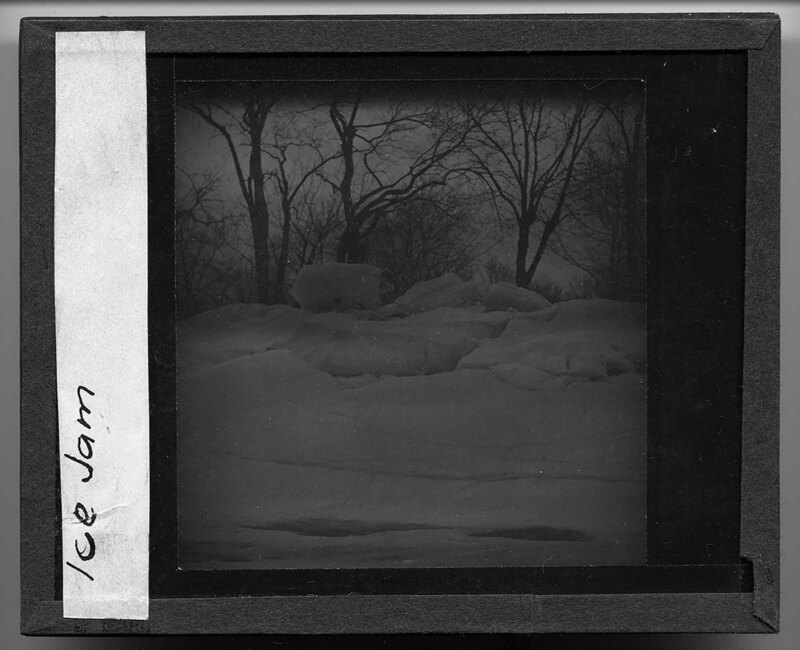
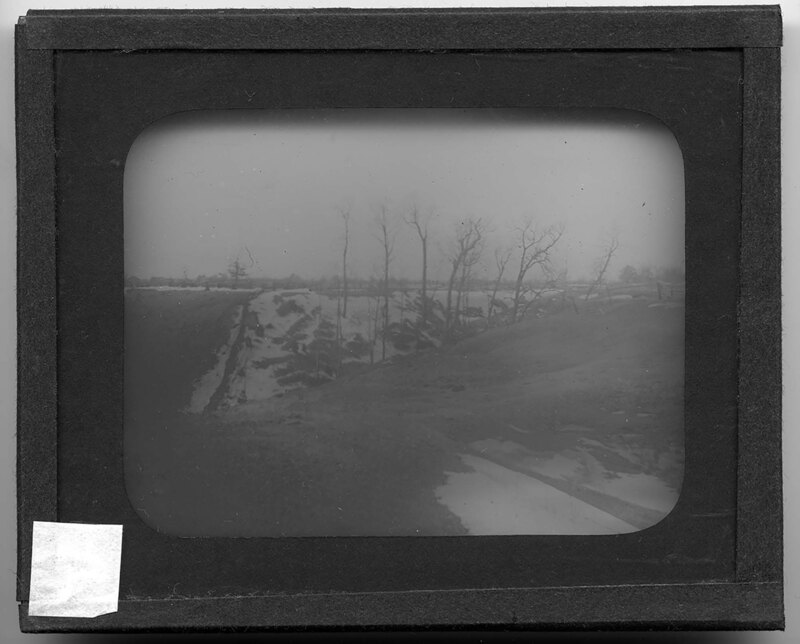
Hilly landscape during the winter. Several trees grow out of the valley in the background and snow covers several of the hills. A wooden fence divides the property and it is likely that a stream once ran through here based on the layout of the landscape.
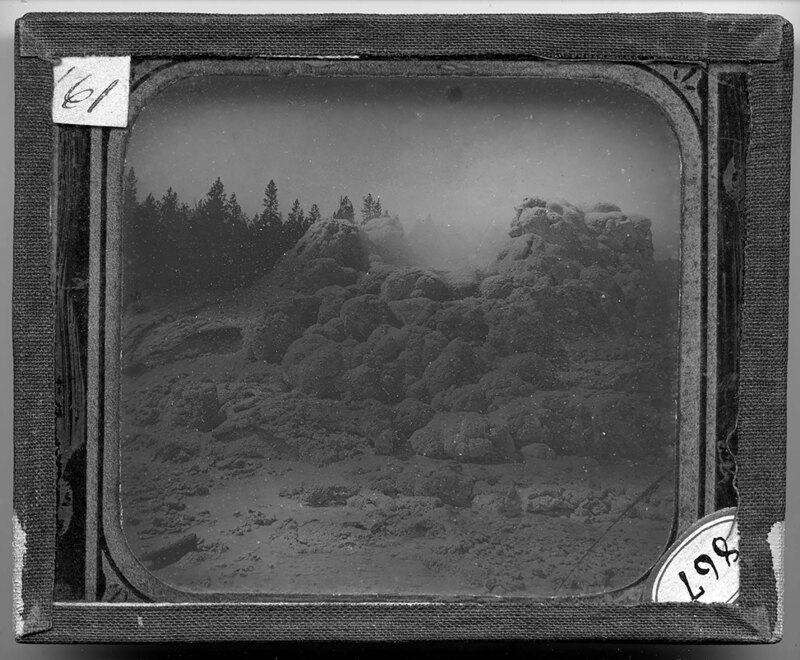
The crater of Castle Geyser in Yellowstone National Park in Wyoming. This cone geyser is located in the Upper Geyser Basin and erupts regularly every 10 to 20 minutes. Large mineral deposits form the cone of the geyser and create a castle-like appearance. Water and other mineral deposits can be seen around the cone and trees can be seen in the background.