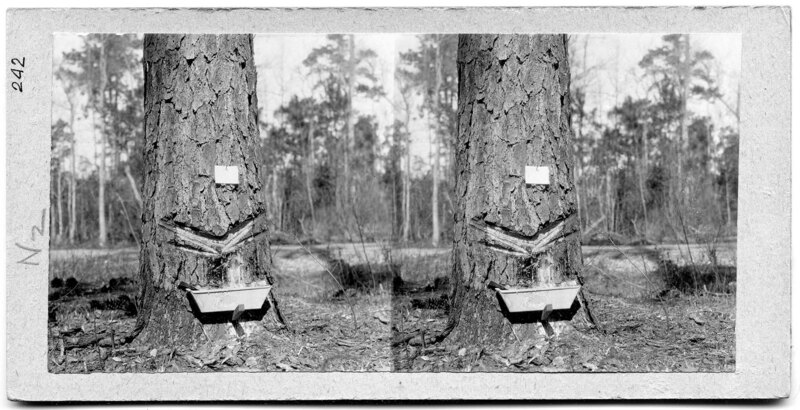
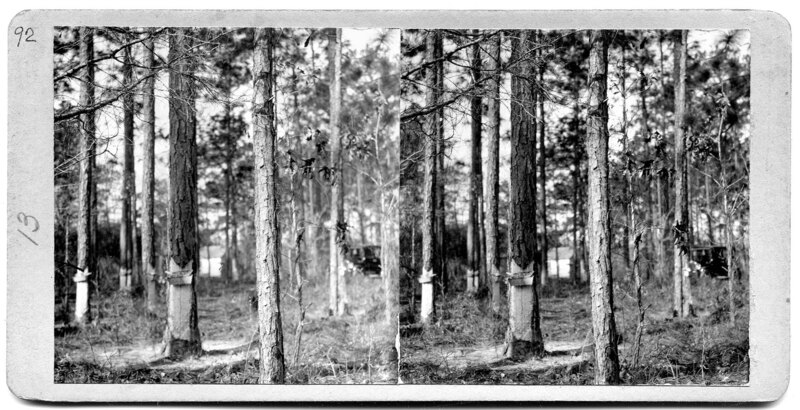
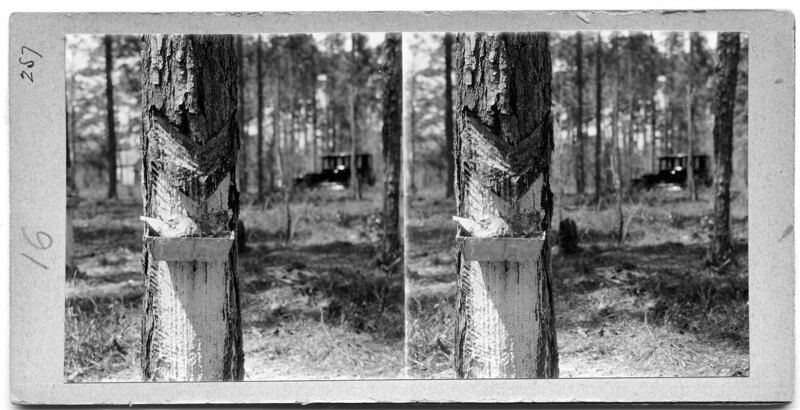
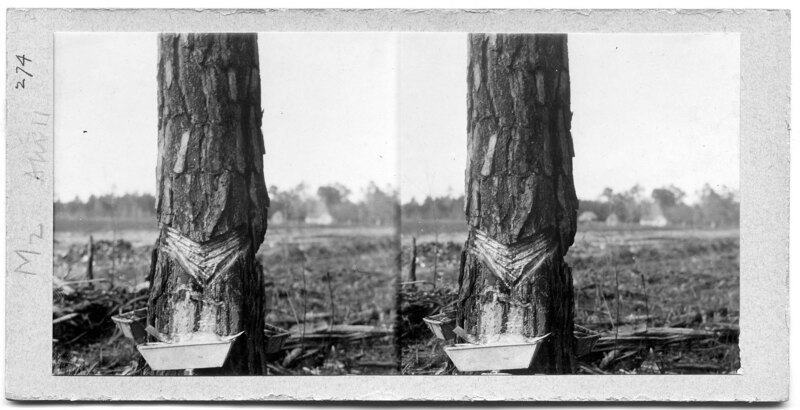
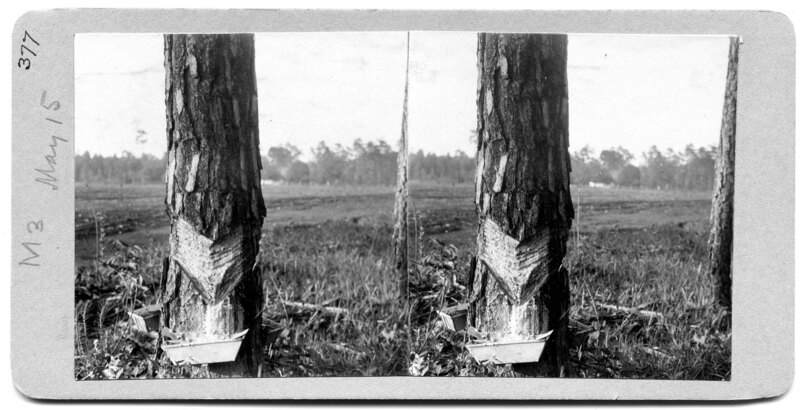
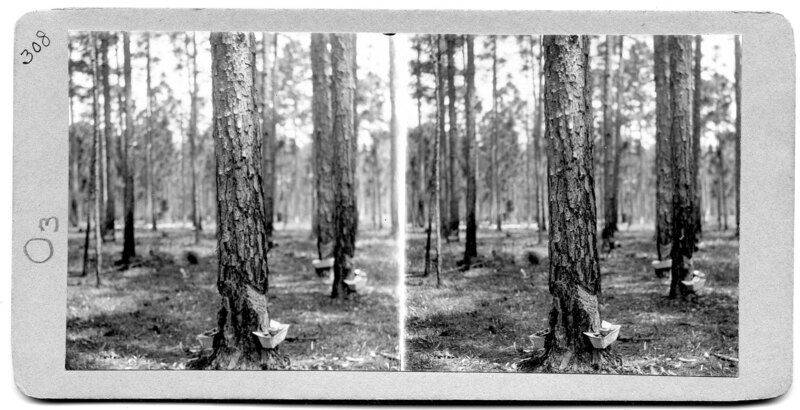
Photograph of a chipped pine tree. It is noted this is the third chipping on this tree. Pine tree resin is collected and processed into turpentine. The pan for the resin is stuck into the the base of the tree to collect resin as it travels down the grooves from the chipping. A forest of pine trees can be seen in the background.
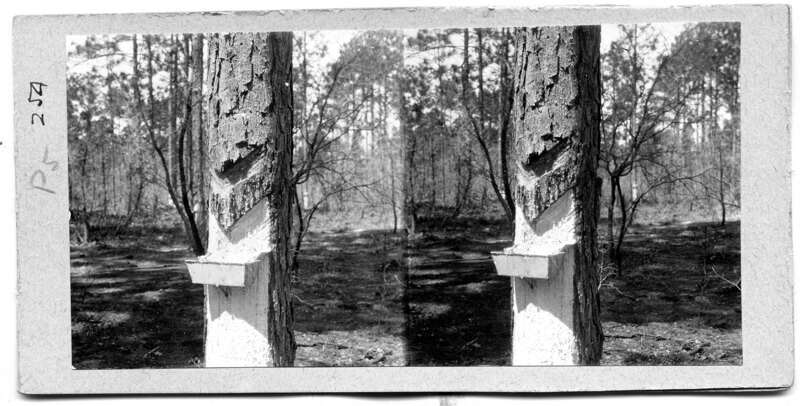
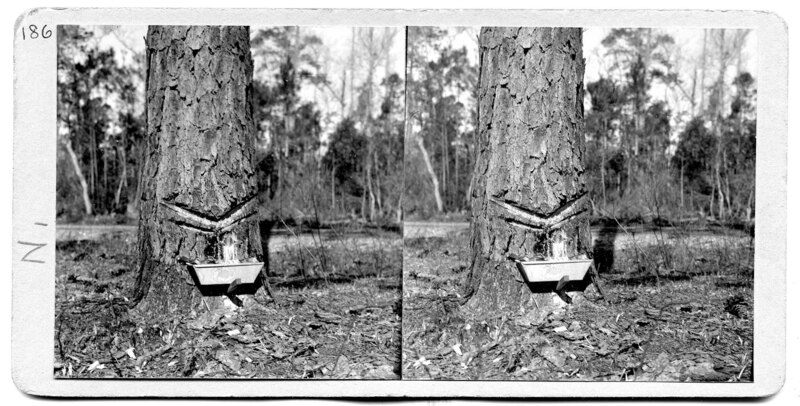
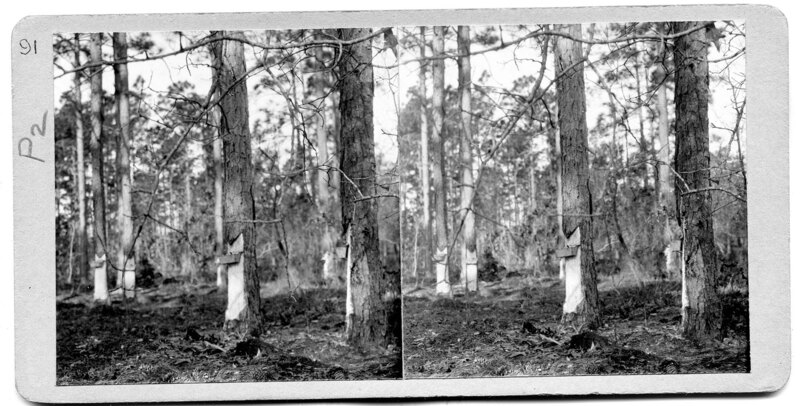
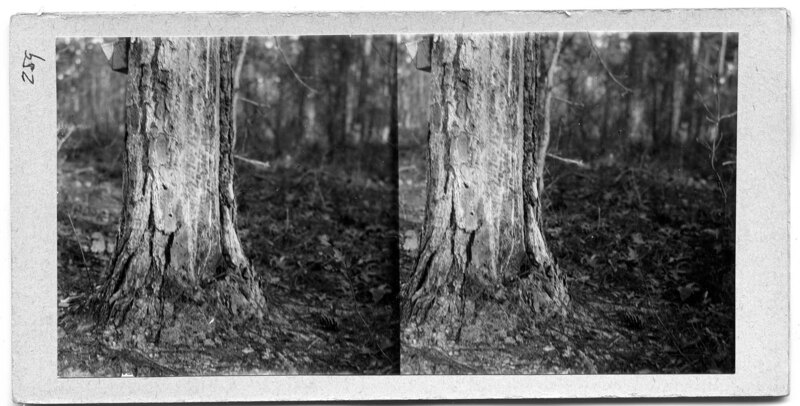
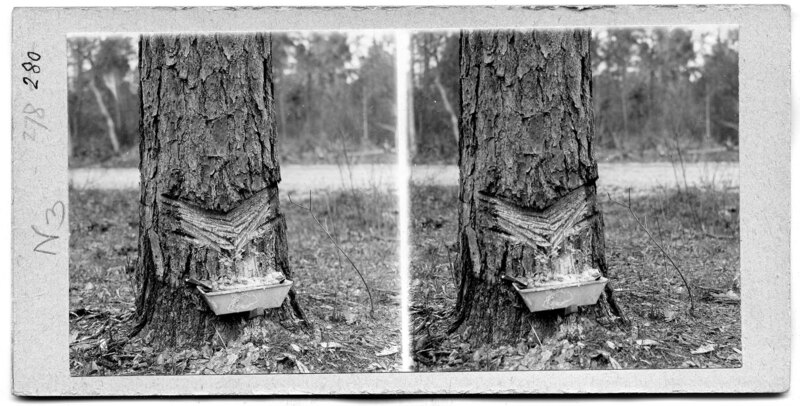
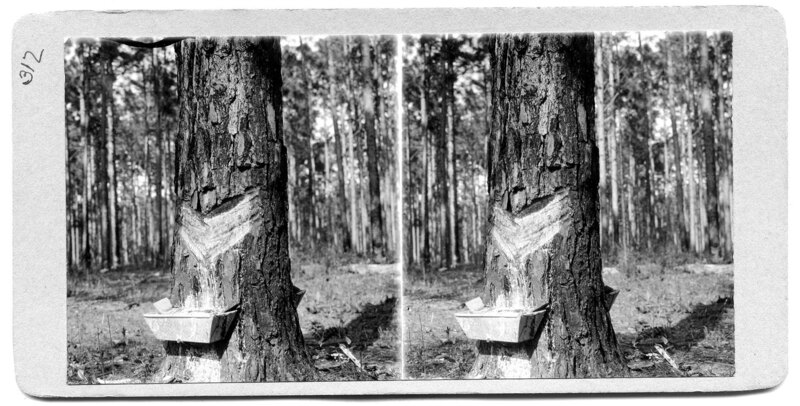
Photograph of a chipped pine tree. Pine tree resin is collected and processed into turpentine. Several chipping marks can be seen in the side of the tree. The metal pan for collecting the resin is stuck into the side of the tree. Previous years chipping scars can be seen below the collection pan. A pine forest can be seen in the background.
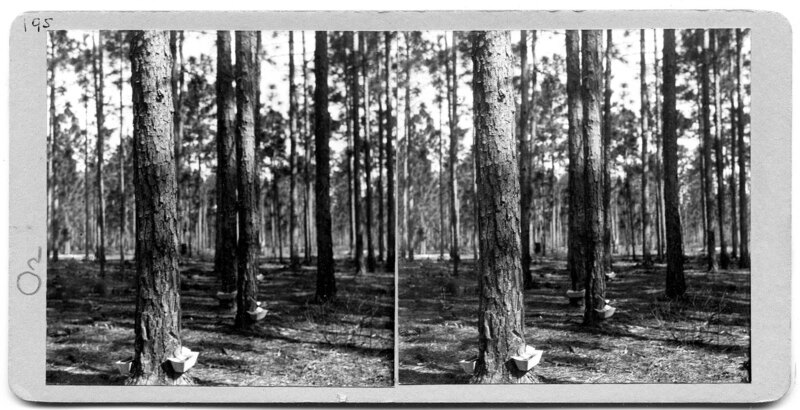
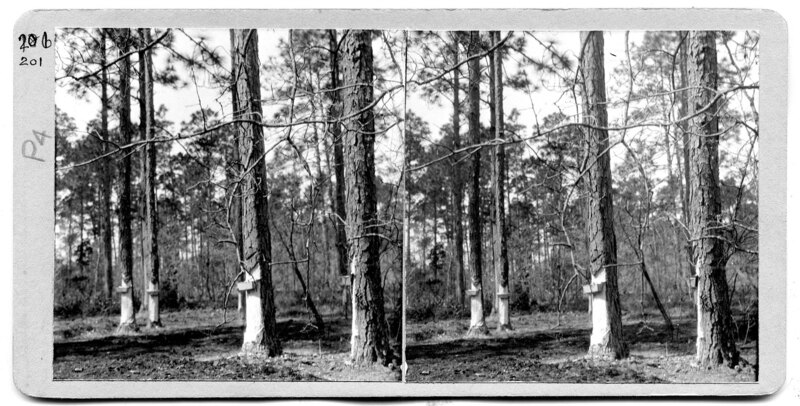
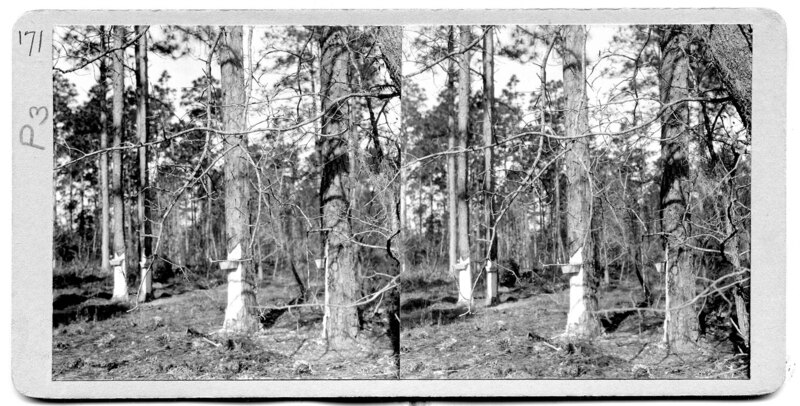
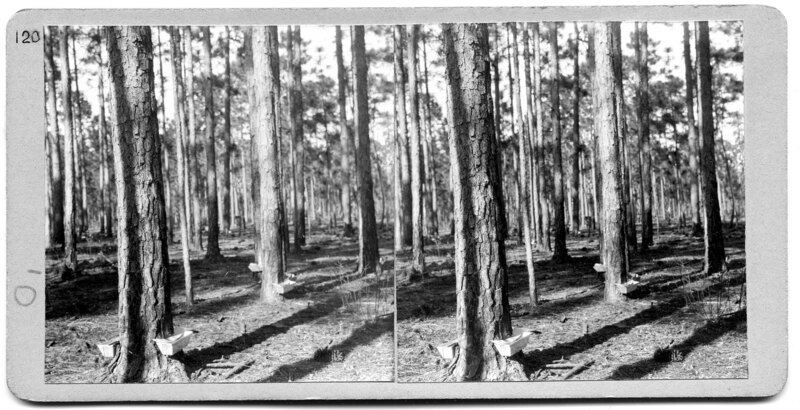
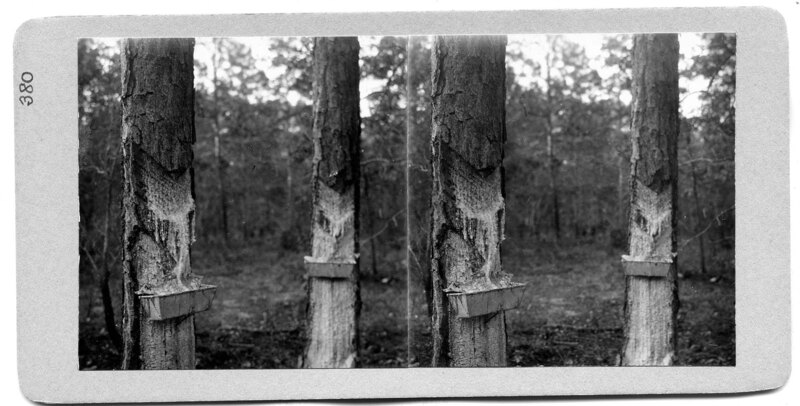
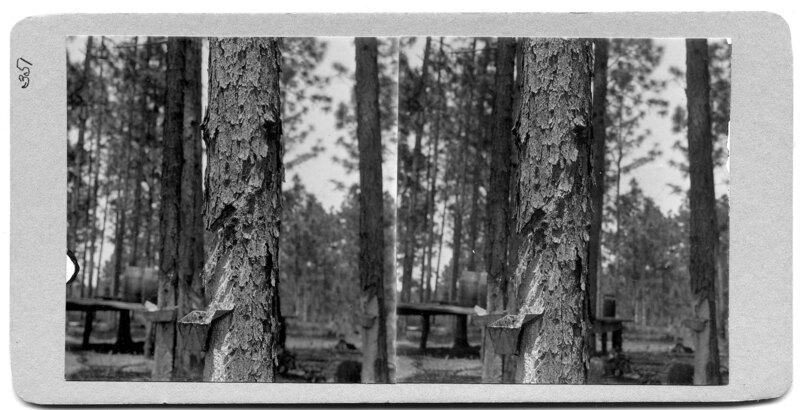
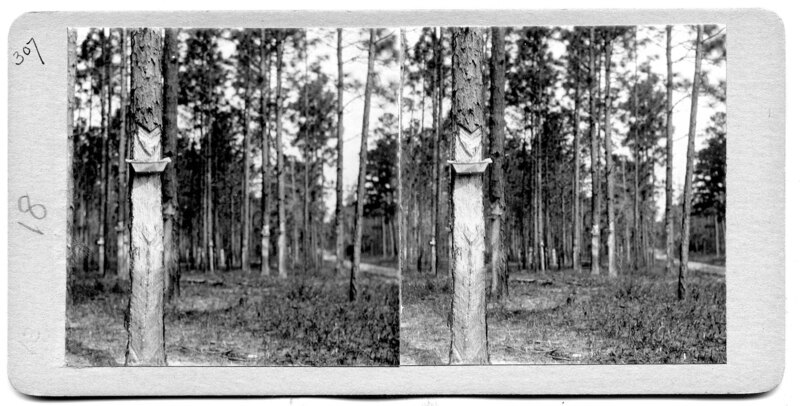
Photograph of forest of chipped pine trees. Pine tree resin is collected and processed into turpentine. The pans for the resin have been stuck into the side of each tree. A pine forest can be seen in the background.
Photograph of forest of chipped pine trees. It is noted that this is the second chipping for the trees. Pine tree resin is collected and processed into turpentine. The pans for the resin have been stuck into the side of each tree. A pine forest can be seen in the background.
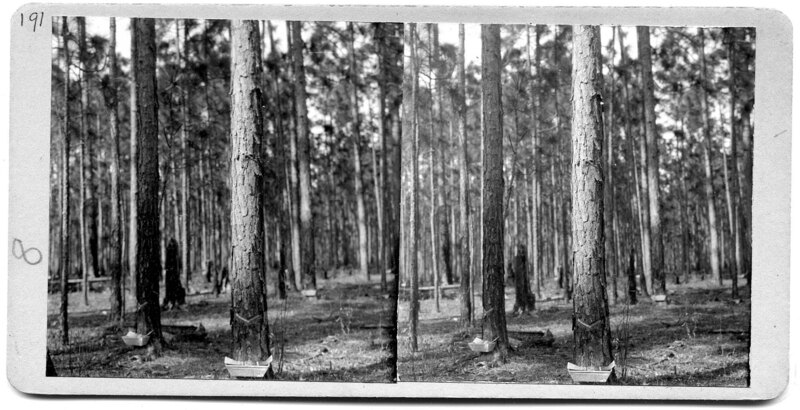
Photograph of a forest of chipped pine trees in McClellanville, South Carolina. The forest is near the Fairfield Mansion on the Sautee River. The pines have been newly chipped to collect resin to process into turpentine. The pans for collection are stuck into the bases of the trees. A forest of pines can be seen in the background.
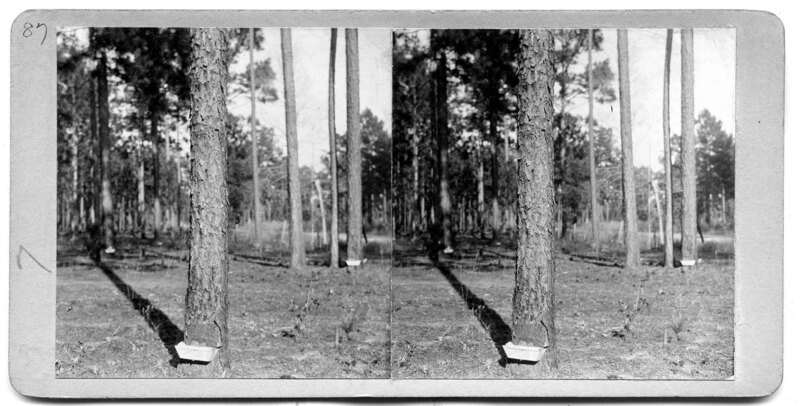
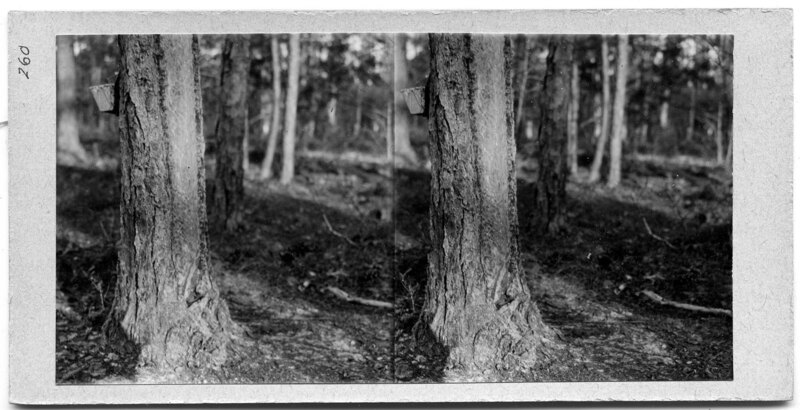
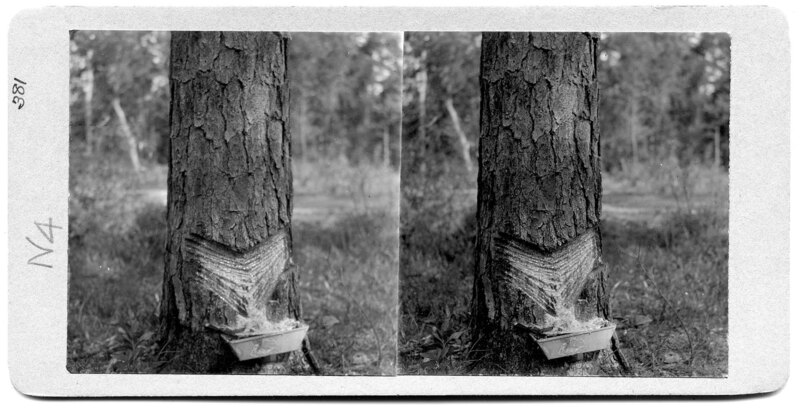
Photograph of a chipped pine tree. Pine tree resin is collected and processed into turpentine. A pan for the resin is stuck into the the side of the tree to collect resin as it travels down the grooves from the chipping. A forest of pine trees can be seen in the background.
Photograph of a chipped pine tree. Pine tree resin is collected and processed into turpentine. A pan for the resin is stuck into the the side of the tree to collect resin as it travels down the grooves from the chipping. A forest of pine trees can be seen in the background.
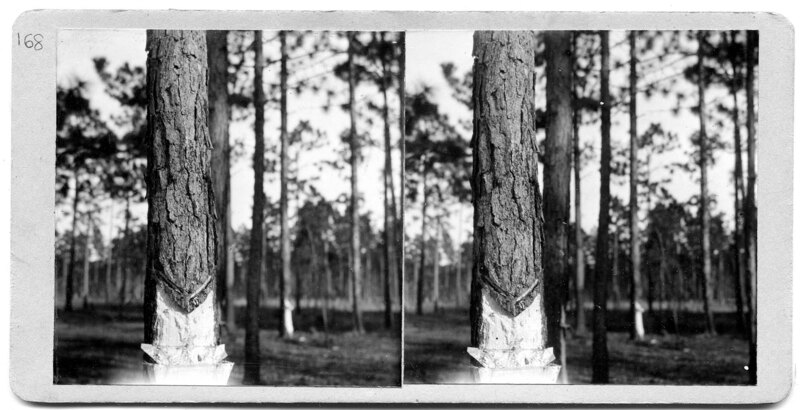
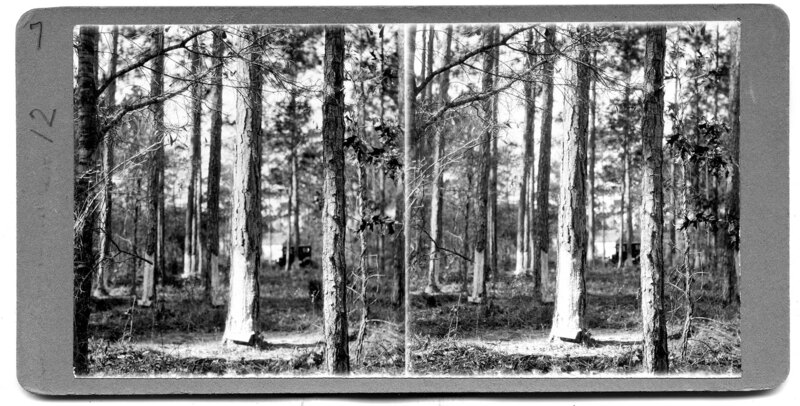
Photograph of a forest of chipped pine trees. It is noted that this is the first "chick" of the new season. Pine tree resin is collected and processed into turpentine. These trees have been chipped for resin collection. The pans for the resin have been stuck into the base of each tree. A forest of pine trees can be seen in the background.
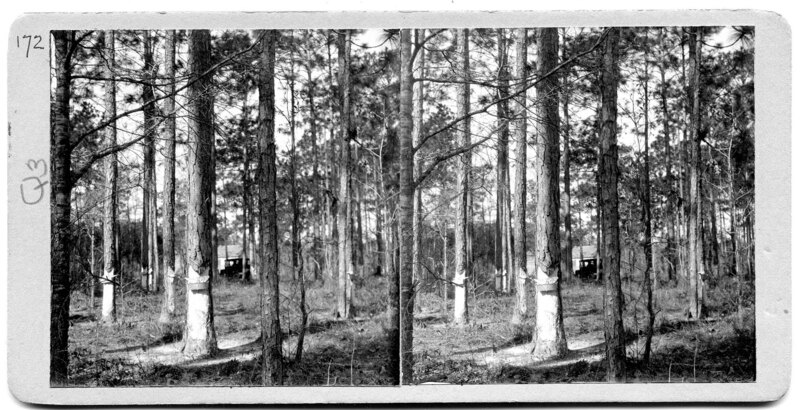
Photograph of a forest of chipped pine trees. Pine tree resin is collected and processed into turpentine. Pans for the resin have been stuck into the base of each tree. A car and a building can be seen in the background through the pine forest.
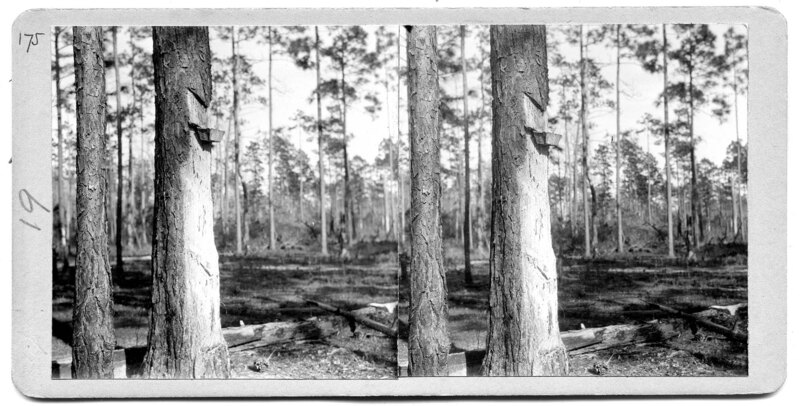
Photograph of a chipped pine tree used for resin collection. A wooden pan is notched into the tree bark below the chips in the tree where resin will travel down the grooves to the tray. A forest of pine trees can be seen in the background.
Photograph of a previously chipped tree with a new chipping pan on the back of the tree. Pine trees are often tapped for resin collection. Scars from the chipping process can be seen on the side of the tree with new bark growth .A forest of pine trees can be seen in the background along with a dirt roadway to the right.
Photograph of a forest of chipped pine trees. Pine tree resin is collected and processed into turpentine. These trees have been chipped for resin collection. The pans for the resin have been stuck into the base of each tree. A car and a building can be seen in the background through the pine forest.
Photograph of a forest of chipped pine trees. Pine tree resin is collected and processed into turpentine. These trees have been chipped for resin collection. The pans for the resin have been stuck into the base of each tree. A car and a building can be seen in the background through the pine forest.
Photograph of a forest of chipped pine trees. Pine tree resin is collected and processed into turpentine. These trees have been chipped for resin collection. The pans for the resin have been stuck into the base of each tree. A car and a building can be seen in the background through the pine forest.
Photograph of a forest of chipped pine trees. Pine tree resin is collected and processed into turpentine. These trees have been chipped for resin collection. The pans for the resin have been stuck into the base of each tree. A pine forest can be seen in the background.
Photograph of a forest of chipped pine trees. Pine tree resin is collected and processed into turpentine. These trees have been chipped for resin collection. The pans for the resin have been stuck into the base of each tree. A car and a building can be seen in the background through the pine forest.
Photograph of a chipped pine tree used for resin collection. Resin is collected to later be processed into turpentine. A wooden pan is notched into the tree bark below the chips in the tree where resin will travel down the grooves to the tray. A car sits in the middle of the trees. A forest of pine trees can be seen in the background.
A photograph of a previously chipped tree with a new chipping pan on the back of the tree. Pine trees are often tapped for resin collection. Scars from the chipping process can be seen on the side of the tree with new bark growth. A forest of pine trees can be seen in the background.
A photograph of a previously chipped tree with a new chipping pan on the back of the tree. Pine trees are often tapped for resin collection. Scars from the chipping process can be seen on the side of the tree with new bark growth. A forest of pine trees can be seen in the background.
Photograph of a chipped pine tree used for resin collection. Resin is collected to later be processed into turpentine. A wooden pan is notched into the tree bark below the chips to collect resin. Several of the other trees in the background are also chipped.
Photograph of a chipped pine tree used for resin collection. Resin is collected to later be processed into turpentine. A wooden pan is notched into the tree bark below the chips to collect resin. Several of the other trees in the background are also chipped.
Photograph of a chipped pine tree used for resin collection. Resin is collected to later be processed into turpentine. A wooden pan is notched into the tree bark below the chips to collect resin. Several of the other trees in the background are also chipped.
Photograph of a chipped pine tree used for resin collection. Resin is collected to later be processed into turpentine. A wooden pan is notched into the tree bark below the chips to collect resin. Several of the other trees in the background are also chipped.
Photograph of a chipped pine tree used for resin collection. Resin is collected to later be processed into turpentine. A wooden pan is notched into the tree bark below the chips to collect resin. Several of the other trees in the background are also chipped.
Photograph of a chipped pine tree used for resin collection. Resin is collected to later be processed into turpentine. A wooden pan is notched into the tree bark below the chips to collect resin. Several of the other trees in the background are also chipped.
Photograph of a chipped pine tree used for resin collection. Resin is collected to later be processed into turpentine. A wooden pan is notched into the tree bark below the chips to collect resin. Several of the other trees in the background are also chipped.
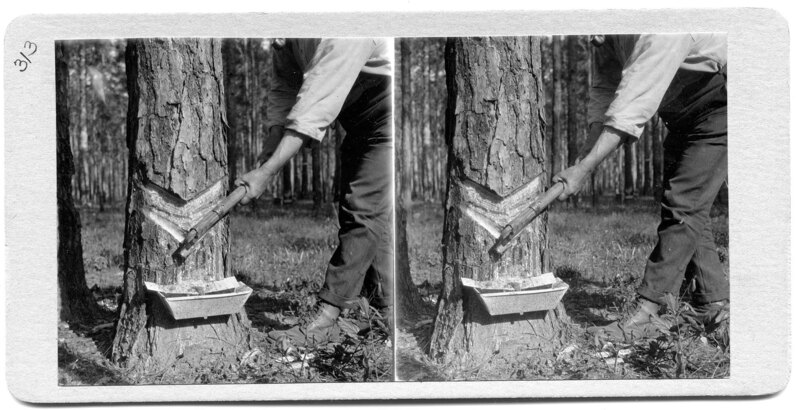
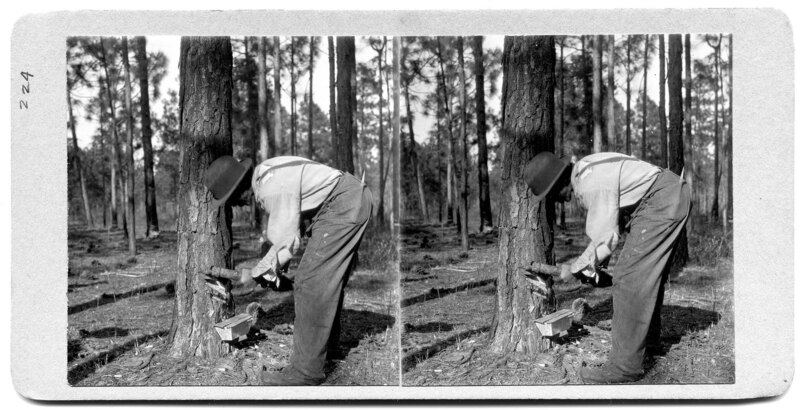
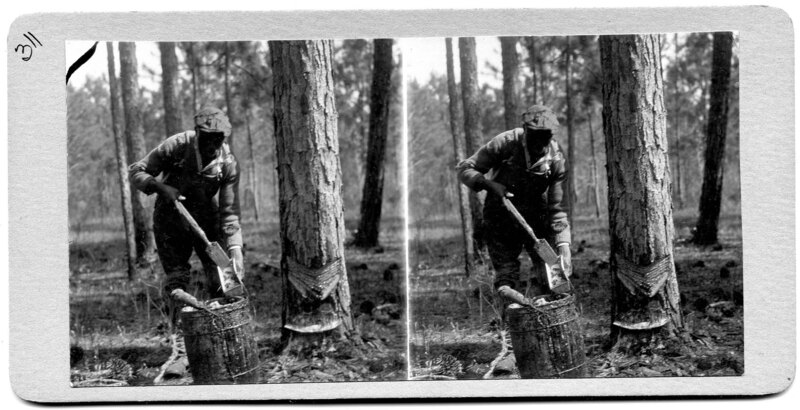
Photograph showing Mr. Pullman chipping a new pine tree for resin collection. He uses a hand ax to chip lines into the bark of the pine tree. A small wooden collection pan is stuck in to the base of the tree and will catch the resin that flows down the tree through the chips. A forest of pine trees spreads out in the background.
Photograph showing trees tapped for resin collection. Pine tree resin is collected and processed into turpentine. Pans are notched into the bases of the trees, below the chipped portion of the bark to collect the resin. A forest of pine trees spreads out in the background.
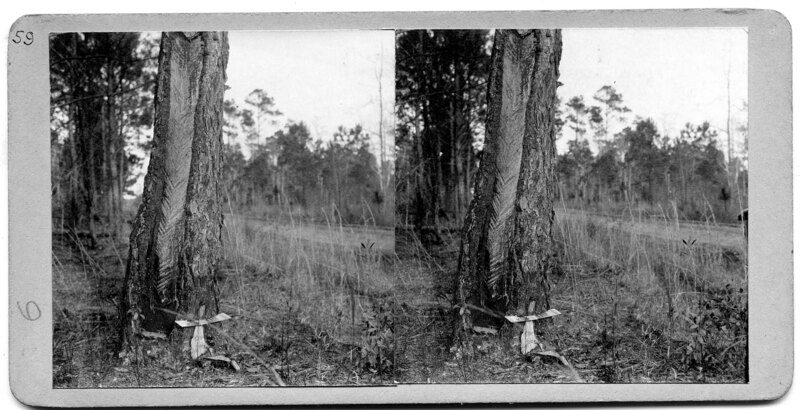
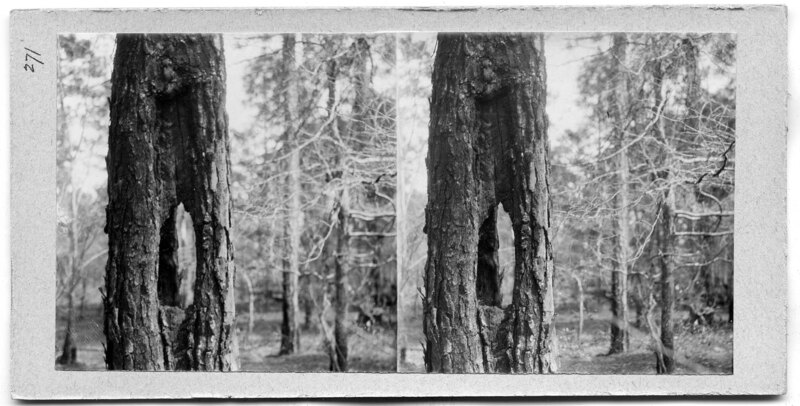
Photograph of an extensively chipped tree on the side of a dirt road. It is noted that the tree has been chipped for three years.The tree has likely been chipped for years in an effort to collect resin to process into turpentine. A wooden pan sits high-up on the tree where it collects resin that flows down the chipping pattern. Several other trees in the background are chipped for resin collection with differing height pans. Grass covers the ground around the trees.
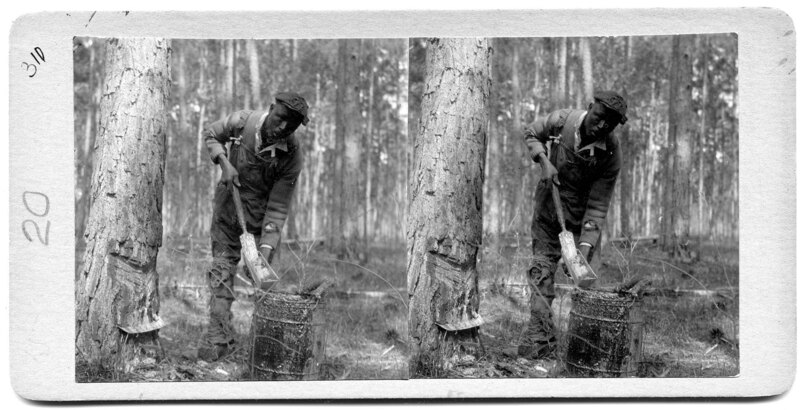
Photograph of Ben Blake scraping collected resin into a large wooden barrel from the tree in the background. Pine tree resin is collected to process into turpentine, a chemical solvent. The man uses a wooden spatula to scrape the resin out of the pan and several rows of chips can be seen in the tree. A forest of pine trees spreads out in the background.
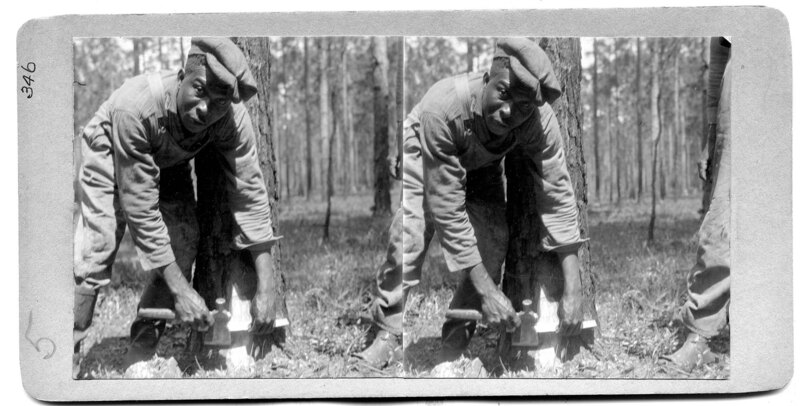
Photograph of a man chipping a new pine tree for resin collection. He uses a hand ax to chip lines into the bark of the pine tree. A small wooden collection pan is stuck in to the base of the tree and will catch the resin that flows down the tree through the chips. A forest of pine trees spreads out in the background.
Photograph of a man chipping a new pine tree for resin collection. He is wearing overalls and a work shirt with a bowler hat. He uses a hand ax to chip lines into the bark of the pine tree. A small wooden collection pan is stuck in to the base of the tree and will catch the resin that flows down the tree through the chips. A forest of pine trees spreads out in the background.
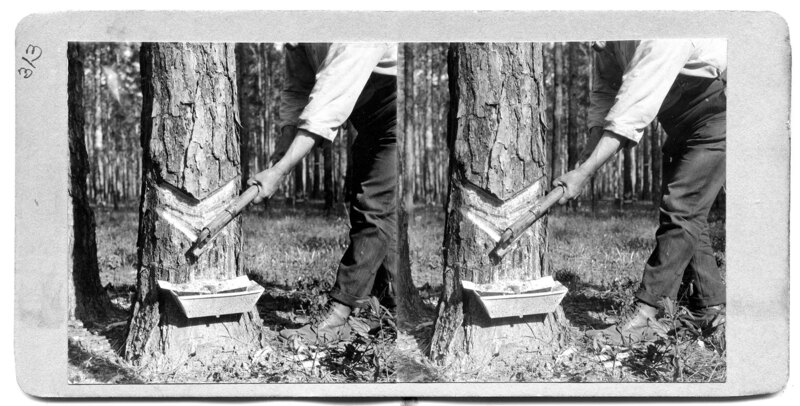
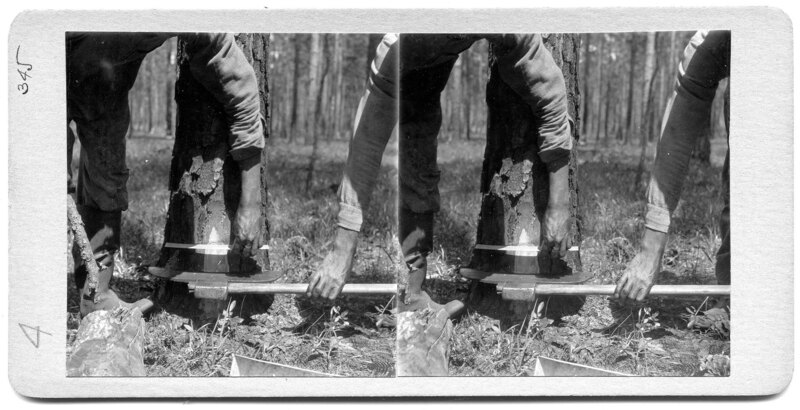
Photograh of a resin collection worker demonstrating the placement of a new plate that will be placed on a pine tree for resin collection. He is tapping the plate into the tree with a hand ax. A second man stands to the right, watching over the work. A forest of pine trees spreads out in the background.
Photograph of two men measuring a new pine tree for tapping. One worker holds the ax in place where the collection plate will be placed . The other works on the finding the perfect height from the plate where the collection chips will be made . This allows the resin from the tree to flow down in the collection pan. A forest of pine trees spreads out in the background.
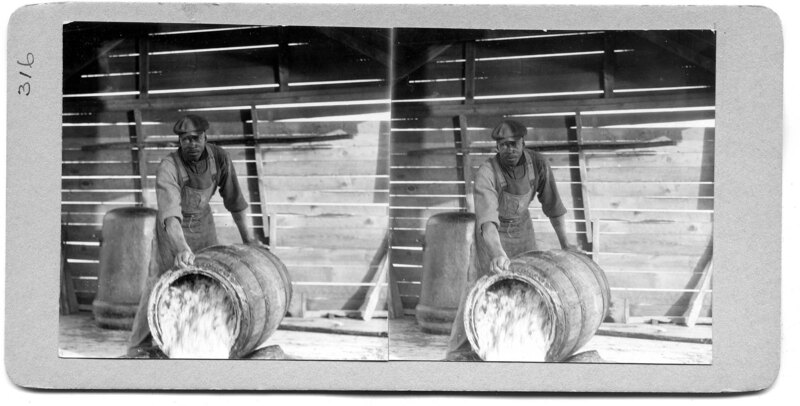
Photograph of a man rolling a barrel through a processing plant. The plant likely produces turpentine from collected pine tree resin. He is wearing overalls, a work shirt, and a hat. The building is constructed of wooden slat boards and has a wooden floor.
Photograph of a man scraping collected resin into a wooden barrel after removing the collection plate from the tree in the background. Pine tree resin is collected to process into turpentine. The man uses a wooden spatula to scrape the resin out of the pan.Several rows of chips can be seen in the tree. A forest of pine trees spreads out in the background.
Photograph of two workers placing a new sap collection plate in a pine tree. Pine trees are tapped for their resin which is later processed into turpentine, a widely-used chemical solvent. One worker holds the chipping device. The other hits it into the tree to create the pattern for the resin to run down into the collection plate. A forest of pine trees can be seen in the background.
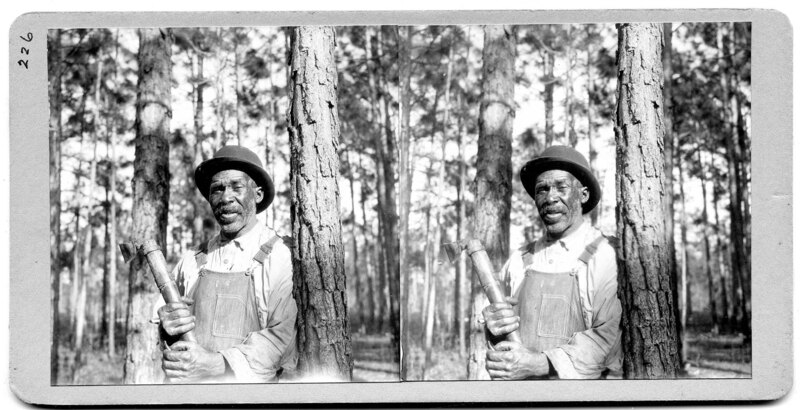
Photograph of a man standing next to a pine tree. The man is holding a small chipping ax. He is dressed in overalls, a work shirt, and a bowler hat. A forest of pine trees spreads out in the background.
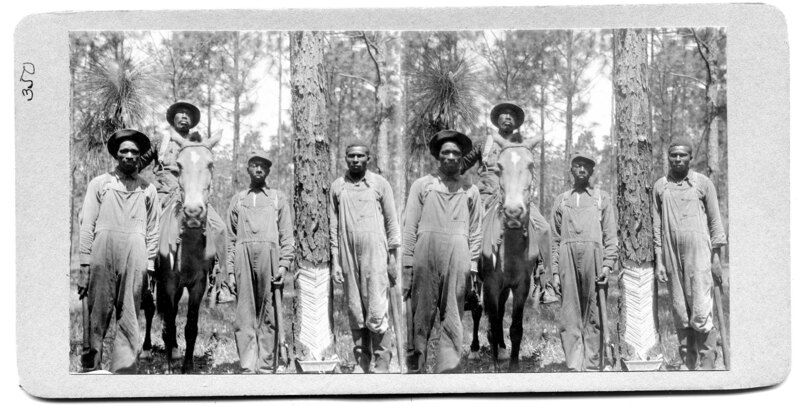
Photograph of four workers standing by a chipped pine tree. One of the men is sitting on a horse. A chipped tree can be seen in the foreground. The tree is collecting sap to make into turpentine and the collection basket can be seen at the base of the tree. A forest of pine trees spreads out in the background.
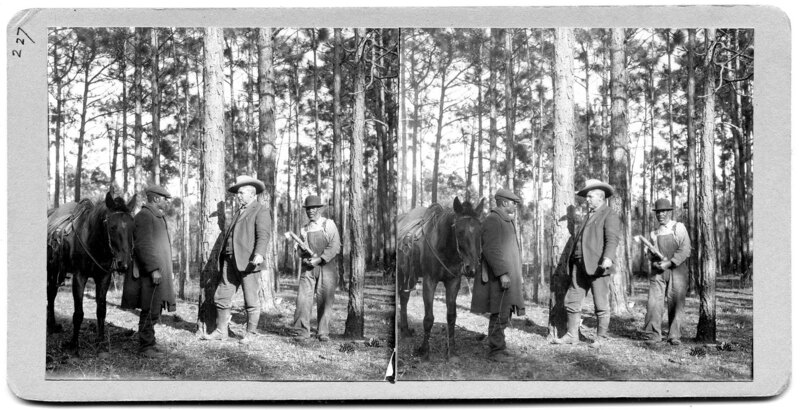
Photograph of three men standing in a grove of pine trees. One of the men holds a chipping ax and is dressed in work overalls.The other men dressed in overcoats inspect the tree in the foreground .
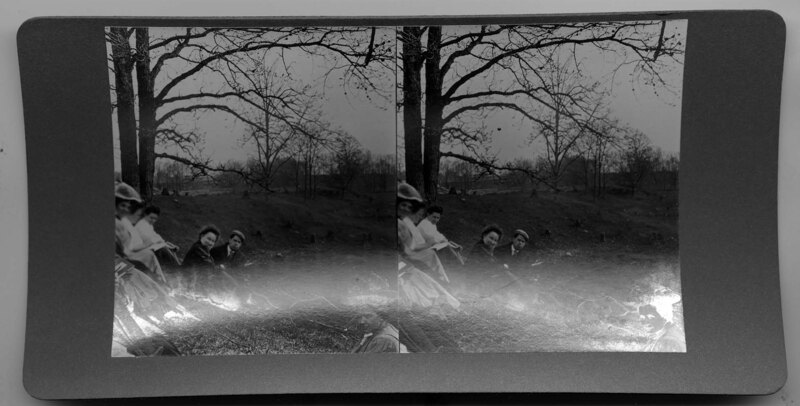
Photograph of a group of students sitting on a grassy hillside. Trees cover the top portion of the hill Several trees stumps dot the side of the hill where the students are sitting.
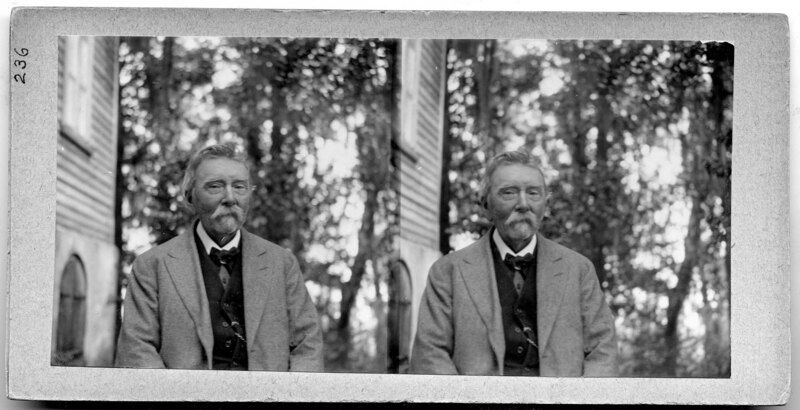
Portrait of Mr. David Doar of Harrietta. Mr. Doar is wearing a wool overcoat, a vest, and a dress shirt with a bowtie. He is sitting outside of his house, which appears to be multiple stories. Trees grow in the background.
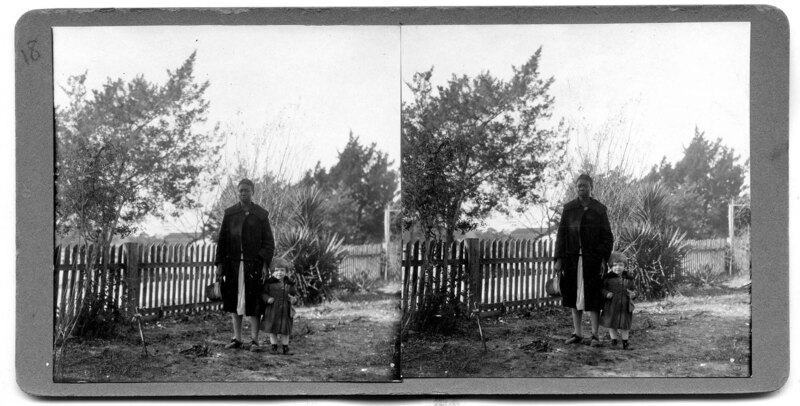
Picture of a woman named Mary and a child on a January day in the side yard. Mary is wearing a heavy wool jacket and a dress with stockings and shoes, and the child is wearing a wool jacket with stockings and boots. A wooden picket fence divides the property from the road and palmetto plants grow in the yard in the background. A grape vine trellis can be seen in the background.
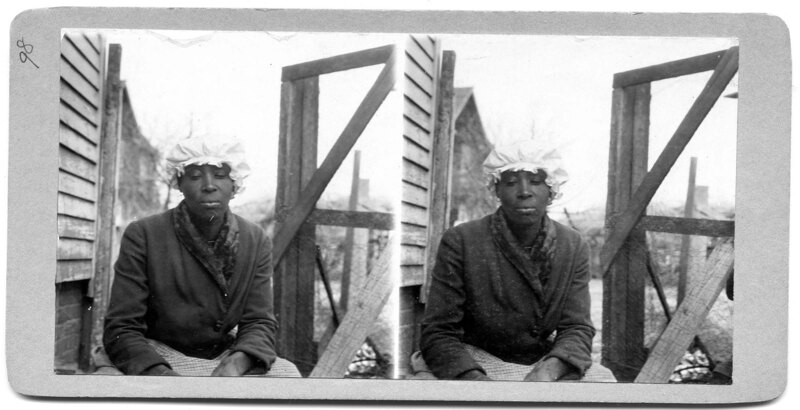
A portrait of Isabel Garrett. She is wearing a bonnet, wool overcoat, and a gingham skirt. She is sitting next to a wooden and wire gate next to her house and a second house can be seen in the background.
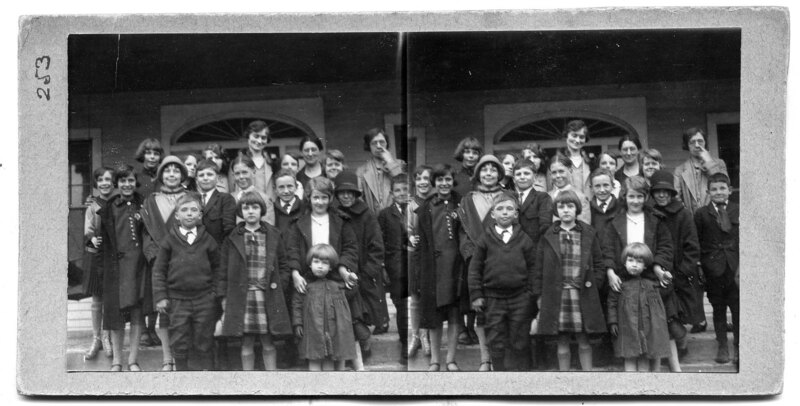
Photograph of a group of children and three women. The individuals stand on the steps outside of a house or school. A large transom window spans the top of the doorway behind the ground. A large portico extends over the porch.
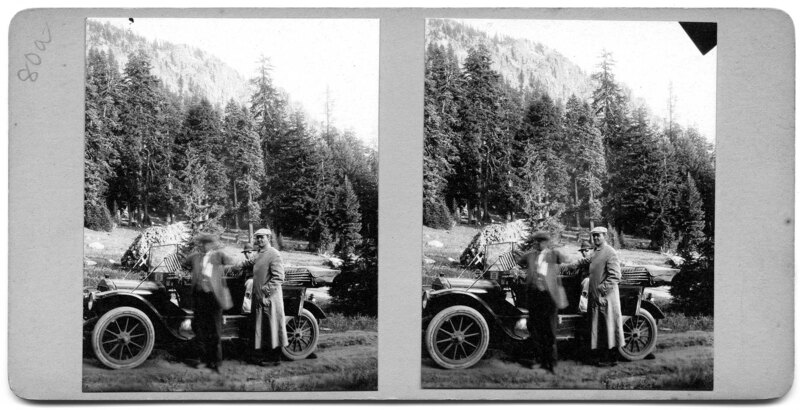
Photograph of three men standing by a car in a mountain landscape. The car has Amerian and Denmark flags flying on the front. The road is deeply rutted and is covered with grass in places. Massive douglas fir trees grow on the hill in the background. A rocky mountain face rises above the trees in the background.
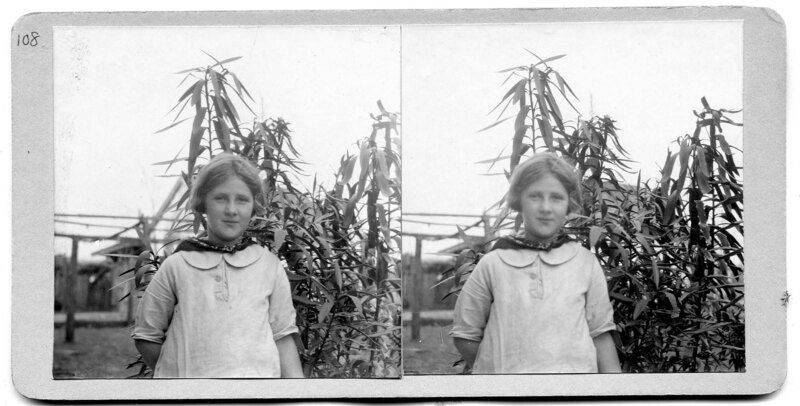
Photograph of a young girl standing in front of plants. She is wearing a cotton dress with a collar and a bandana around her neck. A wooden trestle is standing behind her, likely for viney plants. A house can be seen in the background.
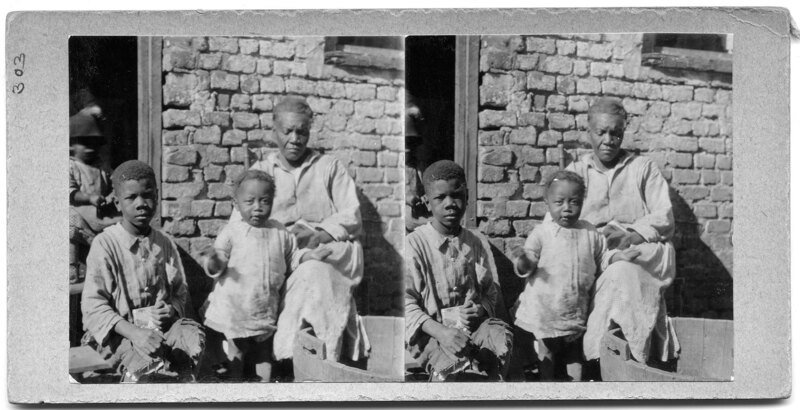
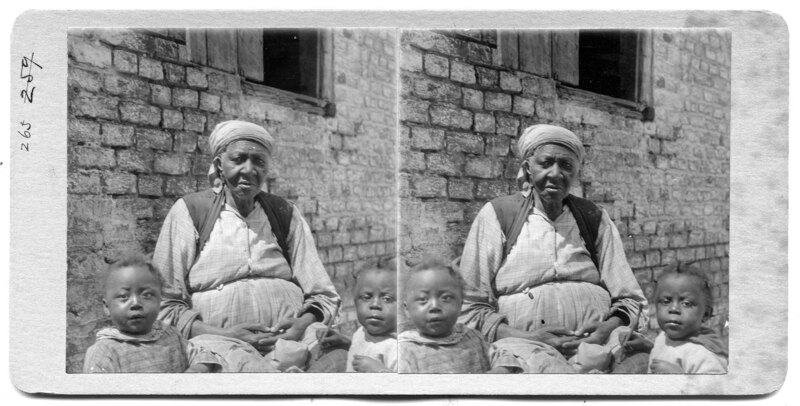
Photograph of an African American woman sitting outside of her house with three children. She is wearing a cotton gingham dress. Two of the children are dressed in cotton dresses and the boy has a cotton button-down shirt and wool pants. He is holding a small book. The house is constructed of hand-cut brick and mortar joints with a wooden window with a wooden shutter. A large wooden tub sits in front of the house.
Photograph of an African American woman sitting outside of her house with two small children. She is dressed in a cotton button-down dress, a shawl, and a headwrap. The children both have cotton dresses. The house is constructed of hand-cut brick and raked mortar joints with a wooden window with a wooden shutter.
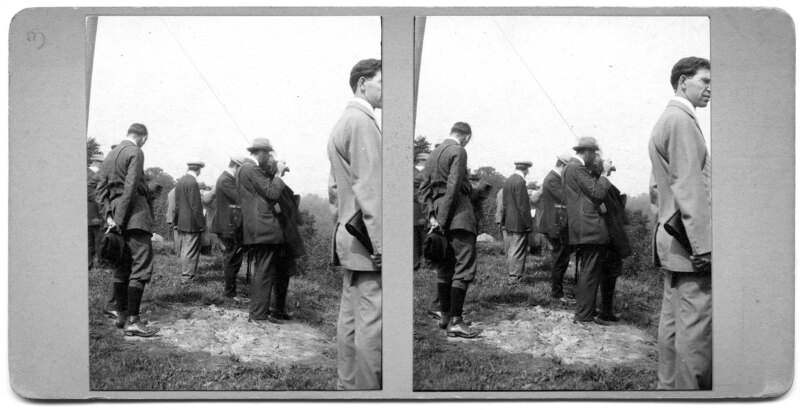
Photograph of a group of men documenting the landscape. Several men are taking pictures of the landscape to the right. Others study topographic maps and take notes. A stand of trees can be seen in the background behind a wooden fence.
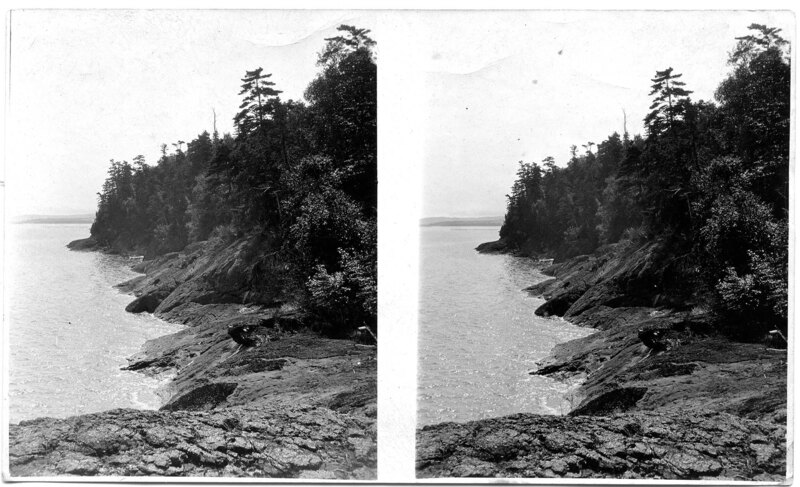
Photograph of a rocky shoreline. Water cuts away the rock near the lake. Trees and other vegetation cover the boulders. A rock bed above the water can be seen. Hills can be seen in the background, making up the opposite bank of the lake.
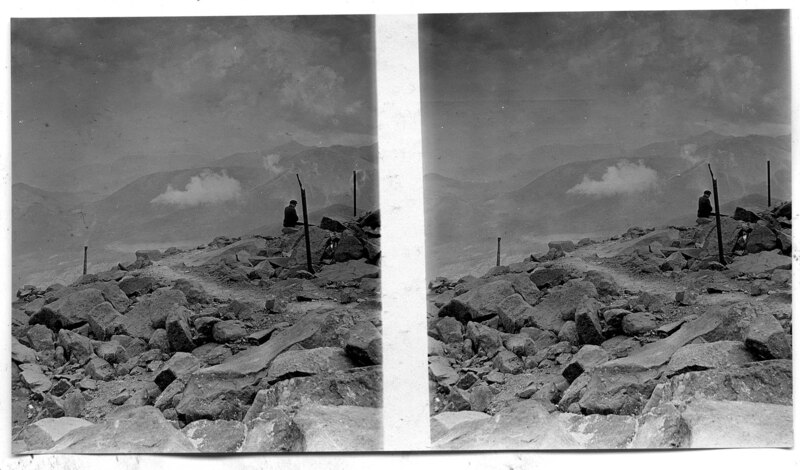
Photograph of a man sitting on a rock overlooking a mountain landscape. A small dirt path can be seen between the large boulders on top of the hill in the foreground. Dead tree trunks rise up through the boulders, but there is no vegetation in the area. Clouds hang in the air between the mountains in the background.
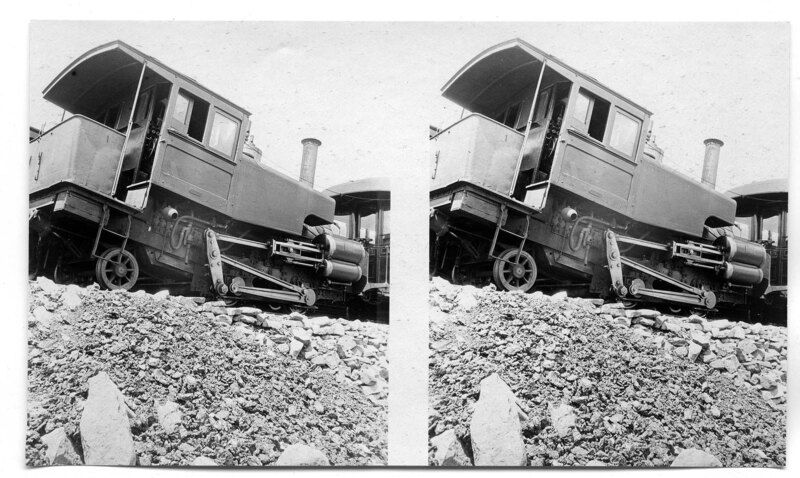
Photograph of a steam powered locomotive. The engine cabin has a small room for the conductor sheltered by an overhanging portico. Pistons and mechanical arms can be seen on the side of the cabin. A smokestack rises out of the engine room to the right. A second car can be seen to the right. The landscape around the train tracks is rocky.
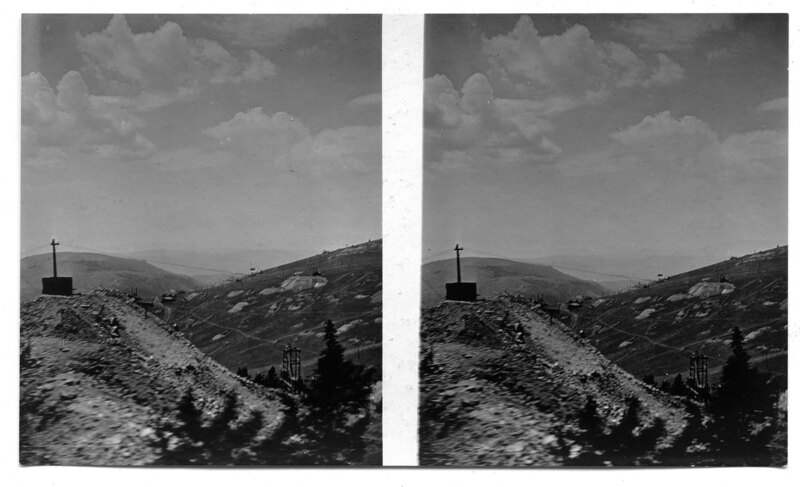
Photograph of a mountain landscape. Power lines cross over the hills in the foreground. The hills in the background are covered with grass and large boulders. A road can be seen on the side of the hill. Mountains rise in the background.
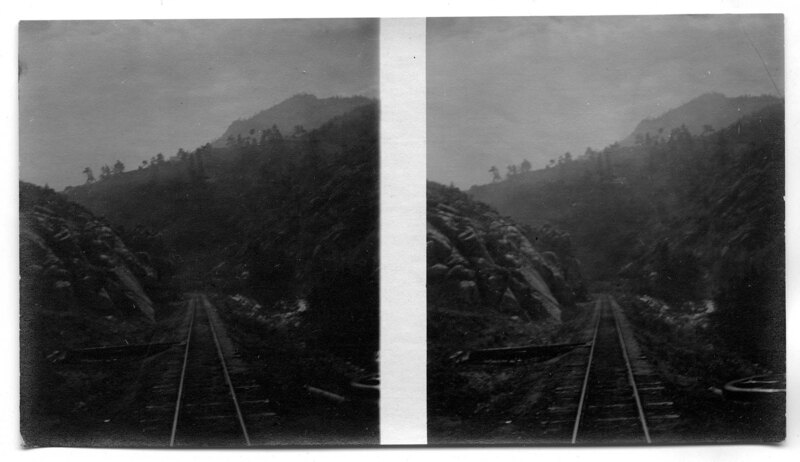
Photograph of a rail line cutting through a rocky mountain landscape. Steep rock walls surrounds the train tracks as they curve through the landscape. The rock walls are deeply striated and cracked from years of erosion. Large boulders sit beside the tracks. A river runs beside the tracks to the left.
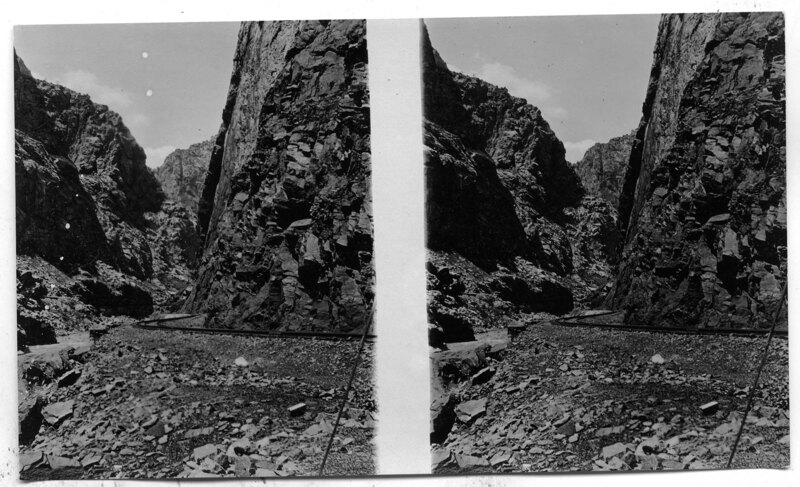
Photograph of a rail line in a rocky mountain landscape. Steep rock walls surrounds the train tracks as they curve through the landscape. The rock walls are deeply striated and cracked from years of erosion. Large boulders sit beside the tracks where they have fallen from the rock face above.
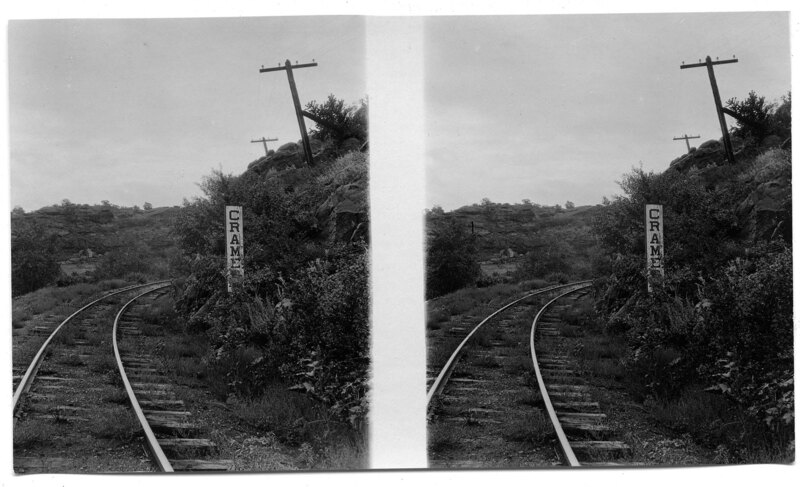
Photograph of a rail line in a mountain landscape. A sign next to the roadway is partially covered but the visible portion reads, "Crames." Powerline covered with vegetation with boulders are strung on the hillside above the tracks.Rocky hills can be seen in the background.
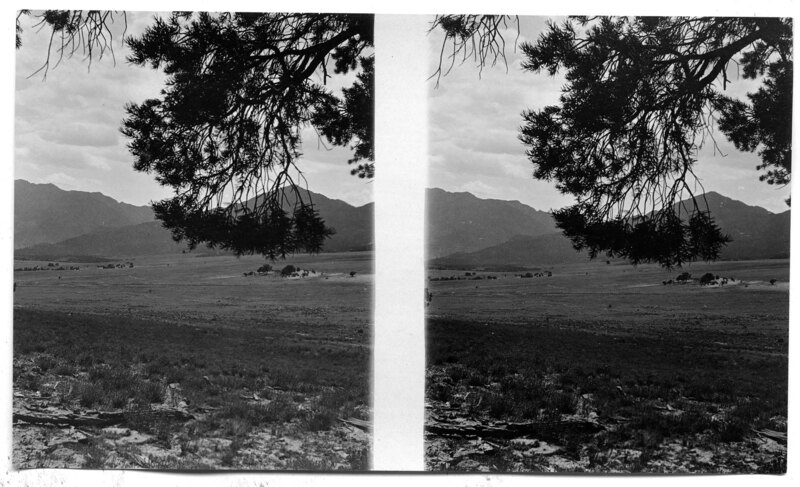
Photograph of a mountain landscape. An evergreen tree can be seen in the foreground . Grass covers most of the ground in the plateau between the mountains and trees cover the peaks in the background.
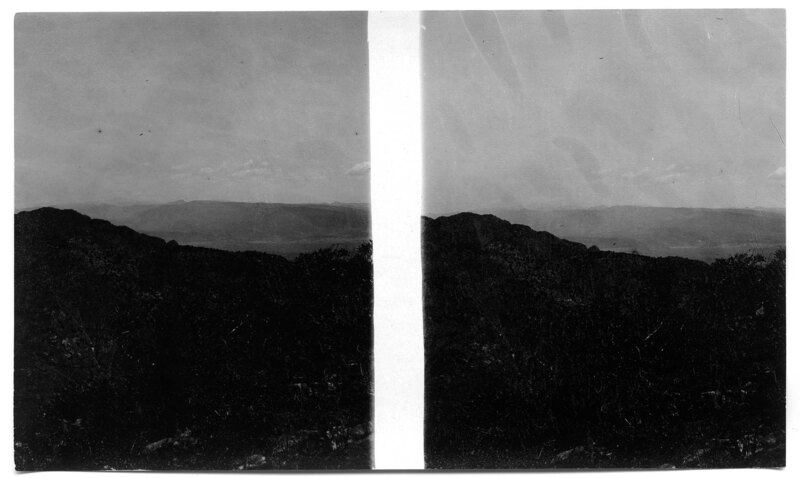
Photograph of a mountain landscape. Vegetation covers the peaks in the foreground. A valley can be seen between the mountains and range in the background.
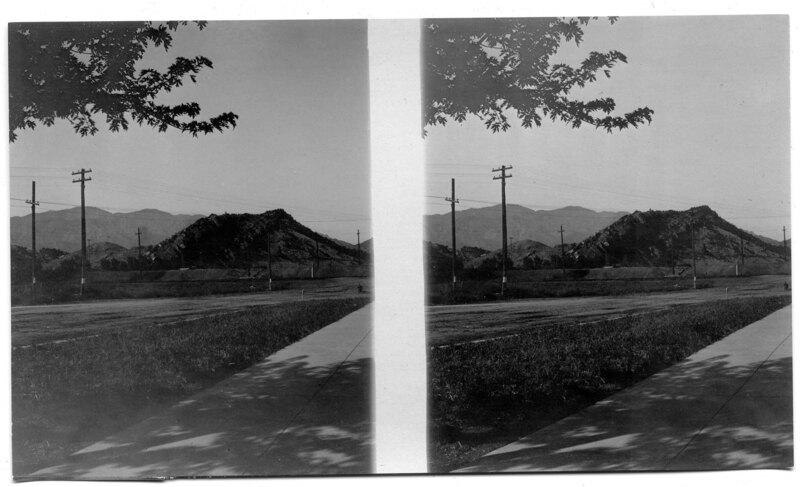
Photograph of a mountain streetscape. A concrete walkway and a dirt roadway cross in front of several mountain peaks. A man walking in the road can be seen to the right. Power lines are strung between wooden poles on the left side of the road. The peaks are covered with vegetation and rise in the background, behind the town.
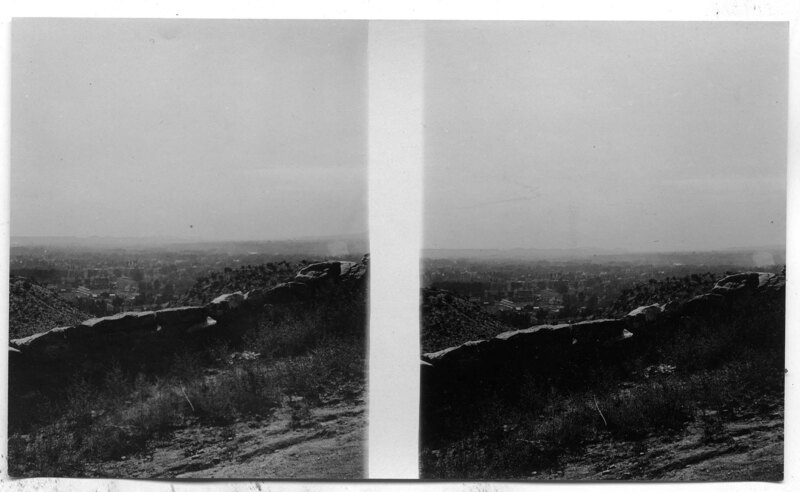
Photograph of a village surrounded by large hills. A stone fence can be seen next to the dirt roadway in the foreground. Mountains rise in the background.
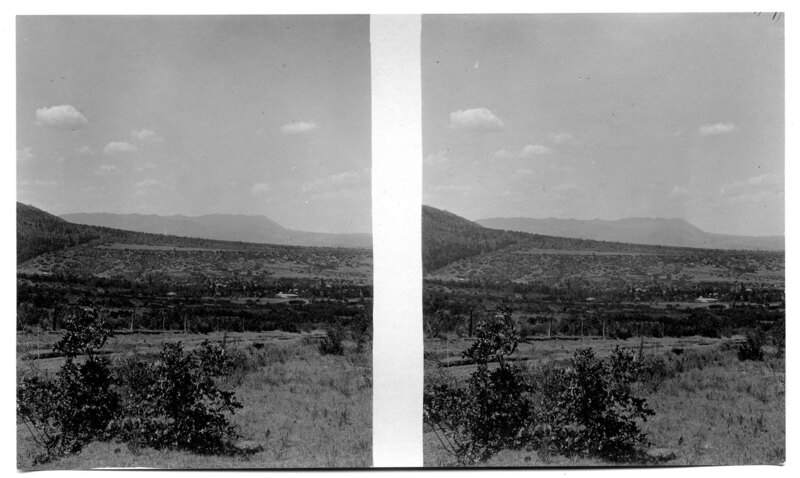
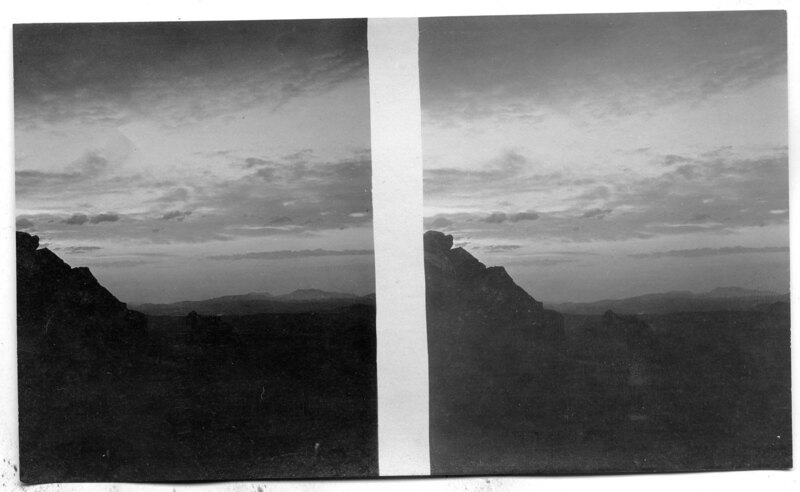
Photograph of a mountain landscape. The landscape in the foreground has sparse vegetation. The shallow plateau in the foreground is also covered with vegetation. A steepe mountain peak can be seen in the background
Photograph of a mountain landscape. A small village with several roads can be seen at the base of the mountains.Vegetation covers the sides of the mountains. An extensive switchback road crosses up the mountain behind the town.
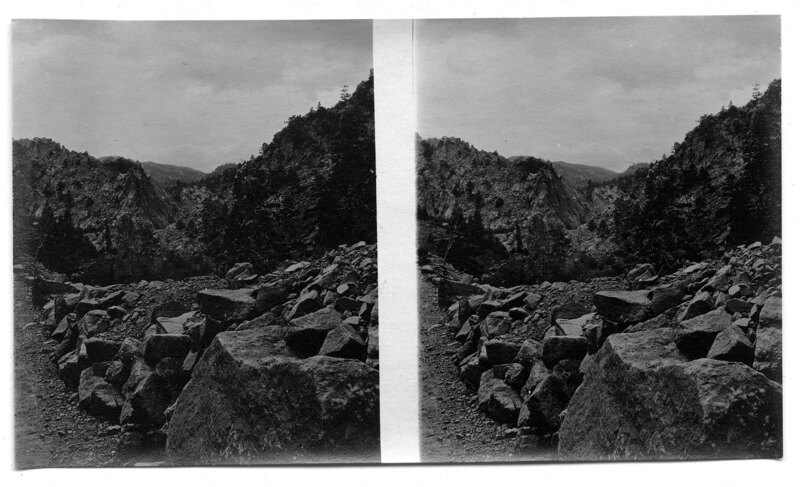
Photograph of a mountain landscape. Large boulders surrrounded by vegetation are piled on the hillside in the foreground. A river can be seen at the base of the mountains as it cuts through the valley. The rocky peaks in the background are covered with vegetation.
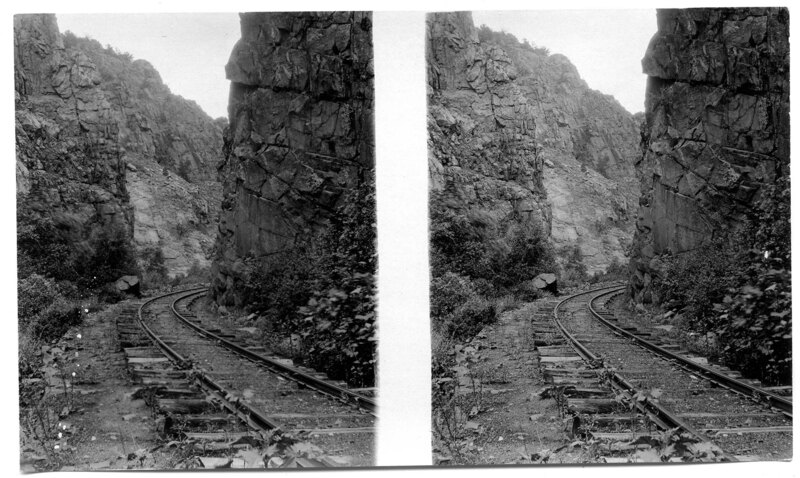
Photograph of railroad tracks cutting through a rocky landscape. Large boulders and striated rock faces rise around the rail line. Several stands of trees cover the tops of the rocky cliffs. Mountains rise in the background.
Photograph of a mountain landscape. Large boulder are piled on top of the hill in the foreground. A rocky path can be seen to the left. Trees and other vegetation cover the sides of the peaks in the background.
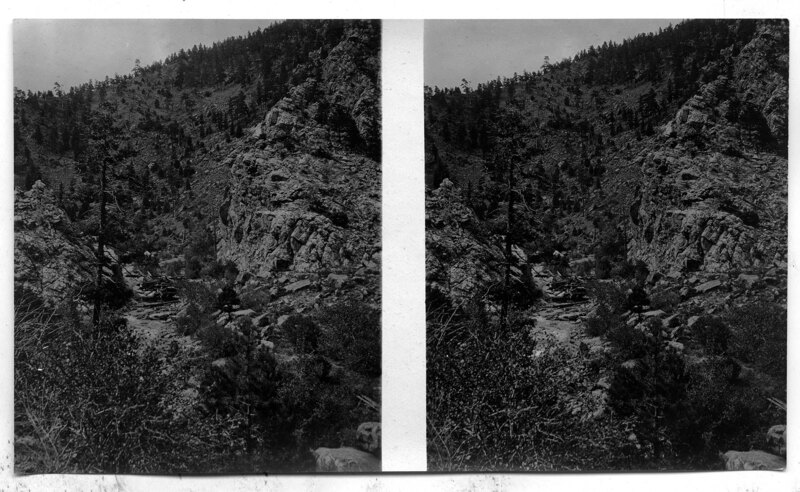
Photograph of a mountain landscape. A river with boulders on the banks cuts through the valley between the hills. Trees and other vegetation grow on the sides of the peaks, and scrub bushes surround the river on the banks. Deep cracks and striations have formed in the rocks of the hills from years of erosion.
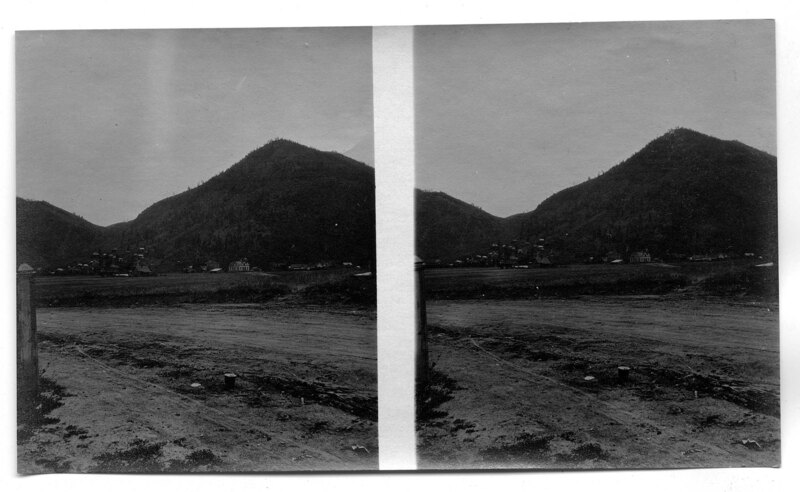
Photograph of a mountain village. Several houses at the base of the peaks can be seen in the background. The landscape in the foreground is flat and clear cut, likely for agriculture. The dirt roadway is rutted and muddy. The peaks in the background are covered with trees and other vegetation.
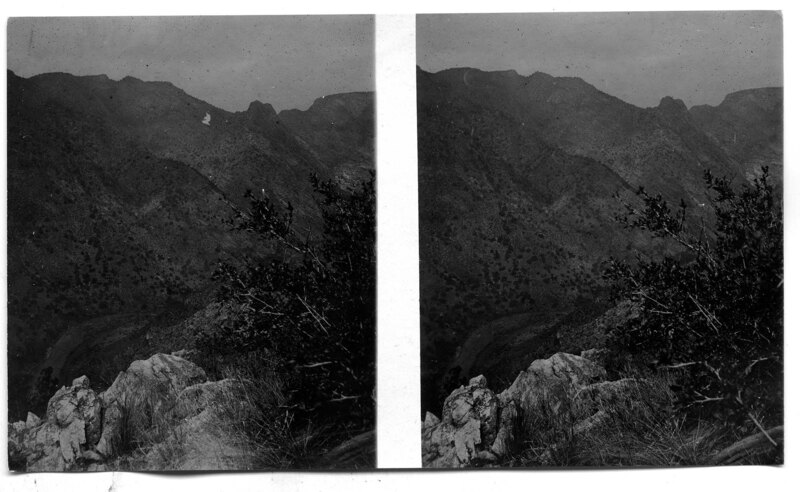
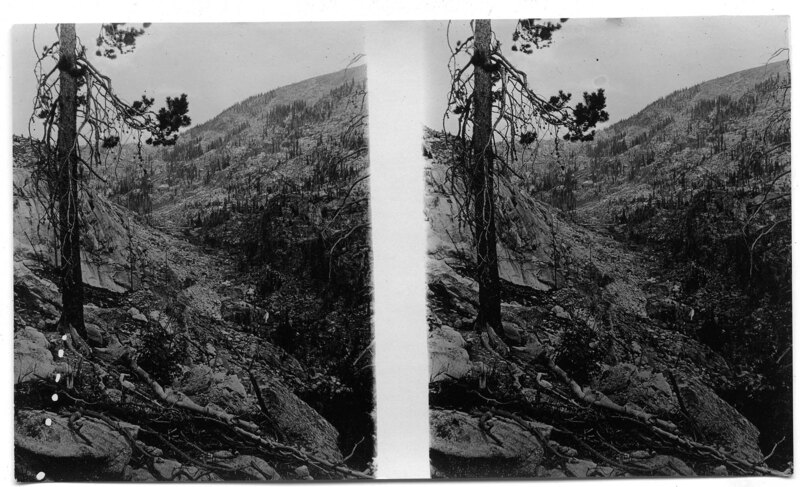
Photograph depicting a mountain landscape. A single tree grows out of the rocky soil in the foreground. The roots of the tree anchor the plant to the large boulders on the hill which stretch down the mountainside. Stands of trees cover the sides of the peaks in the background. Large boulders are piled in the valley between the two mountains after years of erosion.
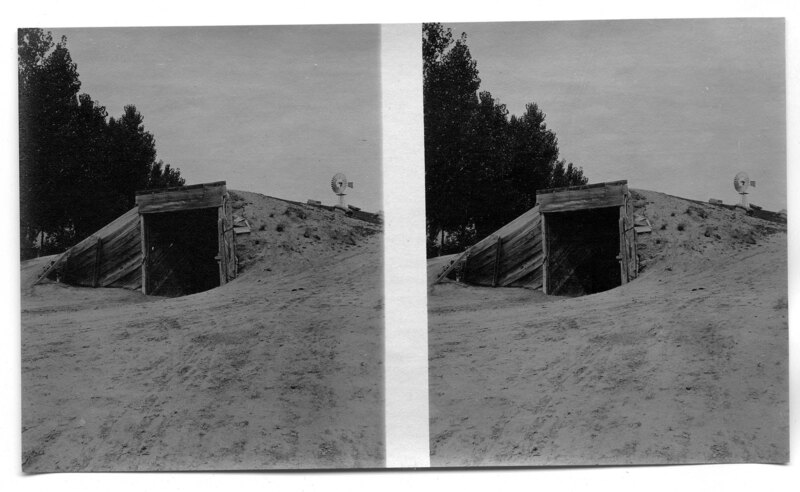
Photograph of a root cellar. The entrance to the cellar is open. The root cellar is built in a dirt embankment. Wooden boards around the entrance hold back the dirt from filling in the cellar. A tree line can be seen to the left. A windmill can be seen over the dirt embankment in the background.
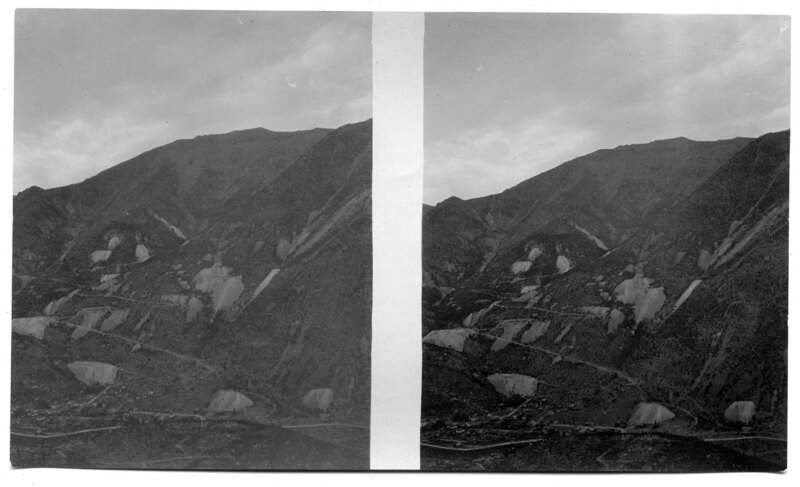
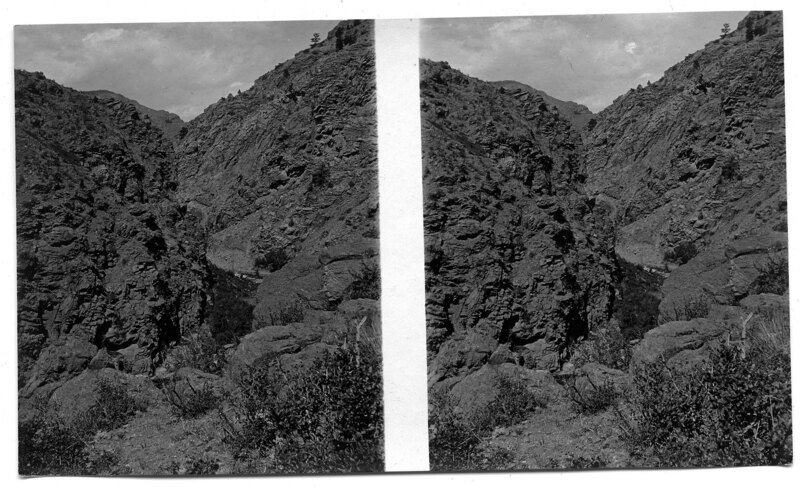
Photograph of rocky mountain landscape. Deep cuts and cracks have formed in the rocky face of the mountains in the foreground. Small bushes and grasses grow up between the boulders.
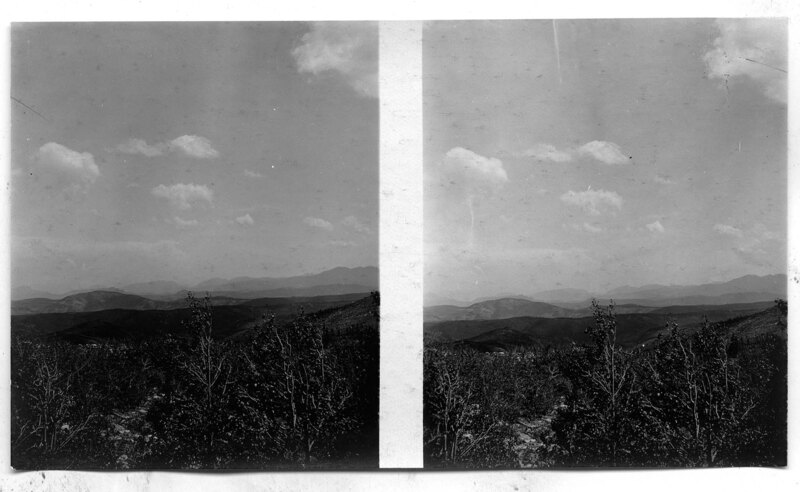
Photograph of a mountain landscape. Dense vegetation covers the hill the foreground. A mountain range can be seen in in the background. The other peaks in the range are also covered with vegetation.
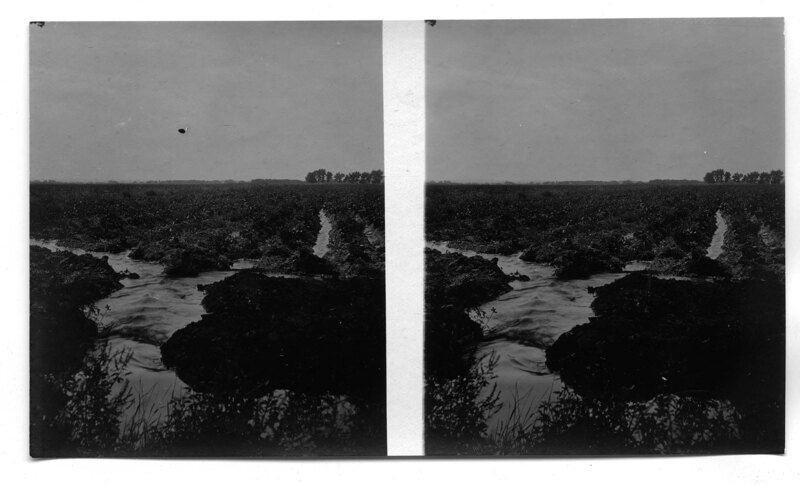
Photograph of agricultural irrigation ditches. The landscape is flat and cleared for farming. Trenches have been dug between the furrowed rows of plants to allow water to seep into the ground around the plants. A cut has been made in the embankment from the ditch in the foreground to allow water to pass into the trenches in the field. A stand of trees can be seen to the right at the rear of the field.