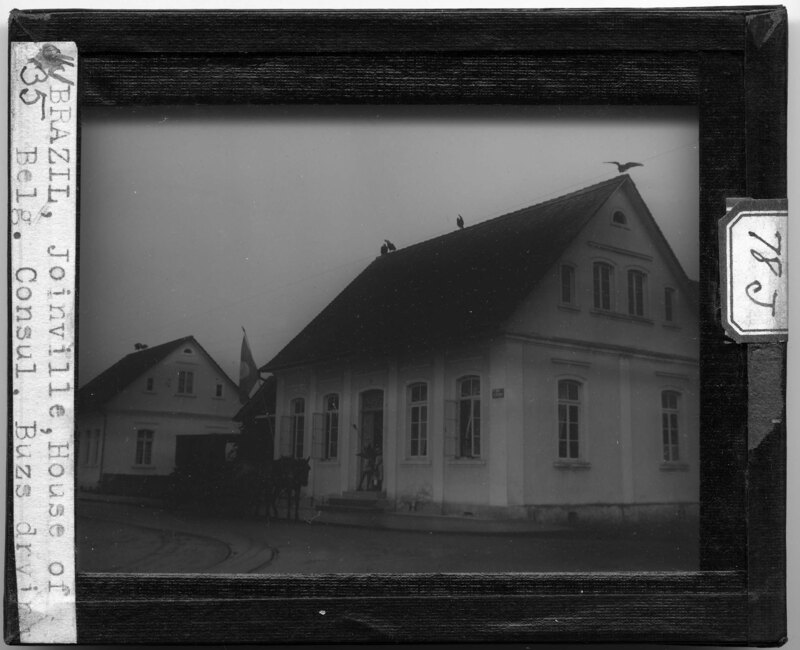
The house of Belgian consul in Joinville, Brazil. It is a one and half story vernacular building. A horse team and bus sits outside the house while two children stand in the doorway and woman leans out of one of the front windows.
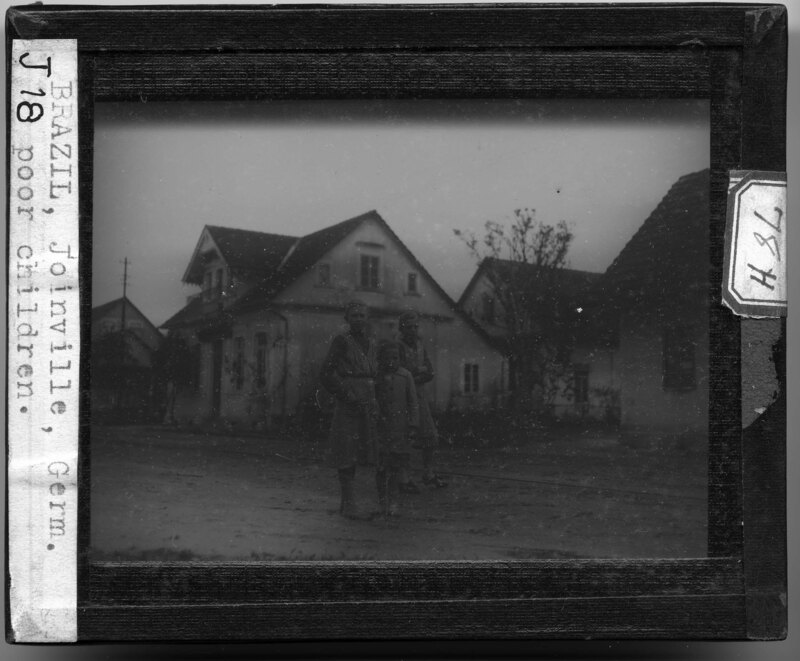
Poor German girls have their picture taken in the middle of the street in Joinville, Brazil. They are dressed in gingham dressed and one of the girls is wearing shoes and stockings while the other two are barefoot. In the background, one and half story houses are built along the dirt roadway. Foliage grows up around the houses.
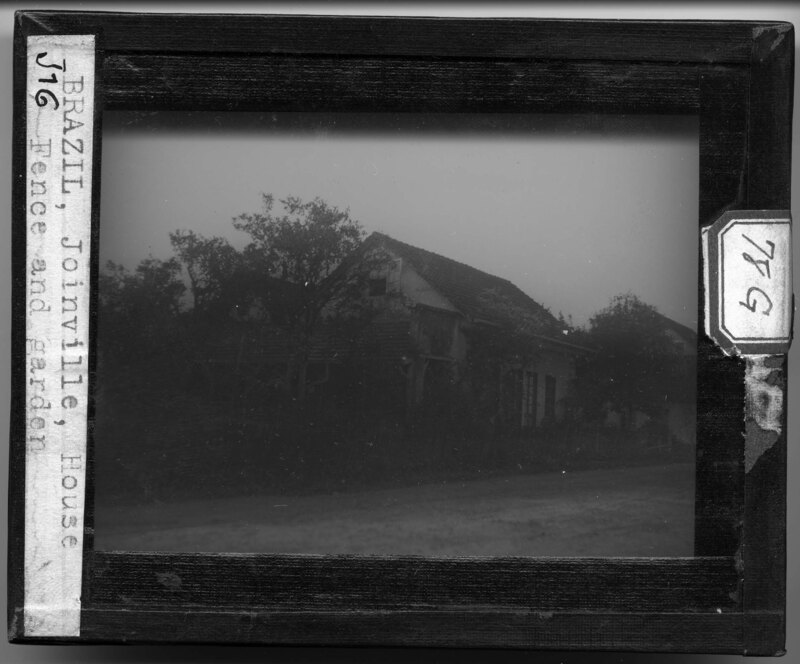
One and a half story vernacular houses in Joinville, Brazil. A wooden fence surrounds the property and a garden grows in the backyard along with trees and other foliage that surrounds the house. The houses are most likely middle classes worker homes.
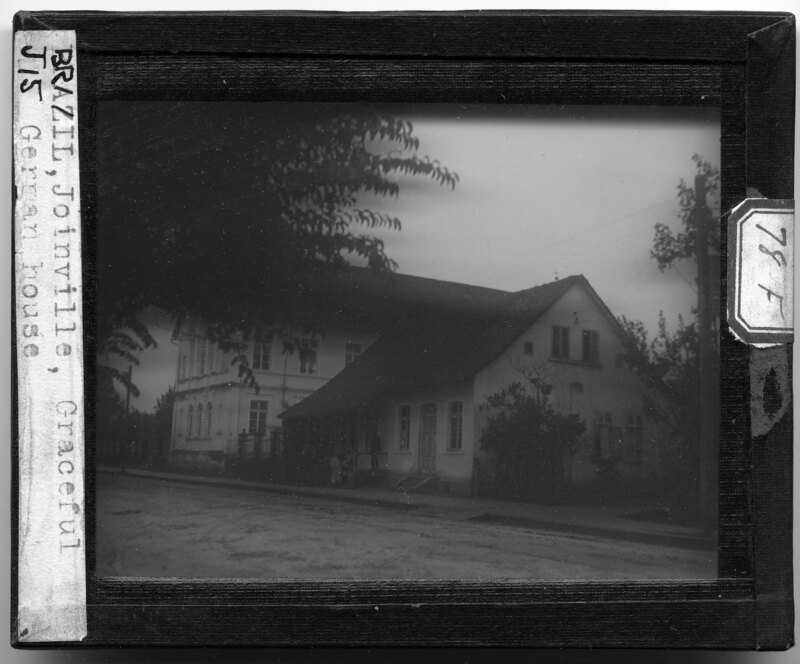
One and a half story vernacular German house in Joinville, Brazil. The house may be split into two different residences based on the multiple front facades. People can be seen sitting on the porch of the house. A two story house stands behind the main house. A dirt road passes in front of the house. It is noted this is an example of a graceful German house.
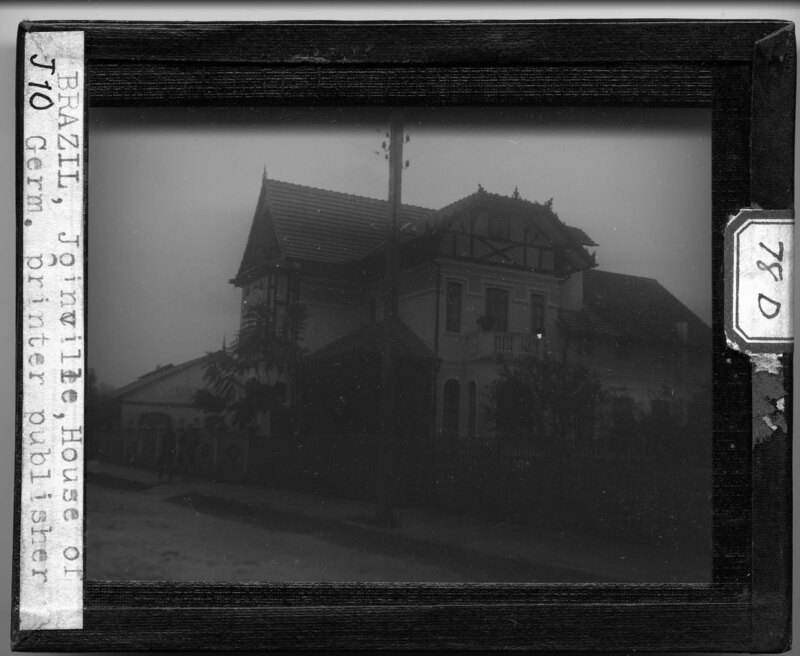
Eclectic style house of a German printer-publisher in Joinville, Brazil. Two men walk down the sidewalk in front of the house that is surrounded by an iron and wooden fence. An electrical pole can be seen in the foreground next to a dirt road. An office building stands behind the German house.
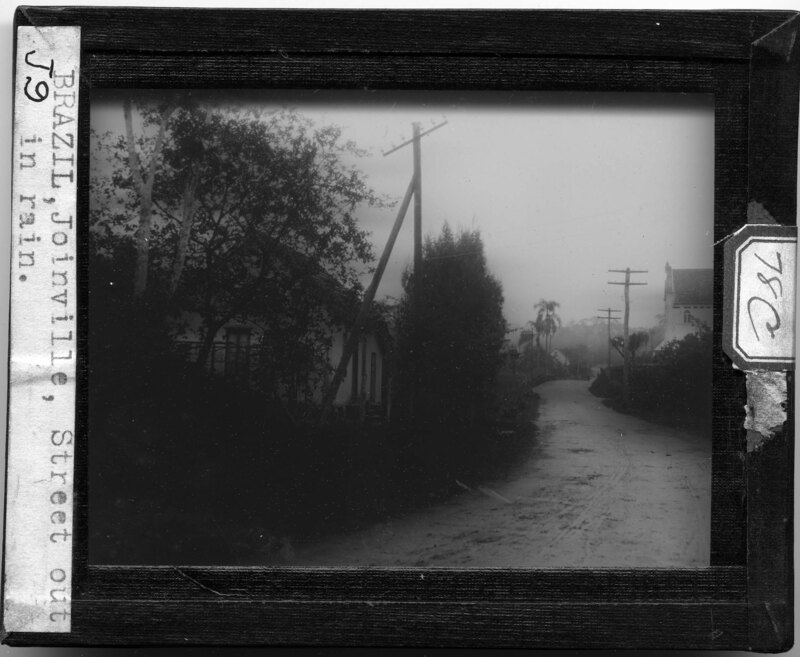
Streetscape during a rain storm in Joinville, Brazil. One and a half to two story vernacular houses line the dirt roadway. Foliage grows up around the houses and electrical poles line the street.
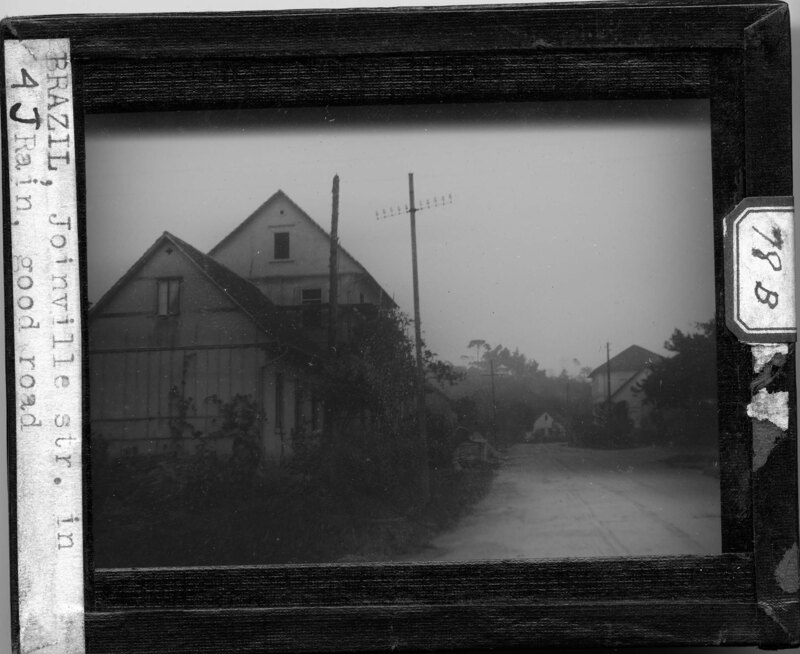
Vernacular style one and a half to two story houses in Joinville, Brazil. Looking down the dirt road in front of the houses during a rainstorm. Vegetation grows up around the houses and there is an electrical pole in the foreground. It is noted that this is a good road in Joinville.
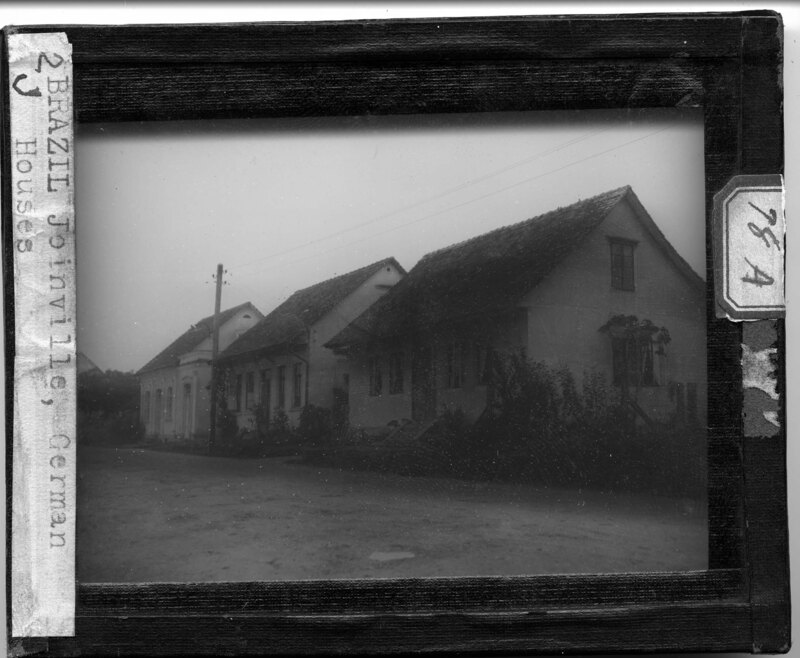
Vernacular style one and a half story houses that appear to be center passage floorplans with saltbox style roofs. It is noted that these are German houses in the town of Joinville, Brazil. A dirt road passes in front of the row of houses and vegetation grows up around the houses.
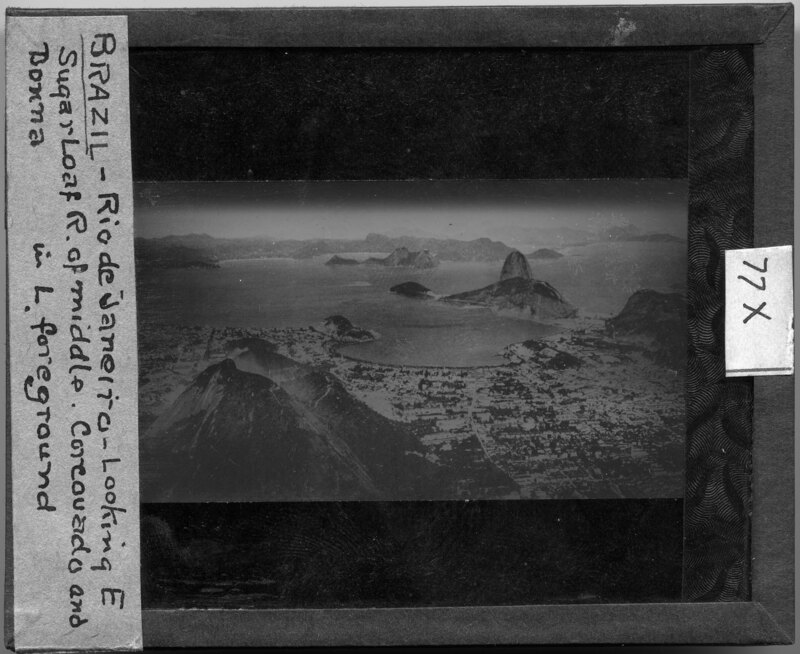
View of the bay at Rio de Janeiro, Brazil. Sugarloaf Mountain can be seen in the middle of the bay with other mountains and hills rising out of the bay behind Sugarloaf. Rio de Janeiro can be seen at the base of the mountain in the foreground. It is noted that Corcouado and Bonna can be seen in the left foreground. Slide labeled with text, "Made by G.R. Swain, 713 E. University Ave., Ann Arbor, Michigan." Swain was staff photographer at U of M from 1913 to 1947.
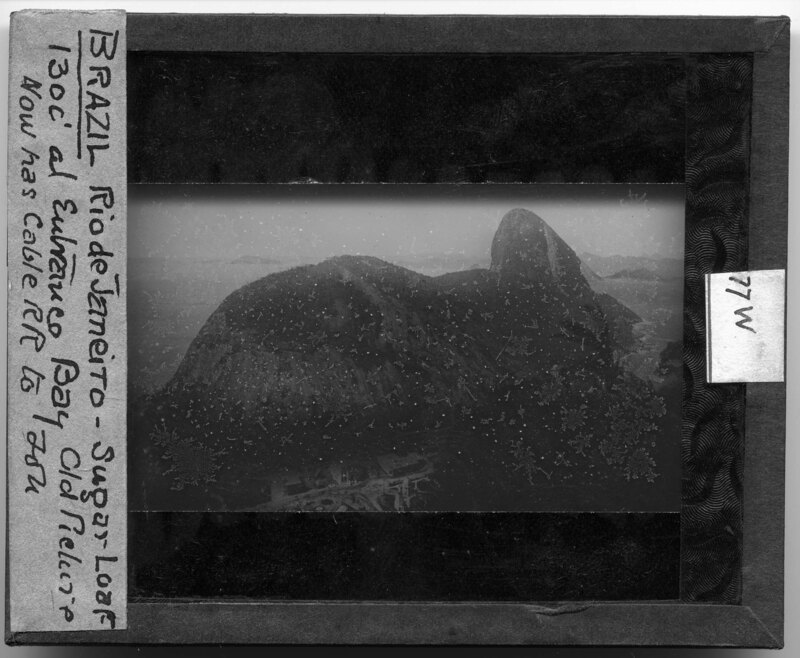
Island mountain of Sugarloaf in Rio de Janeiro, Brazil. Several buildings and roadways can be seen at the base of the mountain. Other mountains and hills rise up from the bay behind Sugarloaf Mountain. Slide labeled with text, "Made by G.R. Swain, 713 E. University Ave., Ann Arbor, Michigan." Swain was staff photographer at U of M from 1913 to 1947.
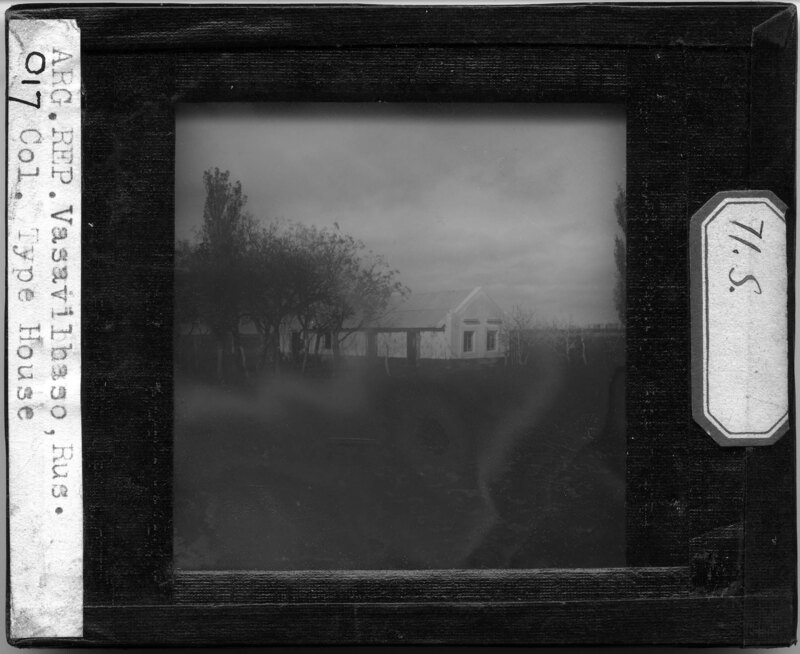
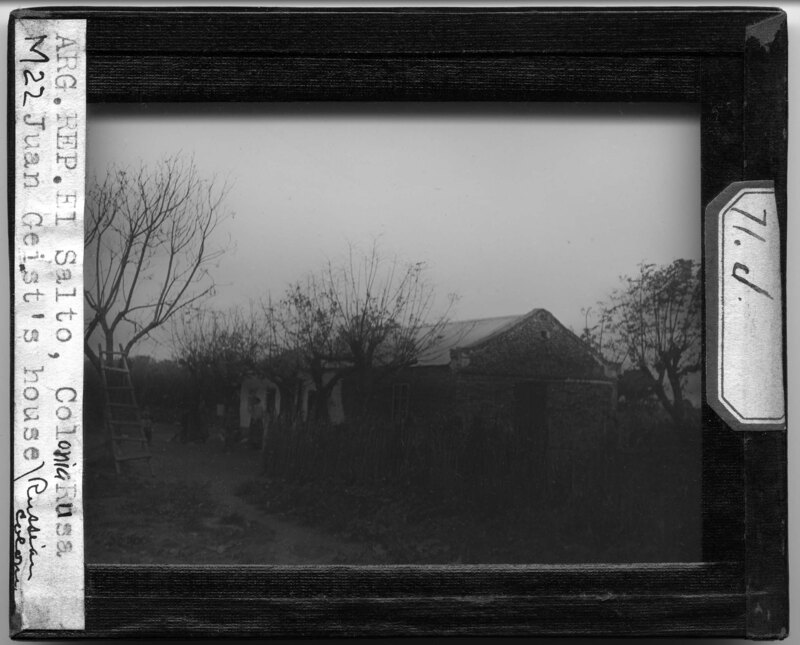
Russian colonist's house built in the middle of plowed farming land. A grove of tree's grows outside of the house. The house is very modest 1 1/2 story design.
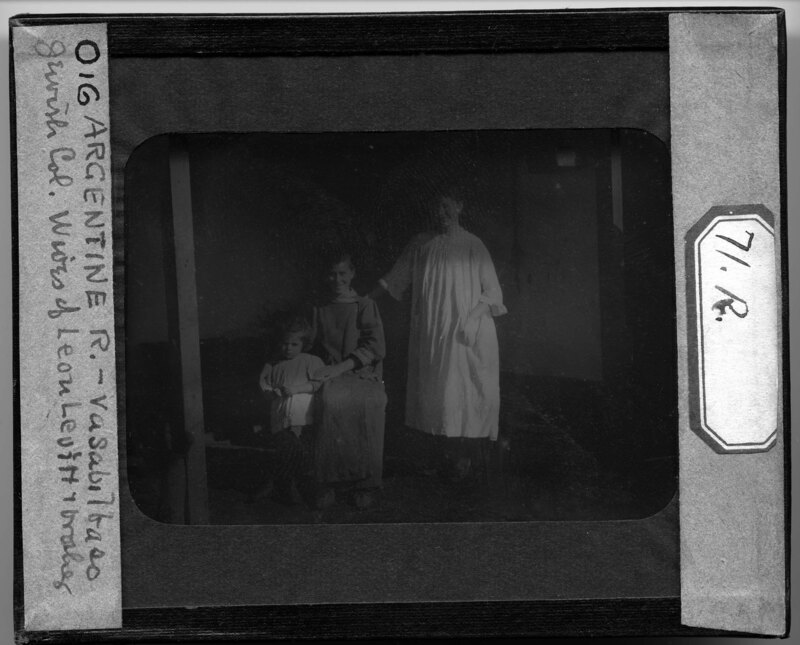
The wives and daughters of Leon Levitt and his brother. It is noted they are Jewish Colonists living in Vasavilbaso, Argentina. Their clothes and shoes are minimalist and they are sitting under a patio with a dirt floor.
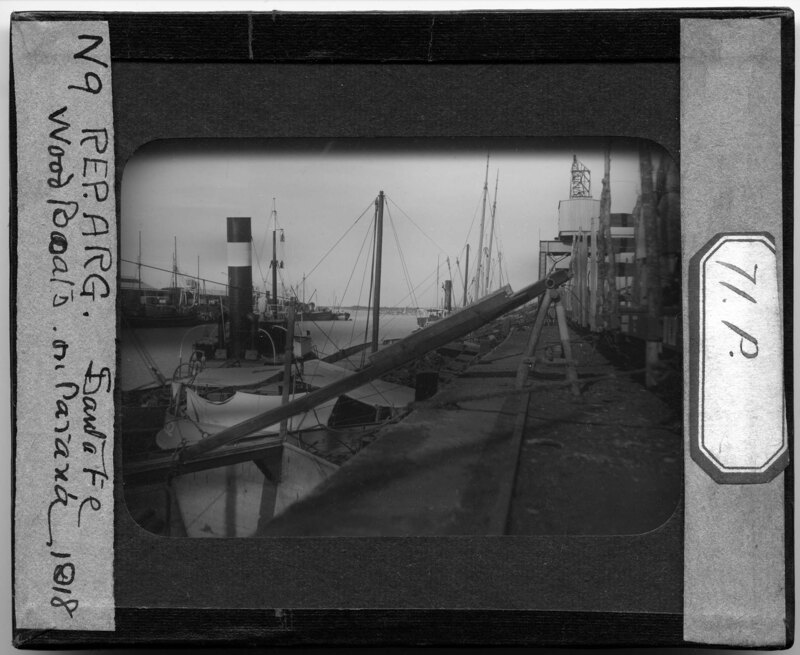
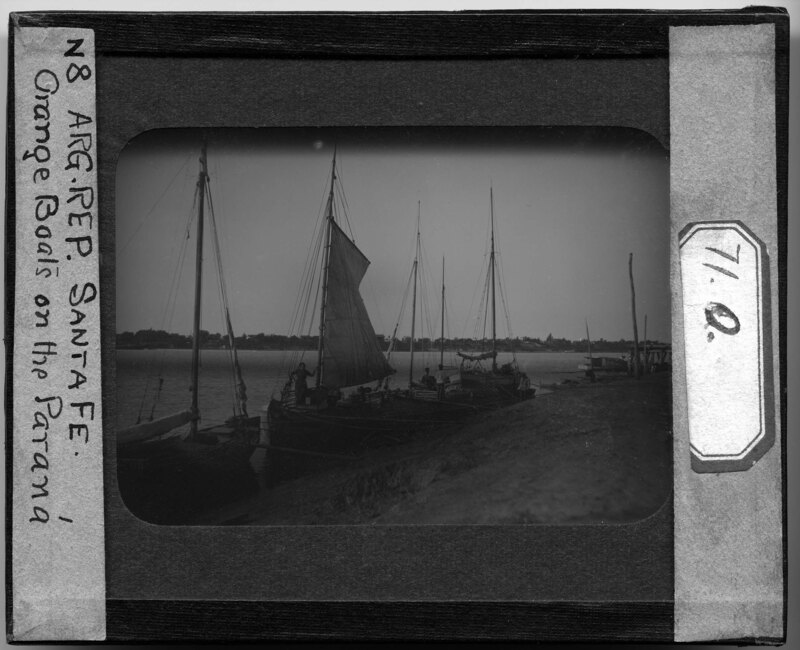
Sailing and steam powered boats are moored to a dock on the Parana River in Santa Fe, Argentina. It is noted the boats are wooden. Loading equipment and rail cars are in the right of the picture in order to load the boats.
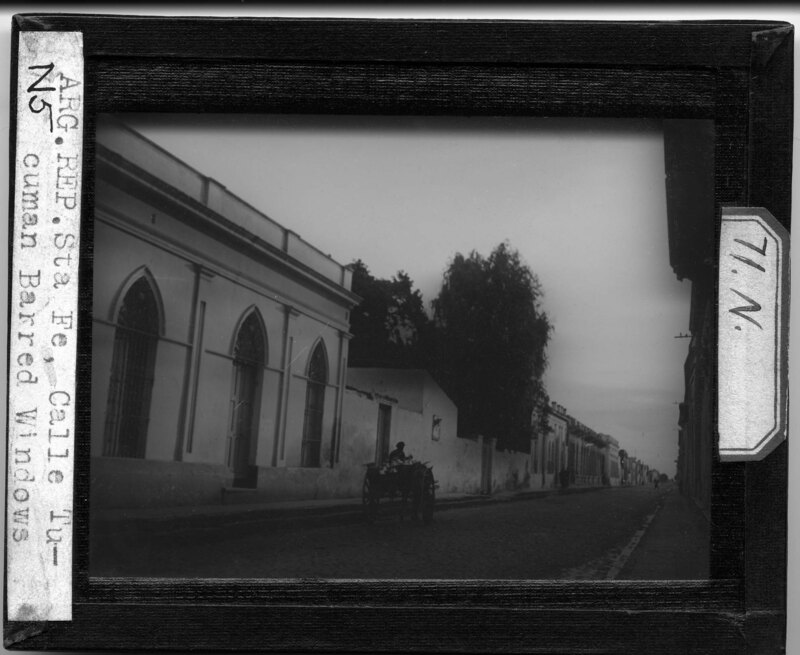
Streetscape of rowhouses and a cobble stone street. Gothic arched barred windows are on the building to the left. A donkey and cart are driving down the street.
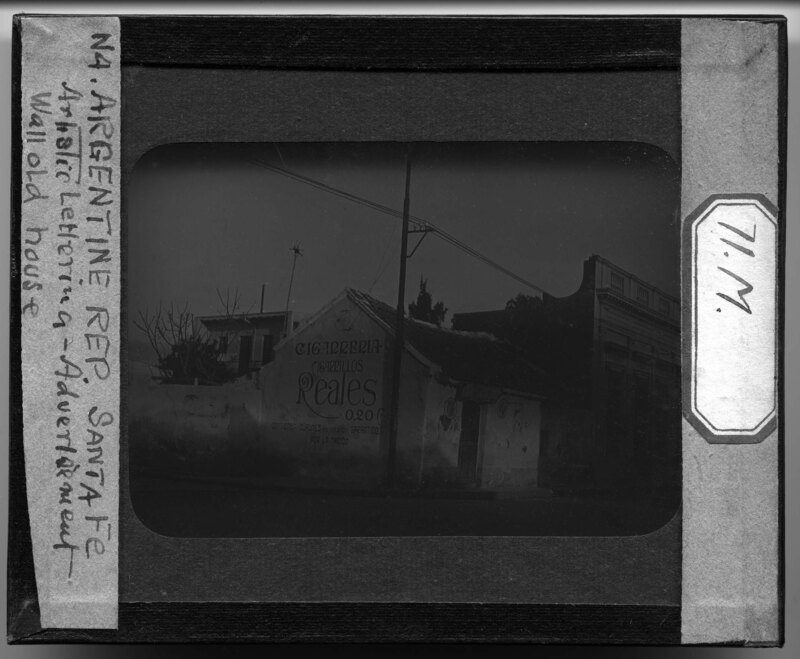
Plaster house in Santa Fe, Argentina. Artistic advertising is painted on the side of the house. The houses of representative of Spanish Colonial architecture
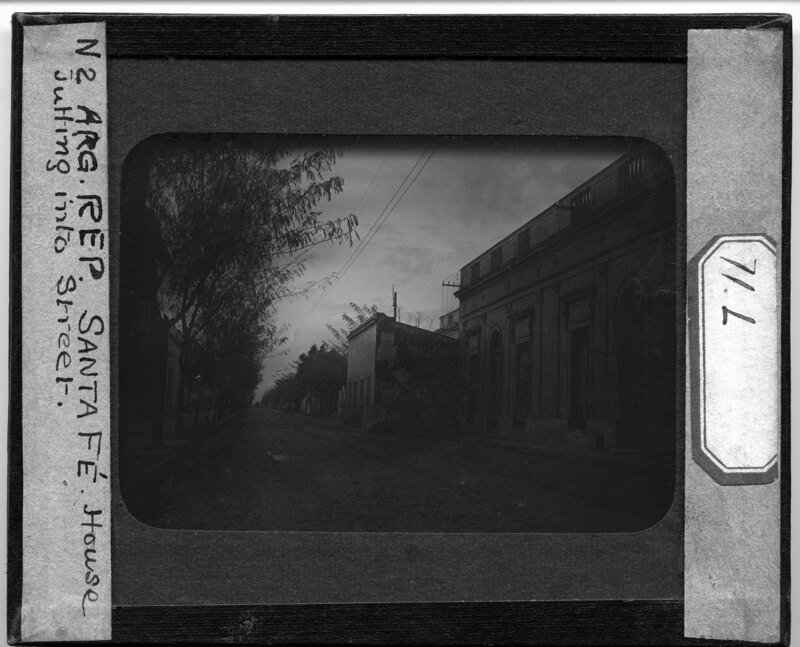
Streetscape in Santa Fe, Argentina. One of the house's juts into the street and doesn't fit into the row of other houses. Trees line the sidewalk next to the street.
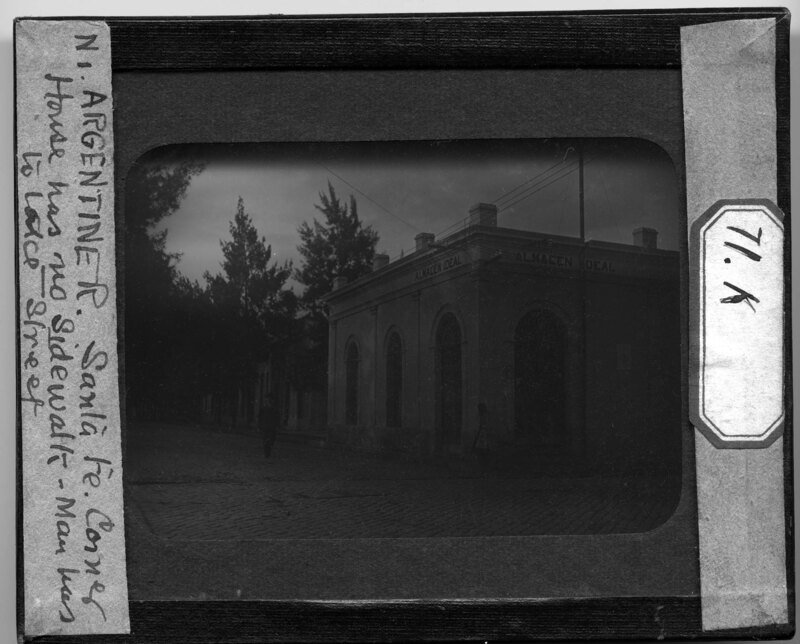
Streetscape of houses and trees lining the cobblestone street. A man walks in the street because the house on the corner does not have a sidewalk. A woman stands outside of the house with no sidewalk. The house is labeled Almacen Deal and has ornate detail in the arch above the doors.
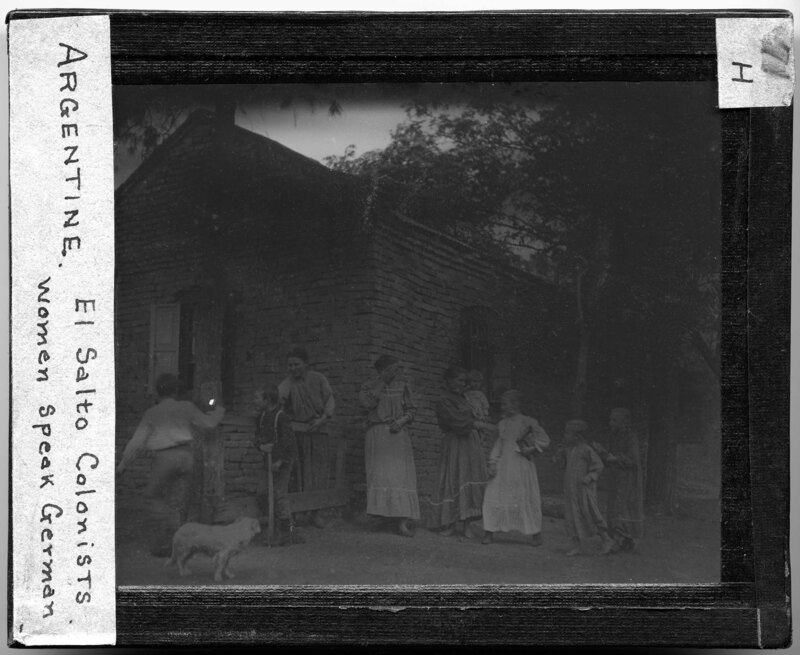
El Salto colonists. Three women and their children are standing outside of their houses made of brick. It is noted the women speak German. The clothes of the women and children is reflective of a rural lifestyle.
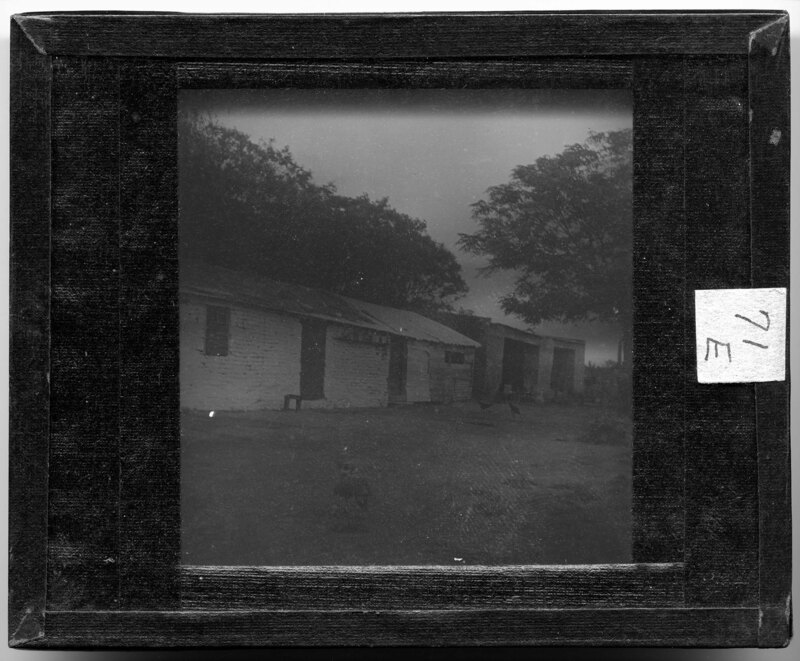
Russian colony houses in El Salto, Argentina. They are one story stone buildings with wooden doors. A dog and chickens are in the barnyard next to a well pump.
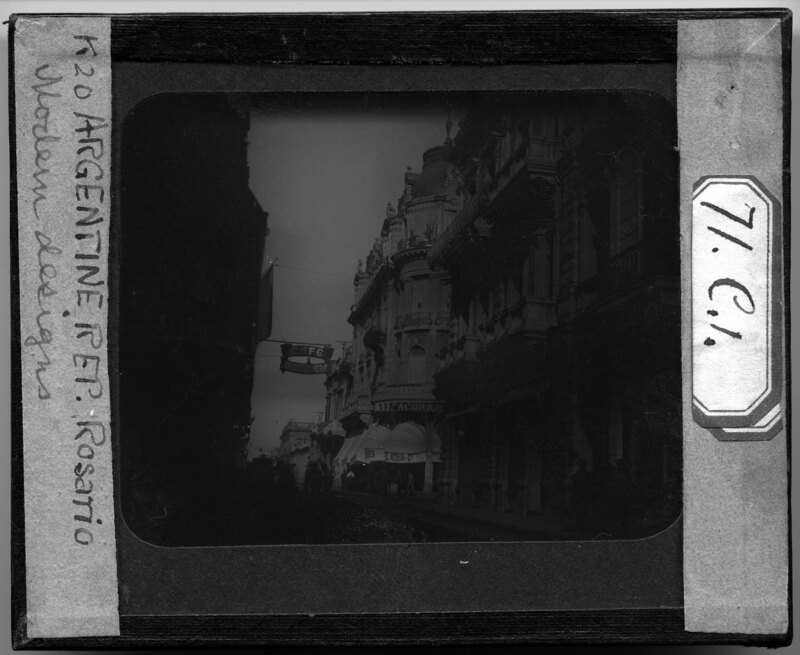
Streetscape of modern architecture with neoclassical influences. Very prominent buildings are on either side of the street. Pedestrians are walking on the sidewalk and in the street.
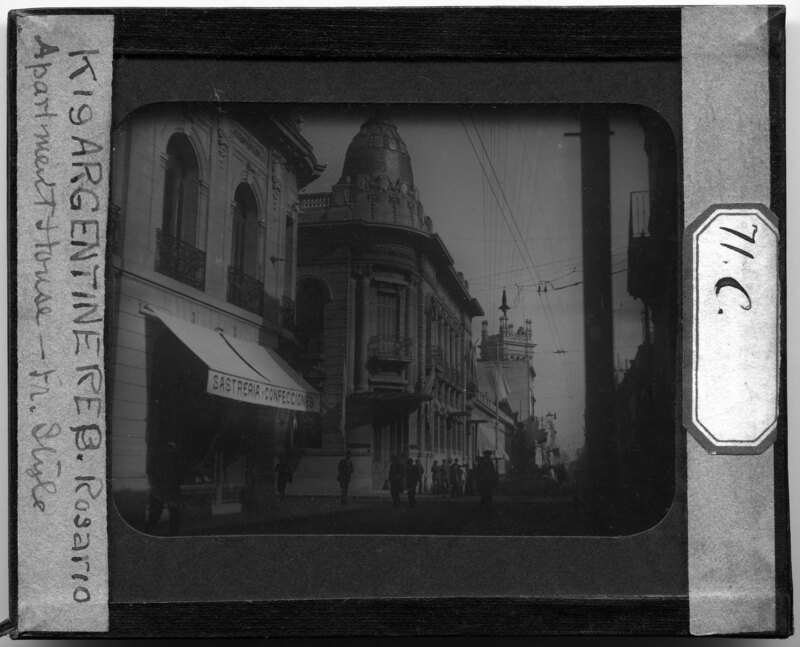
Streetscape of neoclassical architecture. A prominent apartment building with a dome on the roof sits half way down the street. Pedestrians are walking on the sidewalks and in the street.
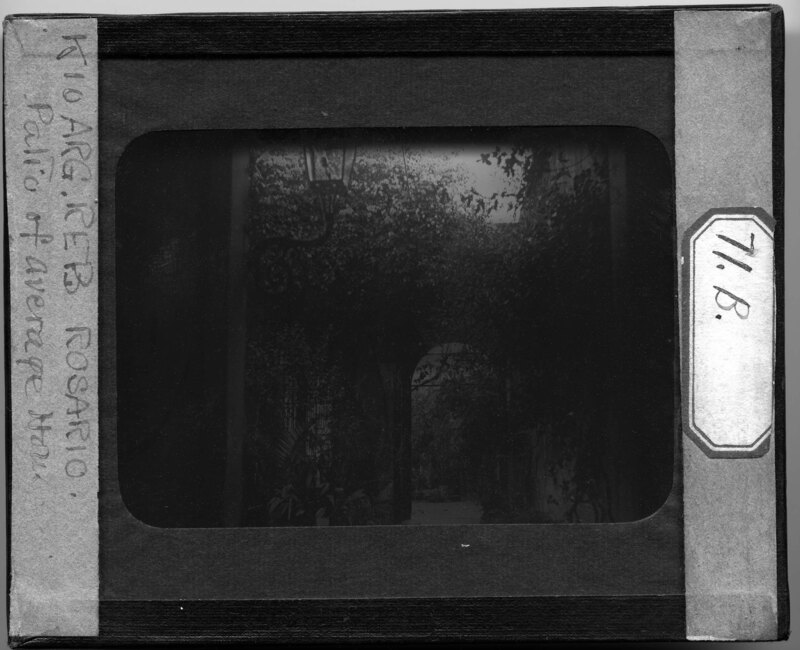
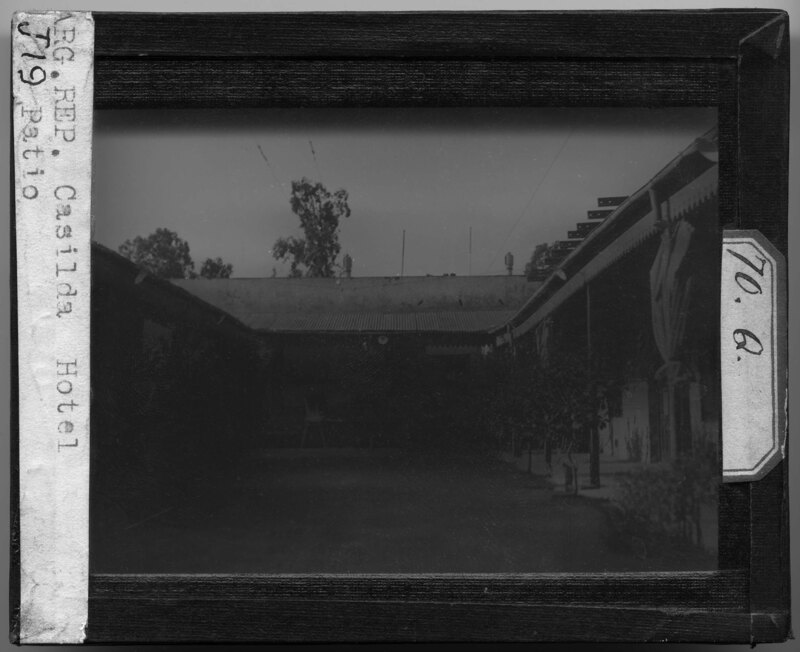
Foliage covers an outdoor patio attached to a house in Rosario, Argentina. It is noted this is an average patio. Roman style arches create the patio pavilion and metal bracket lights are used as decoration.
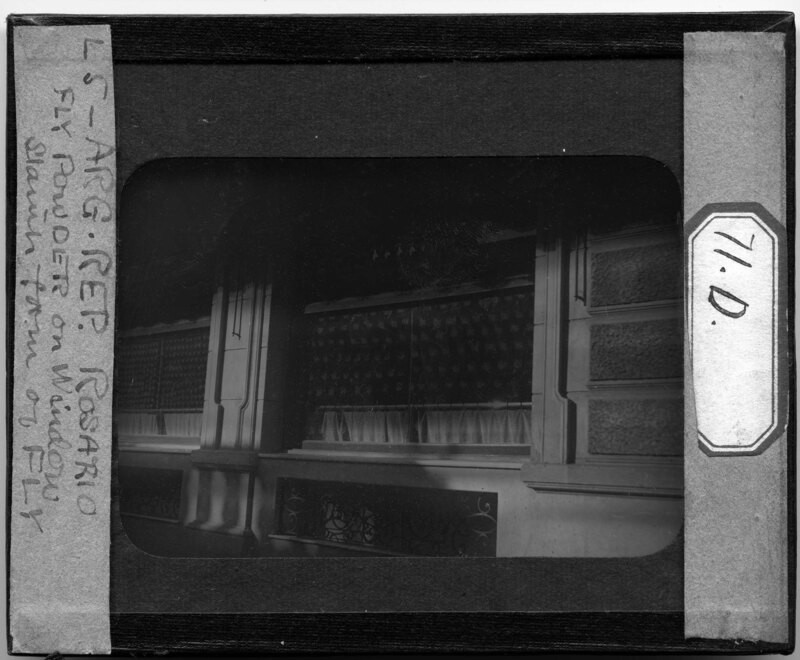
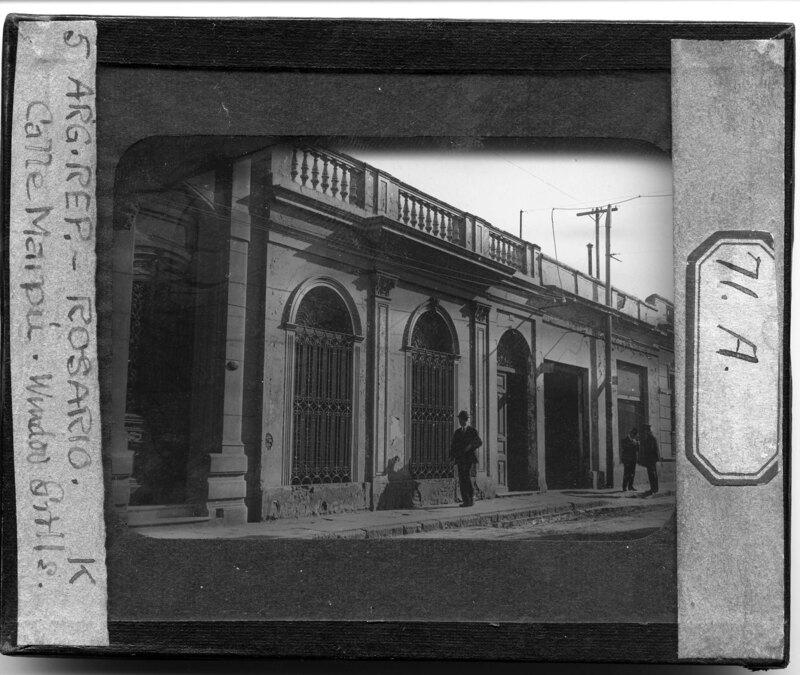
Ornate detail on the front facade of a building in Rosario, Argentina. It has an Italian style influence and has window grilles on the outside. Three men are on the sidewalk outside of the building.
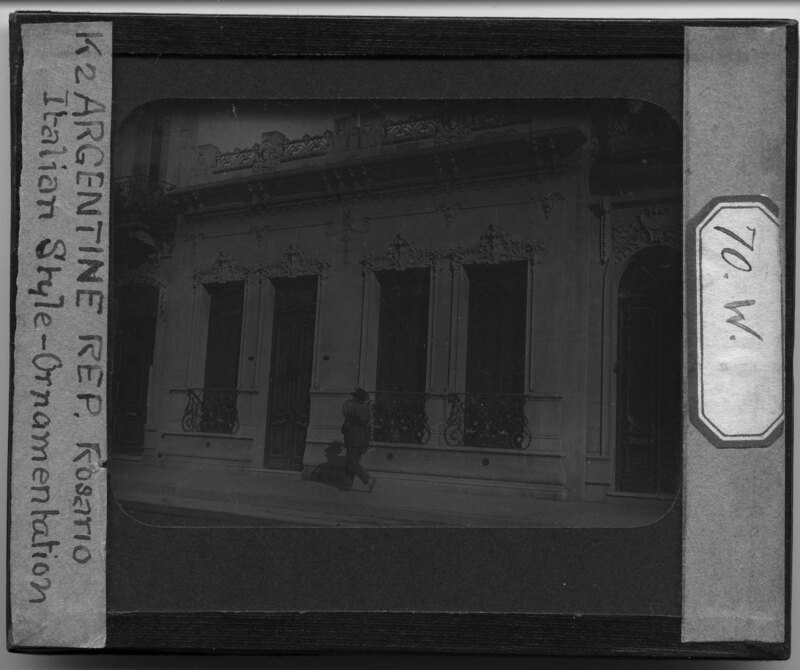
Italian style architecture. Showing the ornate detail on the building. A man with a basket walks in front of the building on the sidewalk. Stone cresting decorates the roof.
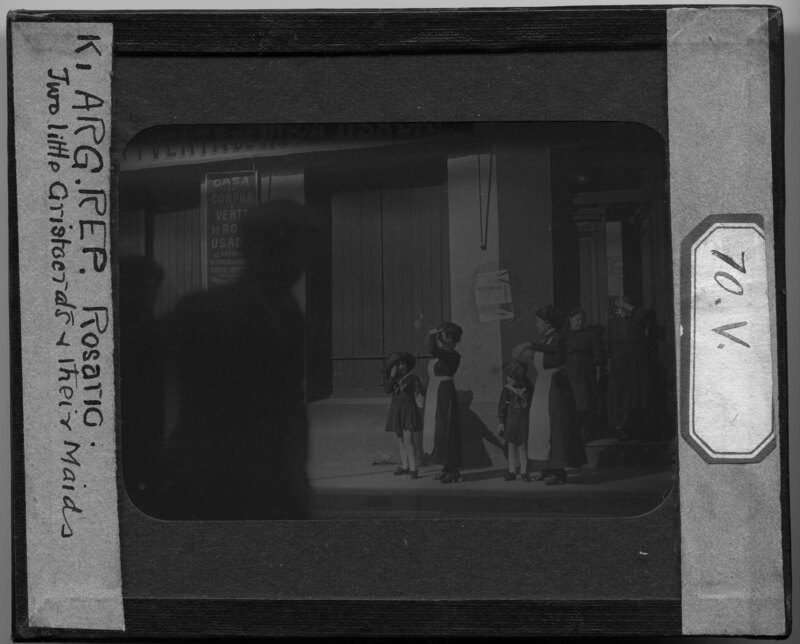
Two aristocrats and their maids are walking on the sidewalk. Two men look at the camera in the foreground and the women and girls are walking out of their house.
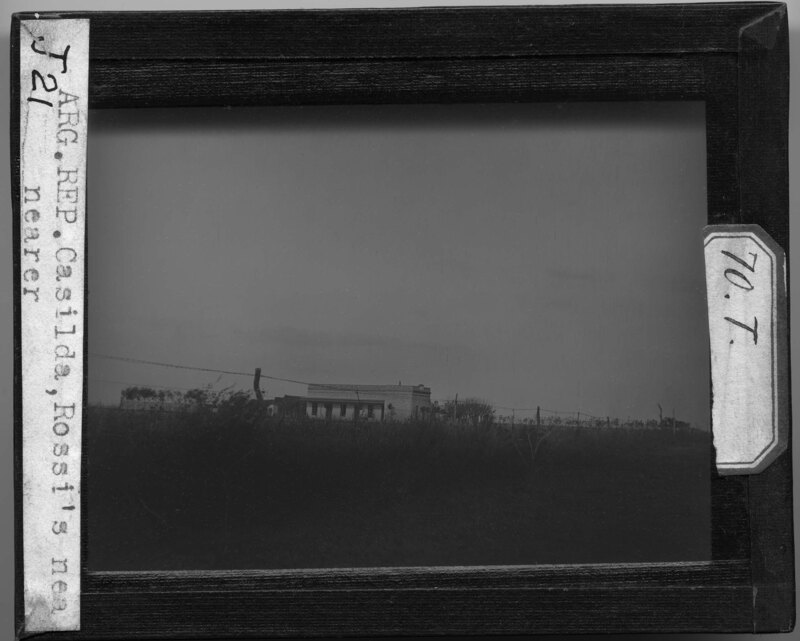
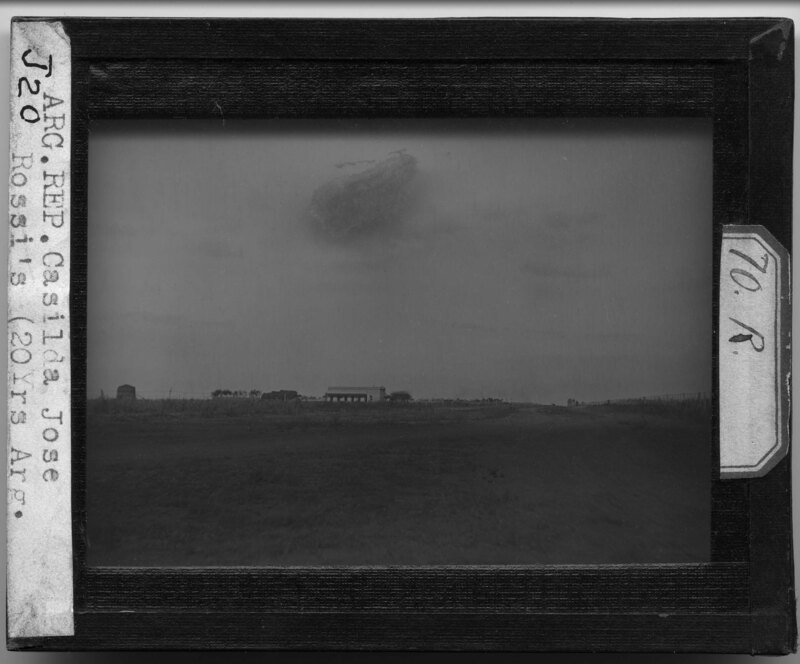
Barbed wire fence with wooden posts that fences off cultivated fields. A stone house can be seen behind the field. It is noted this is the house of Rossi.
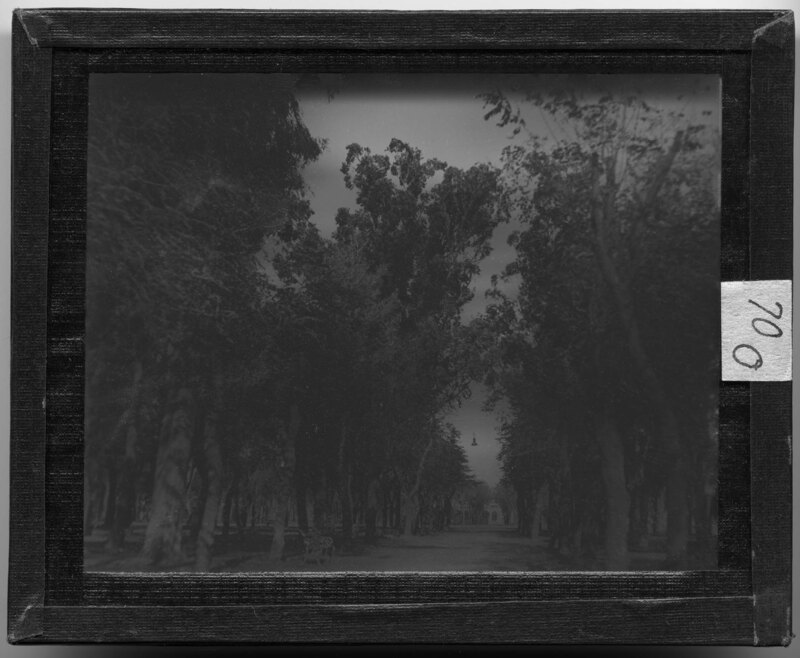
Eucalyptus trees line a dirt walkway in a park in Casilda, Argentina. A metal bench sits beside the walkway for people to rest. A spanish colonialism influenced building can be seen at the end of the path.
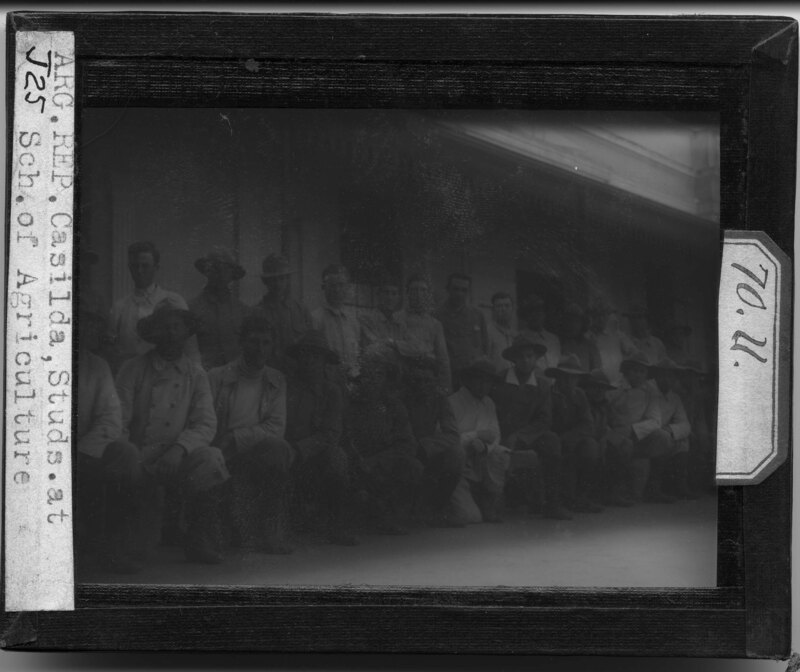
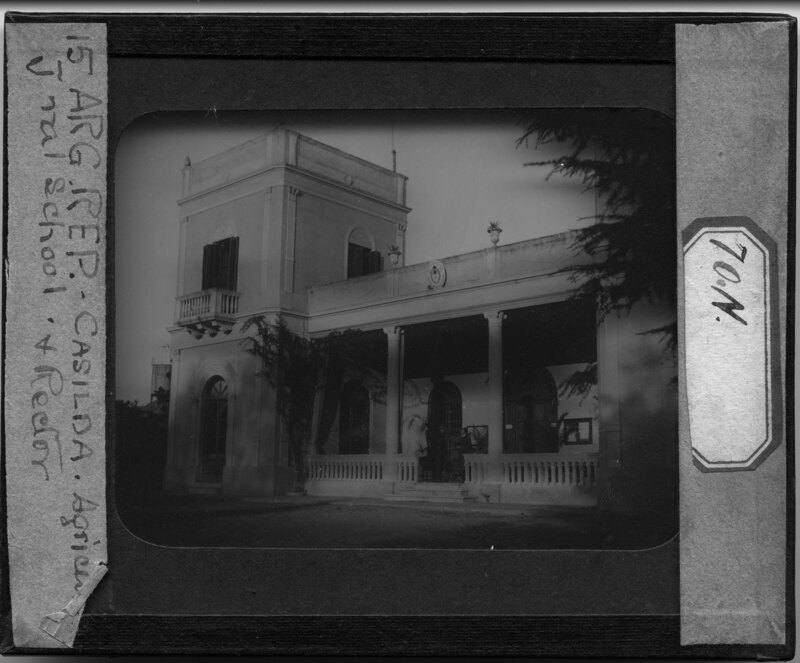
Spanish colonialism style building used as an agricultural school. Two men are talking on the porch of the building and potted plants decorate the porch.
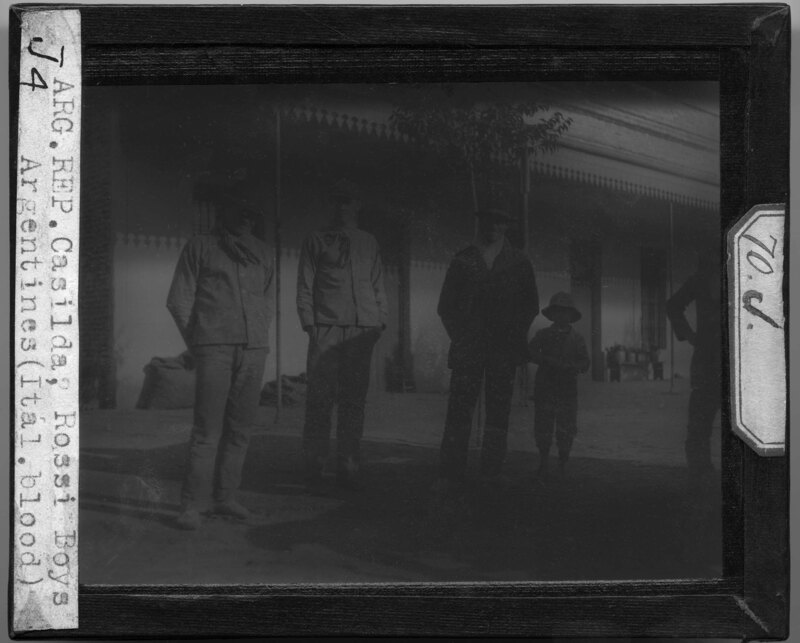
Four men and one boy have their picture taken in Casilda, Argentina. It is noted they are the Rossi boys with Italian blood. They are standing outside of a Spanish style building.
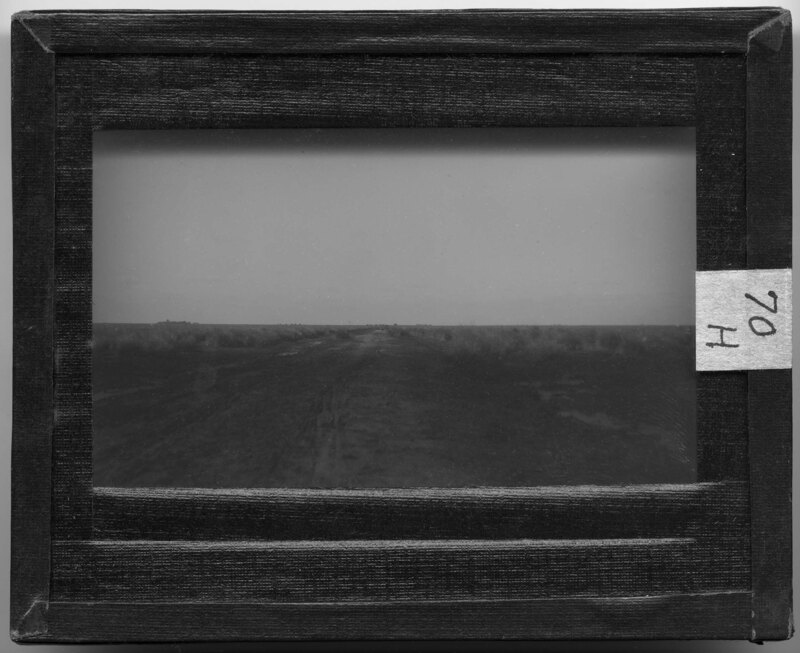
A dirt road with ruts from wagon wheels. The road is muddy and has standing water. Scrub brush can be seen on either side of the road. It is noted this is 30 miles from Rosario, Argentina.
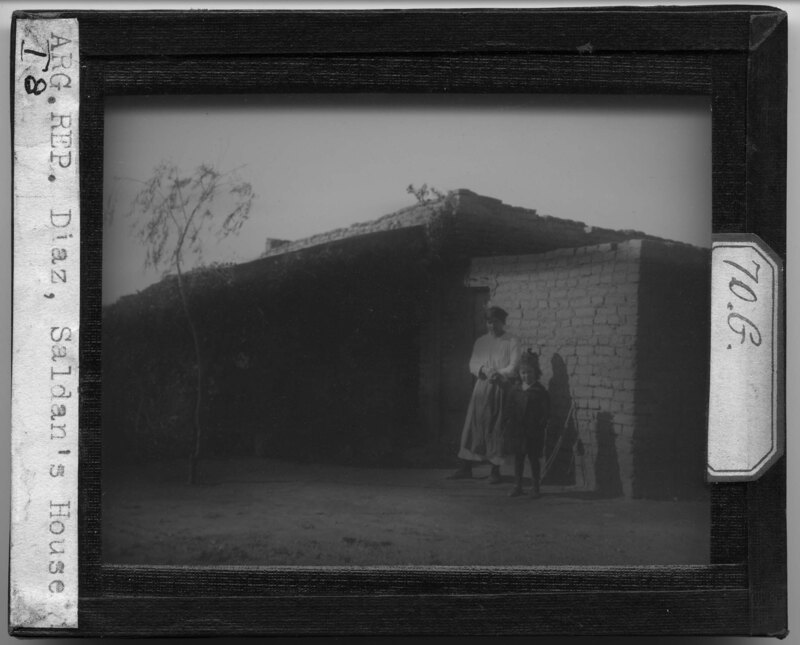
A woman and a girl stand outside of their stone and mortar house. It is a single story house with a lean-to porch. It is noted this is the house of Jaime Saldon.
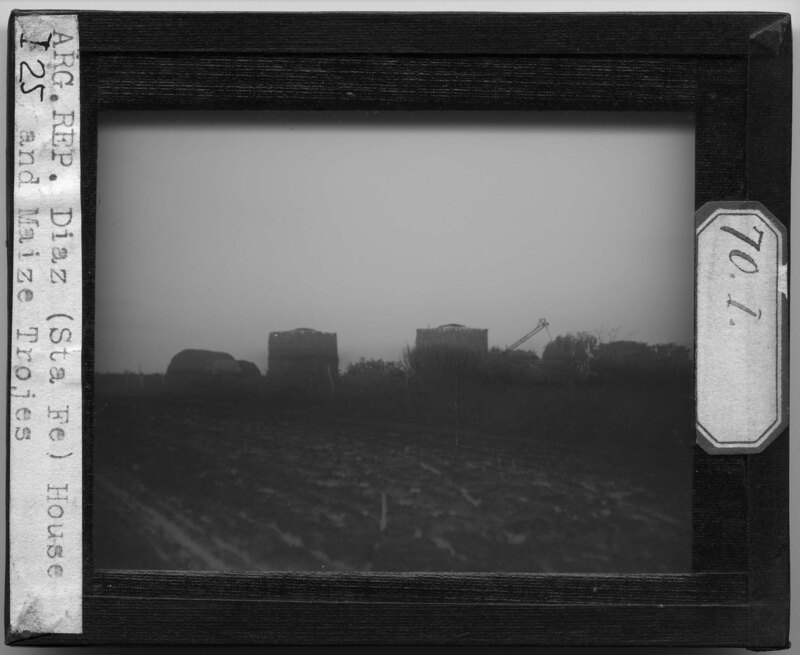
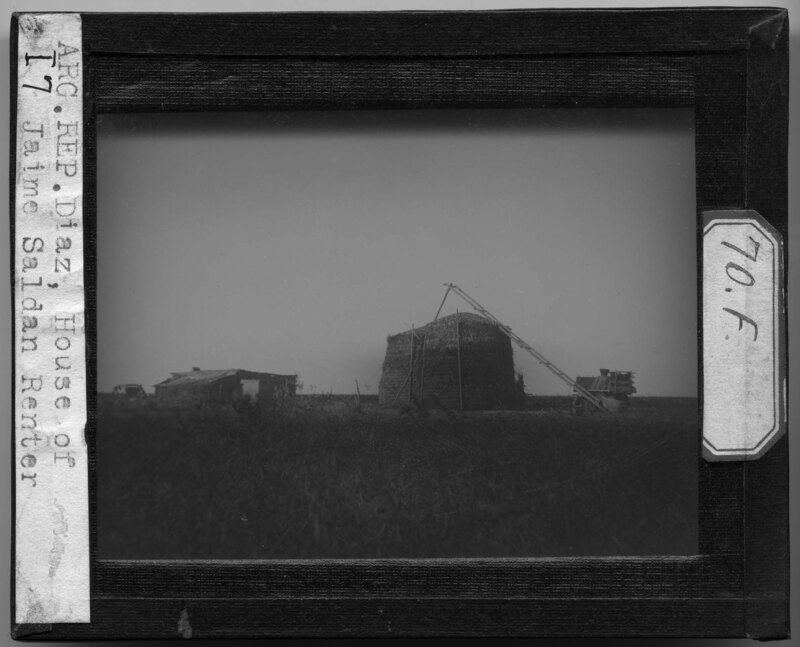
A farmer's rental house. To the right a wooden conveyor allows for buckets of maize to be taken to the top of the pile and dumped creating a large pile of the crop. Fields of maize surround the house and the pile.
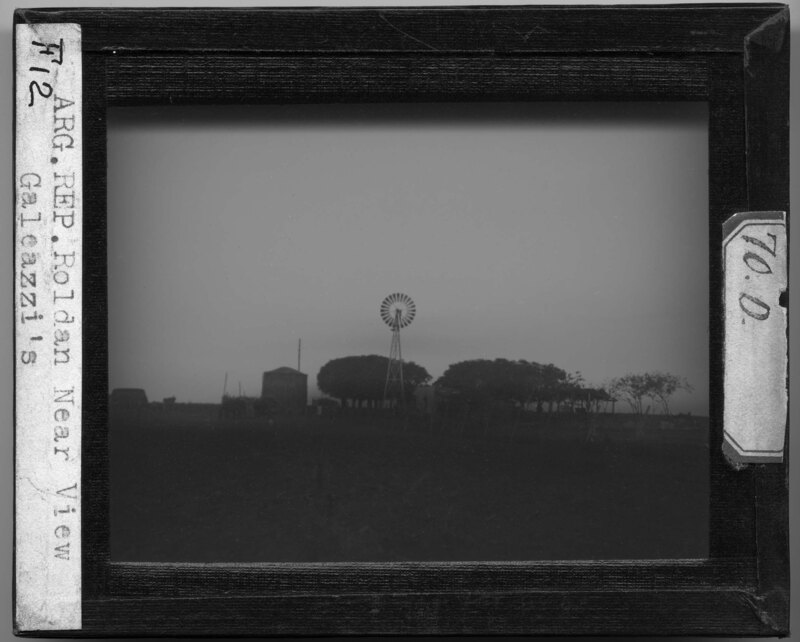
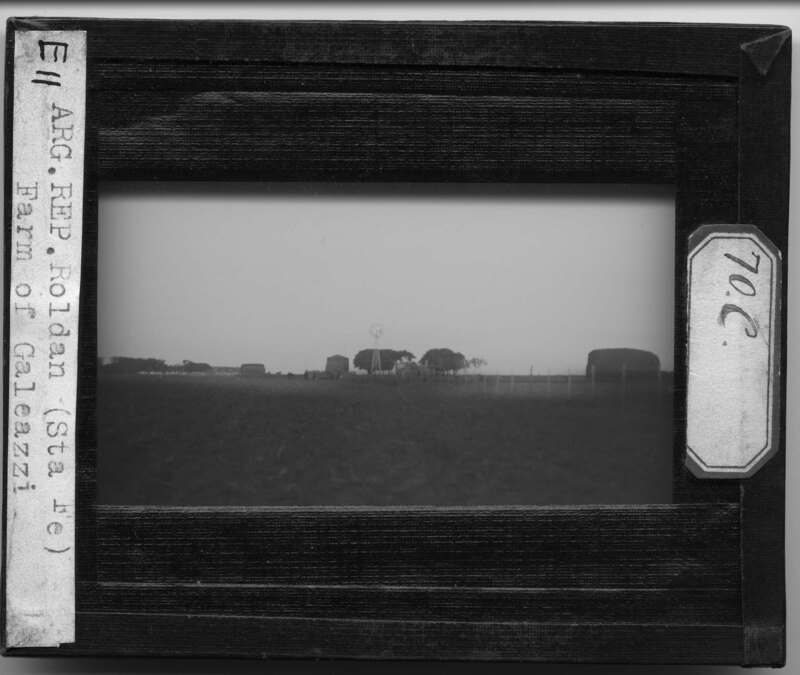
Very flat landscape of cultivated fields and several buildings in the background. A windmill stands beside the cultivated field used for power generation or attached to a water pump. A grove of trees is behind the windmill, otherwise the landscape is barren. It is noted that this is the farm of Galeazzi.
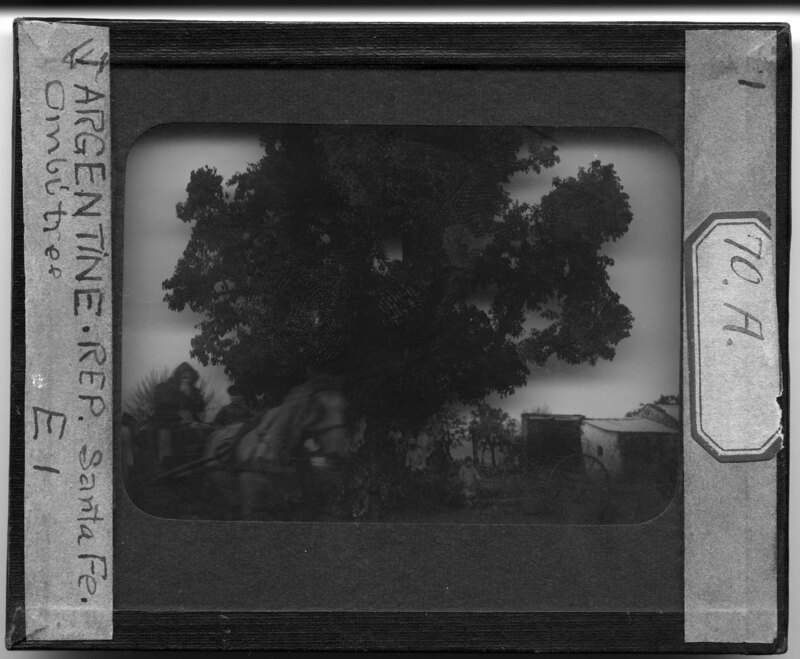
Large Ombu tree in Santa Fe, Argentina. A man and a boy are sitting on a wagon pulled by a horse and children stand at the base of the tree. Stone structures can be seen in the background.
Spanish two story houses in Burgos, Spain with gardens in the foreground. Slide labeled with text, "Made by G.R. Swain, 713 E. University Ave., Ann Arbor, Michigan." Swain was staff photographer at U of M from 1913 to 1947.
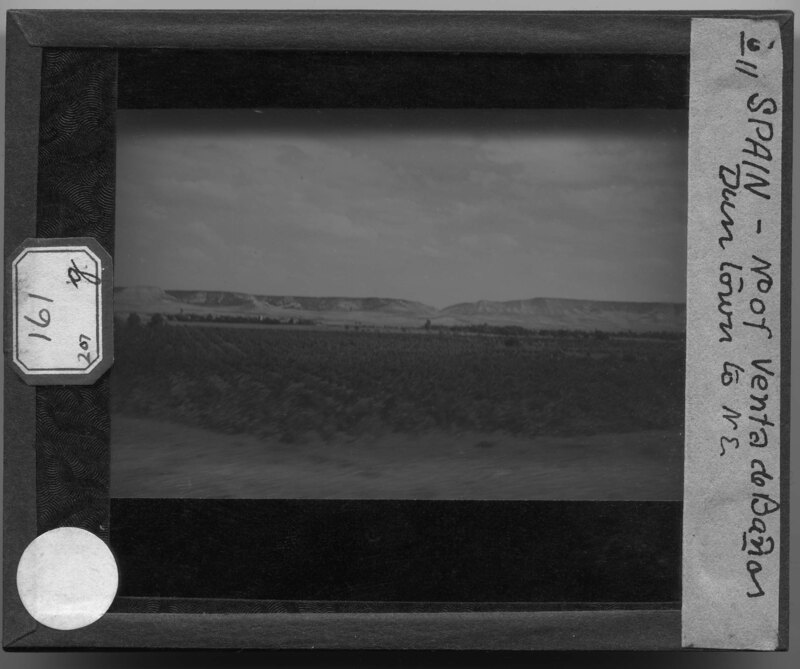
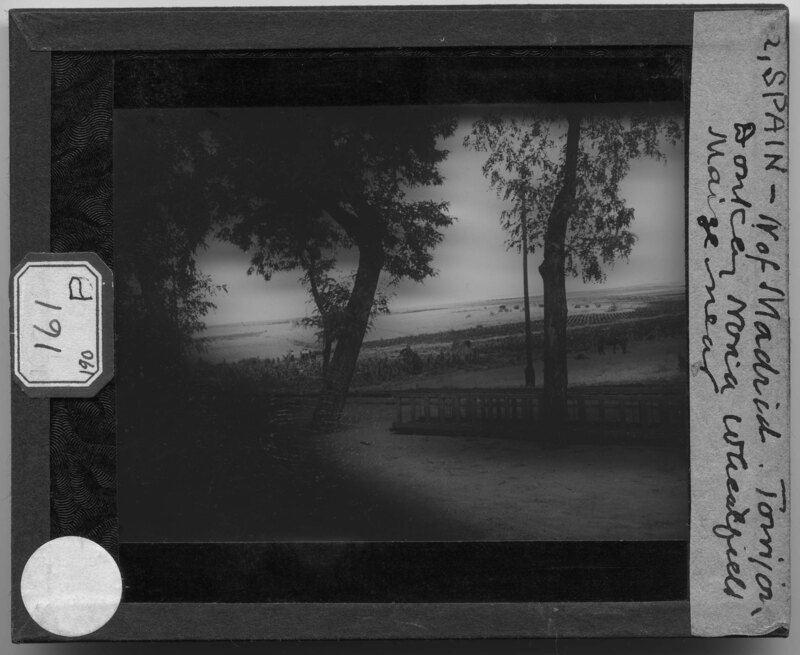
Landscape of planted fields and mountains in the background. It is noted that the picture shows the area north of Venta de Banos. Slide labeled with text, "Made by G.R. Swain, 713 E. University Ave., Ann Arbor, Michigan." Swain was staff photographer at U of M from 1913 to 1947.
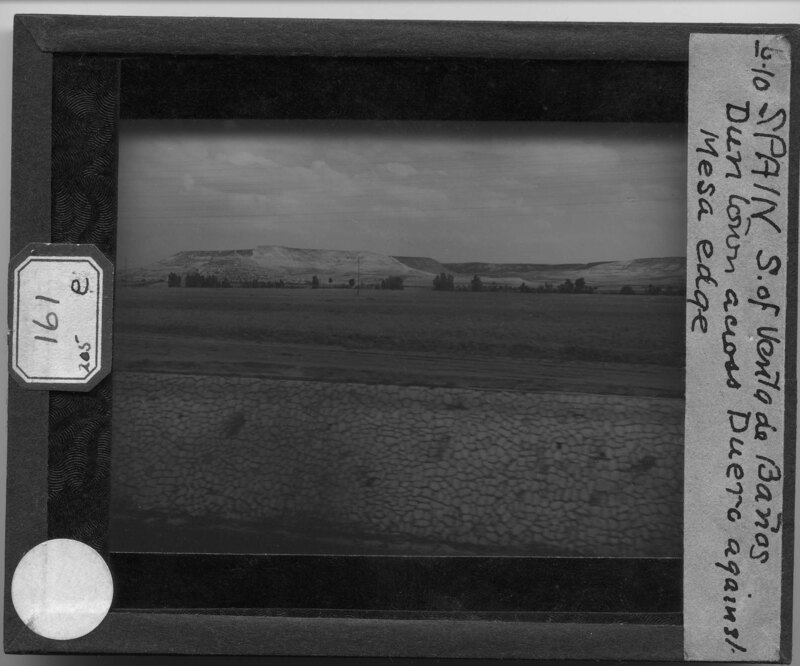
Landscape of planted fields and mountains in the background. A stone wall can be seen in the foreground. It is noted that the picture shows the area south of Venta de Banos. Slide labeled with text, "Made by G.R. Swain, 713 E. University Ave., Ann Arbor, Michigan." Swain was staff photographer at U of M from 1913 to 1947.
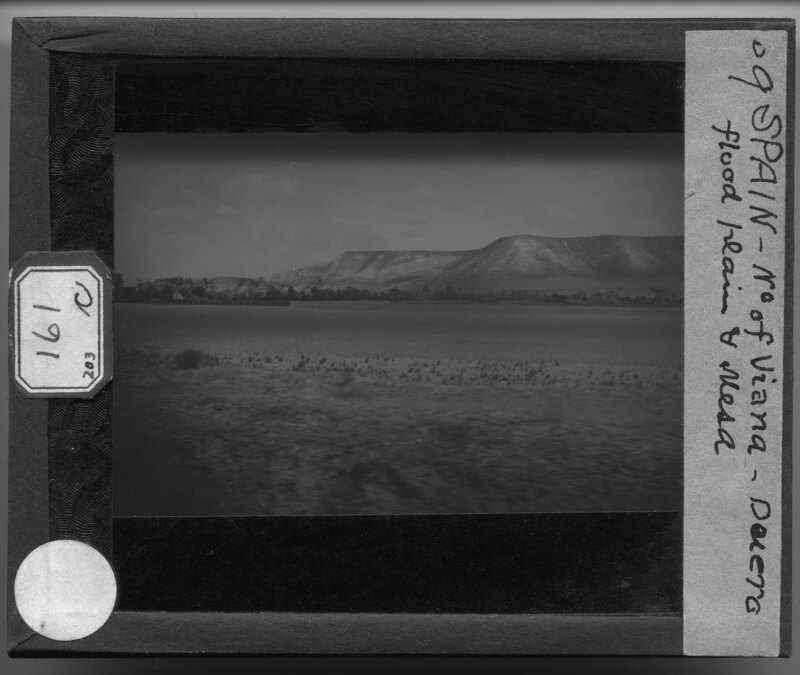
The Duero Floodplain. Planted fields are in the foreground and mountains rise in the background in Viana, Argentina. Slide labeled with text, "Made by G.R. Swain, 713 E. University Ave., Ann Arbor, Michigan." Swain was staff photographer at U of M from 1913 to 1947.
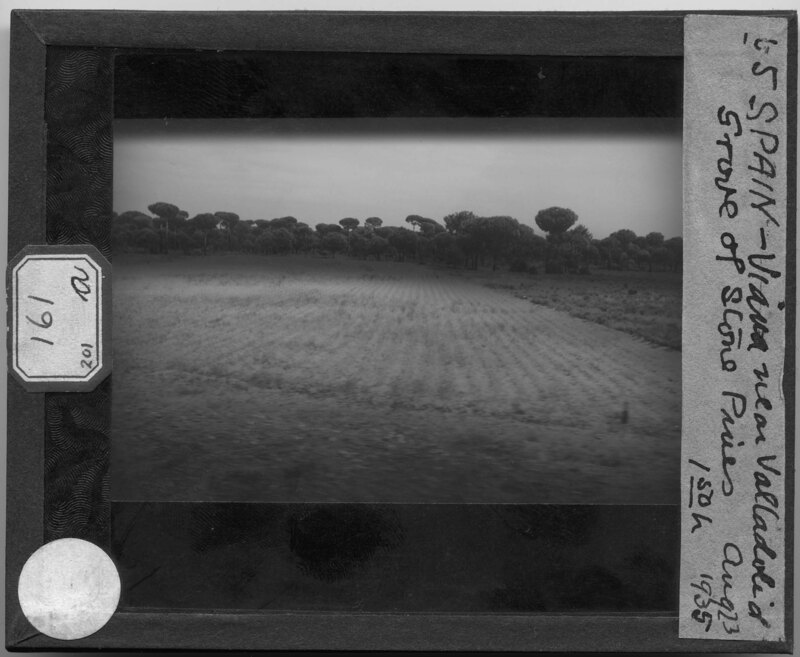
Wheat field that has been cultivated and planted. A tree grove is behind the field and the landscape appears to be relatively flat and rocky. Near Valladole, Argentina. Slide labeled with text, "Made by G.R. Swain, 713 E. University Ave., Ann Arbor, Michigan." Swain was staff photographer at U of M from 1913 to 1947.
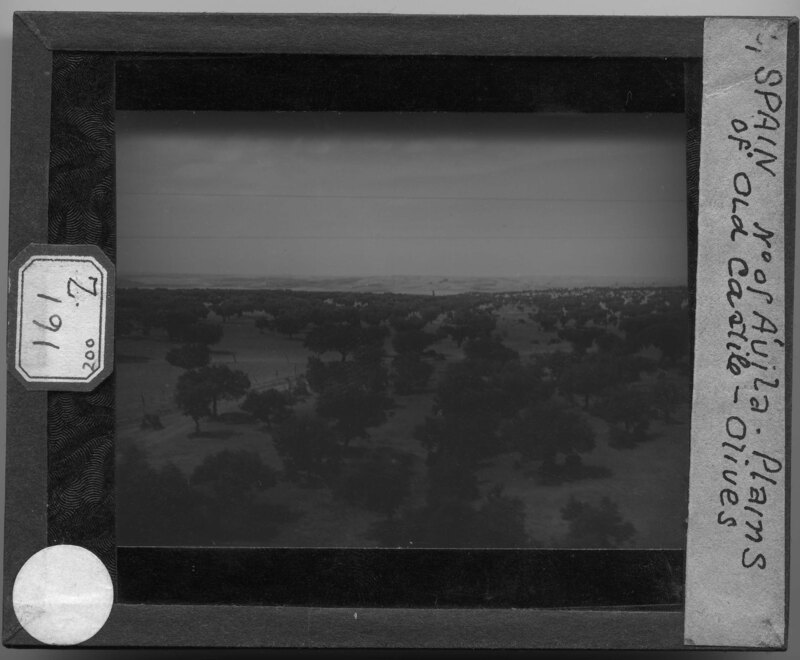
Landscape north of Aquila. The olive plains of Old Castile. The landscape is relatively flat and then rises in the background. Slide labeled with text, "Made by G.R. Swain, 713 E. University Ave., Ann Arbor, Michigan." Swain was staff photographer at U of M from 1913 to 1947.
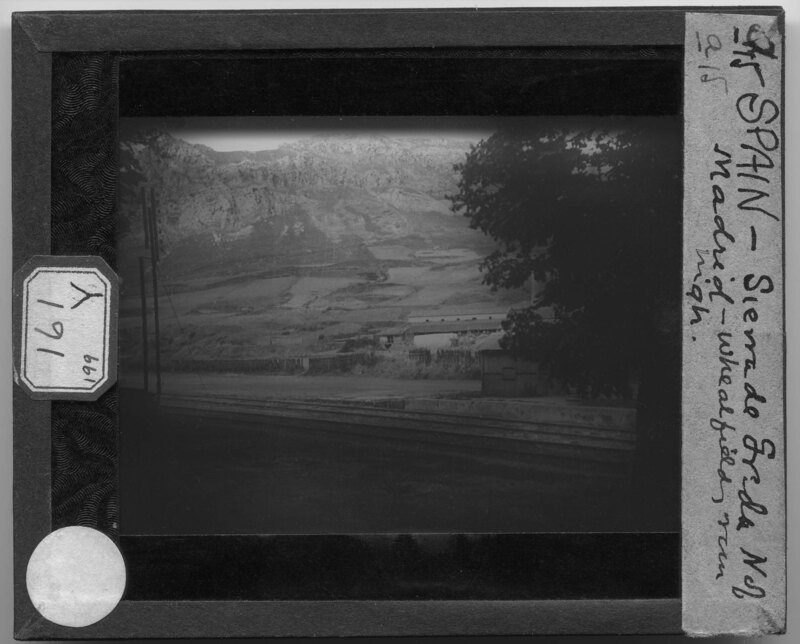
Mountainscape. Railroad tracks can be seen in the foreground with several buildings at the base of the mountain. Wheat fields can be seen on the mountain face. Slide labeled with text, "Made by G.R. Swain, 713 E. University Ave., Ann Arbor, Michigan." Swain was staff photographer at U of M from 1913 to 1947.
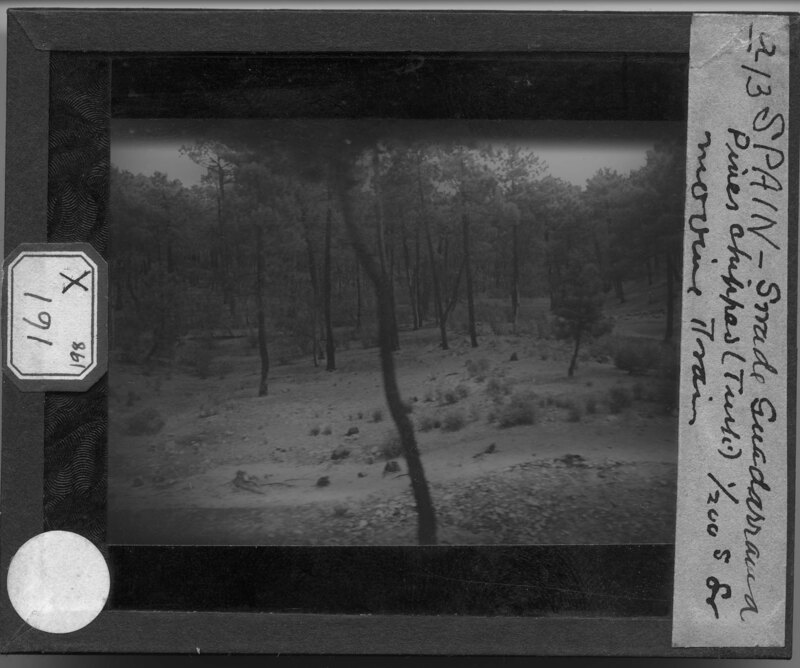
Rocky landscape of pine trees and scrub brush. The pine trees have been harvested to make turpentine. It is noted that the picture was taken from a moving train. Slide labeled with text, "Made by G.R. Swain, 713 E. University Ave., Ann Arbor, Michigan." Swain was staff photographer at U of M from 1913 to 1947.
Mountainous landscape with pine trees that are being harvested to make turpentine. Wheat fields can be seen on the mountain face in the background. A stone foundation can be seen in the foreground. Slide labeled with text, "Made by G.R. Swain, 713 E. University Ave., Ann Arbor, Michigan." Swain was staff photographer at U of M from 1913 to 1947.
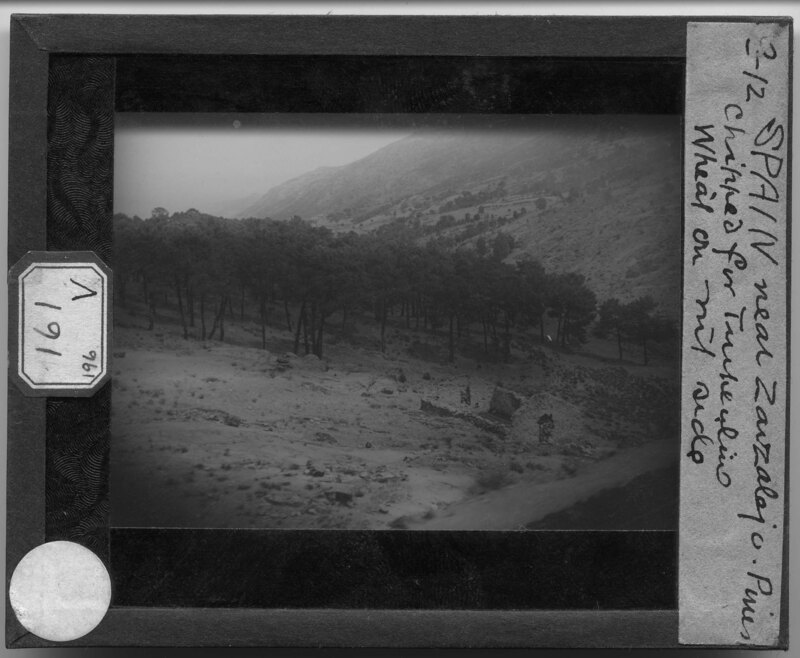
Rocky, mountainous landscape with terraced ground and mountains rising in the background. It is noted that the picture shows pines that have been chopped to make turpentine. Slide labeled with text, "Made by G.R. Swain, 713 E. University Ave., Ann Arbor, Michigan." Swain was staff photographer at U of M from 1913 to 1947.
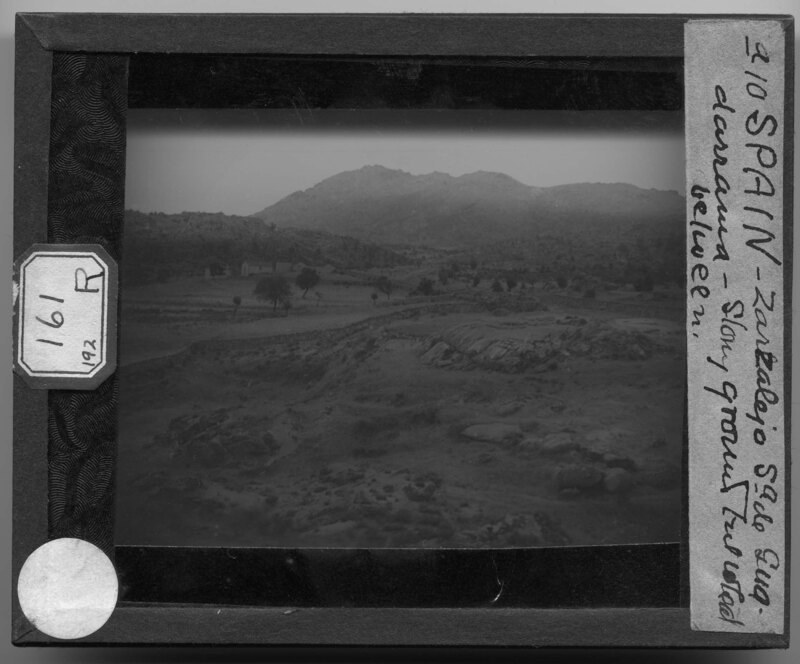
Landscape with agricultural fields spreading out in the distance. It is noted the fields are planted with wheat. The ground is rocky but mostly flat which is ideal for farming. Slide labeled with text, "Made by G.R. Swain, 713 E. University Ave., Ann Arbor, Michigan." Swain was staff photographer at U of M from 1913 to 1947.
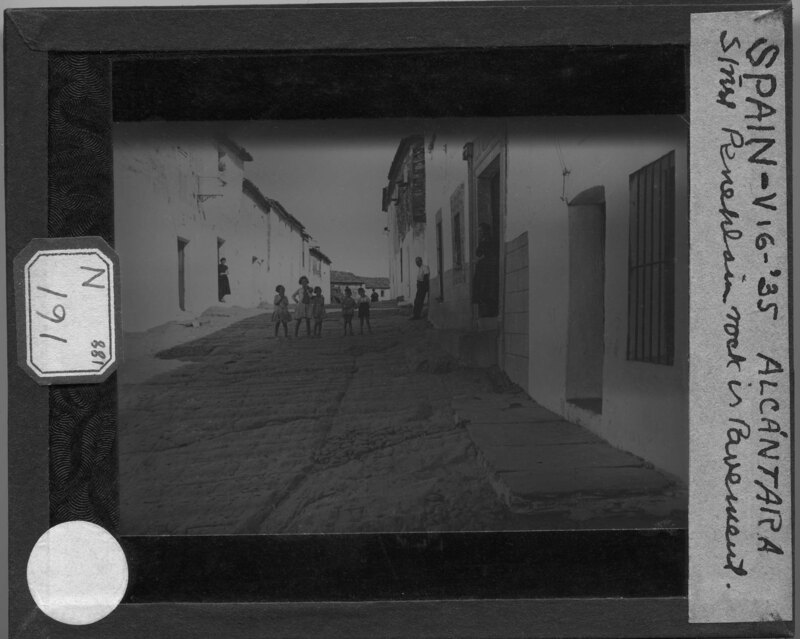
Streetscape of a stone street and rowhouses lining the street. Children stand in the middle of the street and adults stand in the doorways of their houses. It is noted that the pavement is rough and uneven because of water erosion. Slide labeled with text, "Made by G.R. Swain, 713 E. University Ave., Ann Arbor, Michigan." Swain was staff photographer at U of M from 1913 to 1947.
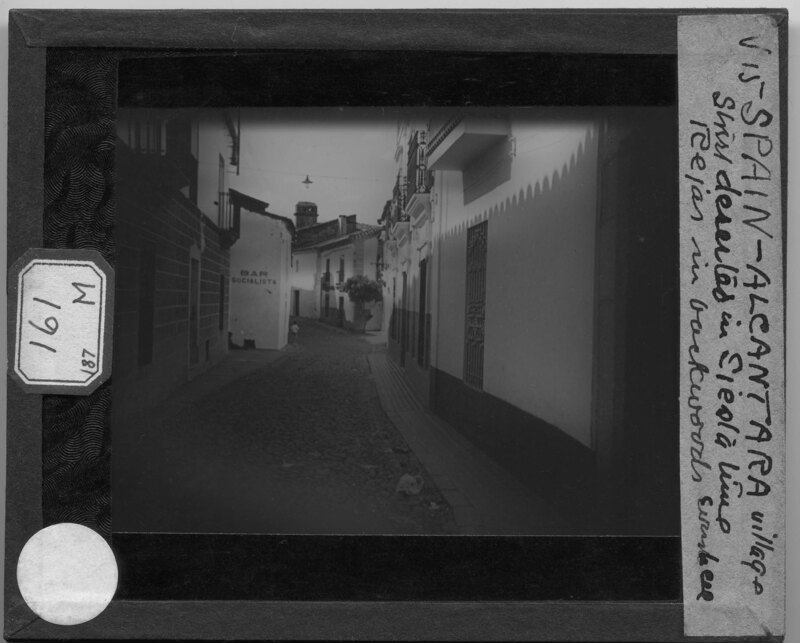
Streetscape of a cobbled stone street with row houses on either side of the street. Garbage litters the street and a boy walks past a building labeled Bar Socialista. Slide labeled with text, "Made by G.R. Swain, 713 E. University Ave., Ann Arbor, Michigan." Swain was staff photographer at U of M from 1913 to 1947.
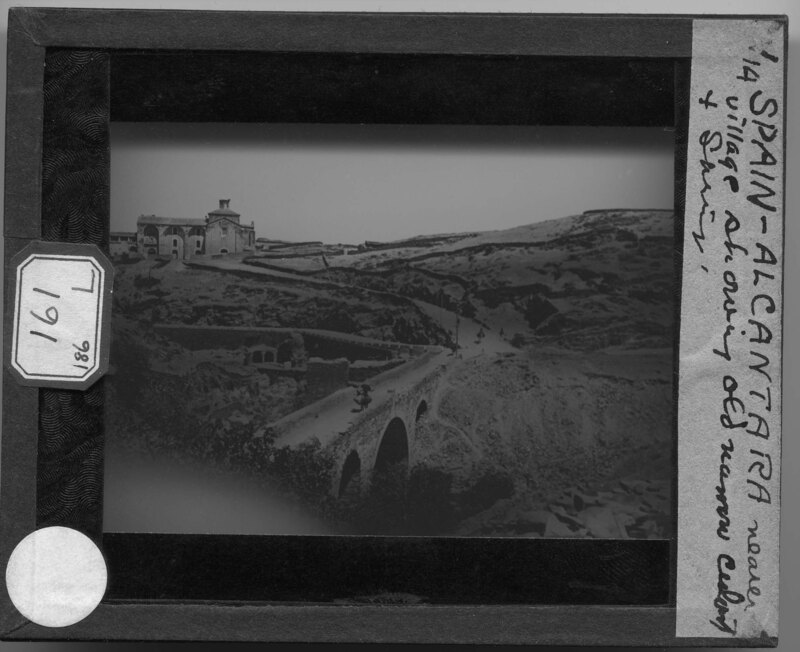
A stone bridge crosses a river valley and leads into a village higher up on a hillside. The landscape is mountainous and rocky. Terraced fields can be seen outside of the village and people riding donkeys are crossing the stone bridge. Slide labeled with text, "Made by G.R. Swain, 713 E. University Ave., Ann Arbor, Michigan." Swain was staff photographer at U of M from 1913 to 1947.
Outside of a village showing the mountainous landscape. Girls are filling water jugs at a well below the dirt road. Buildings are sitting on the hillside above the road. Slide labeled with text, "Made by G.R. Swain, 713 E. University Ave., Ann Arbor, Michigan." Swain was staff photographer at U of M from 1913 to 1947.
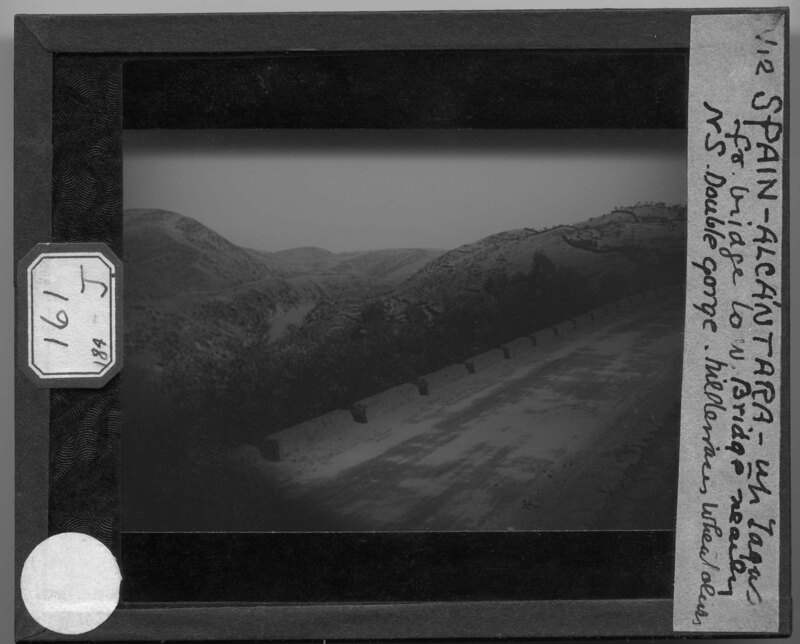
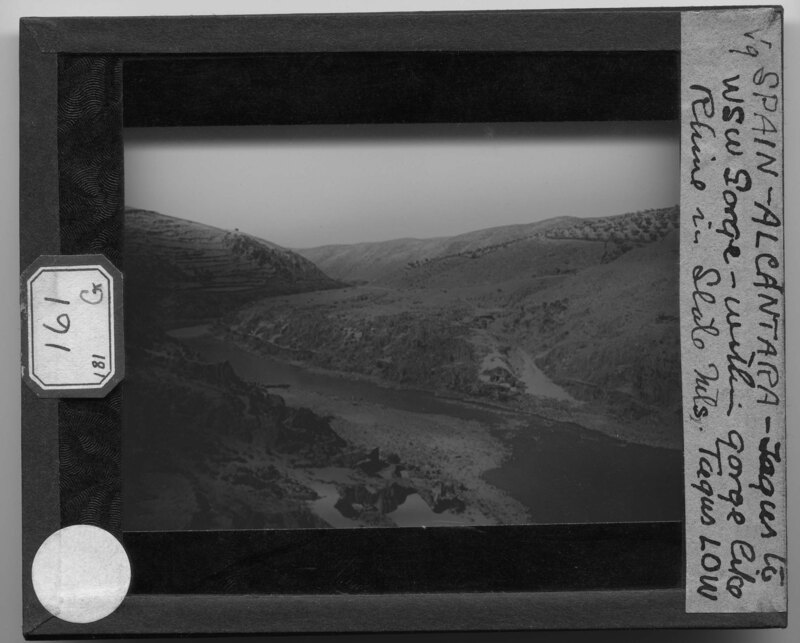
The Tagus River Valley from a dirt road running along the mountainside. Terraced ground can be seen in the right part of the picture, which prevents soil erosion. The landscape is mountainous and rugged. Slide labeled with text, "Made by G.R. Swain, 713 E. University Ave., Ann Arbor, Michigan." Swain was staff photographer at U of M from 1913 to 1947.
Tagus River valley within a mountainous landscape. Agricultural fields can be seen on the mountain in the left part of the picture have been terraced to prevent soil erosion. Slide labeled with text, "Made by G.R. Swain, 713 E. University Ave., Ann Arbor, Michigan." Swain was staff photographer at U of M from 1913 to 1947.
Looking down at the Tagus River from a bridge. The bank of the river is rocky and mountainous. Slide labeled with text, "Made by G.R. Swain, 713 E. University Ave., Ann Arbor, Michigan." Swain was staff photographer at U of M from 1913 to 1947.
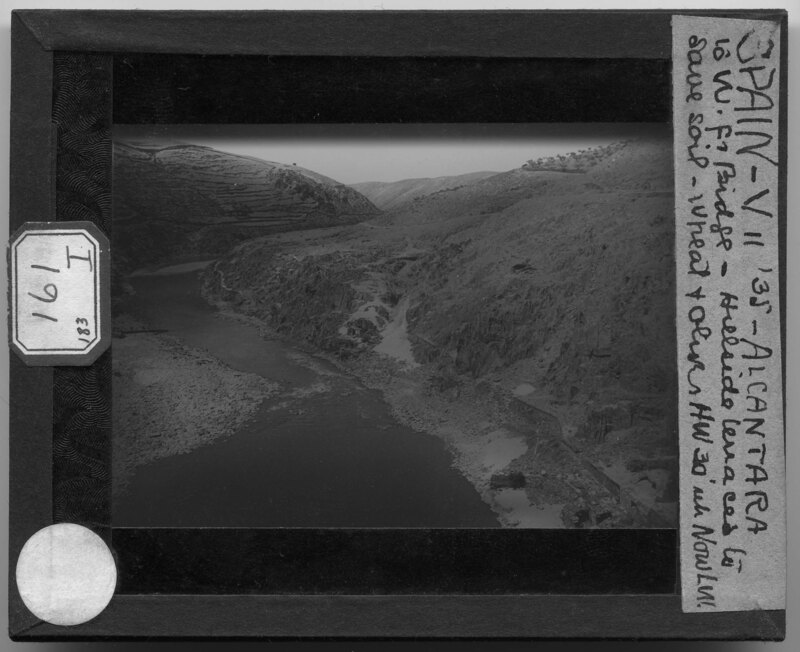
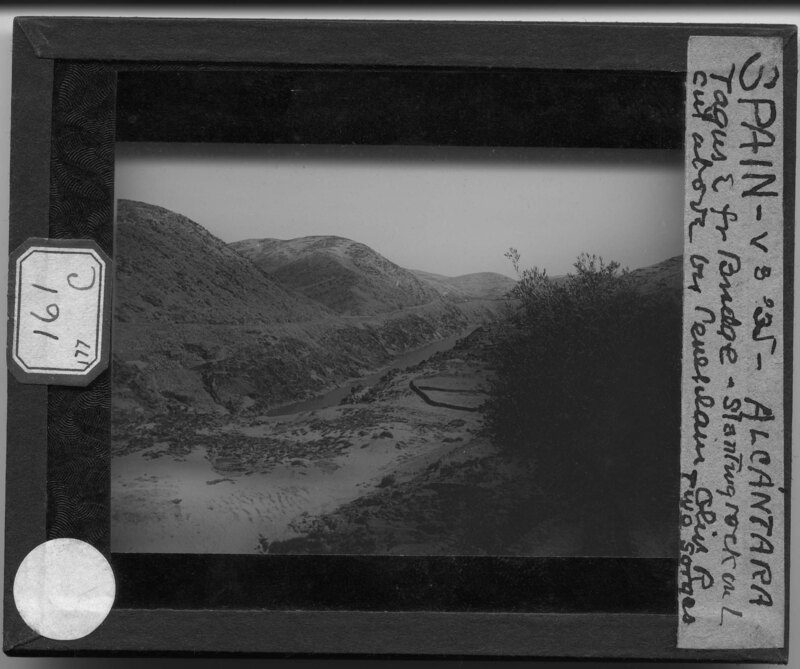
Tagus River valley within a mountainous landscape. Agricultural fields can be seen on the mountain in the left part of the picture and an olive grove sits on top of another hill to the right. Slide labeled with text, "Made by G.R. Swain, 713 E. University Ave., Ann Arbor, Michigan." Swain was staff photographer at U of M from 1913 to 1947.
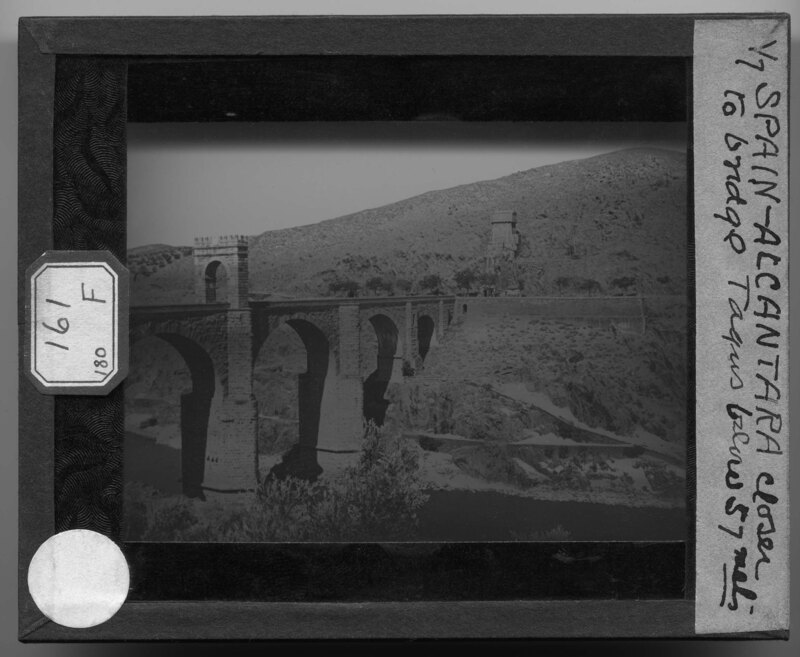
Stone bridge with Romanesque arches crossing the Tagus River. The landscape is mountainous and rocky. Slide labeled with text, "Made by G.R. Swain, 713 E. University Ave., Ann Arbor, Michigan." Swain was staff photographer at U of M from 1913 to 1947.
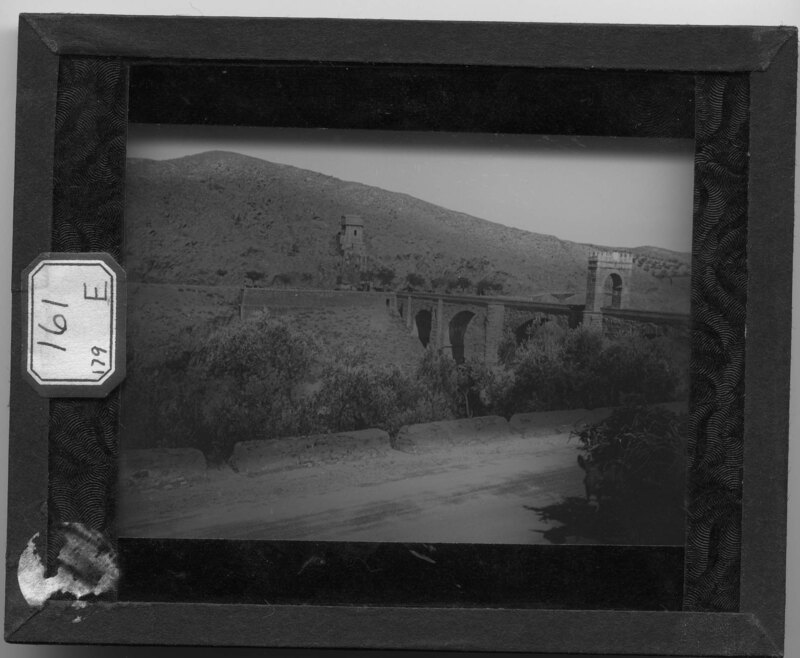
Stone bridge with Romanesque arches crossing the Tagus River. Mountains rise in the background and a donkey walks on the dirt road in the foreground. Olive trees are growing on the other side of the stone block wall in the foreground. Slide labeled with text, "Made by G.R. Swain, 713 E. University Ave., Ann Arbor, Michigan." Swain was staff photographer at U of M from 1913 to 1947.
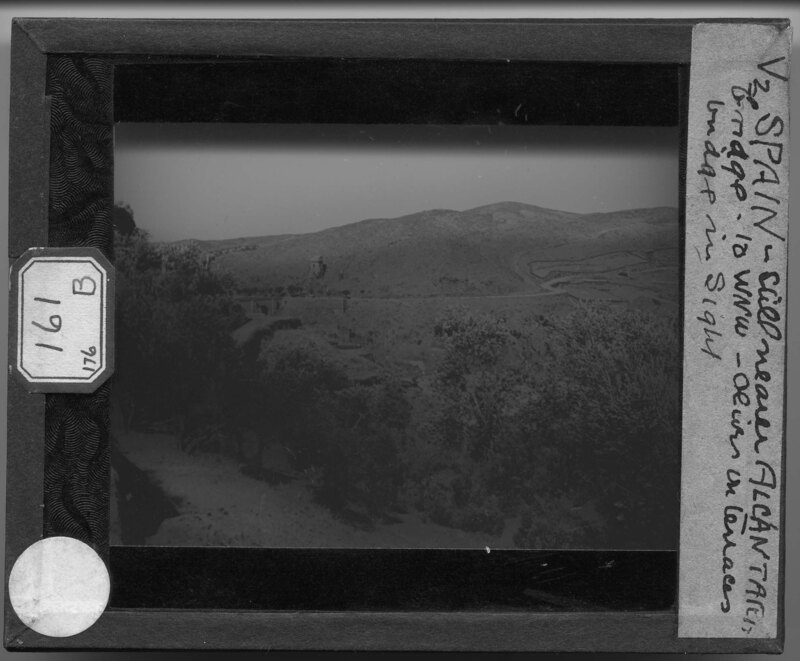
The Tagus River flows through a mountainous landscape dotted with trees and scrub brush. Olive trees are in the right part of the picture. Slide labeled with text, "Made by G.R. Swain, 713 E. University Ave., Ann Arbor, Michigan." Swain was staff photographer at U of M from 1913 to 1947.
Mountainscape with olive grove in the foreground and agriculture fields on the mountain face in the background. A stone bridge crosses a valley. Slide labeled with text, "Made by G.R. Swain, 713 E. University Ave., Ann Arbor, Michigan." Swain was staff photographer at U of M from 1913 to 1947.
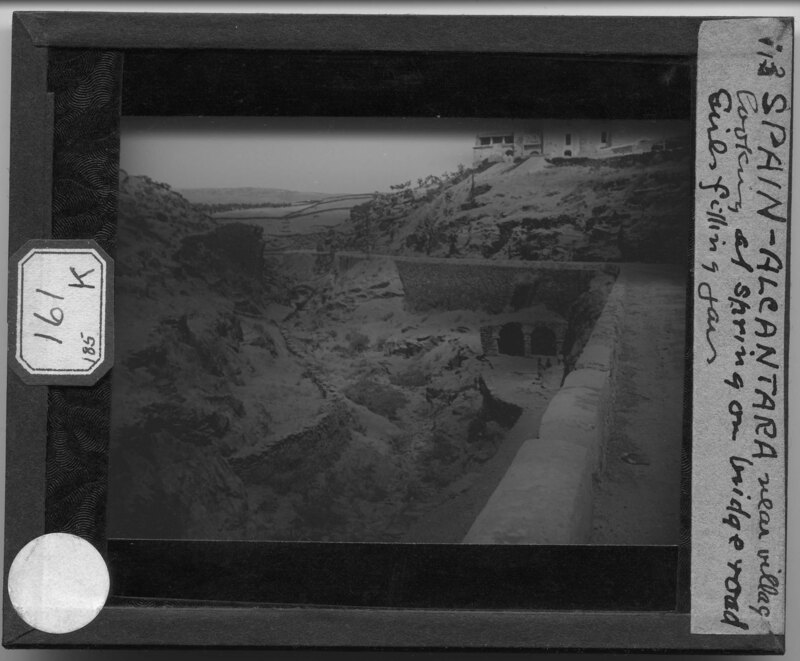
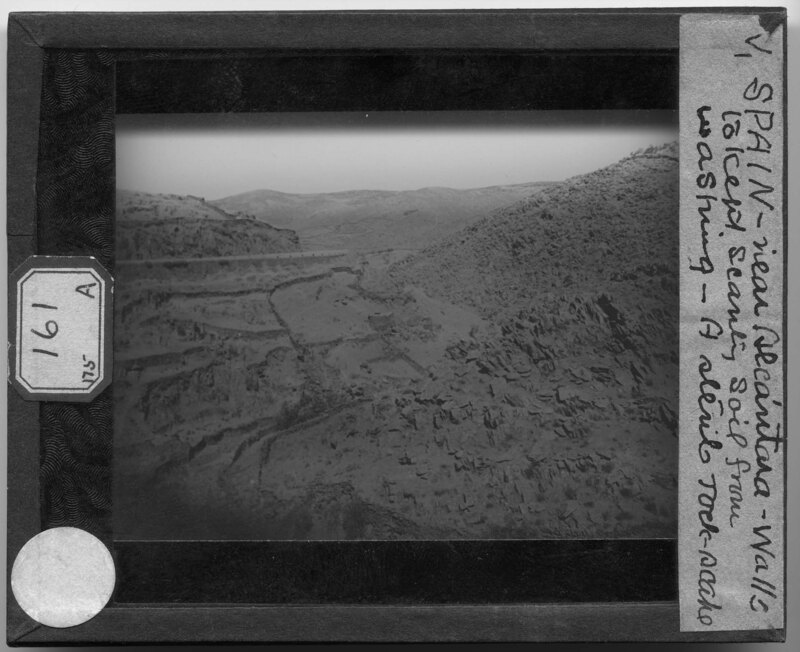
Mountainous terrain with large rocks and boulders on the cliff face. Stone wall that cross the mountainside are used to prevent soil erosion from water flow. Slide labeled with text, "Made by G.R. Swain, 713 E. University Ave., Ann Arbor, Michigan." Swain was staff photographer at U of M from 1913 to 1947.
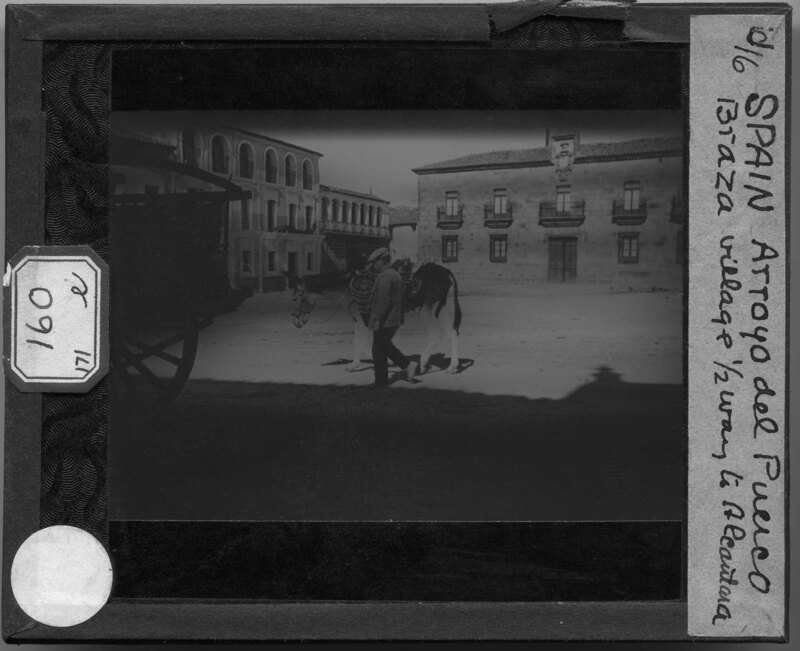
Streetscape of stone buildings with ornate romanesque details. A man and a donkey walk by in the foreground. It is noted this the the Braza village halfway to Alcantara. Slide labeled with text, "Made by G.R. Swain, 713 E. University Ave., Ann Arbor, Michigan." Swain was staff photographer at U of M from 1913 to 1947.