Edwin "Ed" Pear is an attorney with a long distinguished career in real estate, business, and estate planning. Pear attended the Roosevelt school from K-12, and was apart of the graduating class of 1959. In this interview, Ed recounts memories of growing up in a Jewish family in Ypsilanti, his fathers clothing store, and other local businesses that existed at the time. He also reminisces about his time as a student at Roosevelt, sharing his experiences in athletics, extracurriculars, and lamenting about the sadness of the schools closure.
Mary and Terry Clark are a married couple who began dating as elementary school students while attending the Roosevelt school. In this interview the couple speaks fondly of their time at Roosevelt, and each explain the extracurriculars they were involved in and the teachers that had an impact on their lives. They also discuss how they met, holding hands while walking to school, where the popular hang out spots were, and what the school meant to them.
Jim MacDonald was a Roosevelt school attendee from 1957 until his junior year 1969, when the school closed, and his dad, Alistair MacDonald, better known as “Mr. Mac was the principal of Roosevelt while he attended. MacDonald is also the proprietor of Jim MacDonald’s Antiques, which shares a shop with Apple Annie's Vintage in Ypsilanti's Historic Depot Town. In this interview MacDonald discusses his experience growing up in Ypsilanti in the 1950s and 60s near Oakwood and Sheridan, playing with his friends in Sleepy Hollow, and the impact his dad had on kids he went to Roosevelt with. MacDonald also talks in detail about his friendship with Wayne Blikken, explaining their cross country trip playing basketball at various colleges.
Bob Garfield is a lifelong resident of Ypsilanti who attended the Roosevelt school in 7th grade. In this interview, Garfield discusses the year he spent at Roosevelt, noting that the lack of structure is what led him to transfer back to public school. He also talks about Ypsilanti's history, exploring how the landscape has changed, popular hangout spots for kids, and businesses that no longer exist. Garfield also speaks candidly about his experiences with substance use, working at the first Domino's pizza, and gushes with pride talking about his musically gifted adult son, J.T.
Throughout 2024, the city of Ann Arbor celebrated its 200th anniversary with community events, festivals, and art displays that highlighted its rich culture and history. To cap off the celebrations, in December 2024 the EMU Center for Oral History Research invited community members to Skyline High School to share what makes Ann Arbor special. In this interview, Scott King and Andre Andersen talk about moving to and living in Ann Arbor, the things they look forward to outside of UMich Football, and what they believe the AAPD's role to be in the city.
Throughout 2024, the city of Ann Arbor celebrated its 200th anniversary with community events, festivals, and art displays that highlighted its rich culture and history. To cap off the celebrations, in December 2024 the EMU Center for Oral History Research invited community members to Skyline High School to share what makes Ann Arbor special. In this interview, Liz Nowland-Margolis talks about growing up in Ann Arbor, learning about her family's history, and community involvement.
Throughout 2024, the city of Ann Arbor celebrated its 200th anniversary with community events, festivals, and art displays that highlighted its rich culture and history. To cap off the celebrations, in December 2024 the EMU Center for Oral History Research invited community members to Skyline High School to share what makes Ann Arbor special. In this interview, Charlie Reischl talks about growing up in the city, working for non-profits, and the importance of Ann Arbor's art and music scene.
Throughout 2024, the city of Ann Arbor celebrated its 200th anniversary with community events, festivals, and art displays that highlighted its rich culture and history. To cap off the celebrations, in December 2024 the EMU Center for Oral History Research invited community members to Skyline High School to share what makes Ann Arbor special. In this interview, Corey Mills talks about growing up in Ann Arbor, working for the AAPD, and how the city has changed but also stayed the same.
Throughout 2024, the city of Ann Arbor celebrated its 200th anniversary with community events, festivals, and art displays that highlighted its rich culture and history. To cap off the celebrations, in December 2024 the EMU Center for Oral History Research invited community members to Skyline High School to share what makes Ann Arbor special. In this interview, Jeremy Wheeler talks about working with local businesses and orgs as an artist, the types of people who make up Ann Arbor, and the types of worries that come with rising prices.
Throughout 2024, the city of Ann Arbor celebrated its 200th anniversary with community events, festivals, and art displays that highlighted its rich culture and history. To cap off the celebrations, in December 2024 the EMU Center for Oral History Research invited community members to Skyline High School to share what makes Ann Arbor special. In this interview, long-time Ann Arbor resident Mark Margolis talks about running a small business, the vibrant community he's found, and the city's changing landscape.
Throughout 2024, the city of Ann Arbor celebrated its 200th anniversary with community events, festivals, and art displays that highlighted its rich culture and history. To cap off the celebrations, in December 2024 the EMU Center for Oral History Research invited community members to Skyline High School to share what makes Ann Arbor special. In this interview, mother Merrily Hart and daughters Rachel Klayman and Julie Roberts talk about growing up in Ann Arbor close to family, attending the University of Michigan, and finding their ways back to each other after leaving.
Throughout 2024, the city of Ann Arbor celebrated its 200th anniversary with community events, festivals, and art displays that highlighted its rich culture and history. To cap off the celebrations, in December 2024 the EMU Center for Oral History Research invited community members to Skyline High School to share what makes Ann Arbor special. In this interview, Odile Hugnot-Haber talks about her journey to Ann Arbor, the struggles of collective activism and engagement, and how the city can start to make a change in the world.
Throughout 2024, the city of Ann Arbor celebrated its 200th anniversary with community events, festivals, and art displays that highlighted its rich culture and history. To cap off the celebrations, in December 2024 the EMU Center for Oral History Research invited community members to Skyline High School to share what makes Ann Arbor special. In this interview, Paul Conway shares the story of how he made his way to Ann Arbor, attending and then working at the University of Michigan, and the challenges of a growing college and a growing city.
Throughout 2024, the city of Ann Arbor celebrated its 200th anniversary with community events, festivals, and art displays that highlighted its rich culture and history. To cap off the celebrations, in December 2024 the EMU Center for Oral History Research invited community members to Skyline High School to share what makes Ann Arbor special. In this interview, Susan and Sam Westhoff talk about family and growing up in Ann Arbor, the city's rich natural landscape, and trips to the Kerrytown Farmer's Market.
Throughout 2024, the city of Ann Arbor celebrated its 200th anniversary with community events, festivals, and art displays that highlighted its rich culture and history. To cap off the celebrations, in December 2024 the EMU Center for Oral History Research invited community members to Skyline High School to share what makes Ann Arbor special. In this interview, Tom Stulberg talks about being mayor of Lower Town, discovering and correcting local history, and his favorite things to do.
Throughout 2024, the city of Ann Arbor celebrated its 200th anniversary with community events, festivals, and art displays that highlighted its rich culture and history. To cap off the celebrations, in December 2024 the EMU Center for Oral History Research invited community members to Skyline High School to share what makes Ann Arbor special. In this interview, Trent Collier talks about raising a family in Ann Arbor, getting involved in community groups, and finding moments of calm in graduate school.
In her 40 years of service to EMU, Glenna Frank-Miller has served in many crucial capacities including Student Affairs, Campus Life, Diversity and Community Involvement, Alumni Engagement, Career Services and more. She also co-chaired the planning and constrcution of the EMu Student Center. Involved in many levels at EMU, Frank-Miller here describes the need for, and implementation of, the EMU LGBT Resource Center. She describes the various threads that led to the decision to create the center, and describes the reaction on campus to its opening.
As a university administrator of over 40 years at EMU, Gregory Peoples devoted himself to bettering the college experiences of marginalized students,. In 1994, Peoples helped establish the LGBT Resource Center at EMU, and in this interview, he describes the challenges both to himself and from the university in forming this crucial campus support center.
Kate Mehuron, professor of History and Philosophy and the Department of Women's and Gender Studies, and Dennis O'Grady, professor with the Departments of Communication, Media, and Theater Arts and Women's and Gender Studies, were both instrumental in the planning and implementation of the EMU LGBT Resource Center. Acting as a vital connection between faculty, students, and administration, Mehuron and O'Grady describe working with other faculty like Kathleen Russell to win support for the center. They also describe some of the pushback to the center amongst EMU faculty.
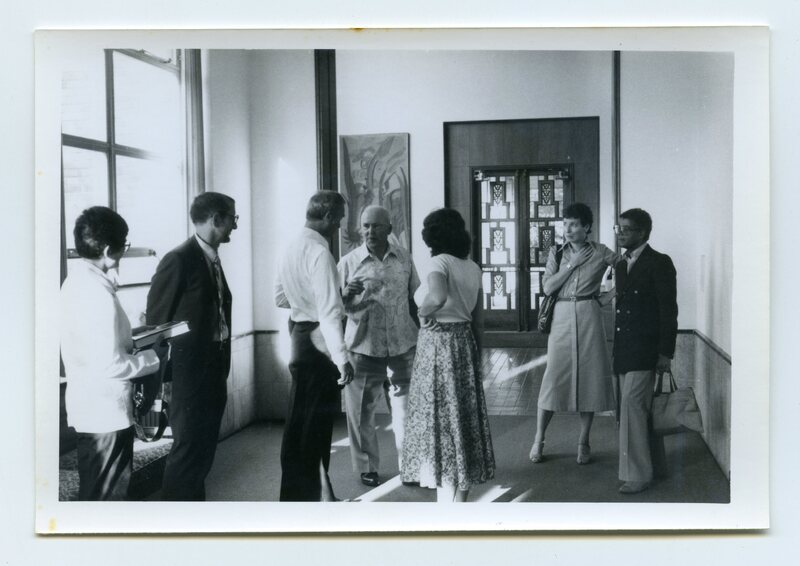
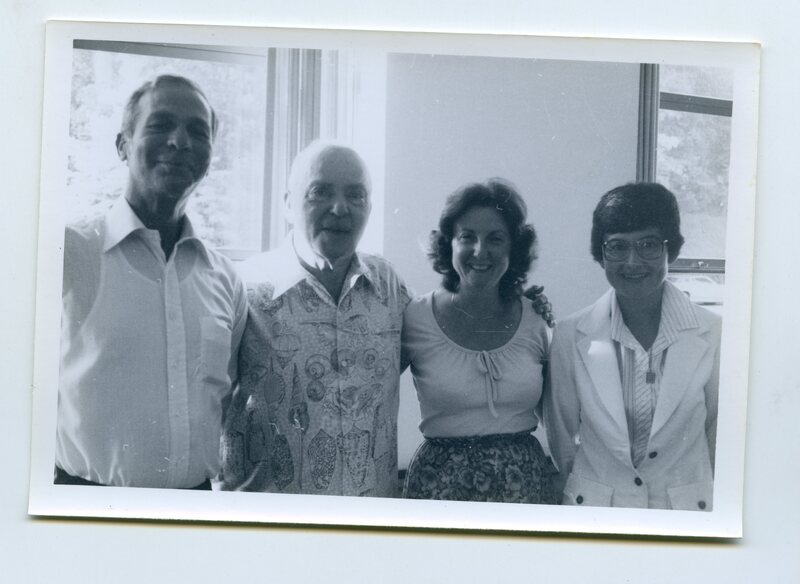
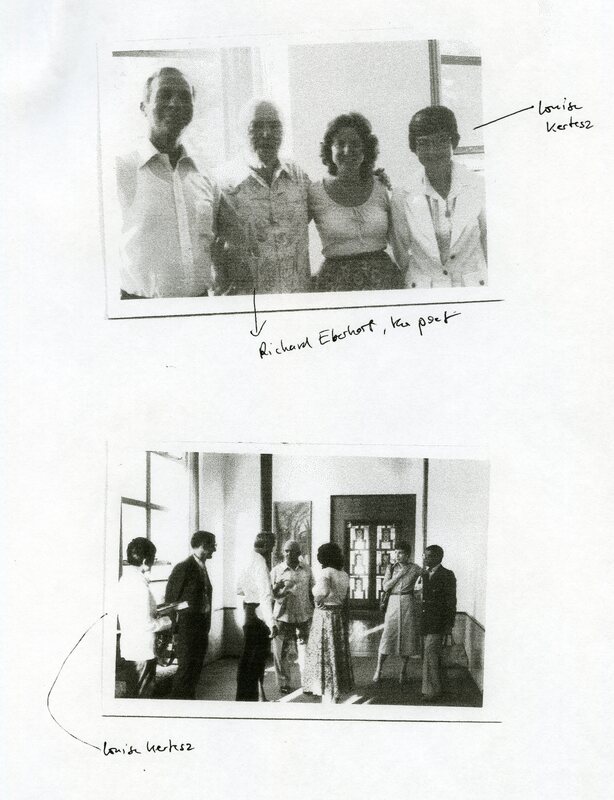
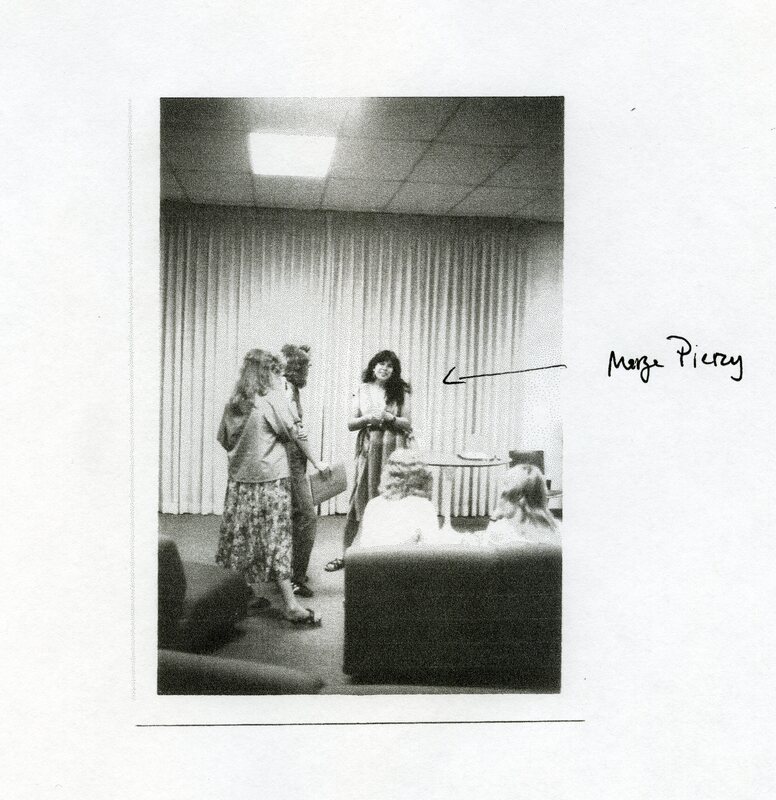
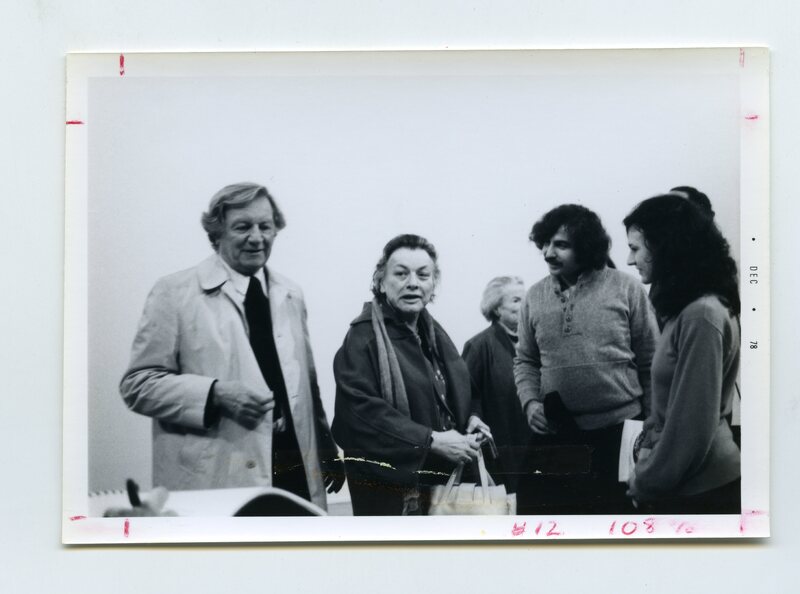
Black and white photograph of Louise Kertesz (pictured far left), her husband Chris Kertesz beside her, and four other individuals, among them Marge Piercy, in conversation with poet Richard Eberhart, at a poetry event, date and location still to be determined.
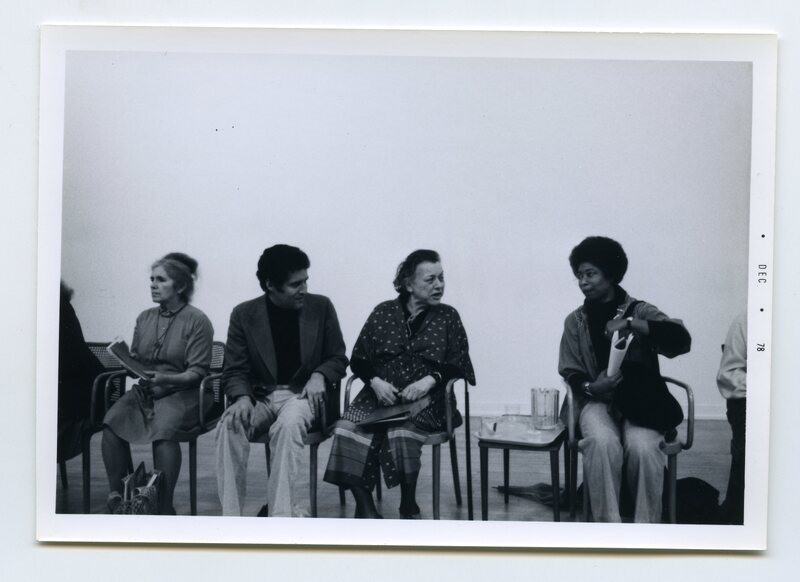
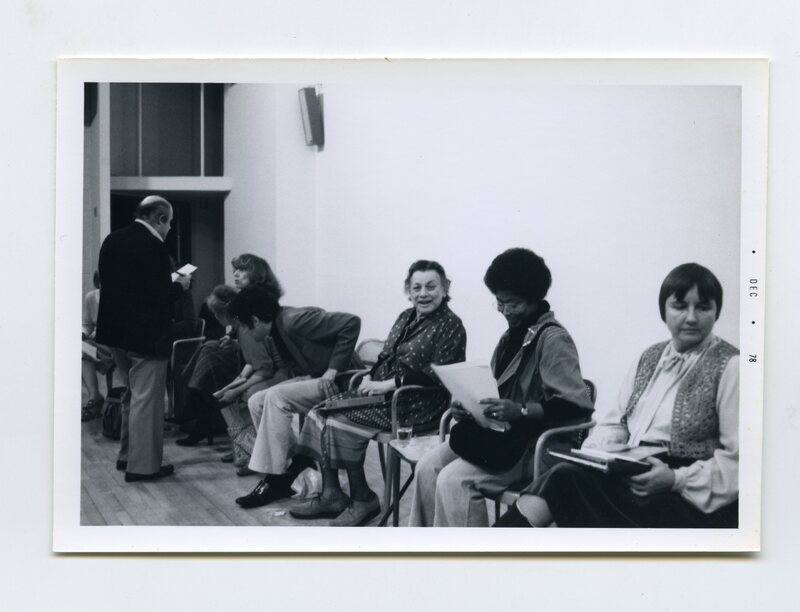
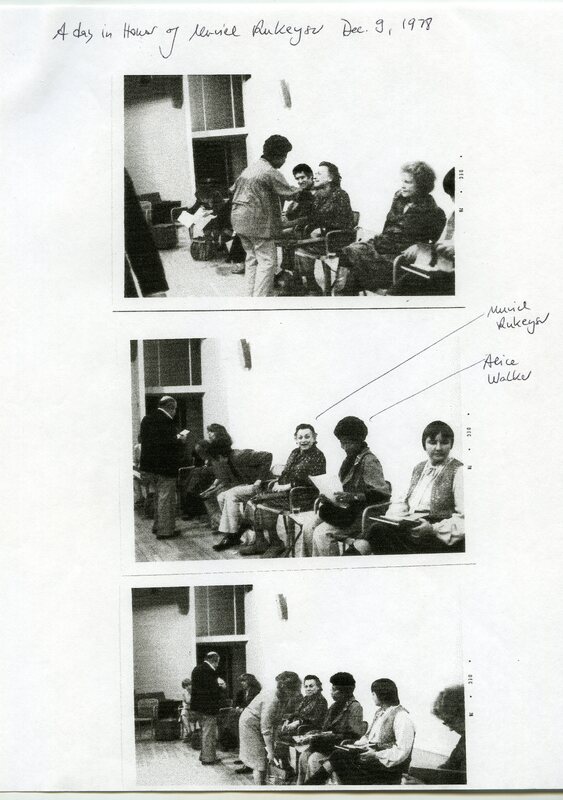
“A day in Honor of Muriel Rukeyser," December 9, 1978, Sarah Lawrence College. Muriel Rukeyser is present in the photograph, sitting with her nephew Louis Rukeyser and the writer Grace Paley to her left and the writer Alice Walker to her right. Alice Walker was a former student of Muriel Rukeyser at Sarah Lawrence College.
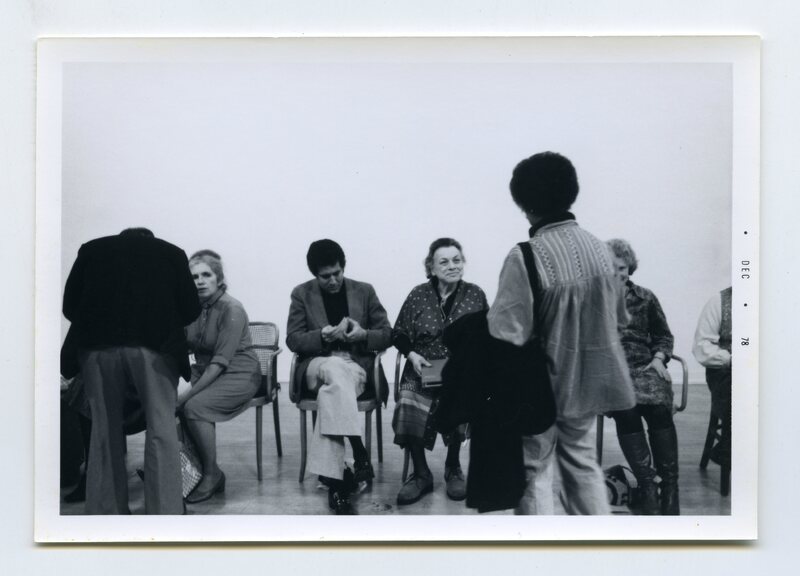
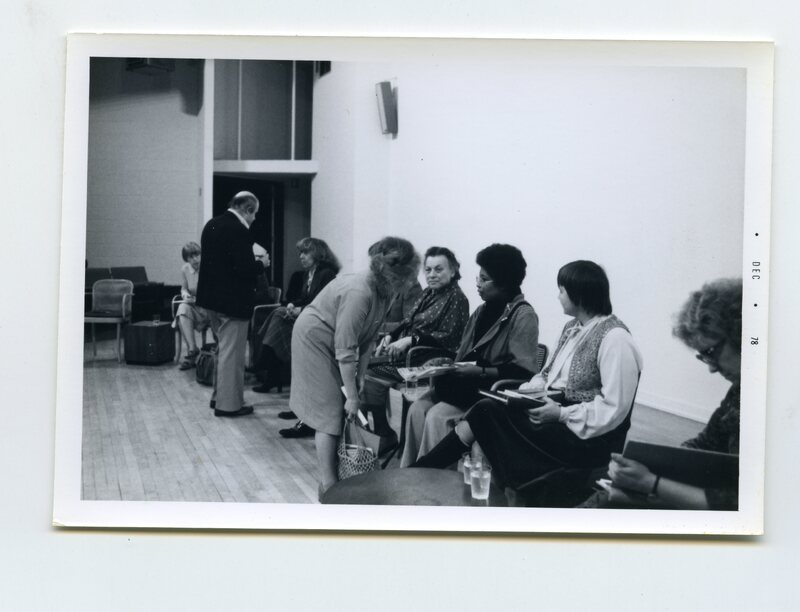
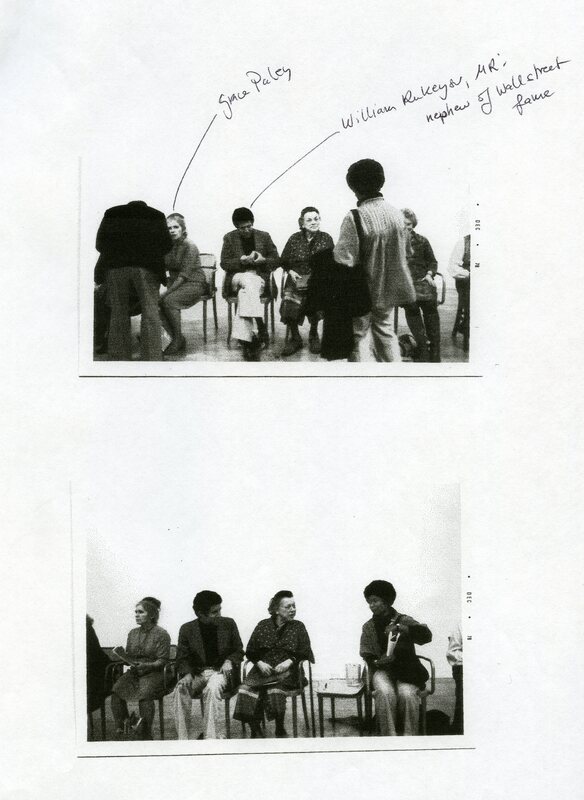
"A day in Honor of Muriel Rukeyser," December 9, 1978, Sarah Lawrence College. Muriel Rukeyser is present in the photograph, sitting with her nephew Louis Rukeyser and the writer Grace Paley to her left and the writer Alice Walker standing to her right, facing her. Alice Walker was a former student of Muriel Rukeyser at Sarah Lawrence College.
“A day in Honor of Muriel Rukeyser," December 9, 1978, Sarah Lawrence College. Muriel Rukeyser is present in the photograph, sitting with her nephew Louis Rukeyser to her left, and the writer Alice Walker standing and facing Rukeyser. Alice Walker was a former student of Muriel Rukeyser at Sarah Lawrence College.
“A day in Honor of Muriel Rukeyser," December 9, 1978, Sarah Lawrence College. Muriel Rukeyser is present in the photograph, sitting with the writer Alice Walker to her right. Alice Walker was a former student of Muriel Rukeyser at Sarah Lawrence College.
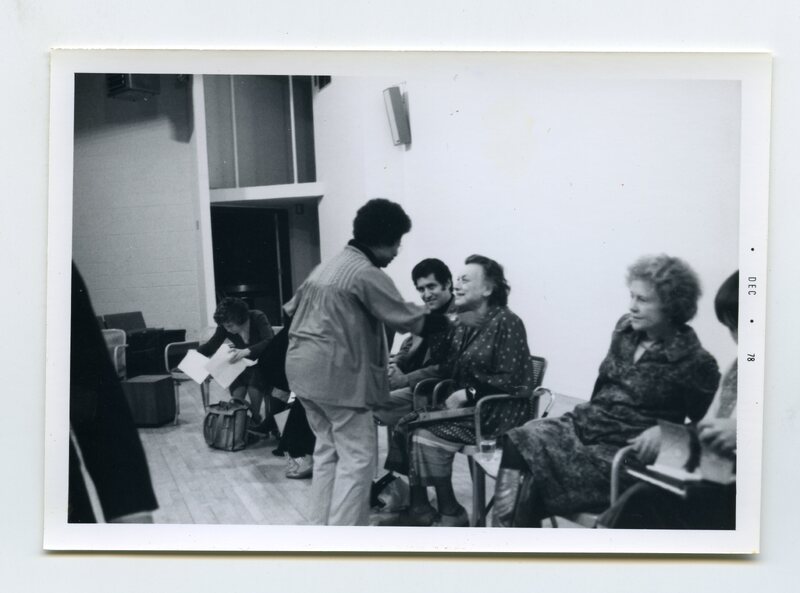
Muriel Rukeyser is present in the photograph, sitting with the writer Alice Walker to her right. Grace Paley appears to be the woman standing in front of Walker and involved in conversation with her. Alice Walker was a former student of Muriel Rukeyser at Sarah Lawrence College.
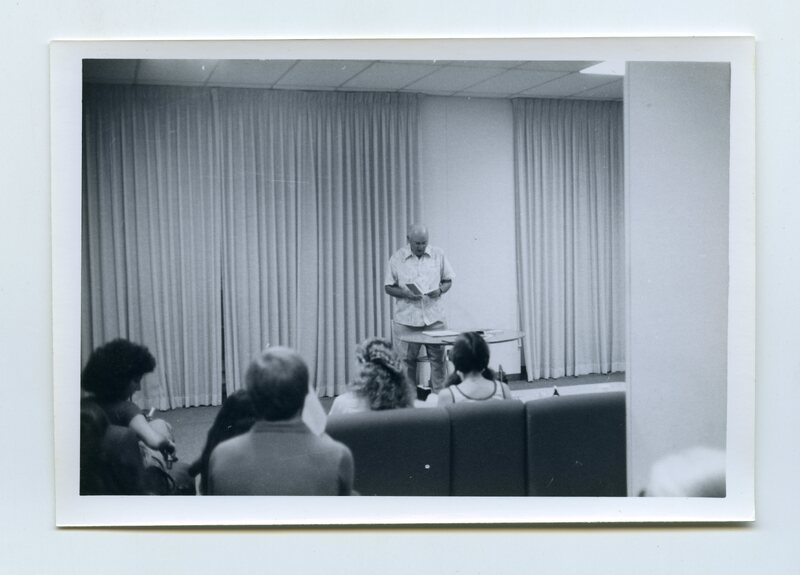
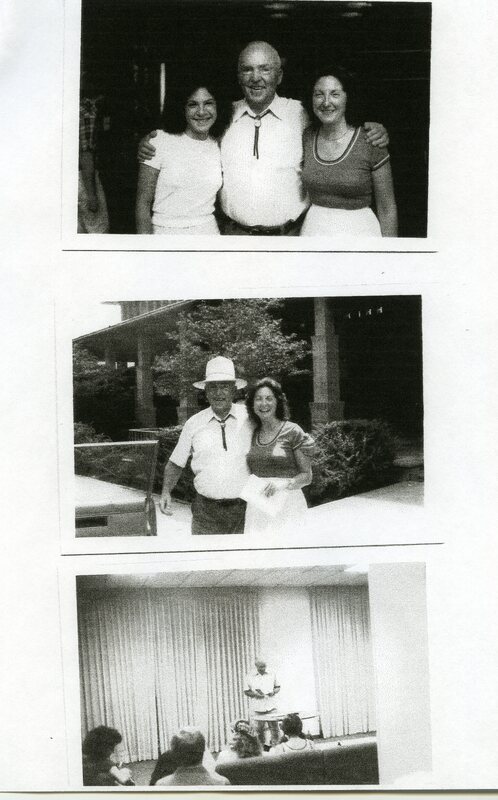
The poet Richard Eberhart stands behind a low table with an open book in front of a small audience of seated individuals, at a poetry event, date and location still to be determined.
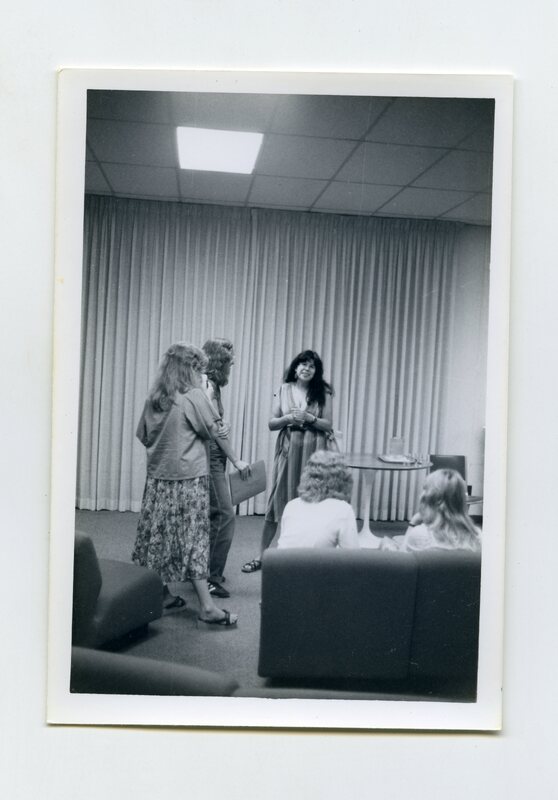
Louise Kertesz, far right, standing with poet Richard Eberhart and two other individuals, one man and one woman, at a poetry event, date and location still to be determined.
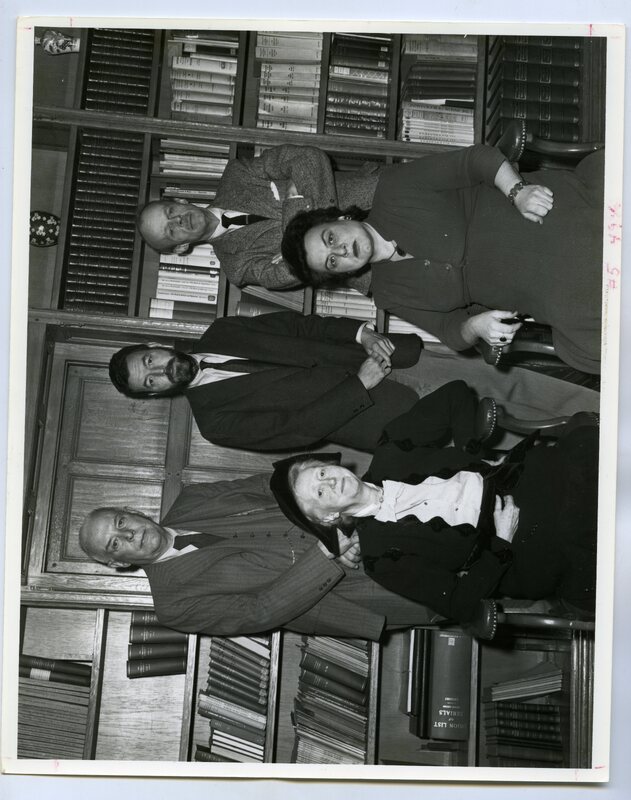
Dated 1954, a photograph of the Bollingen Poetry Prize Selection Committee. A group photograph (from the back row, left to right) Wallace Stevens, Randall Jarrell, Allen Tate. (Front row) Marianne Moore and Muriel Rukeyser.
Photograph of Muriel Rukeyser with Sarah Lawrence President Charles R. DeCarlo on her left. “A day in Honor of Muriel Rukeyser," December 9, 1978, Sarah Lawrence College.
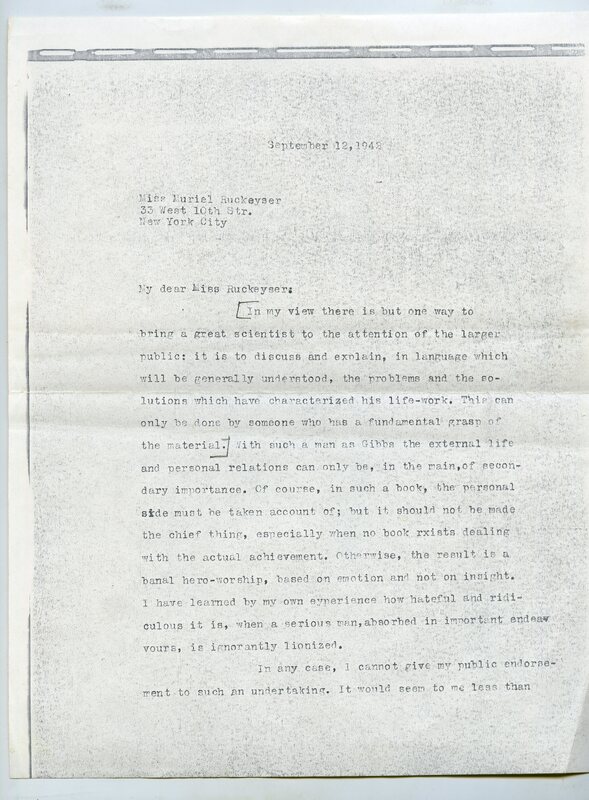
A photocopy of a typewritten two-page letter, dated September 12th, 1942. The letter is from Albert Einstein to Muriel Rukeyser. The background information on this letter is that Muriel Rukeyser had asked Albert Einstein to write a foreword to her biography of the theoretical scientist Willard Gibbs. Rukeyser asked Einstein to “lend his name to her effort to make Gibbs known to a time that needed the story of his achievement." Without reading Rukeyser’s book, Einstein refused, saying that “In my view, there is but one way to bring a great scientist to the attention of the larger public: it is to discuss and explain, in language which will be generally understood, the problems and solutions which have characterized his life-work. This can only be done by someone who has a fundamental grasp of the material.” Einstein acknowledges that "the personal side must be taken account of," but it can’t be the whole focus of the book, or the work becomes “banal hero-worship, based on emotion and not on insight” and that Einstein has learned “by my own experience how hateful and ridiculous it is, when a serious man, absorbed in important endeavors, is ignorantly lionized.” In the end, Einstein refuses Rukeyser’s request, writing that “I cannot give my public endorsement to such an undertaking. It would seem to me less than honourable. That sounds harsh: I even fear that you will take my inability for unjustifiable unkindness. But so I am, and cannot be otherwise.” Kertesz found this letter during her research in the Berg Collection of the New York Public Library. She bracketted the first part of the letter, and attached a sticky note to the back of the paper that says, “Einstein.” Page 1 of 2.
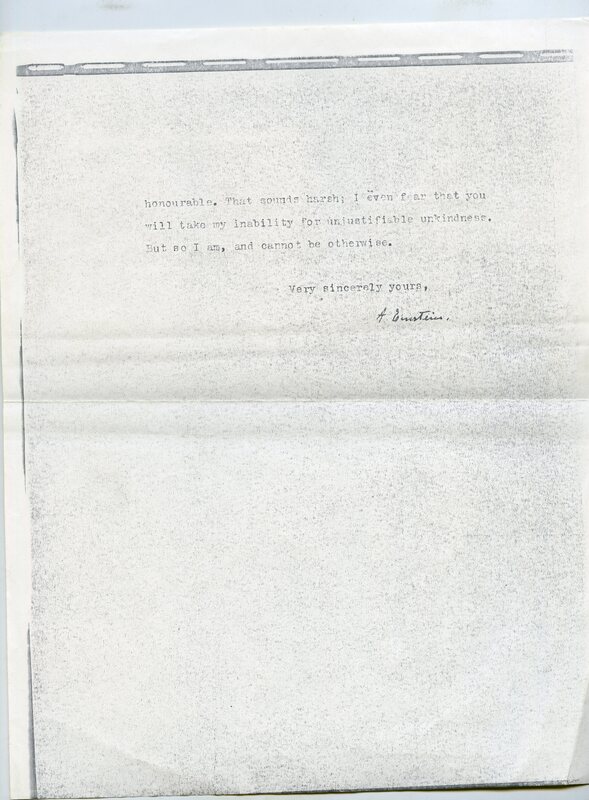
A photocopy of a typewritten two-page letter, dated September 12th, 1942. The letter is from Albert Einstein to Muriel Rukeyser. The background information on this letter is that Muriel Rukeyser had asked Albert Einstein to write a foreword to her biography of the theoretical scientist Willard Gibbs. Rukeyser asked Einstein to “lend his name to her effort to make Gibbs known to a time that needed the story of his achievement." Without reading Rukeyser’s book, Einstein refused, saying that “In my view, there is but one way to bring a great scientist to the attention of the larger public: it is to discuss and explain, in language which will be generally understood, the problems and solutions which have characterized his life-work. This can only be done by someone who has a fundamental grasp of the material.” Kertesz found this letter during her research in the Berg Collection of the New York Public Library. Page 2 of 2.
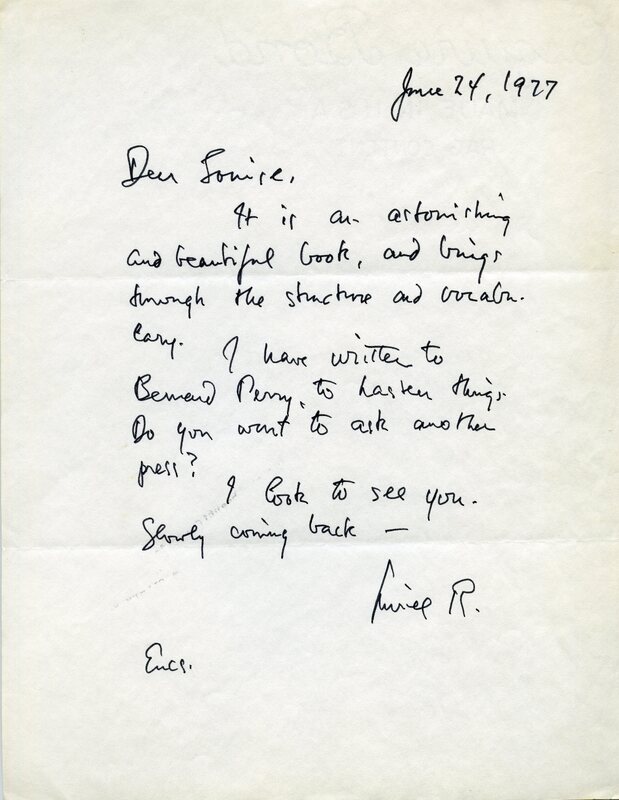
Dated June 24th, 1977. A photocopied handwritten note from Muriel Rukeyser to Louise Kertesz. Rukeyser states that Kertesz's manuscript “is an astonishing and beautiful book, and brings through the structure and vocabulary.”’ Rukeyser had written to Bernard Perry to “hasten things along” and asks if Louise wants her to write to another press. Rukeyser also looks forward to seeing Louise. Her final words, "Slowly coming back," refer to her recovery from her second stroke.
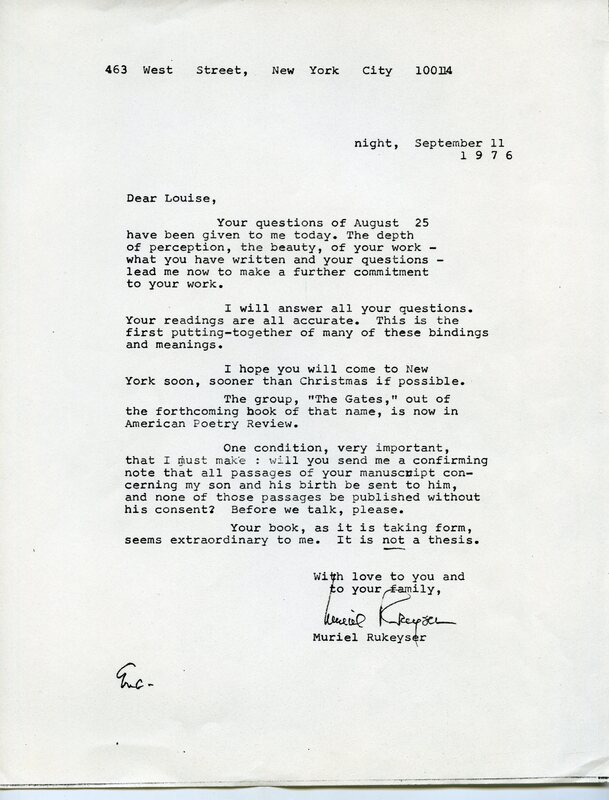
Dated September 11th, 1976. A typewritten note From Muriel Rukeyser to Louise Kertesz. Muriel had received Louise’s questions on August 25th, and she praises “The depth of perception, the beauty, of your work - what you have written and your questions - lead me now to make a further commitment to your work.” There is “one condition, very important, that I must make: will you send me a confirming note that all passages in your manuscript concerning my son and his birth be sent to him, and none of those passages be published without his consent?” Muriel ends by saying, “Your book, as it is taking form, seems extraordinary to me. It is not a thesis.”
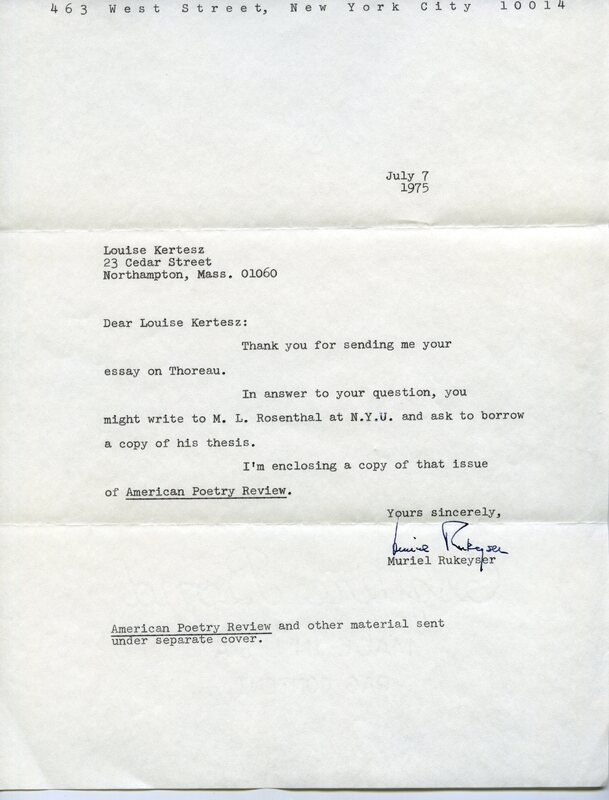
An original, typewritten letter, dated July 7th, 1975. The letter is from Muriel Rukeyser to Louise Kertesz. In the letter, Rukeyser thanks Louise for sending her essay on Thoreau. Rukeyser also provides an answer to Louise’s question [how to access a copy of M.L Rosenthal's 1949 thesis, "Chief Poets of the American Depression: Contributions of Kenneth Fearing, Horace Gregory, and Muriel Rukeyser to Contemporary American Poetry"] and suggests that she write to M.L. Rosenthal at N.Y.U. and ask to borrow a copy of his thesis. Rukeyser ends the letter by saying that she is enclosing a copy of the issue of American Poetry Review that Louise had requested.
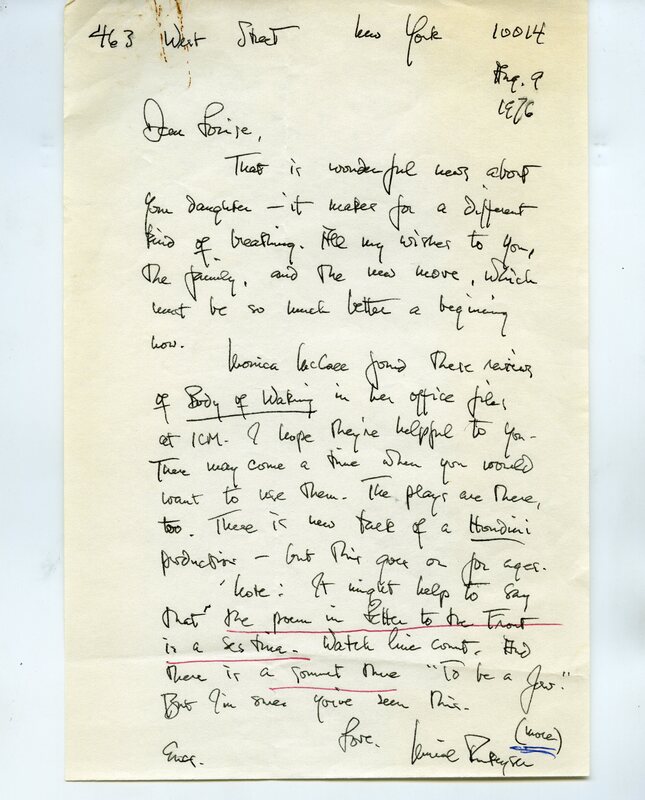
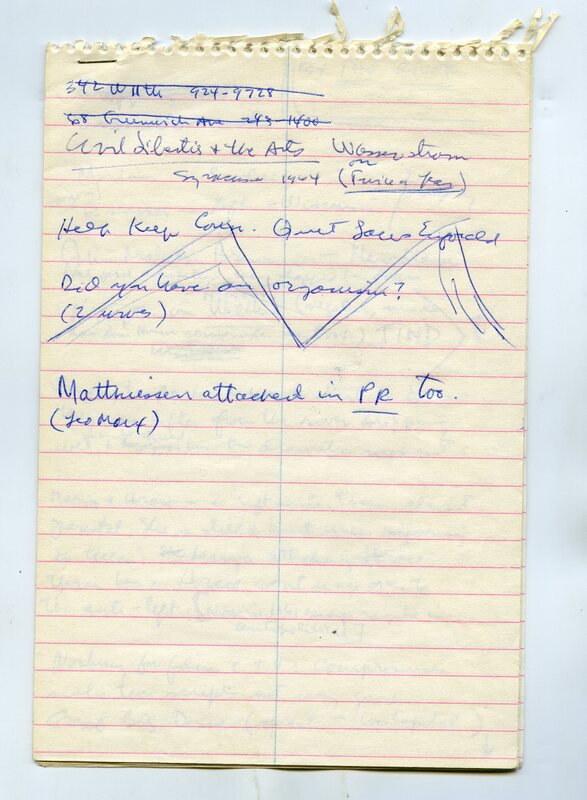
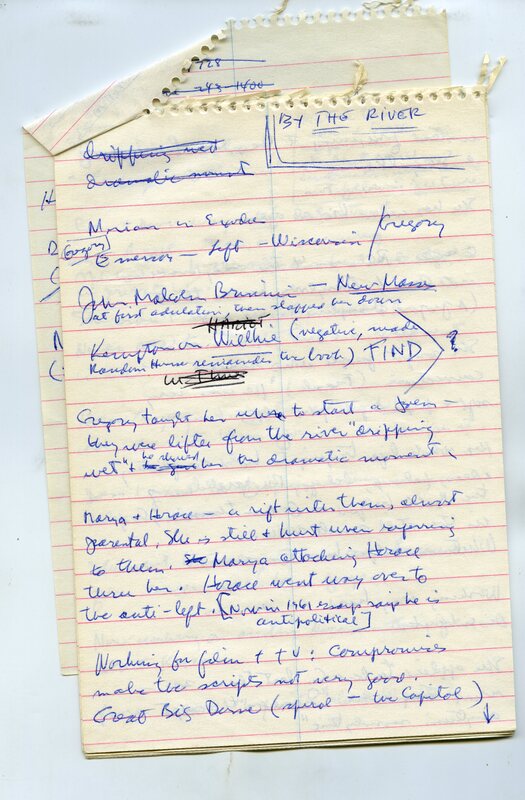
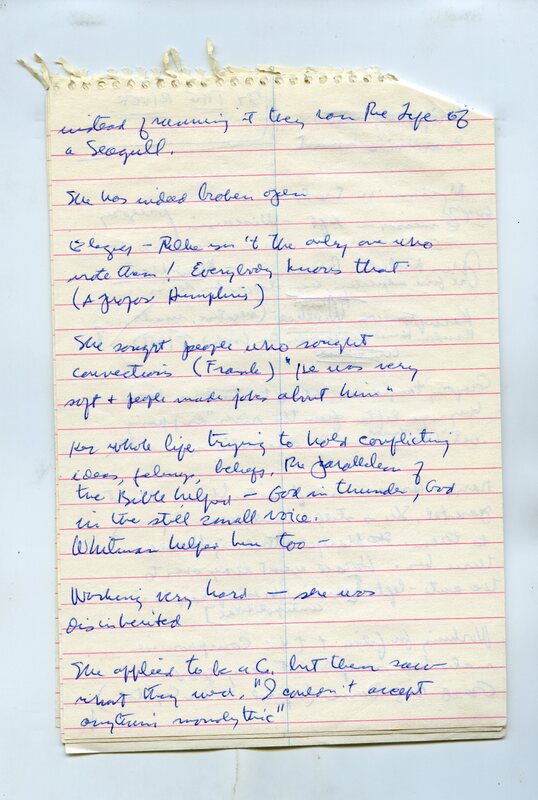
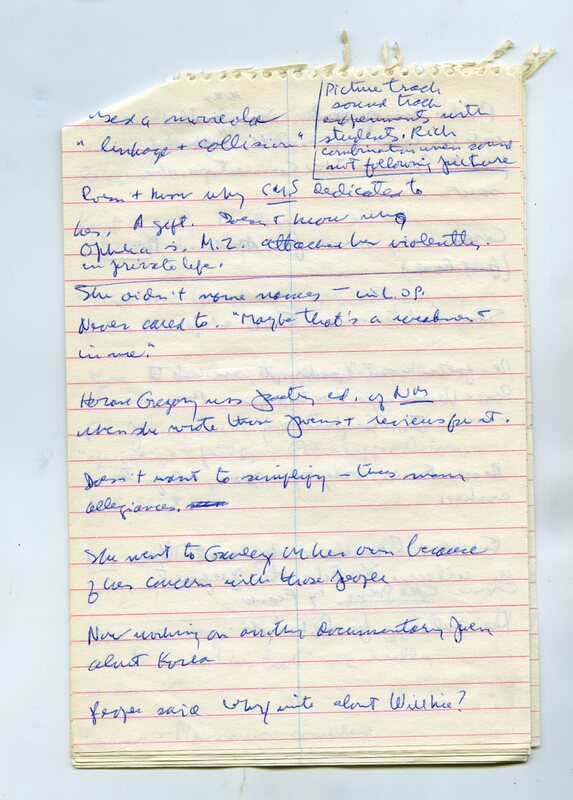
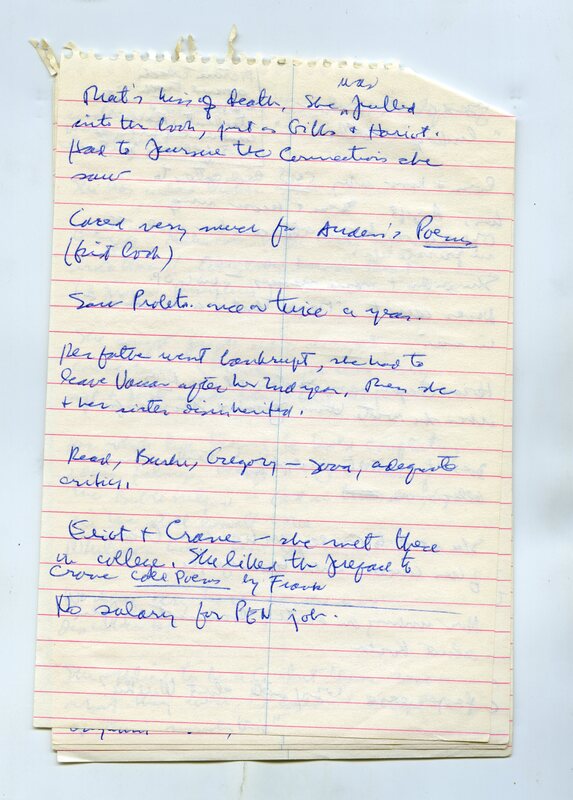
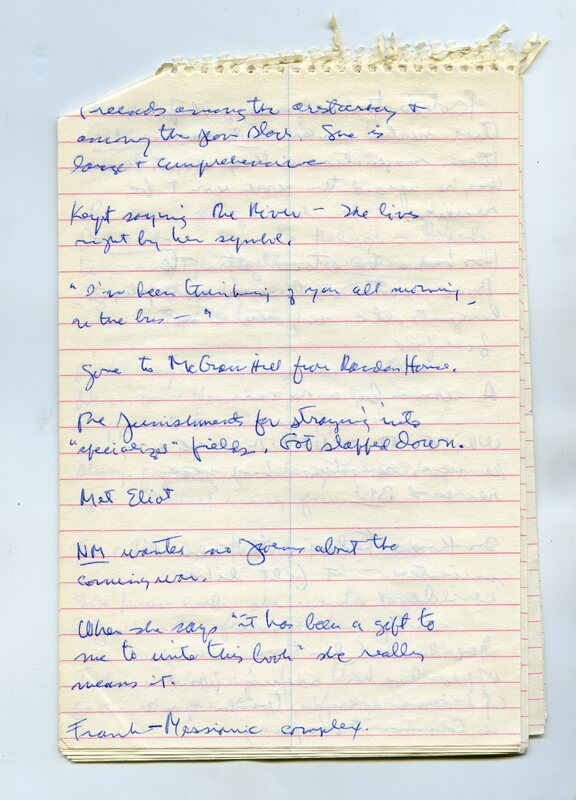
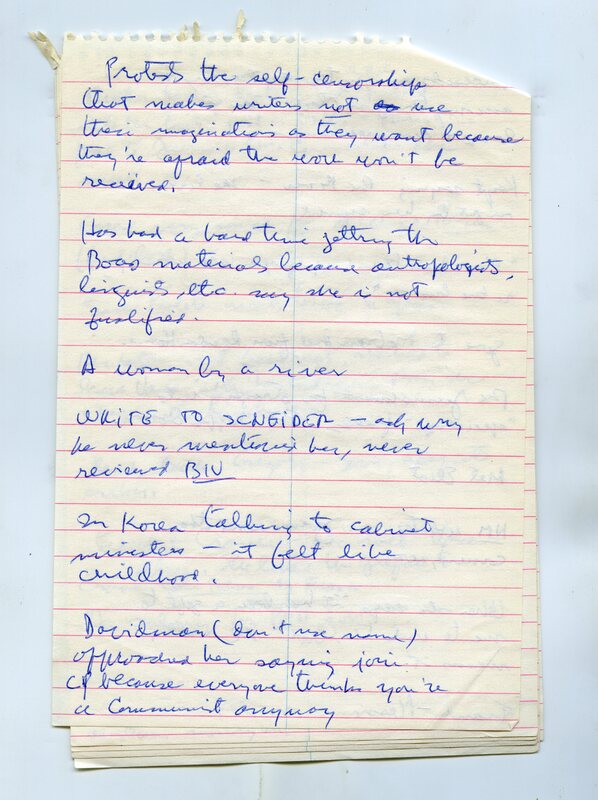
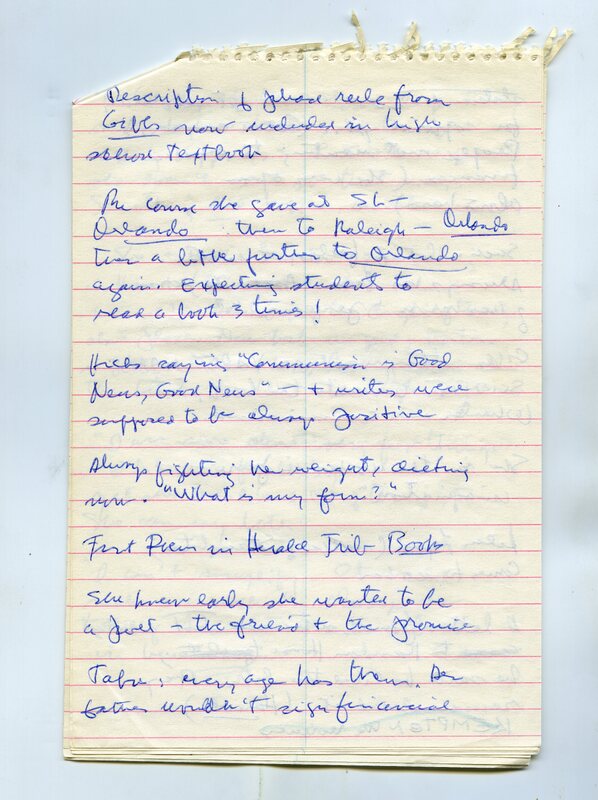
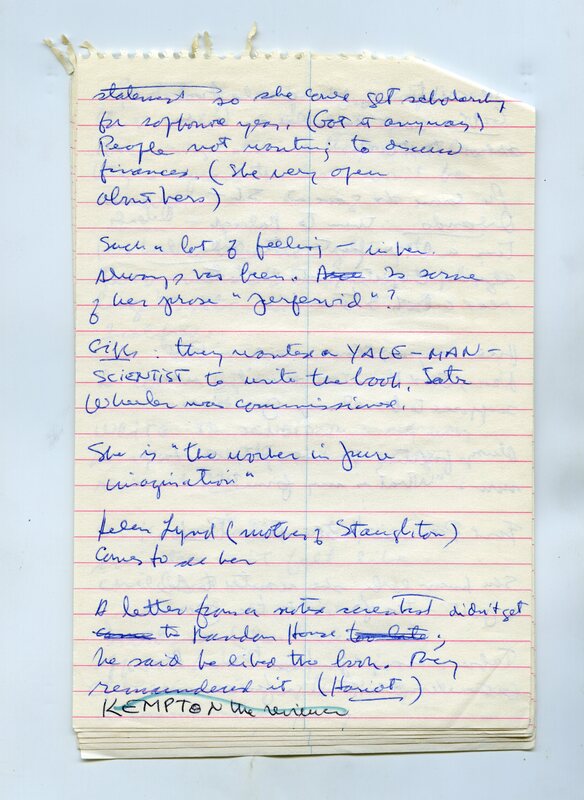
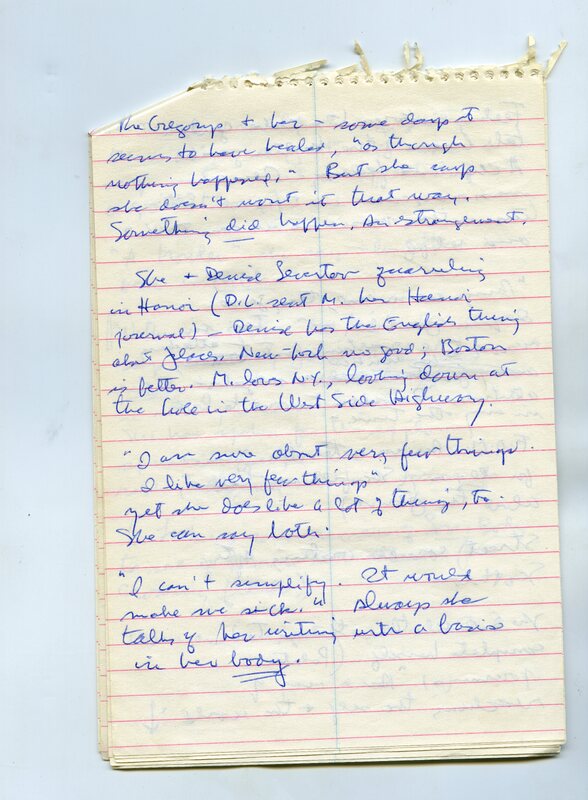
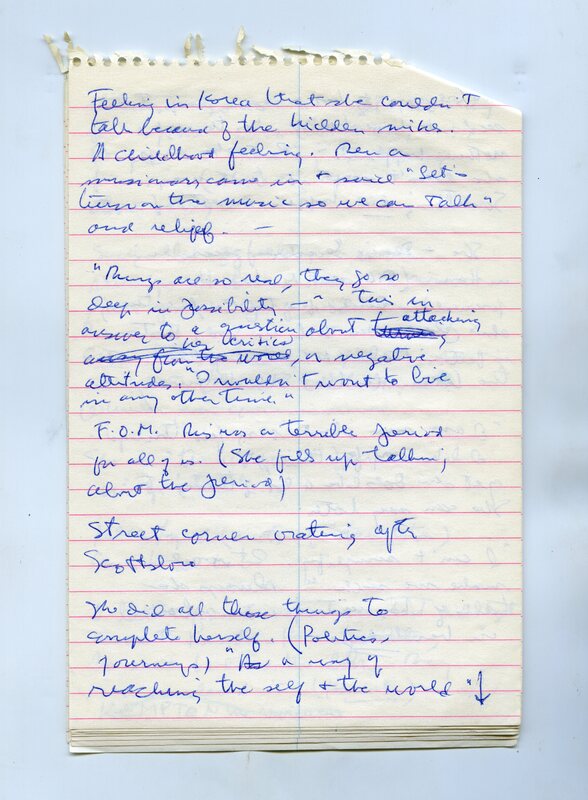
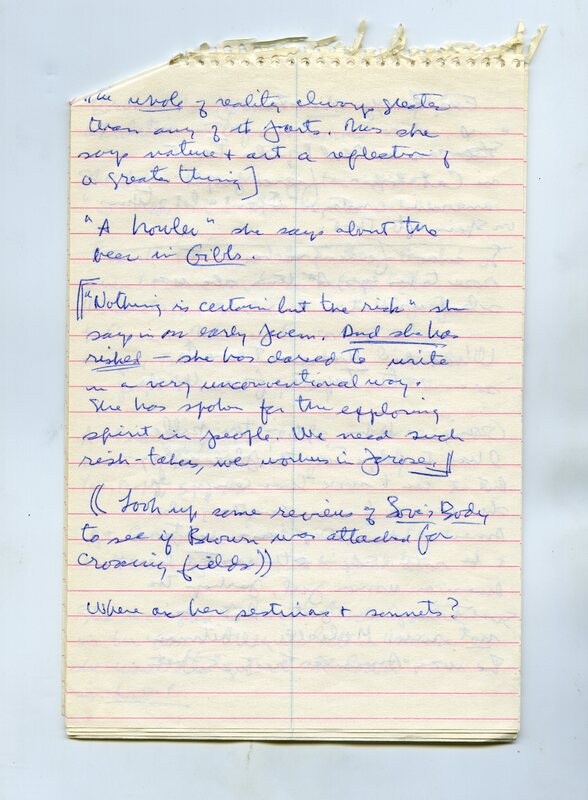
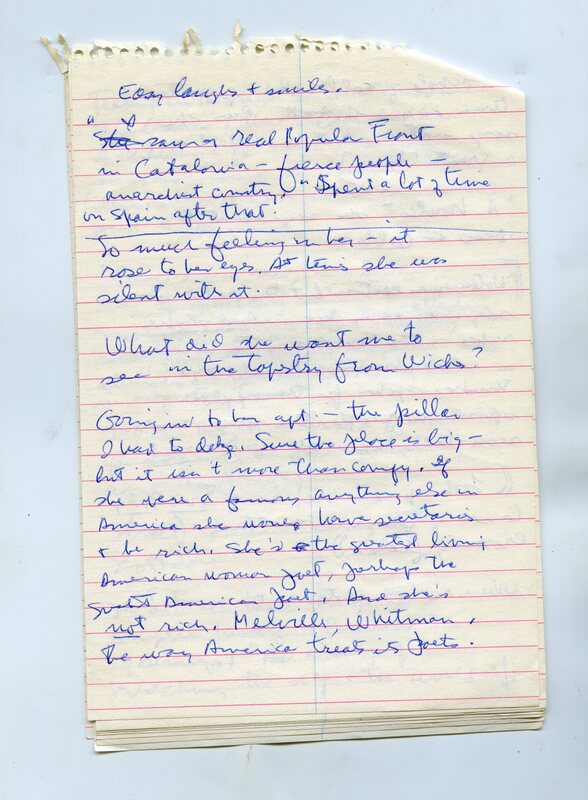
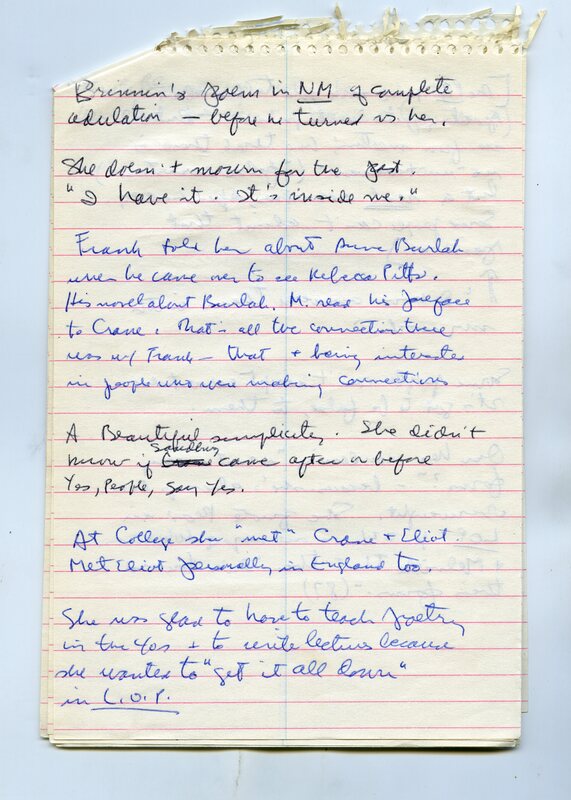
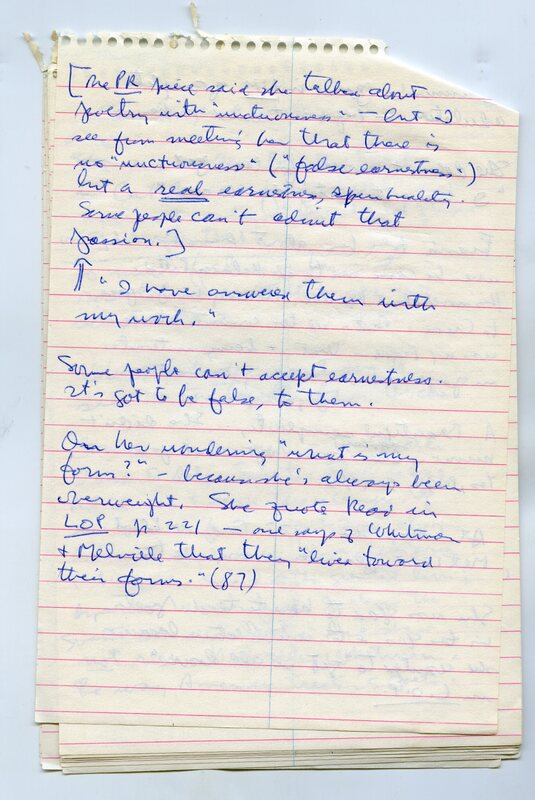
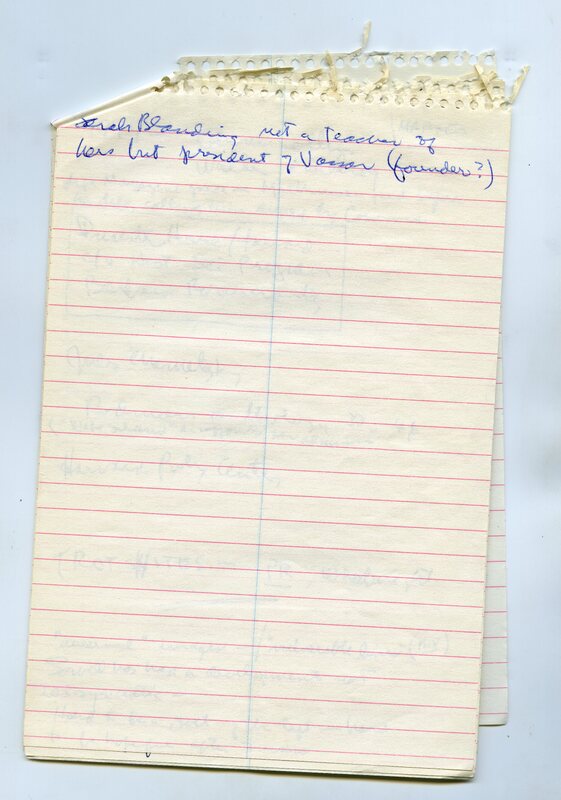
An original handwritten two-page letter to Louise Kertesz from Muriel Rukeyser, dated August 9, 1976. Muriel states that whatever happened to Louise’s daughter is wonderful news, and sends good wishes to Louise and her family. Monica McCall had found reviews of Body of Waking in her office at ICM, along with "the plays." The second part of the letter states that Muriel will be in London from the 19th to September 3rd for the P.E.N. Congress, where she will speak on "the Truth of Imagination" in poetry. Page 1 of 2. The letter is attached with a paper clip to a seventeen-page bundle of Louise's handwritten notes of findings, quotes, observations on Rukeyser. [See documents 018_LK_01_006 to 018_LK_01_023.]
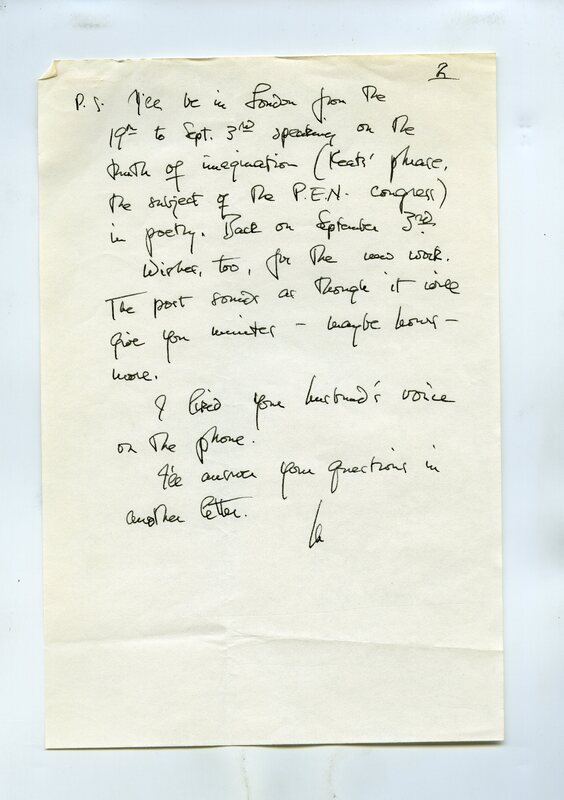
An original handwritten two-page letter to Louise Kertesz from Muriel Rukeyser, dated August 9, 1976. Muriel states that whatever happened to Louise’s daughter is wonderful news, and sends good wishes to Louise and her family. Monica McCall had found reviews of Body of Waking in her office at ICM, along with "the plays." The second part of the letter states that Muriel will be in London from the 19th to September 3rd for the P.E.N. Congress, where she will speak on "the Truth of Imagination" in poetry. Page 2 of 2. The letter is attached with a paper clip to a seventeen-page bundle of Louise's handwritten notes of findings, quotes, observations on Rukeyser. [See documents 018_LK_01_006 to 018_LK_01_023.]
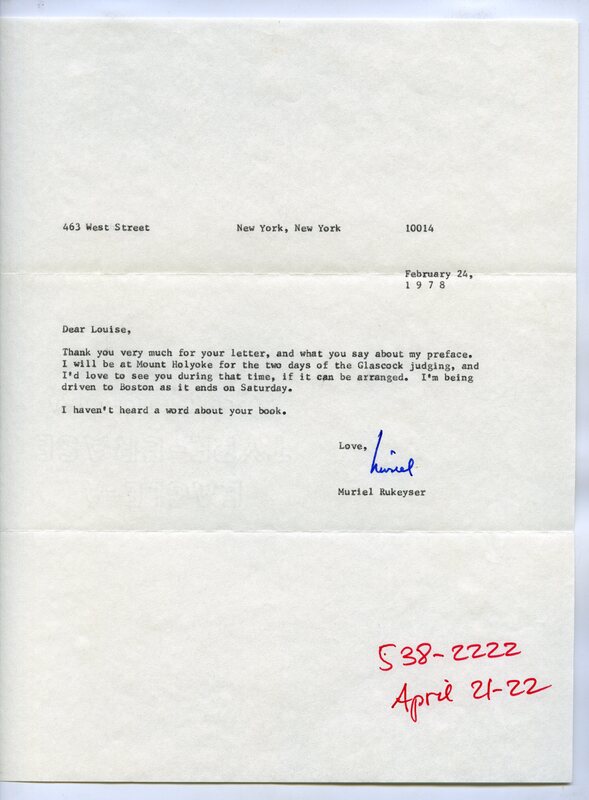
Original typewritten letter, dated February 24th. 1978. From Muriel Rukeyser to Louise Kertesz. Muriel thanks Louise for her letter and what she says about her preface [Rukeyser's preface to The Collected Poems of Muriel Rukeyser, published in 1978]. The letter says that Muriel will be at Mount Holyoke for the two days of the Glascock Poetry Contest, and that she would love to see Louise during that time. Muriel is being driven to Boston as the event ends on a Saturday. The letter ends with Muriel saying that she hasn’t heard a word about Louise’s book.
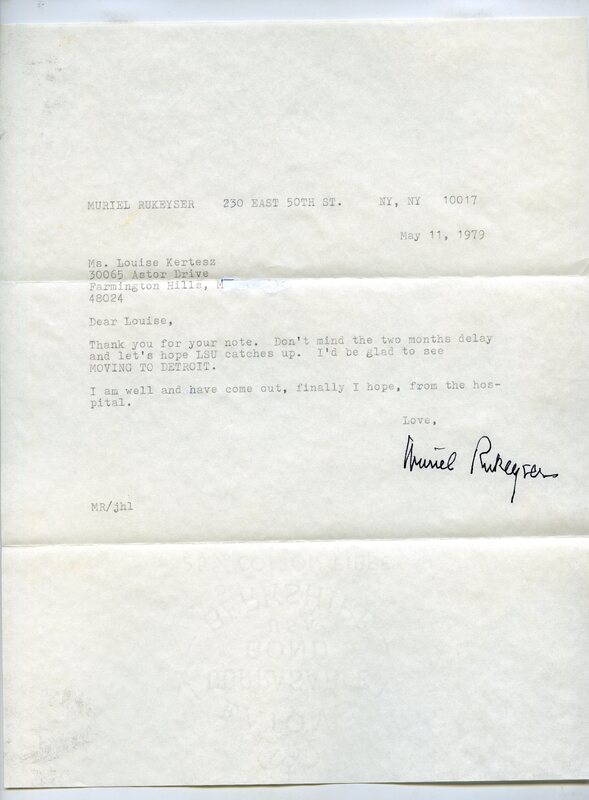
An envelope dated May 21st, 1979, with a letter dated May 11th, 1979. The letter is from Muriel Rukeyser to Louise Kertesz. Rukeyser begins the letter by thanking Louise for her note. Rukeyser also tells Louise to not mind the two-month delay and to hope that LSU catches up. Furthermore, Rukeyser says that she will be glad to see MOVING TO DETROIT [Kertesz''s manuscript of poems which she submitted to Louisiana State University]. Rukeyser ends the letter by saying that she is doing well and that she may be ready to leave the hospital.
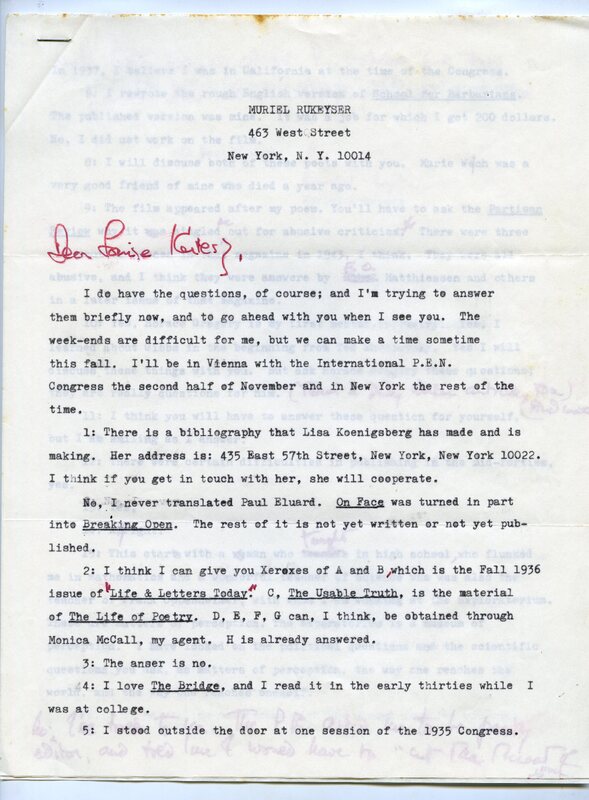
Original typewritten three-page letter, undated, of Muriel Rukeyser to Louise Kertesz, answering sixteen questions. Rukeyser's answers are wide-ranging. She mentions a poem "On Face," which may have been inspired by a Paul Eluard poem: "On Face was turned in part into Breaking Open. The rest of it is not yet written or not yet published." Page 1 of 3.
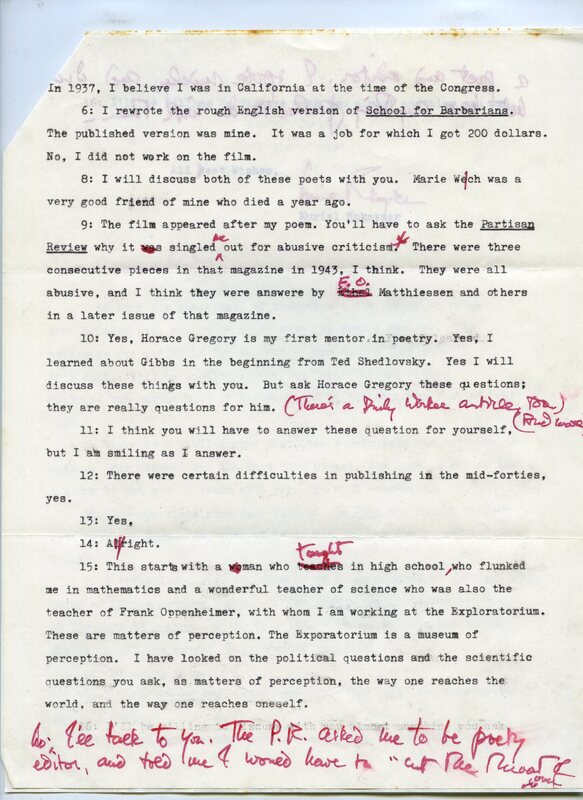
Original typewritten three-page letter, undated, of Muriel Rukeyser to Louise Kertesz, answering sixteen questions. Rukeyser's answers are wide-ranging. In answer to a question about her involvement in the publication of Erika Mann's book School for Barbarians: Education Under The Nazis, she clarifies that "I rewrote the rough English version ... The published version was mine. It was a job for which I got 200 dollars." She also addresses the Partisan Review debacle and suggests that Kertesz ask the editors directly "why it [her poem "Wake Island"] was singled out for abusive criticism." In another answer, she mentions a "wonderful teacher of science who was also the teacher of Frank Oppenheimer, with whom I am working at the Exploratorium ...The Exploratorium is a museum of perception. I have looked on the political questions and the scientific questions you ask, as matters of perception, the way one reaches the world, and the way one reaches onself." Page 2 of 3.
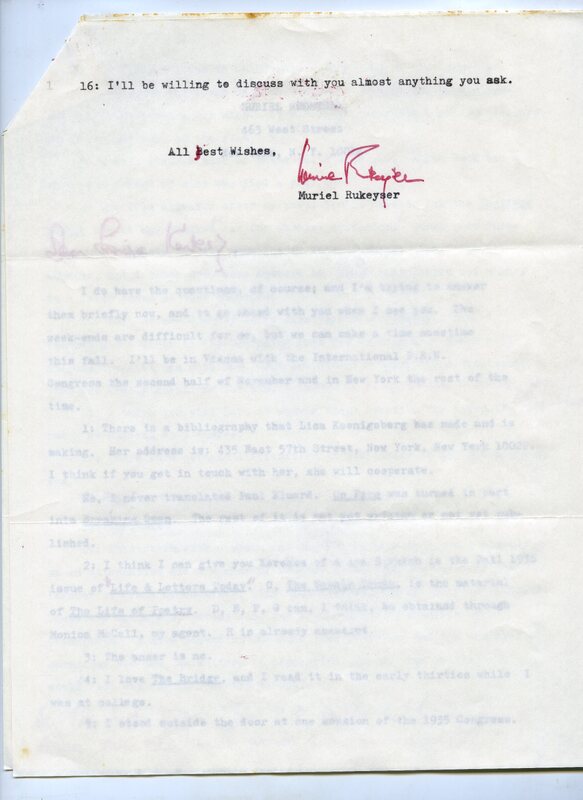
Original typewritten three-page letter, undated, of Muriel Rukeyser to Louise Kertesz, answering sixteen questions. Rukeyser ends her letter by responding to question 16 with the following words: "I'll be willing to discuss with you almost anything you ask." Page 3 of 3.
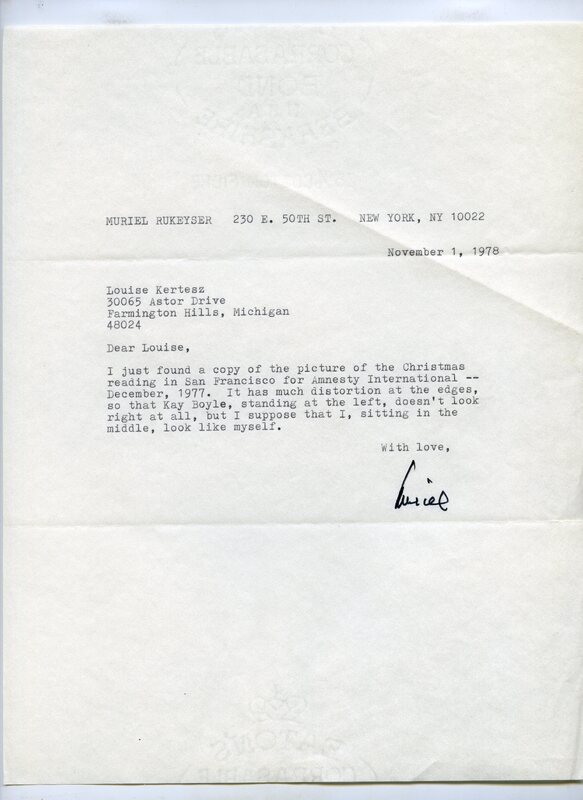
Original, typewritten letter, dated November 1, 1978. The letter is from Muriel Rukeyser to Louise Kertesz. In the letter, Rukeyser tells Louise that she found a copy of the picture of the Christmas reading in San Francisco for Amnesty International in December of 1977. The picture is distorted at the edges, so that Kay Boyle, who was standing on the left of Rukeyser, "doesn't look right at all," but Rukeyser supposes "that I, sitting in the middle, look like myself."
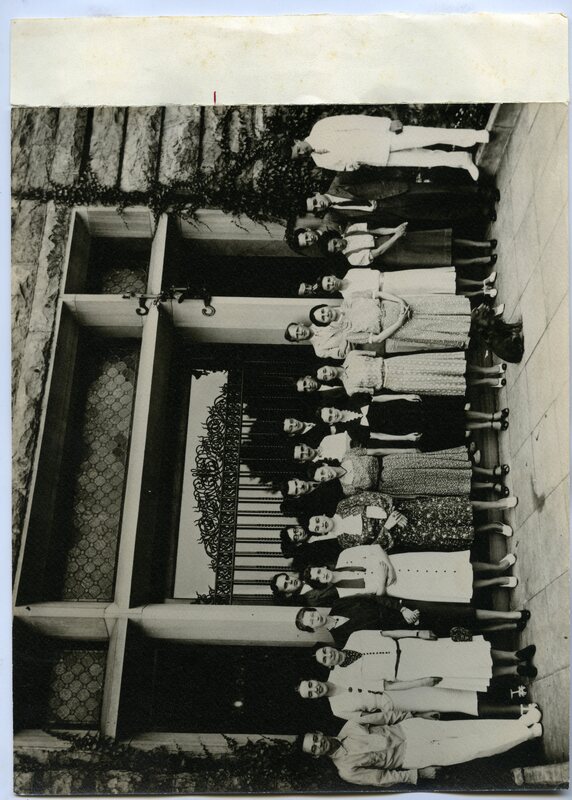
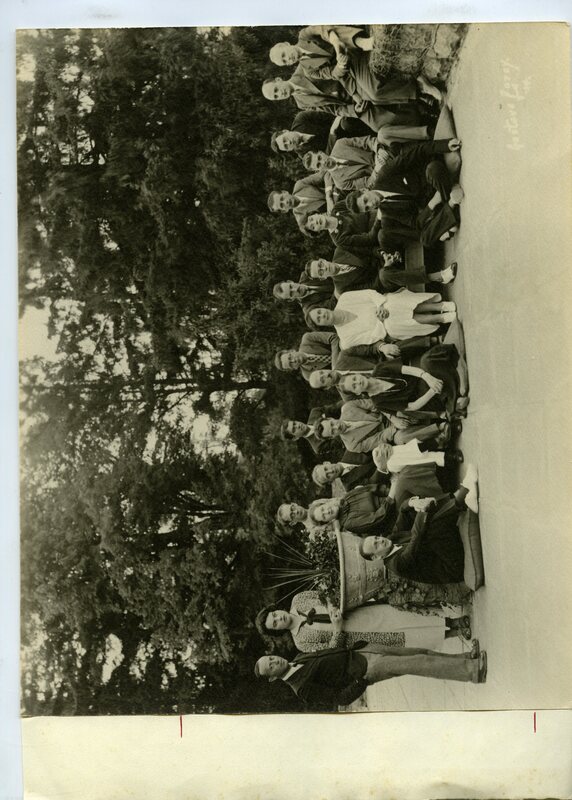
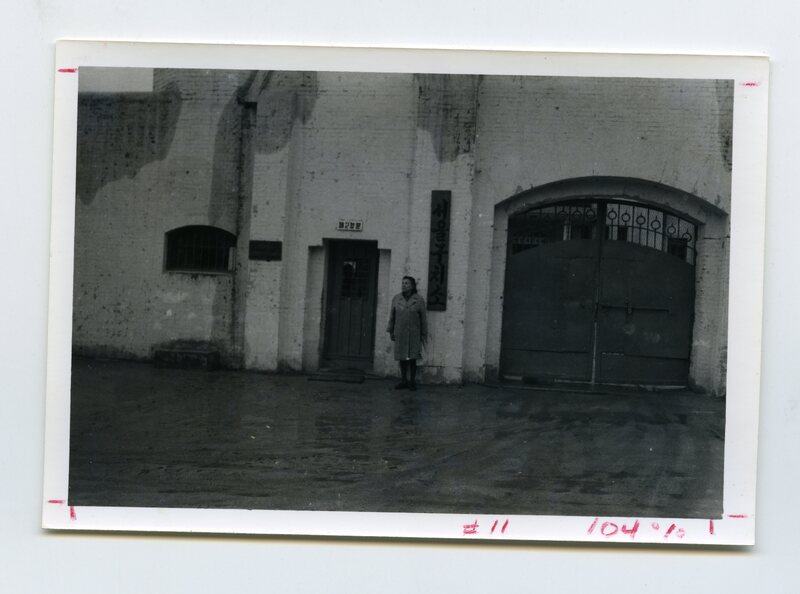
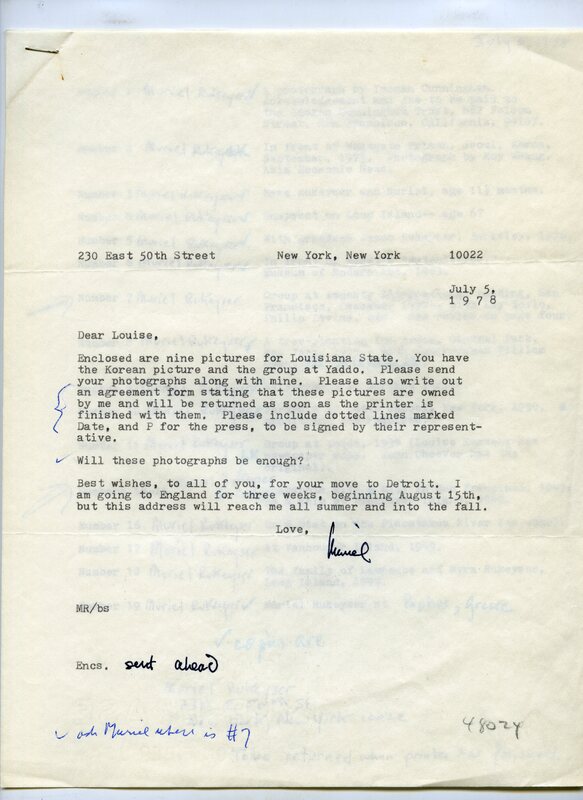
Original typewritten letter, dated July 5th, 1978. The letter is from Muriel Rukeyser to Louise Kertesz. In the letter Rukeyser had enclosed nine pictures for Louisiana State University Press. The letter says that Louise has the Korean picture and the group at Yaddo. Rukeyser asks whether or not these photographs will be enough, and she wishes Louise’s family the best on their move to Detroit. Rukeyser is going to England for three weeks, beginning August 15th, but her address at 230 East 50th Street in New York City "will reach me all summer and into the fall." Stapled to this letter is a page that describes all of the pictures Rukeyser sent to Louise.