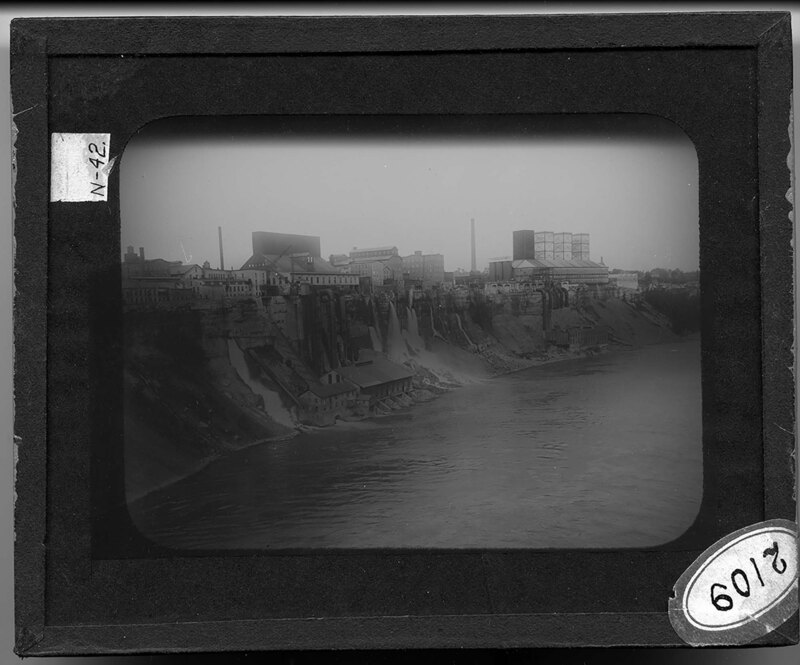
Landscape of an earthen dam and water spillways. Industrial buildings are constructed on the top of the dam, presumably as power plants for the spillways. Water pours through holes in the dam and cascades into the river below. More industrial buildings can be seen in the background as well as further down the river.
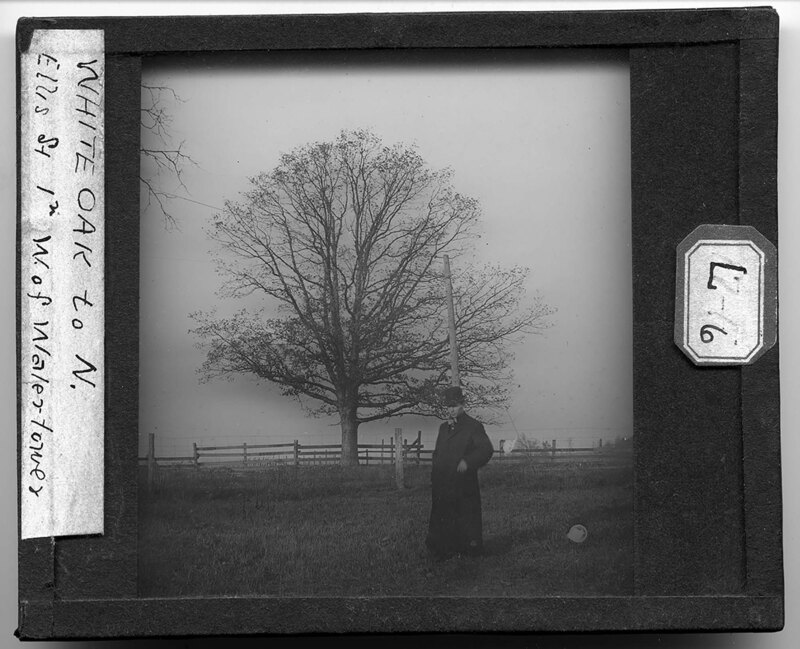
A man in a bowler hat and trench coat stands in front of a large White Oak Tree in Ypsilanti, Michigan. It is noted the picture was taken north of Ellis Street and west of Washington. It appears to be fall or winter because the tree is missing its leaves. A wooden fence divides the property from the road and the landscape is flat and mostly agricultural fields.
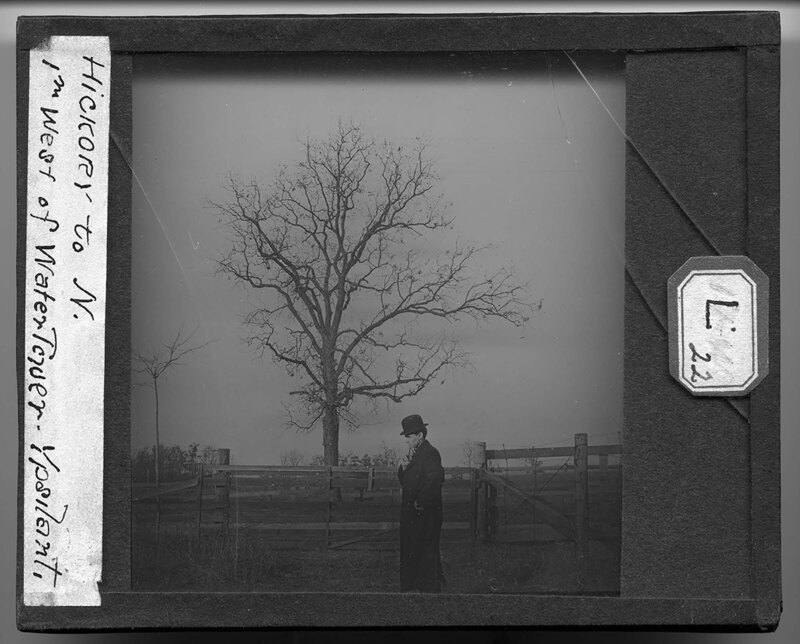
A man in a bowler hat and trench coat stands in front of a large Hickory Tree in Ypsilanti, Michigan. It is noted the picture was taken to the northwest of the Water Tower. It appears to be fall or winter because the tree is missing its leaves. A wooden fence divides the property from the road and the landscape is flat and mostly agricultural fields.
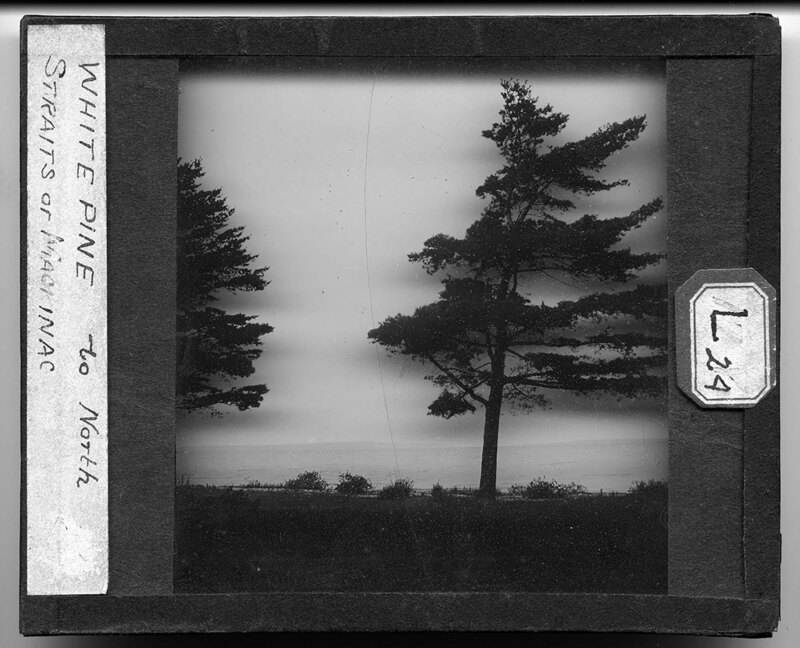
A large White Pine tree overlooking the Straits of Mackinac in northern Michigan. The tree's growth has been affected by the wind that comes off of the lake in the background and tilts to the right. A second tree can be seen to the left and the landscape is covered with dune grass. The straits can be seen in the background.
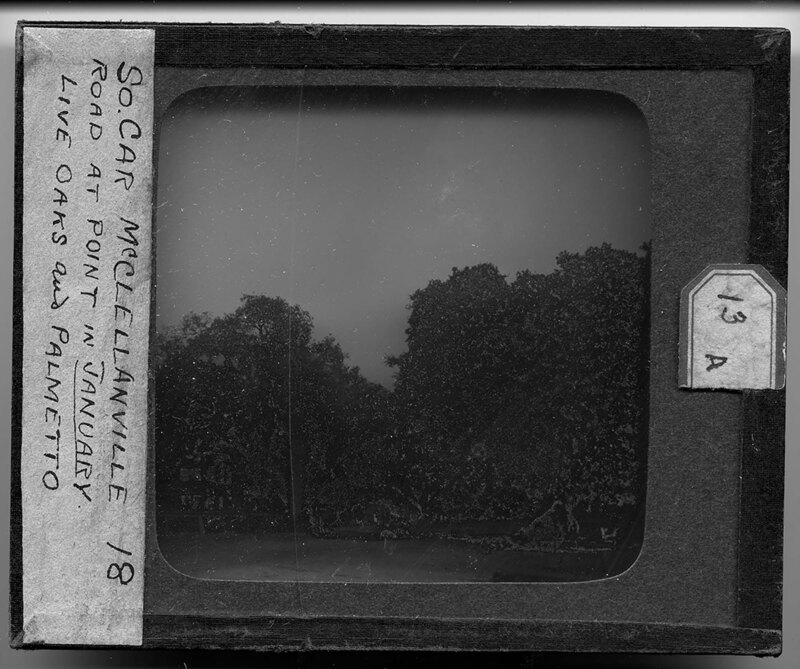
Landscape of live trees along McClellanville Road in January. A single palmetto can be seen to the left and an oak to the right. A raised foundation house can be seen behind the trees to the left and several benches can be seen under the oak tree.
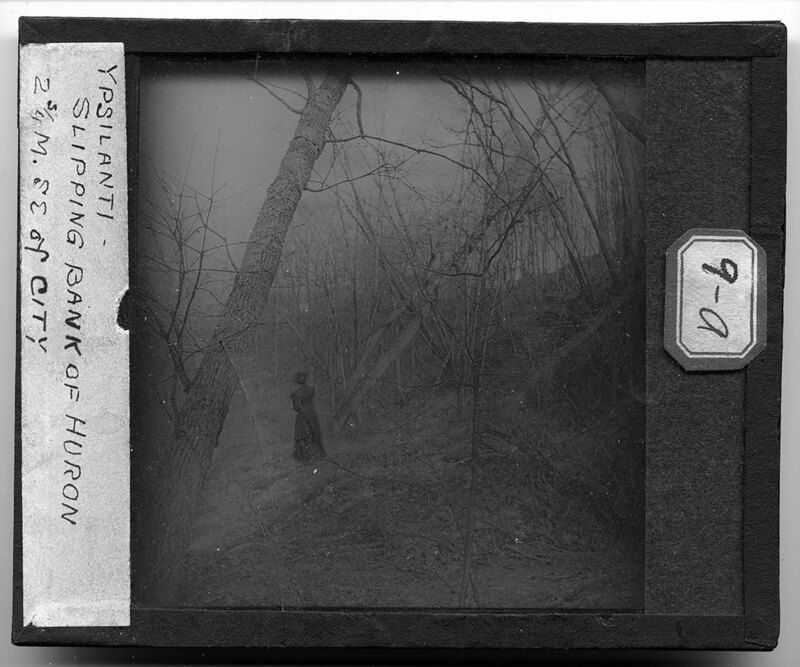
A woman walks through a forest SE of Ypsilanti, Michigan. It is noted the picture shows the slipping bank of the landscape around the Huron River. It appears to be winter or early spring because all of the trees are missing their leaves and the undergrowth has not started growing.
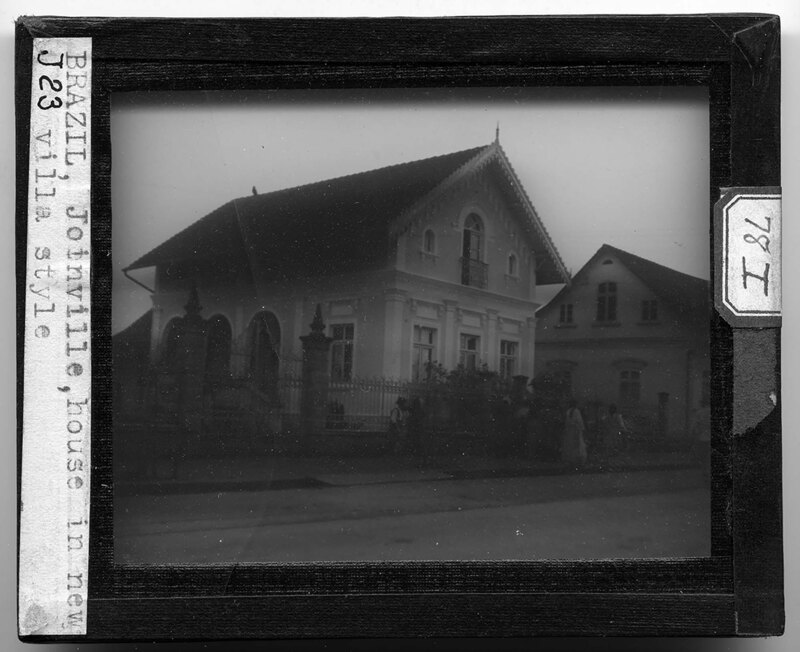
A villa-style house in Joinville, Brazil. The house appears to have a side-entrance but large floor to ceiling windows are on the facade that faces the street. A false cornice and dentil line wraps around the building between the two floors and the second story has a steep, overhanging tile roof. Gingerbread decoration hangs from the street-facing gable and is mirrored in the exterior design of the house. The entire property is surrounded by a wrought-iron fence and stone entrance columns. People walk on the sidewalk in front of the house.
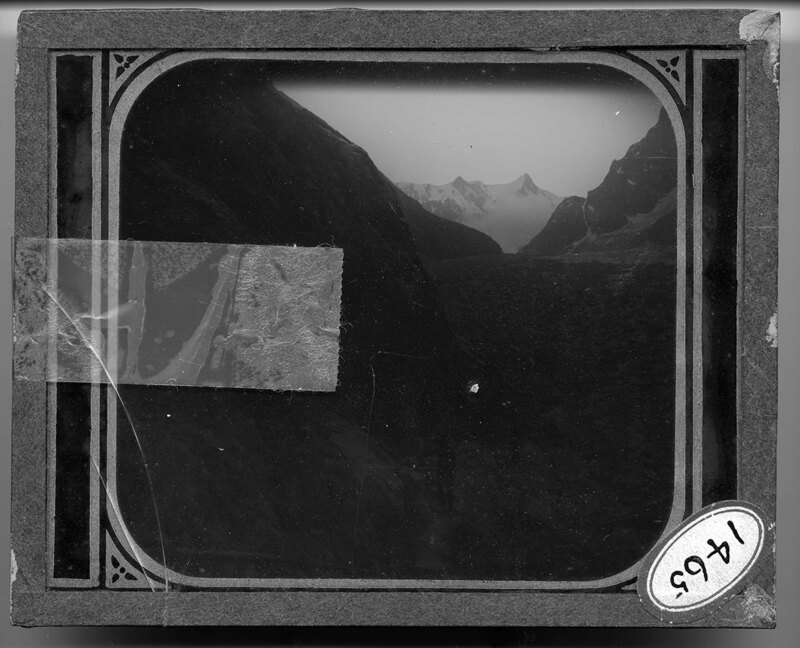
A mountain pass in Switzerland Valley. Two men walk along a narrow rock ledge to the left and a large boulder field spreads out to the right. Snow-capped peaks can be seen in the background and steep rock walls rise on either side of the frame. There is a metal handrail next to the path but the path is treacherous.
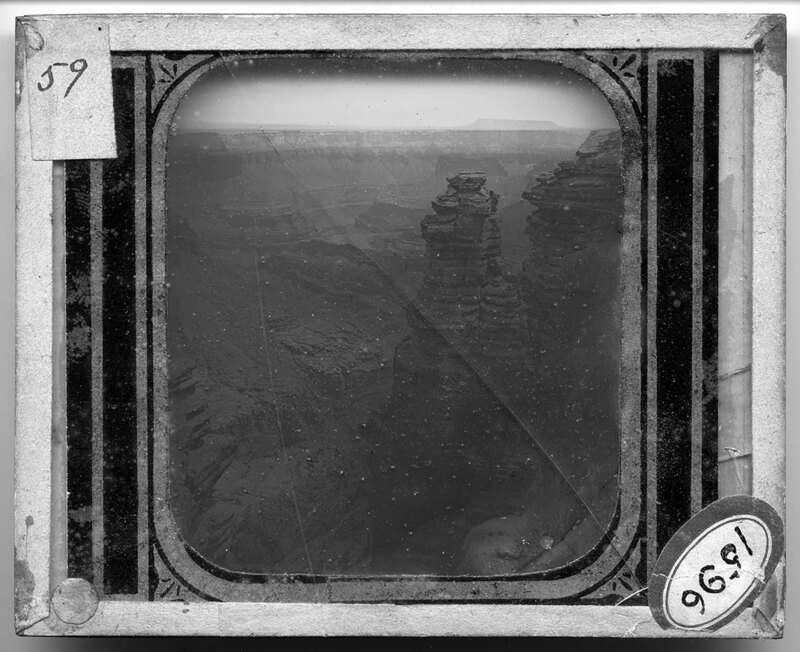
Shinimo Altar in Marble Canyon, Arizona. It is noted on the slide this rock formation is in Colorado, but it is part of Marble Canyon on the northern part of the Grand Canyon. The steep, stepped canyon walls can be seen in the background and there is little vegetation. The large formation looks like stacked rocks and has a large crack running vertically through the entire formation. The landscape in the background where the Colorado River has not cut through the bedrock is flat and barren, and there is a large rock plateau in the distance.
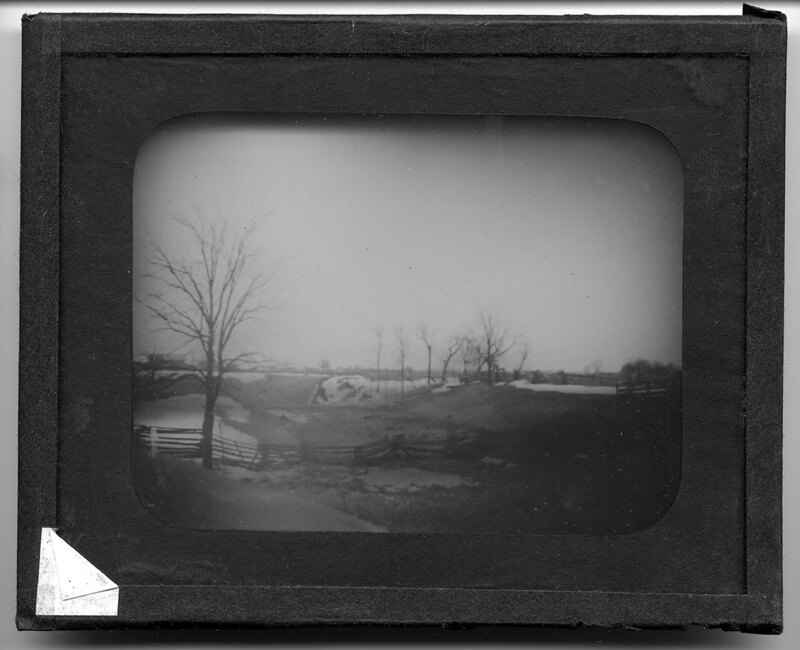
Landscape of Oak Run E., which is hilly and partially covered in snow. A wooden fence divides the property and several trees can be seen in the foreground. There is a steep drop-off to the right.
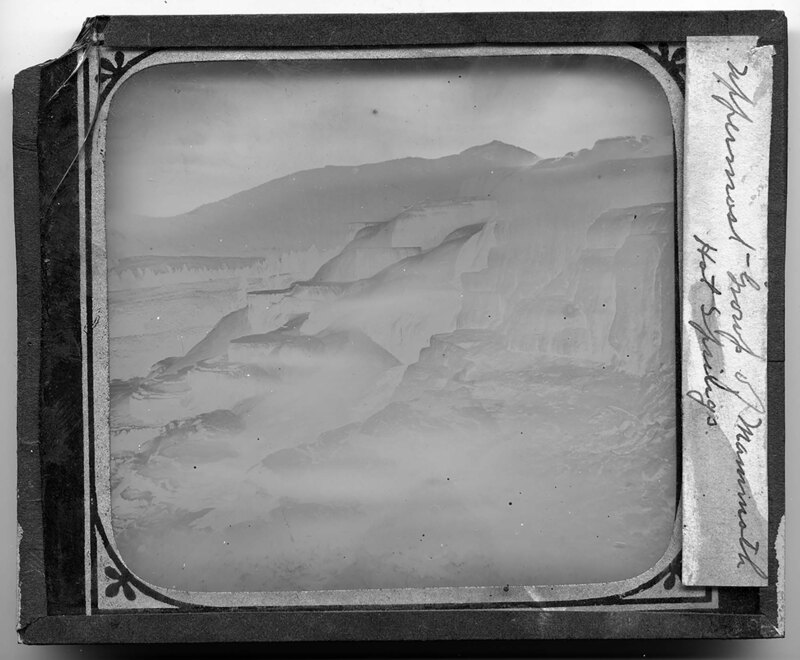
Landscape of Mammoth Hot Spring in Yellowstone National Park in Wyoming. Mineral deposits from the ground water create stepped pools and calcareous overhangs, creating a mountain of mineral hot springs. Portions of the hot springs are active at different times, so the landscape is always changing. Mountains can be seen in the background, along with several stands of trees.
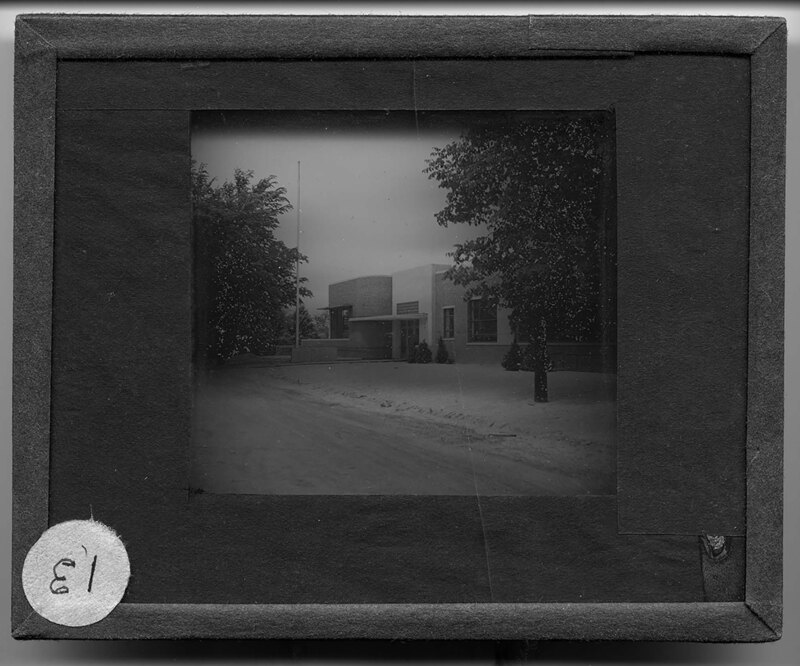
The Rackham Building on the campus of Eastern Michigan University in Ypsilanti, Michigan. The building was constructed in 1938 and housed the special education department. The building was the first constructed in the country that was specifically designed to train teachers in special education. Designed in the WPA Moderne style, Rackham is constructed of brick and has a concrete entrance on the south side of the building. Trees and shrubs obscure the front of the building but still let light into the first floor through the many windows. A dirt road passes in front of the building.
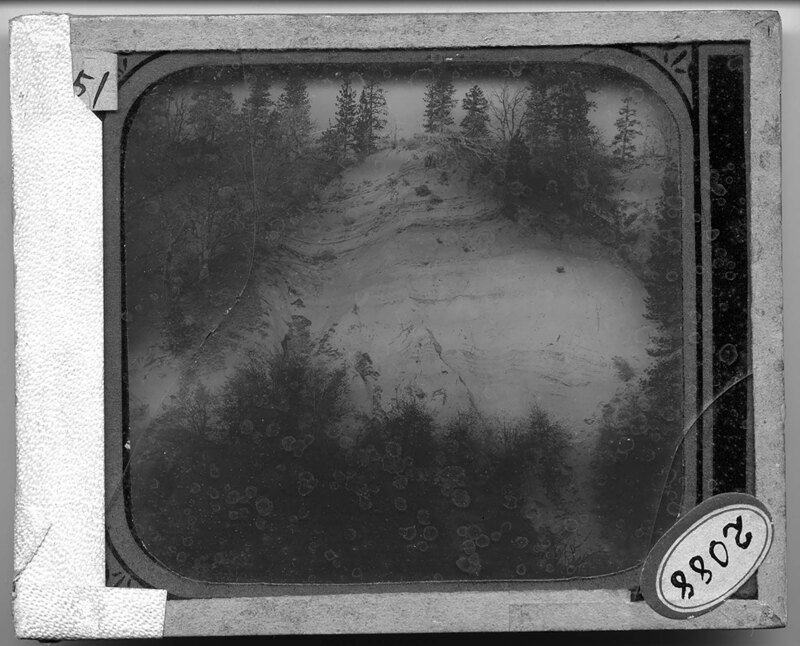
Landscape of a rocky cliff face in Shasta County, California. It is noted that the rock formation is located along Pit Road and is 110 ft. thick. Curved deposit lines cover the side of the cliff and trees grow on top of and on the side of the rock wall.
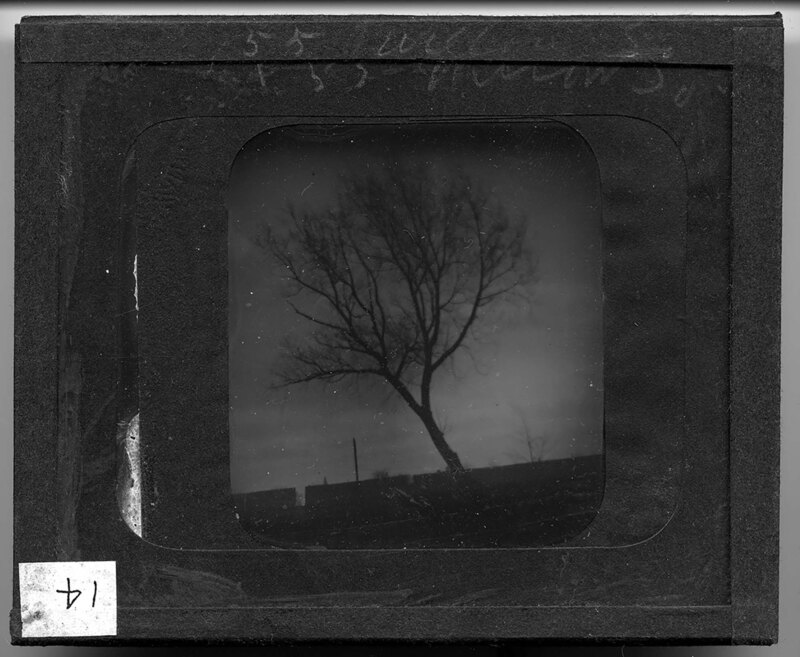
Picture of a tree showing the effect of wind on its branches. It appears to be winter time or early spring because the tree has lost its leaves. A wooden fence can be seen behind the tree.
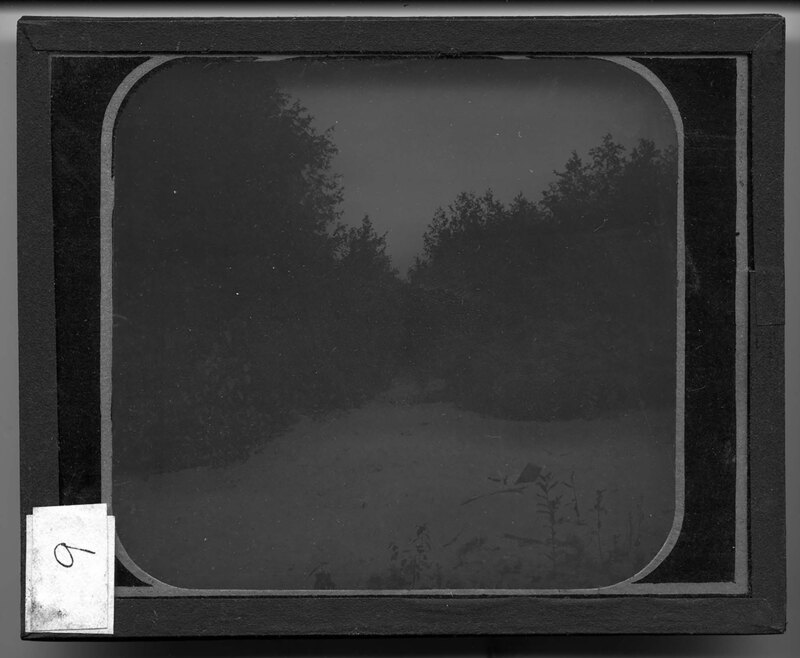
A sandy trail through a stand of pine trees. Weeds stick out of the sand in the foreground and scrub bushes grow up around the bases of the pine trees.
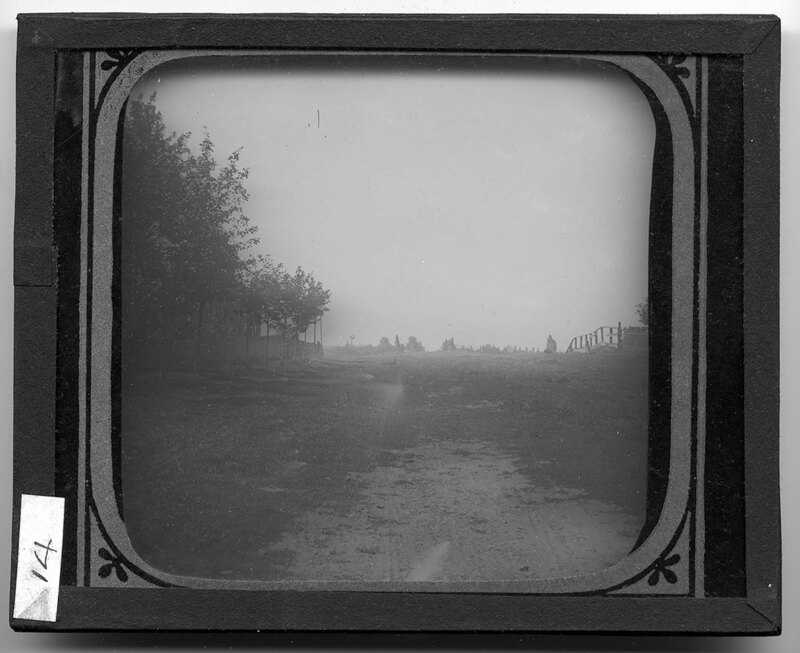
Landscape of a country road. Tire tracks can be seen in the dirt but grass mostly covers the roadway, suggesting this is not a heavily used road. A house with small trees can be seen to the left and a wooden fence divides the property to the right from the road.
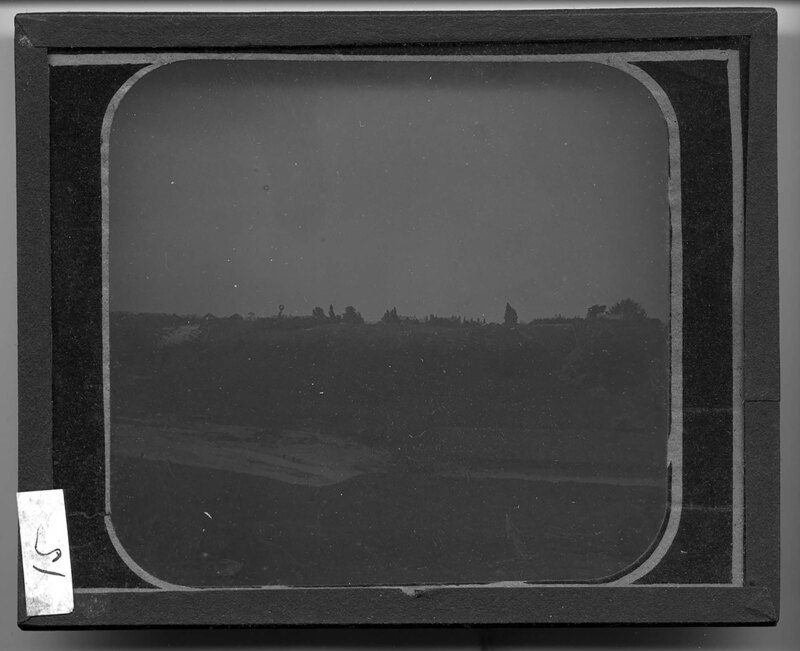
Landscape of hills and farm fields. Wooden fences divide the fields, which are clear cut for farming. Trees grow on the edge of the fields and the entire landscape is covered with grass. It is likely spring or summer because the trees have their leaves.
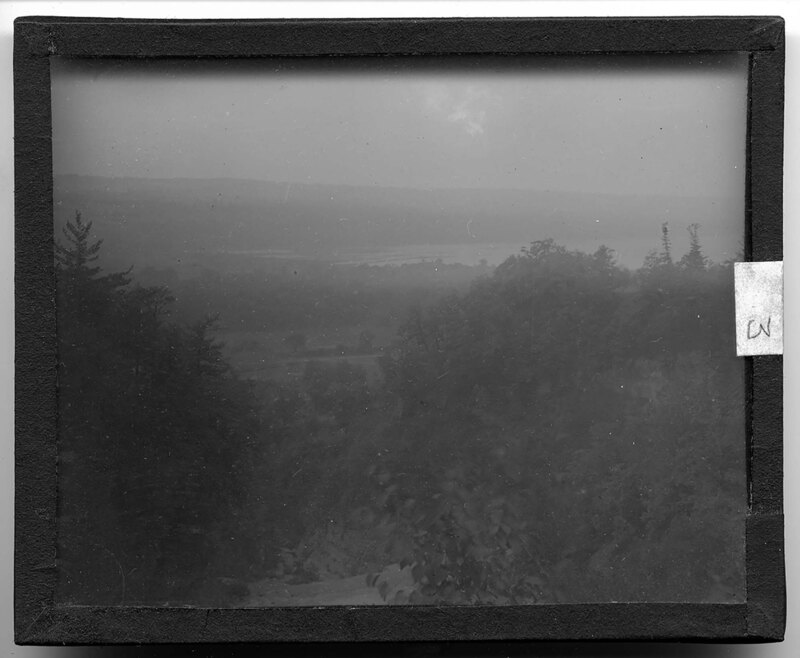
aerial view of a valley at the base of a wooded mountain top. The rocky cliffs give way to a flat landscape and a large lake. Forested hills can be seen in the background.
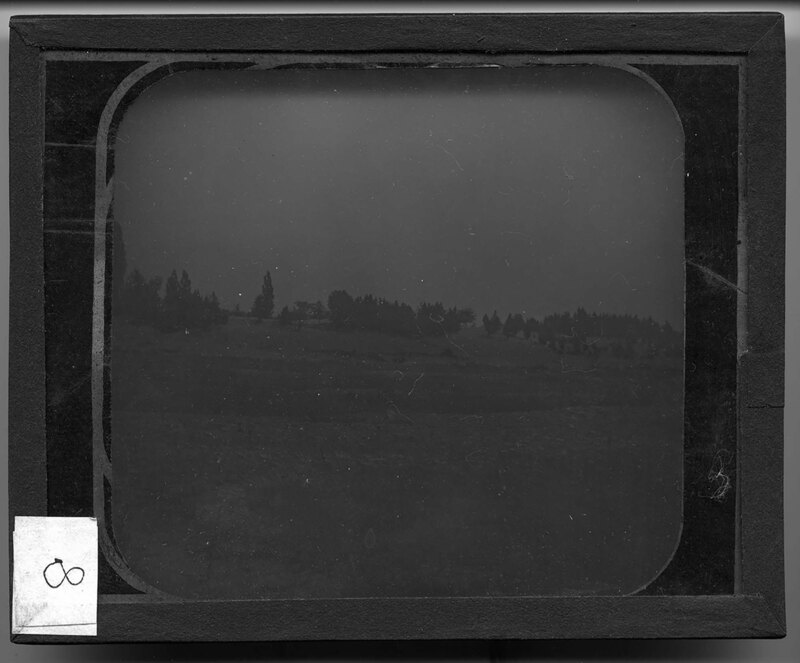
Landscape of trees on a rocky hillside. The terrain is relatively flat, but is covered with grass and rocks. The trees only grow on top of the dune and are clumped together.
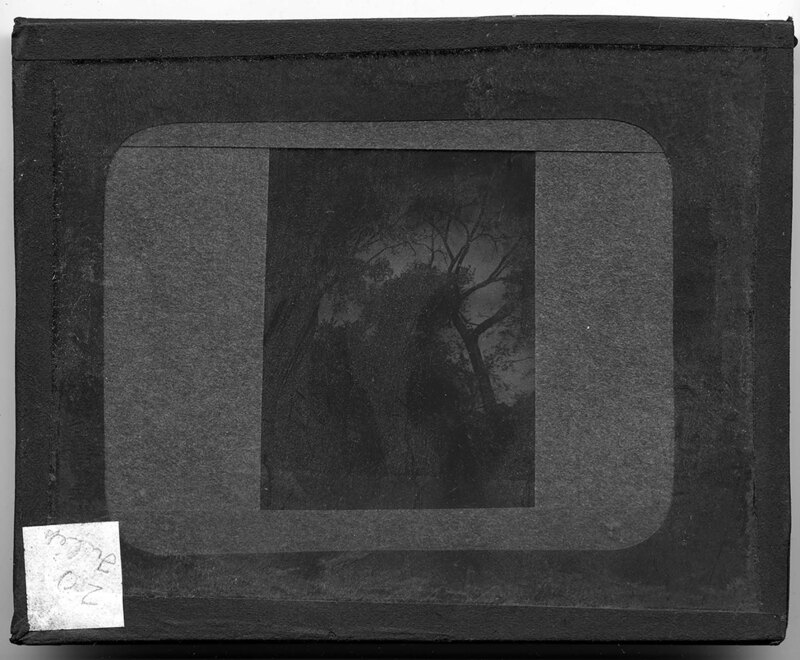
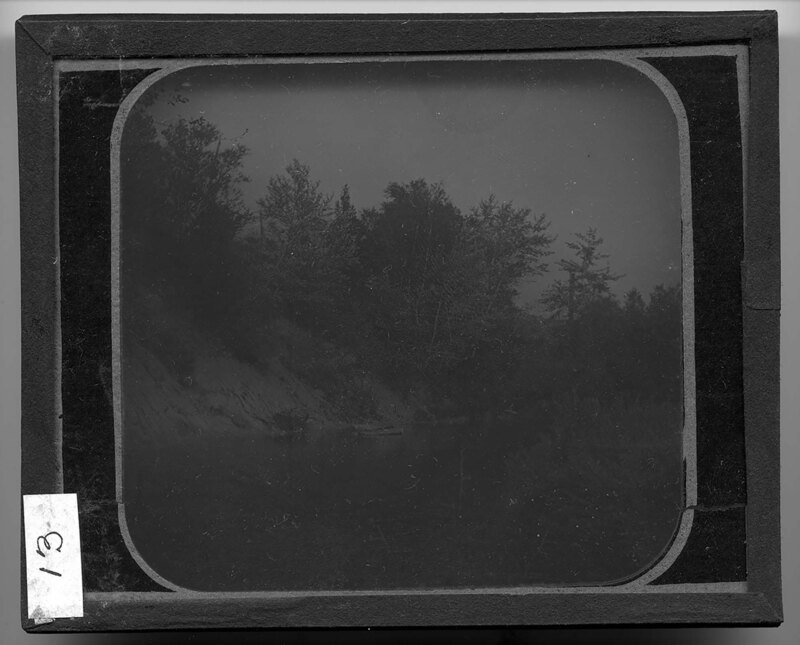
Landscape of a wooded, swampy area. Large trees grow out of the hillside, which is covered in grass and has several boulders scattered throughout the grass. A group of trees can be seen in the background and it appears to be spring or summer because all of the trees have leaves on them.
Picture of a tree showing the effect of wind on its branches. It appears to be winter time or early spring because the tree has lost its leaves. A wooden fence can be seen behind the tree.
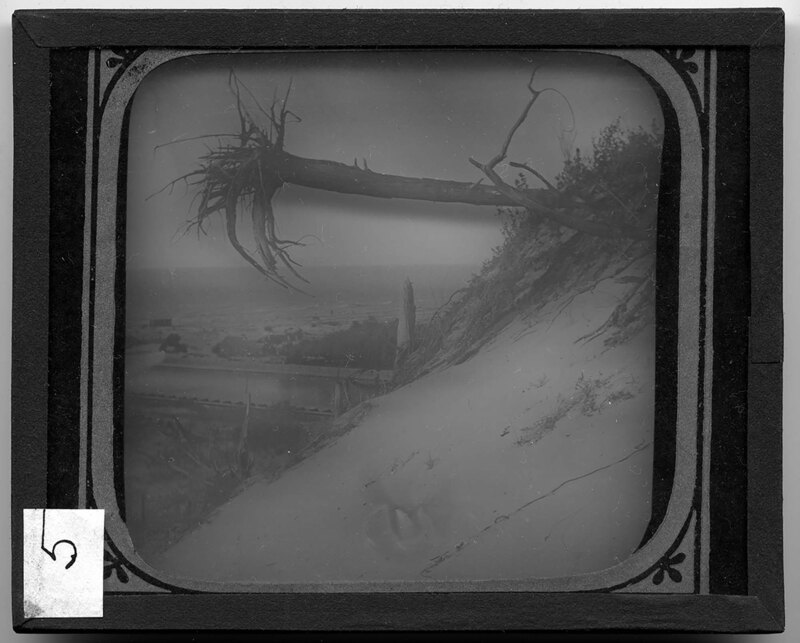
The base of a dead tree sticks out from the side of sand dune. As the dune moved from the wind and erosion, the tree was covered and eventually died. When the dune moved again, the tree became exposed and now appears to come out of the side of the dune. Houses have been constructed along the banks of the water in the background and a levee can be seen behind the houses.
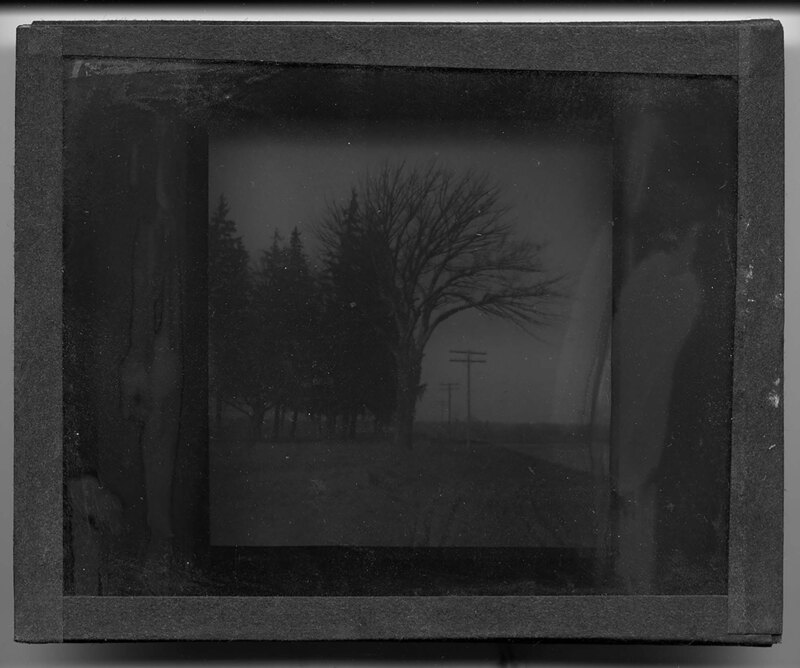
A tree standing beside a roadway. It appears to be winter time or early spring because the tree has lost all of its leaves. Deep tracks from a car can be seen in the yard in the foreground and power lines run next to the roadway to the right. A stand of pine trees can be seen in the background.
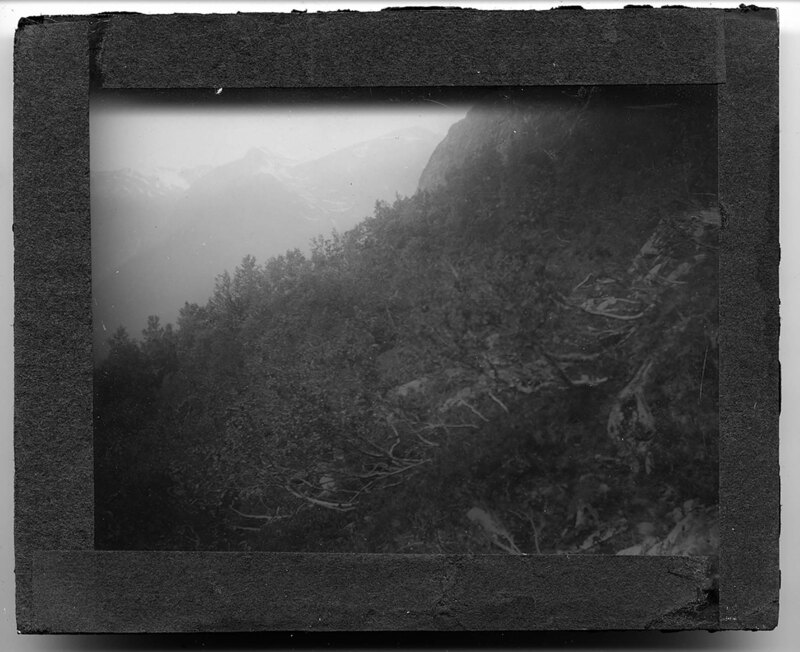
Landscape overlooking a wooded mountainside. Dense vegetation covers the ground, obscuring the rocky terrain. Several mountains can be seen in the background, partially snow covered.
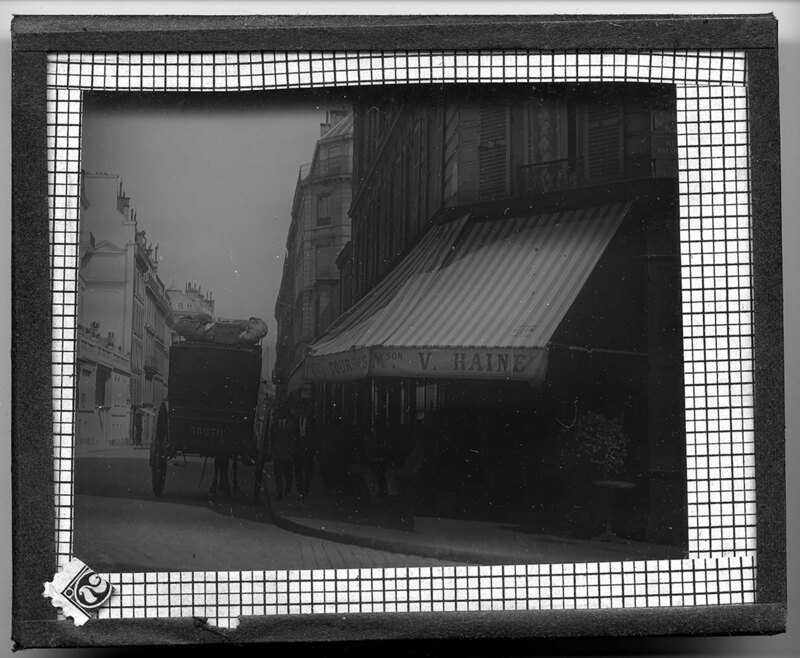
Urban streetscape where people are walking down the sidewalk or sitting at tables under the awning of the Courses. V. Haine. A loaded buggy sits outside of the show and a horse waits in front. The cobblestone street is lined with tall buildings and there are several balconies for apartments above the shop fronts.
Landscape of rolling hills and trees in the winter. Snow covers portions of the surrounding hills and wooden fences divide the property. A farm can be seen in the background.
Landscape of a railroad bridge and a river. The river cuts through the flat landscape, leaving behind piles of rocks and tree debris on the banks. The bank to the left is steep and partially eroded so no vegetation grows there. The railroad bridge is constructed of stone pillars and iron tressil work. Trees obscure most of the railway.
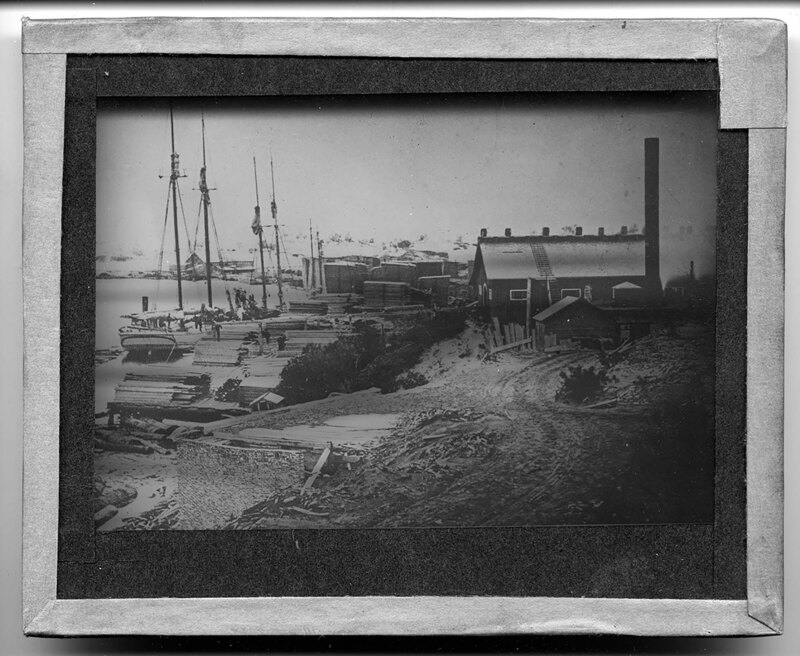
Photostat of workers loading lumber onto sailing ships outside of a small warehouse or factory. Piles of cut and uncut timber are stacked on the docks near the water and men can be seen scaling the piles as the timber is loaded.
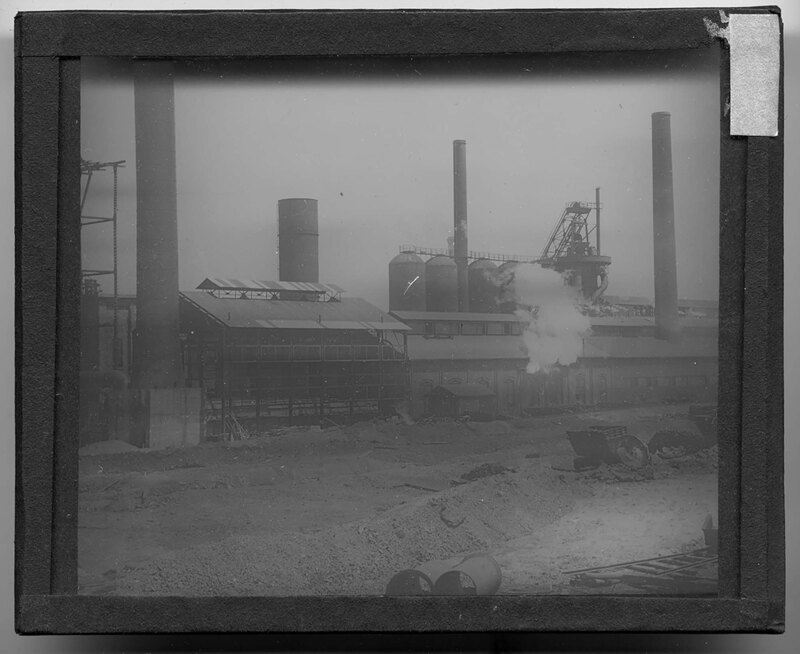
A factory that is comprised of several different structures, including a long warehouse, several smokestacks and circular storage buildings, and an open air storage facility.
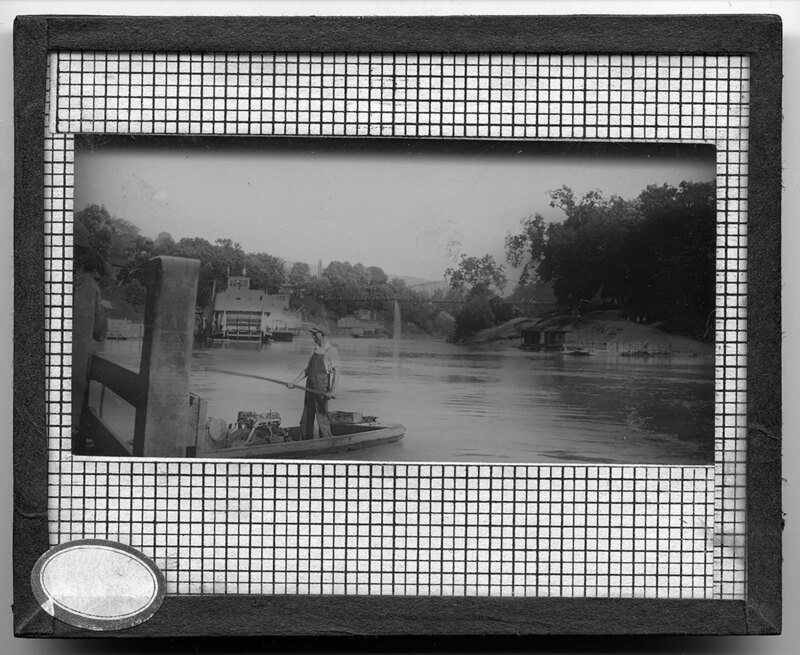
A man maneuvers his small boat to the dock in the foreground while larger steamboats are moored to the banks of the river in the background. A large bridge spans the water to connect the two banks, which are heavily forested. Three men walk down a dirt embankment to a small dock and house boat to the right.
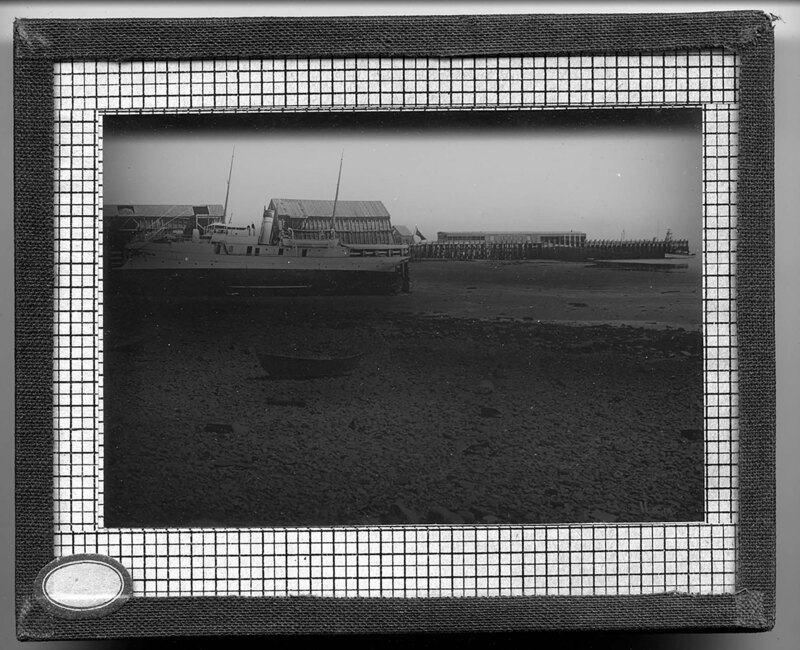
A rowboat and a large ship are stranded on the sea bed because the tide has gone out. The rocky beach creates a clear divide between the shore and the sea bed even though the water has retreated. Several docks and wooden storage warehouses can be seen in the background, likely used to house cargo for shipping.
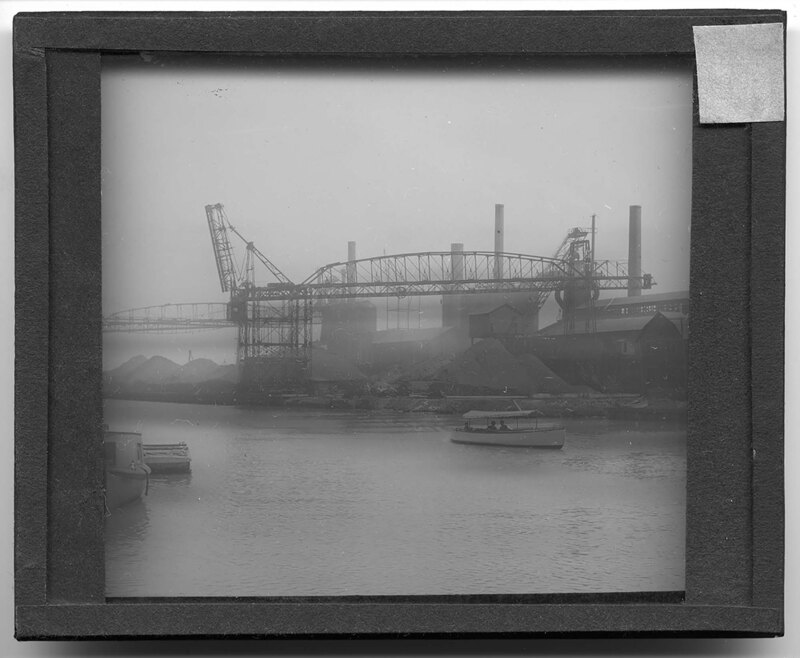
Landscape of a river with a plant or factory on its banks. A family sits in a boat with a cloth awning in the middle of the river and several other boats can be seen moored to the bank to the left. A large iron crane and conveyor system towers over the factory buildings and several smoke stacks can be seen in the background.
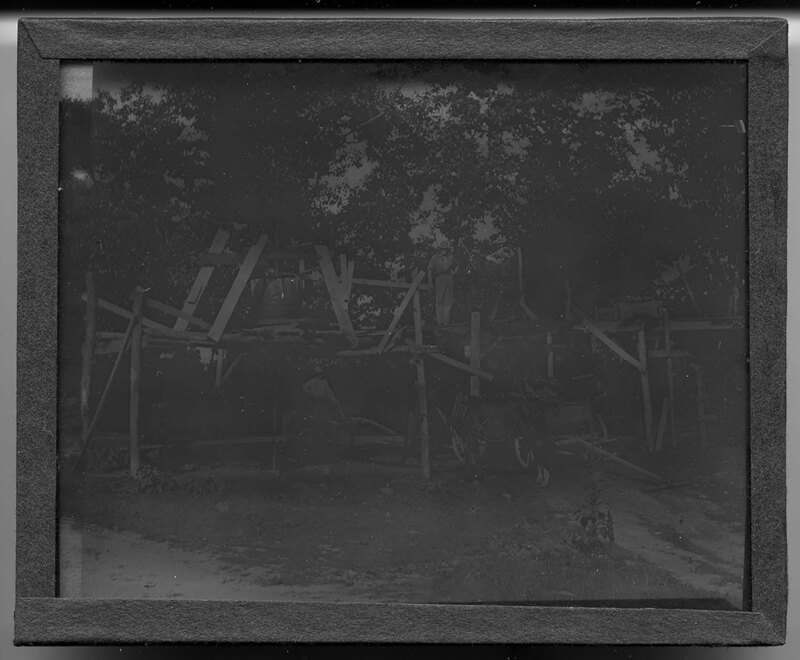
Several men stand next to a wooden platform that is used for some kind of agricultural purpose. Two horses stand underneath the awning, and were likely pulling the wooden wagon behind the horse in the foreground because they still have all their harness equipment on. A large barrel sits on top of the structure.
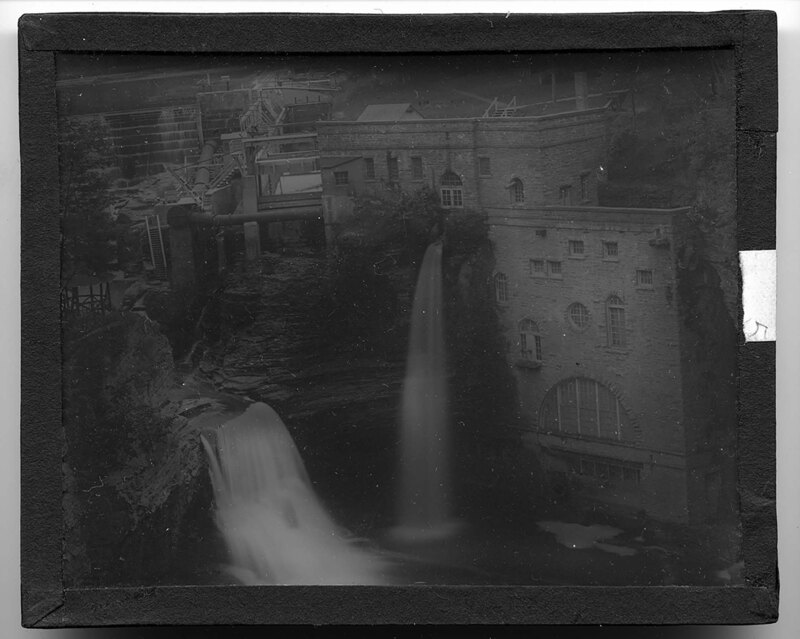
An unusual building constructed into the surrounding rocky cliffs of the landscape. It is noted that this is possibly a water power station but it is unclear. A large waterfall cascades over the rocky edge of the riverbed but a second fall appear to be coming out of the building. The river appears to be dammed in the background, and a system of pipes has been constructed next to the river in the background. The building is constructed of cobblestones and has varying window shapes throughout.
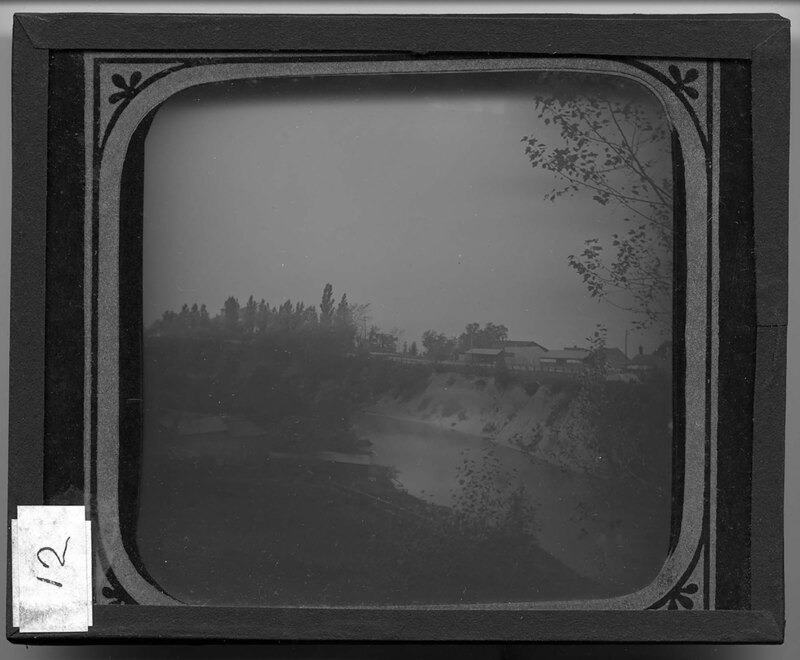
A river cuts through a country landscape. Houses are built on top of the steep dirt embankments around the river and wooden fences divides the properties from the water. A roadway can be seen in the background, on top of the bluff. Vegetation covers the landscape.
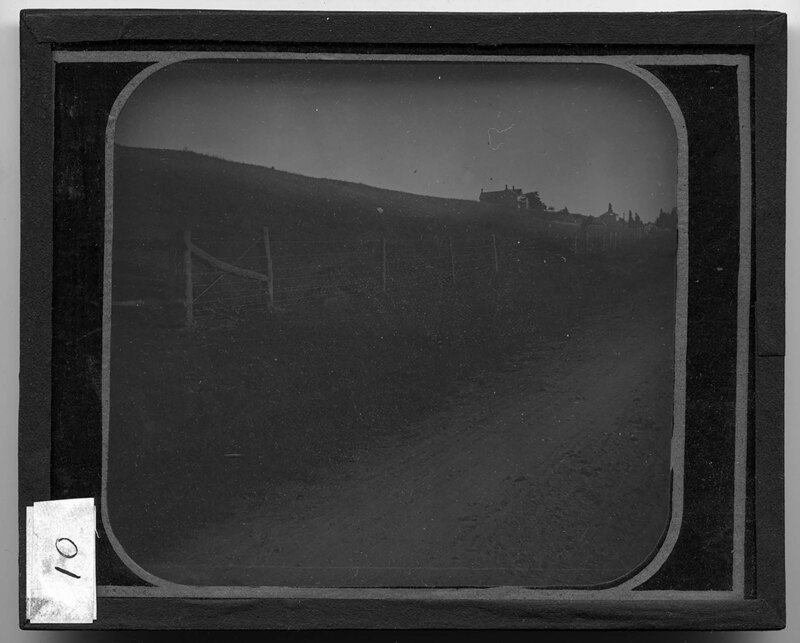
Landscape of a country road and farm land. The dirt road is divided from the grassy field to the left by a wooden and wire fence. A large house can be seen in the background, built on one of the hills overlooking the area.
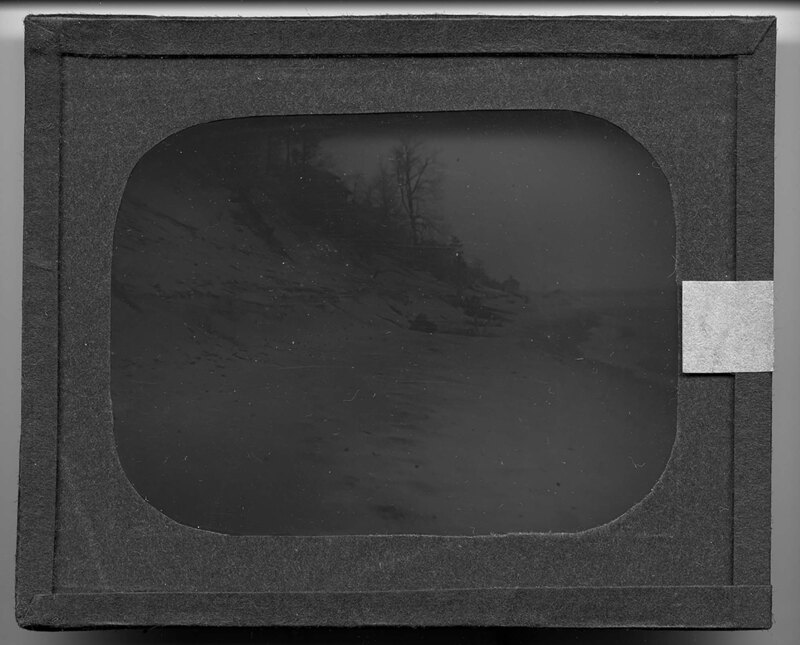
Landscape of a sandy lakeshore. Houses have been constructed at the top of the sand bluff in the foreground and they extend all the way down the beach. Tree debris and rocks litter the small beach and trees grow out of the top of the dune around the houses.
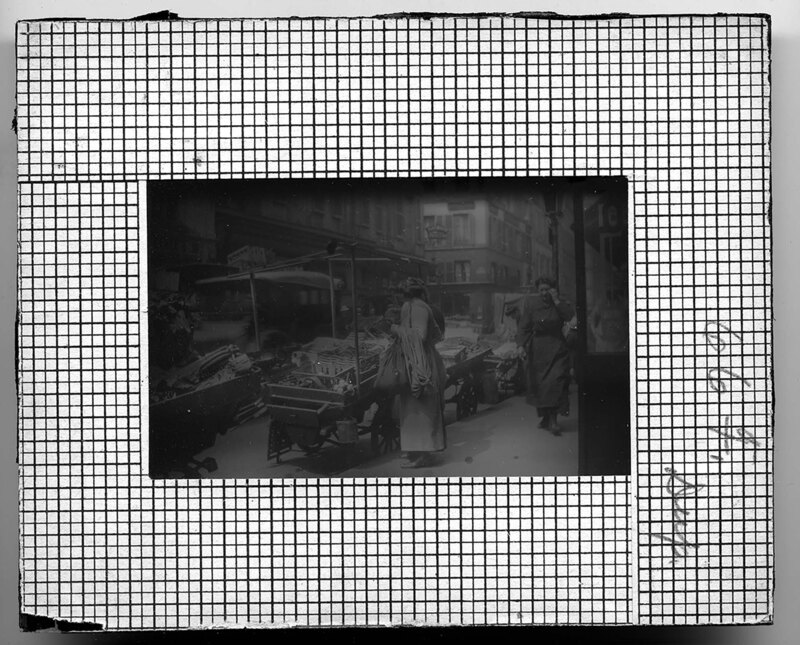
Streetscape of women shopping from street buggies at city market. Baskets of produce sit in wooden buggies and cars can be seen driving past the sidewalk where a woman is walking into a store front. Tall buildings line either side of the street.
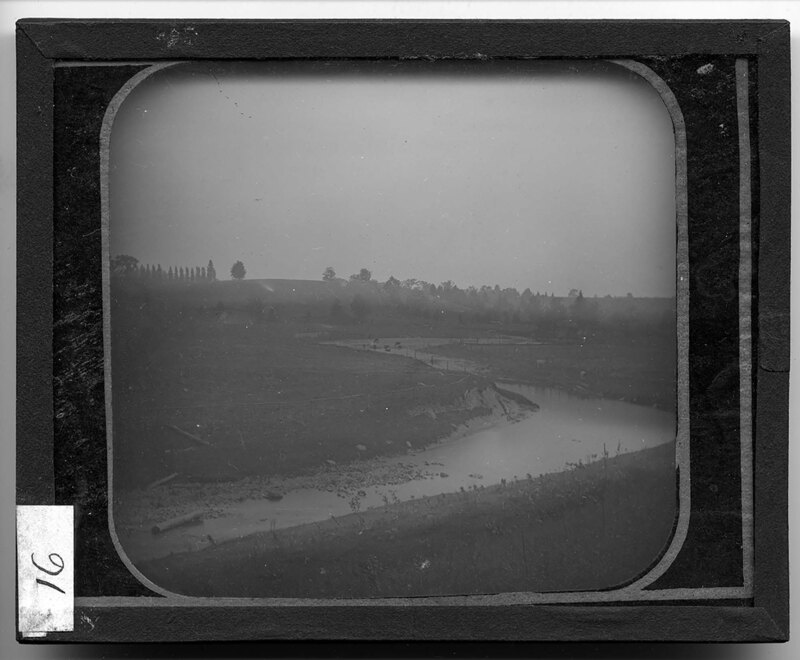
Landscape of a meandering river. The river cuts through the flat plateau to the right, leaving behind rocks and boulders that get piled on its banks. Several logs can also be seen floating on the water. Wooden fences divide the property around the river and cows can be seen grazing on the banks. A steep hill can be seen to the left, dotted with trees.
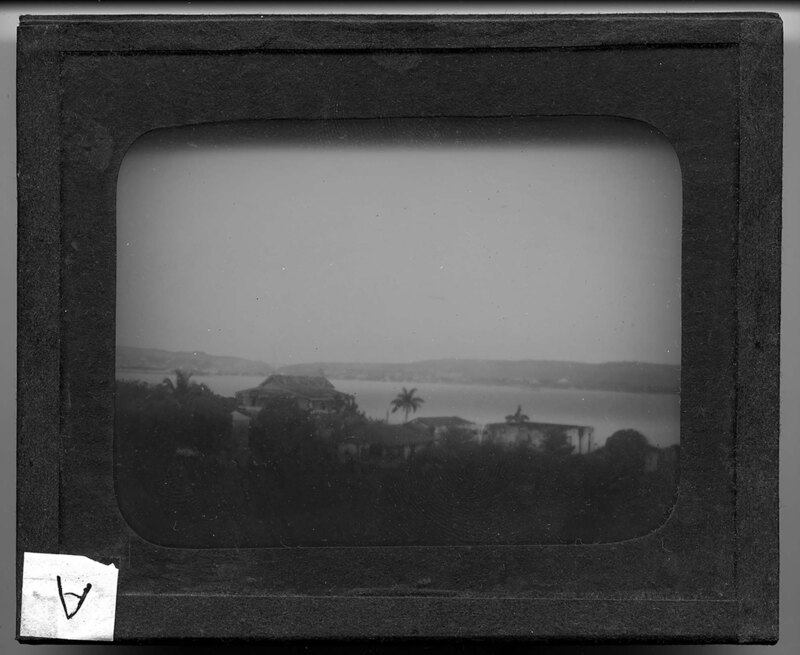
aerial view of a village near the water. It is noted that this area is tropical and there are several palm trees growing around the houses. Dense vegetation covers the hilly landscape around the body of water and the opposite bank is quite hilly as well.
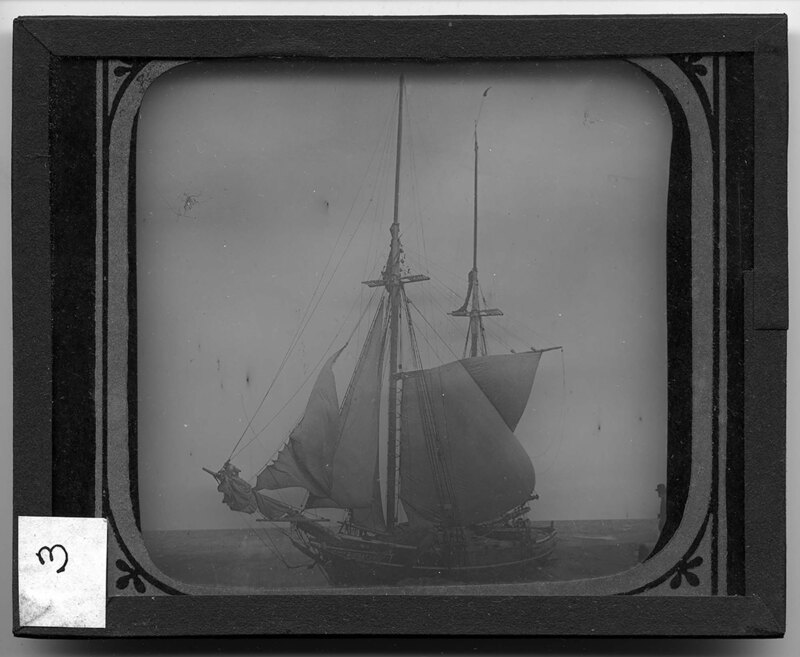
A large sailboat on the water. Named, "Singapore," the has half of its sails open while the other are being tied up as the ship comes to shore. A man stands on a pier stretching out into the water, watching as the boat sail in to be moored.
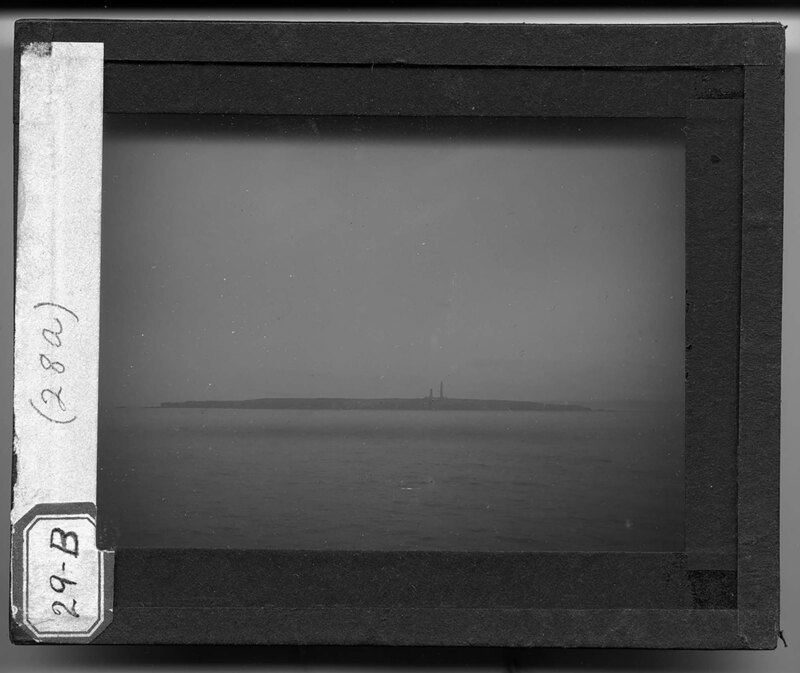
Landscape overlooking an island. A lighthouse stands on the shore closest to the photographer and the island is relatively flat with no vegetation. Several hills can be seen on the opposite banks of the body of water in the background.
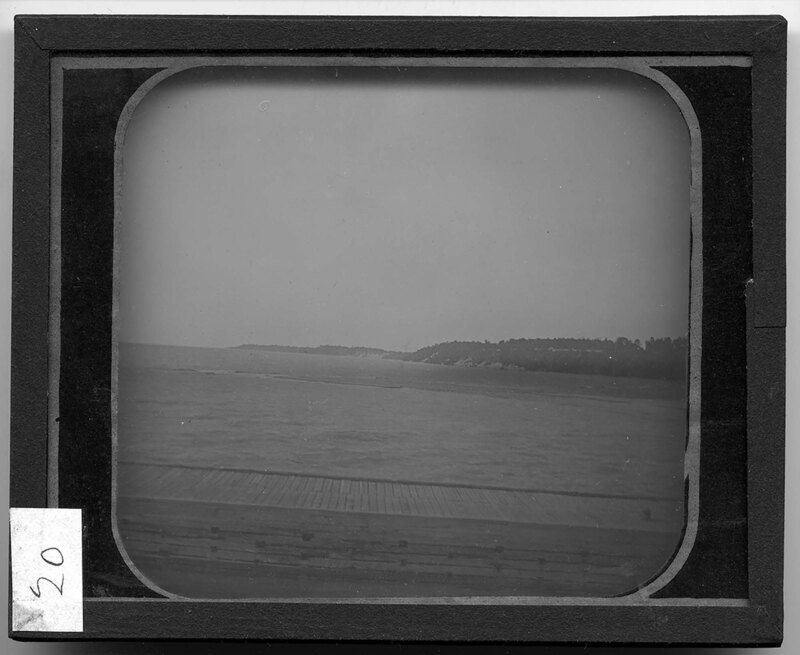
Landscape overlooking a body of water. A boardwalk can be seen in the foreground and steep cliffs covered with trees and other vegetation can be seen in the background, on the shore of the water.
A river cuts through the rocky landscape. The steep banks of the river are covered with trees and other vegetation, and several logs can be seen floating on the water.
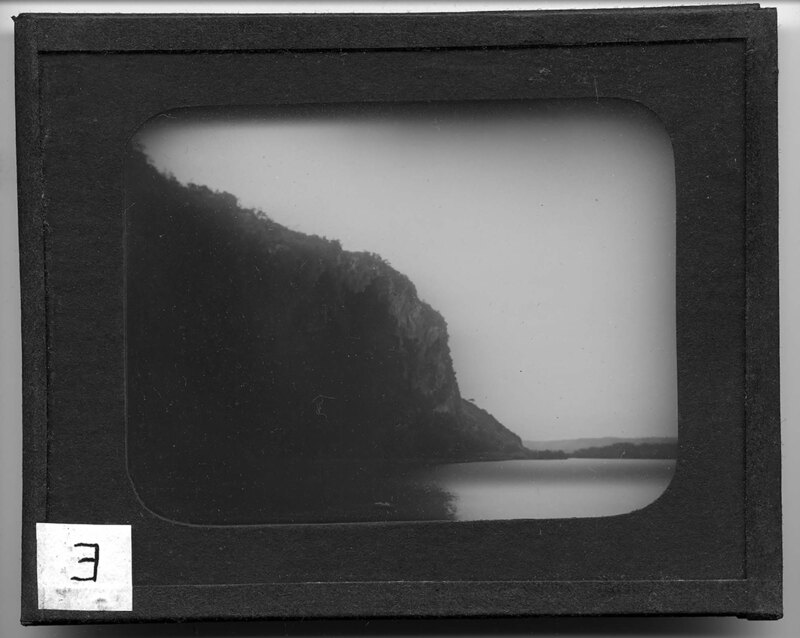
Steep, rocky cliffs near a body of water. The cliffs rise up of the water at an almost vertical angle and are covered with vegetation. A small beach is at the base of the cliff but it is also covered with vegetation. Hills can be seen in the background.
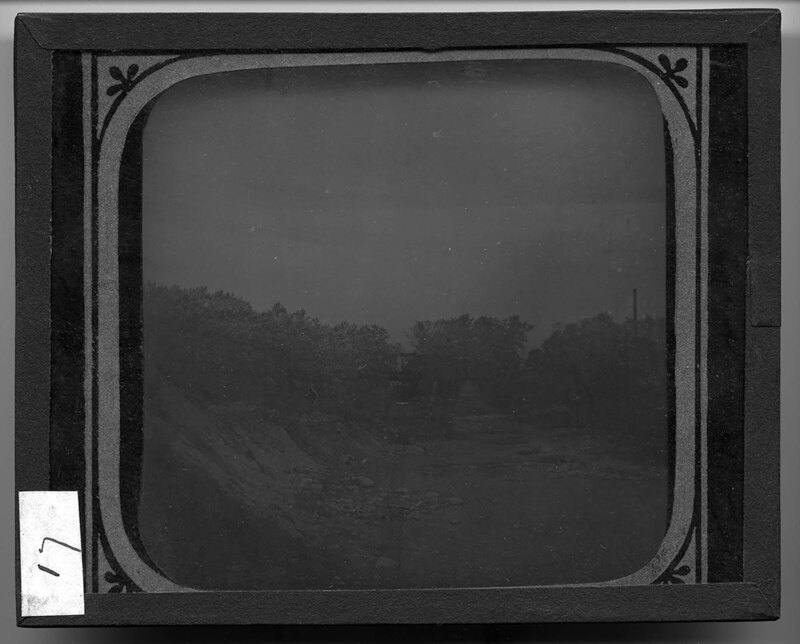
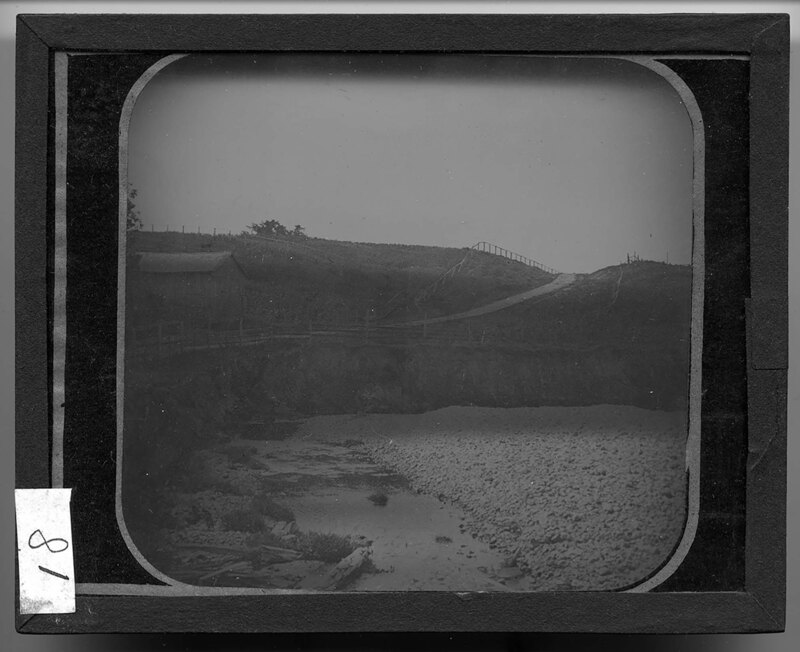
Landscape of a rocky river near a farm. The river cuts through the landscape, leaving behind rocks which have been piled up on the bank to the right. A dirt embankment can be seen to the left, along with wooden fences dividing the dirt roadway from the pastures and a barn to the left.
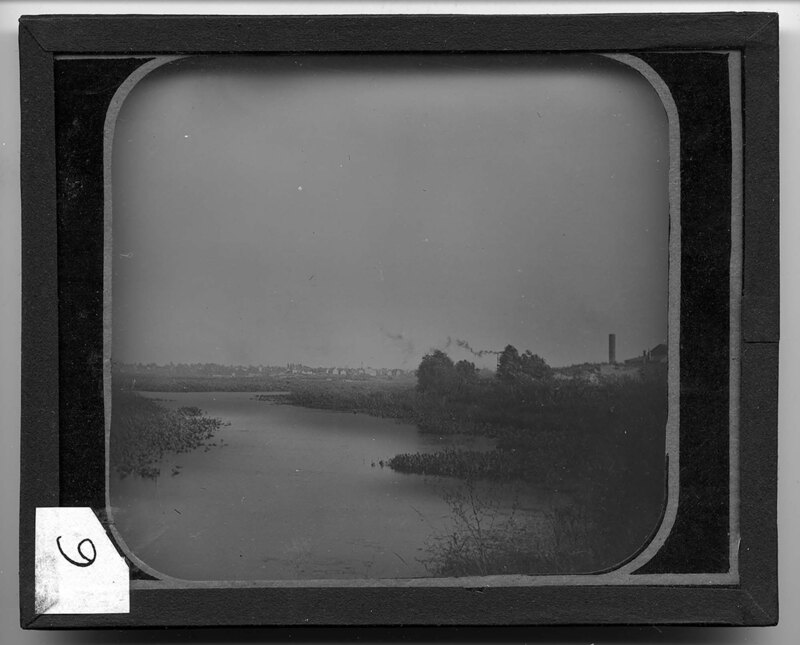
A slow moving, meandering river that cuts through a watery landscape. Several houses and industrial buildings can be seen in the background on one of the hills overlooking the river, but most of the banks of the river are covered with vegetation. Lilly pads and reeds obscure the true bank of the river.
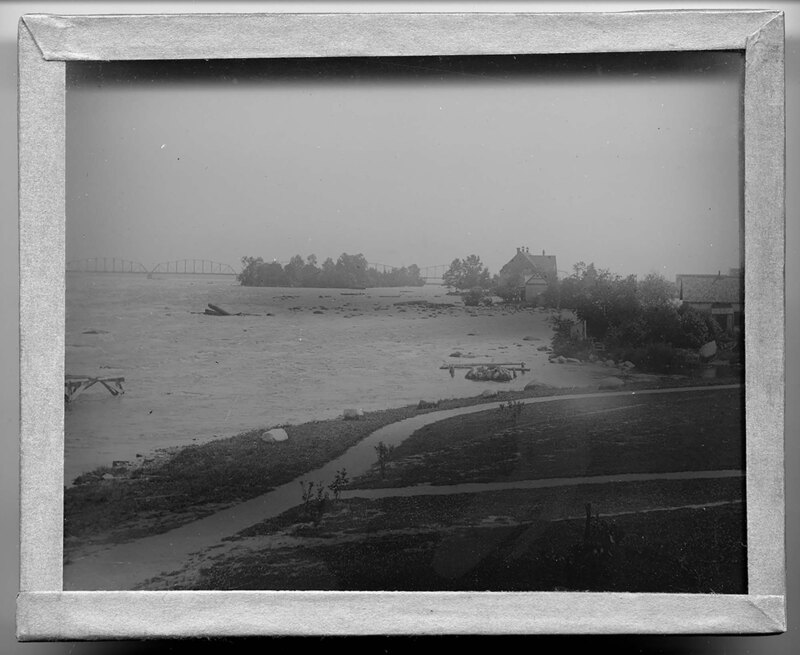
High water rising up to meet the houses on the banks of the lake. Two houses can be seen to the right and they appear to almost be underwater. Several wooden posts can be seen sticking out of the water along with large boulders. A stand of trees is completely isolated as the water rose over the land. A large metal bridge can be seen in the background.
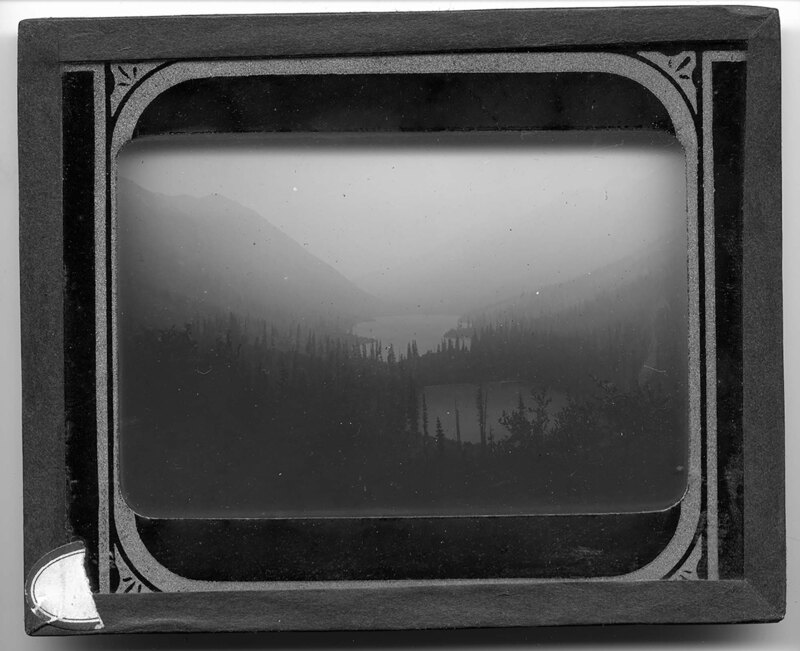
Landscape of several lakes in the valley of the mountains. The lakes have been isolated over time and are surrounded by the steep walls of the mountains. Pine trees and other vegetation cover the entire landscape of the valley.
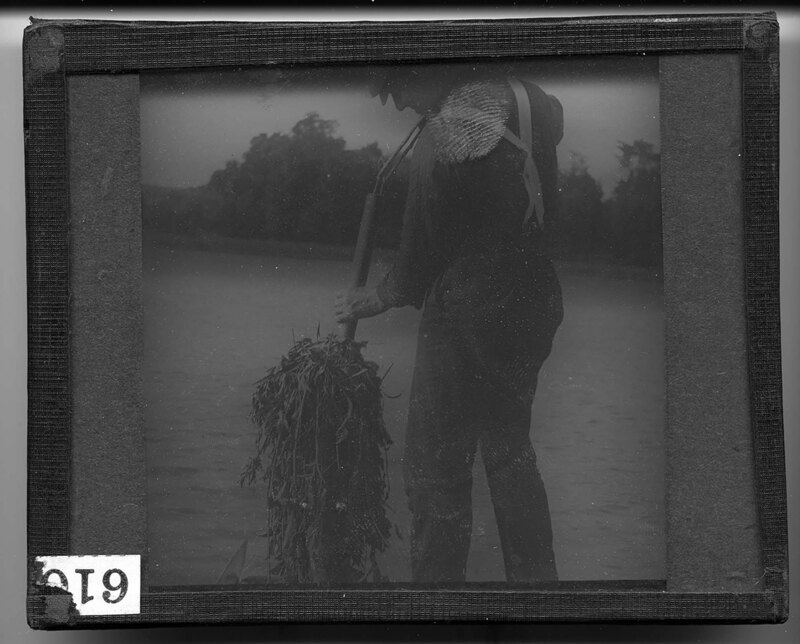
A man pulls a bundle of seaweed from the water on a metal probe. He is wearing wool pants, suspenders, a long sleeve shirt, and a bowler hat. Trees grow on the other bank of the lake in the background.
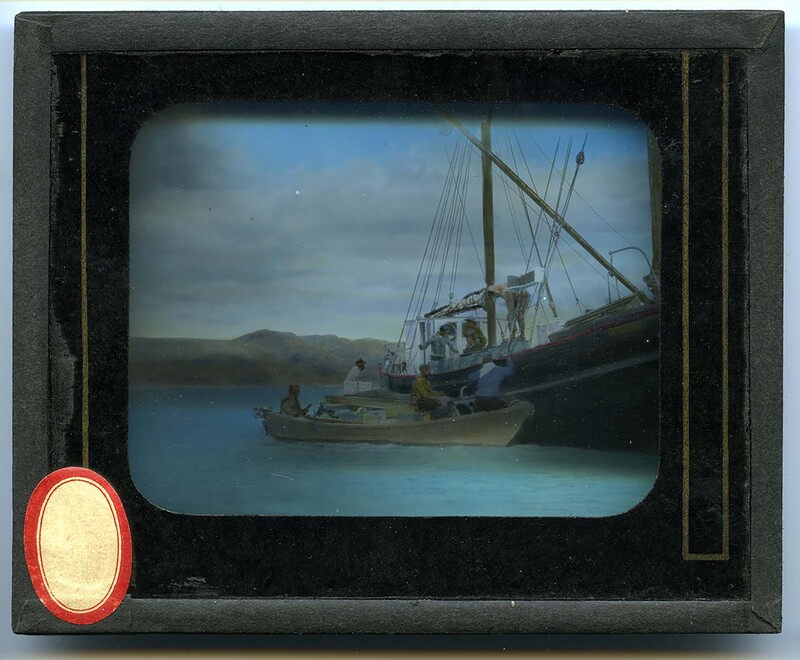
Hand-colored slide of several fisherman loading up their boats from the larger ship called, "Hvalrossen." Half of the men are handing down cargo to the other men in the row boats next to the ship. Mountains can be seen in the background.
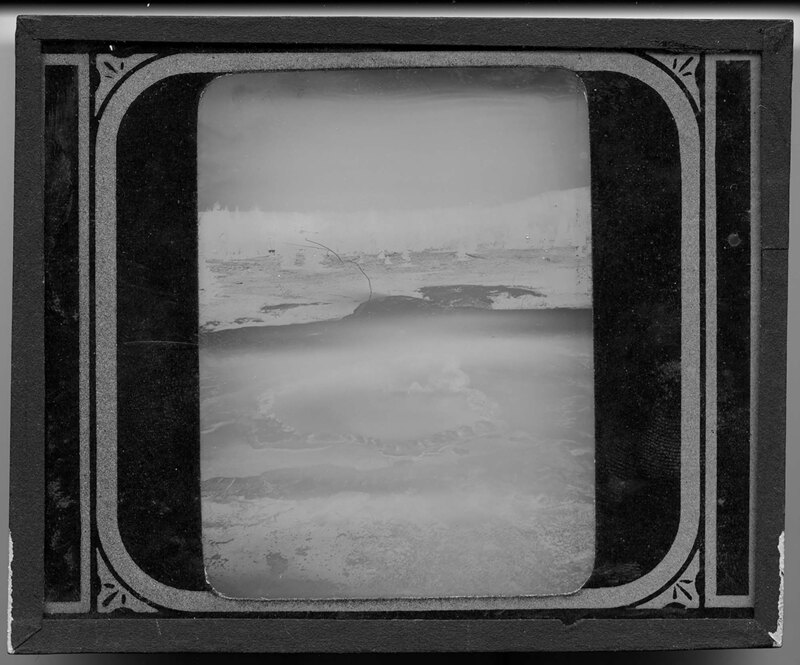
The pool of a geyser, likely in Yellowstone National Park in Wyoming. The geyser is not erupting, but how water bubbles at the vents surface. There is no vegetation around the geyser due to the high levels of minerals in the water and the geothermal heating from below the surface. Trees and grassy fields can be seen in the background, away from the mineral field.
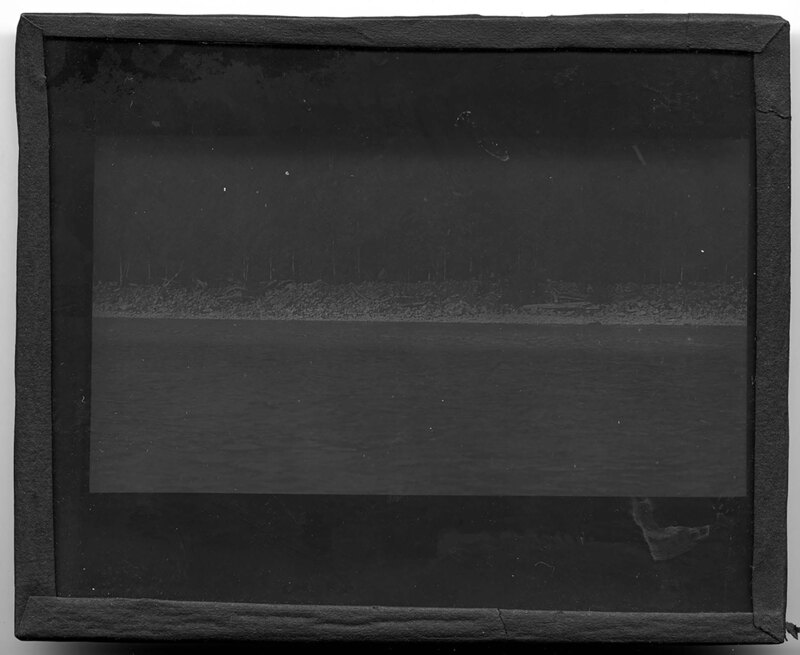
Landscape of a rocky shoreline. Large boulders cover the beach and heavy timbers are scattered across the rocks. A dense forest can be seen in the background and the trees appear to be approximately the same age based on their size.
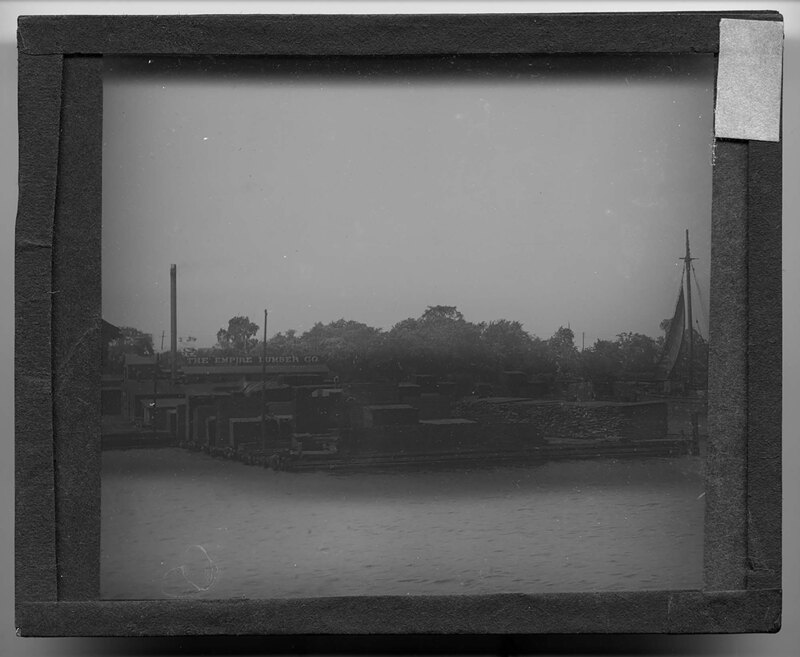
Photo of The Empire Lumber Co. and their docks near the water. It is likely this company was based in Empire, Michigan. Cut and uncut timber has been stacked on the docks, waiting to be shipped and a sailboat can be seen floating on the water to the right.
Landscape of a village built on the shore of the lake in the foreground. The banks are covered with trees and rise gently away from the water's edge. A concrete pier sticks out into the water from the industrial building in the background and houses can be seen on the hills, surrounded by trees.
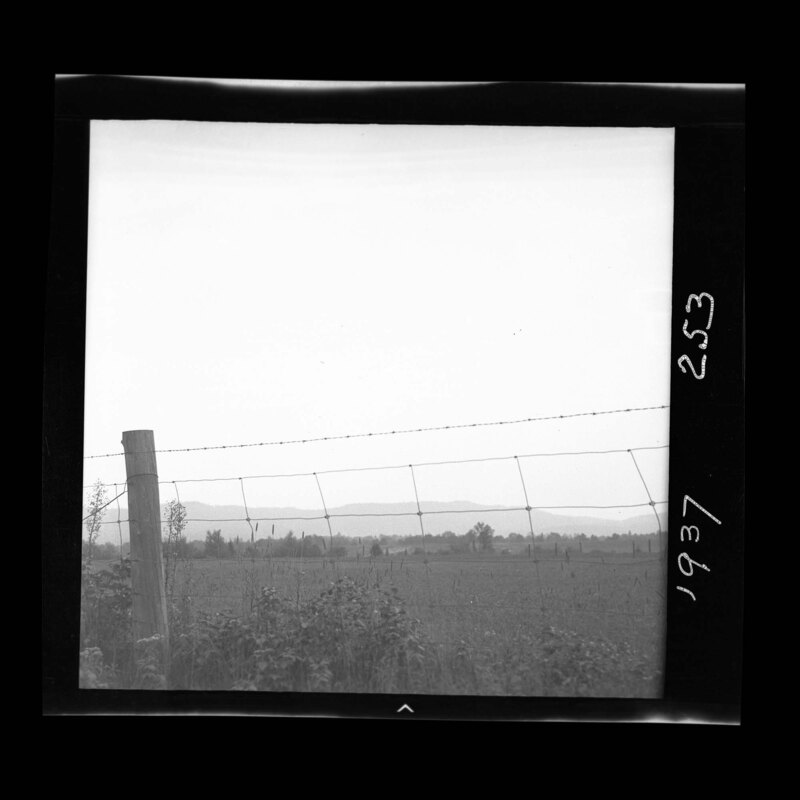
Photograph of a wire fence. It is noted that this photograph has been dated as 1937. Bushes and other vegetation grow around the fence. An open field can be seen in the midground. Stands of trees can be seen in the background. Jefferson would often use the same negative to create a lantern slide as well as a mounted stereographic card. When possible we have indicated if it is a repeat image, however this is not always the case. As such, there may be a corresponding digitized glass lantern slide, and a mounted stereographic card associated with this stereographic negative within the Mark Jefferson Collection.
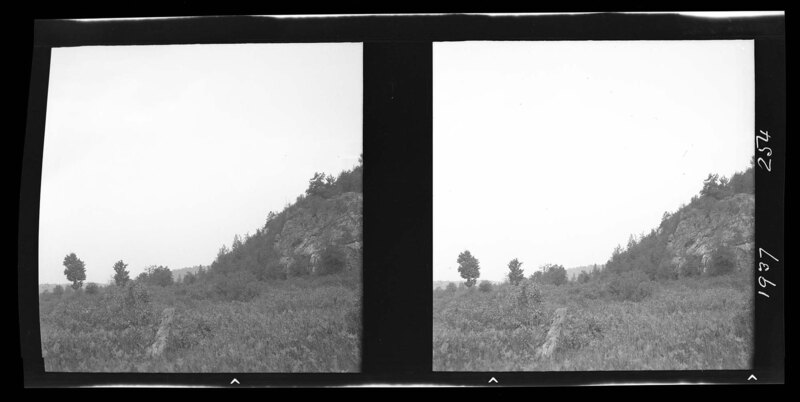
Photograph of an open field. It is noted that this photograph has been dated as 1937. The field with shrubs and trees. A large hill rise to the right of the camera. Jefferson would often use the same negative to create a lantern slide as well as a mounted stereographic card. When possible we have indicated if it is a repeat image, however this is not always the case. As such, there may be a corresponding digitized glass lantern slide, and a mounted stereographic card associated with this stereographic negative within the Mark Jefferson Collection.
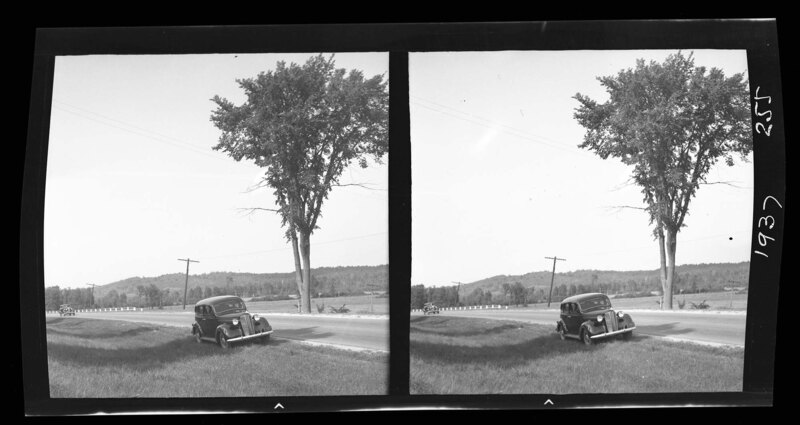
Photograph of a parked car. The car is parked on the side of a paved road. A large tree grows behind the car. Jefferson would often use the same negative to create a lantern slide as well as a mounted stereographic card. When possible we have indicated if it is a repeat image, however this is not always the case. As such, there may be a corresponding digitized glass lantern slide, and a mounted stereographic card associated with this stereographic negative within the Mark Jefferson Collection.
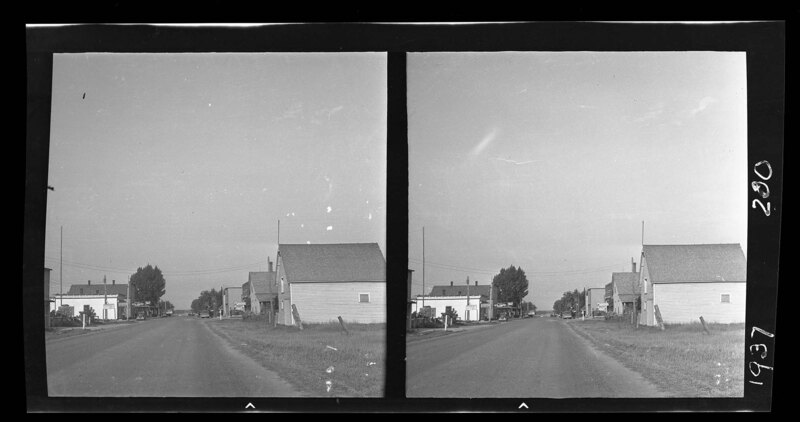
Photograph of a streetscape. It is noted that this photograph was dated as 1937. The street is on a dirt road. Houses and other buildings can be seen on each side of the road. Jefferson would often use the same negative to create a lantern slide as well as a mounted stereographic card. When possible we have indicated if it is a repeat image, however this is not always the case. As such, there may be a corresponding digitized glass lantern slide, and a mounted stereographic card associated with this stereographic negative within the Mark Jefferson Collection.
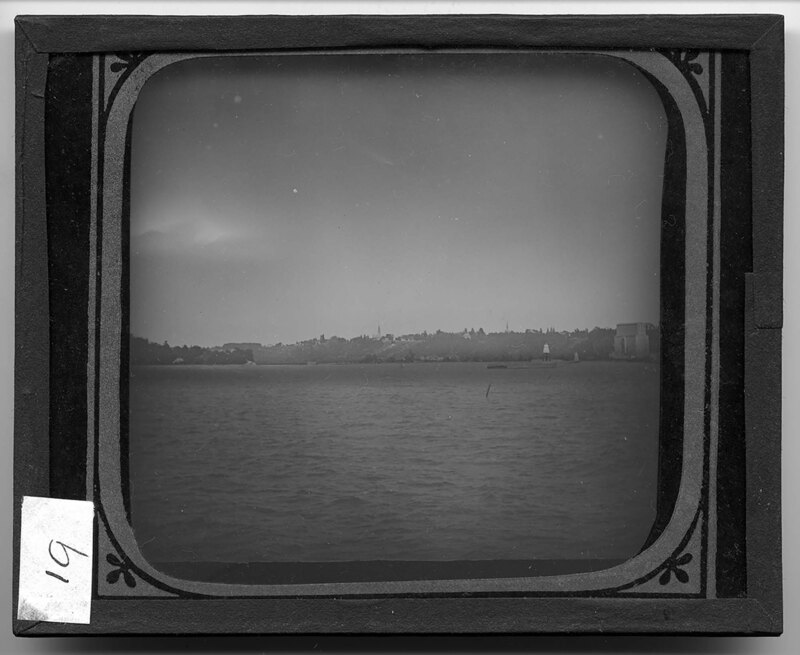
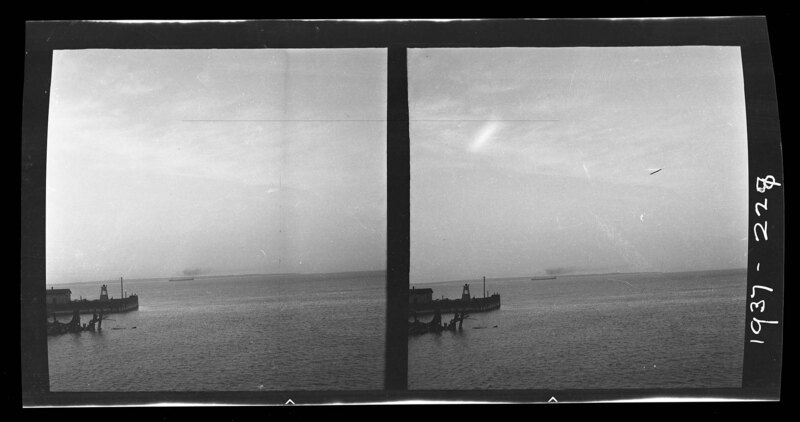
Photograph of an open body of water. A dock can be seen to the left of the camera. A boat can be seen in the background. Jefferson would often use the same negative to create a lantern slide as well as a mounted stereographic card. When possible we have indicated if it is a repeat image, however this is not always the case. As such, there may be a corresponding digitized glass lantern slide, and a mounted stereographic card associated with this stereographic negative within the Mark Jefferson Collection.
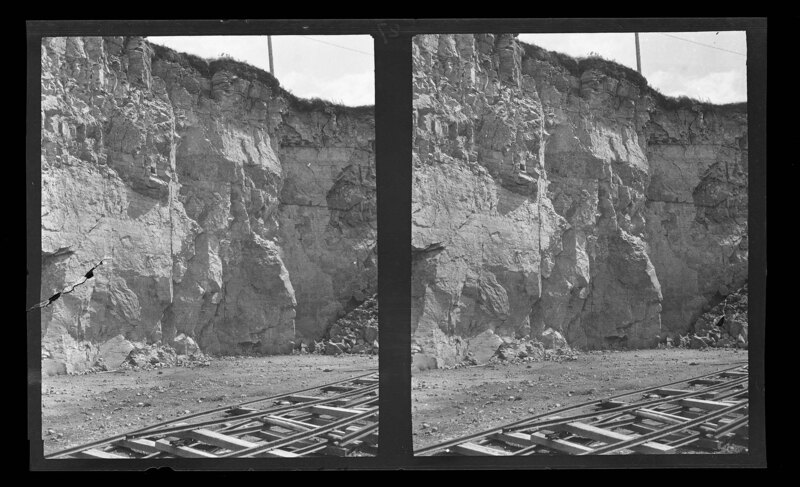
Photograph of train tracks. The tracks were built near a canyon wall. Vegetation grows on the top of the wall. Jefferson would often use the same negative to create a lantern slide as well as a mounted stereographic card. When possible we have indicated if it is a repeat image, however this is not always the case. As such, there may be a corresponding digitized glass lantern slide, and a mounted stereographic card associated with this stereographic negative within the Mark Jefferson Collection.
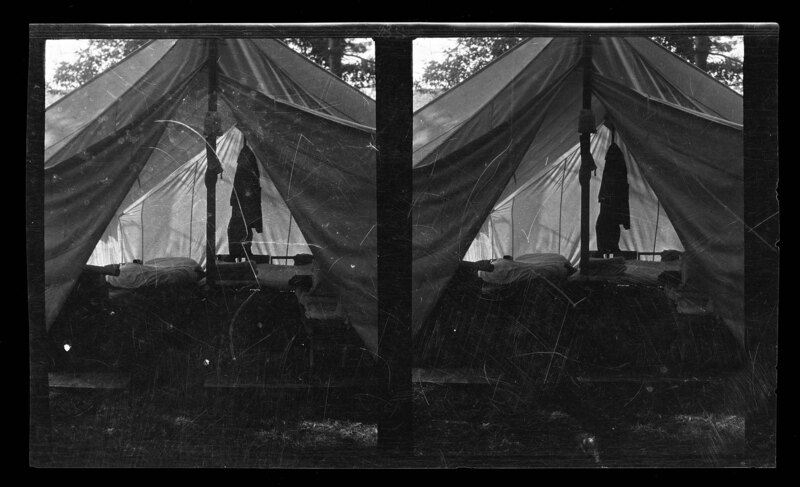
Photograph of an open tent. Beds and clothing can be seen inside of tent. This photograph has a high amount scratches. Trees can be seen in the background. Jefferson would often use the same negative to create a lantern slide as well as a mounted stereographic card. When possible we have indicated if it is a repeat image, however this is not always the case. As such, there may be a corresponding digitized glass lantern slide, and a mounted stereographic card associated with this stereographic negative within the Mark Jefferson Collection.
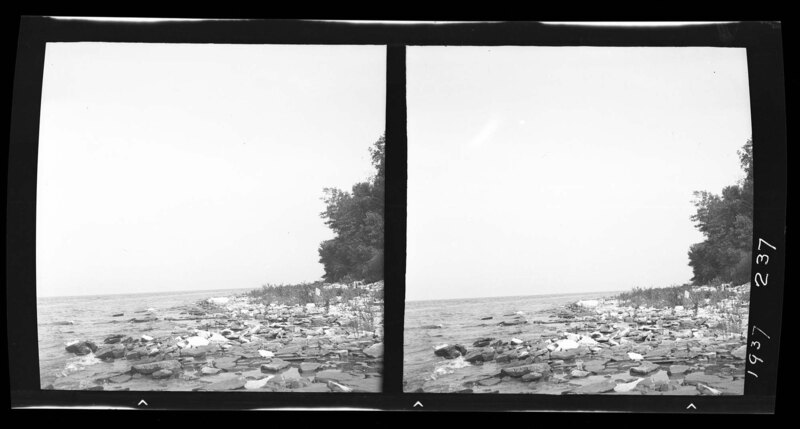
Photograph of rocks. It is noted that this photograph is dated as 1937. The rocks are light in color and very jagged. The rocks sit near a body of water. Trees and other vegetation can be seen in the background. Jefferson would often use the same negative to create a lantern slide as well as a mounted stereographic card. When possible we have indicated if it is a repeat image, however this is not always the case. As such, there may be a corresponding digitized glass lantern slide, and a mounted stereographic card associated with this stereographic negative within the Mark Jefferson Collection.
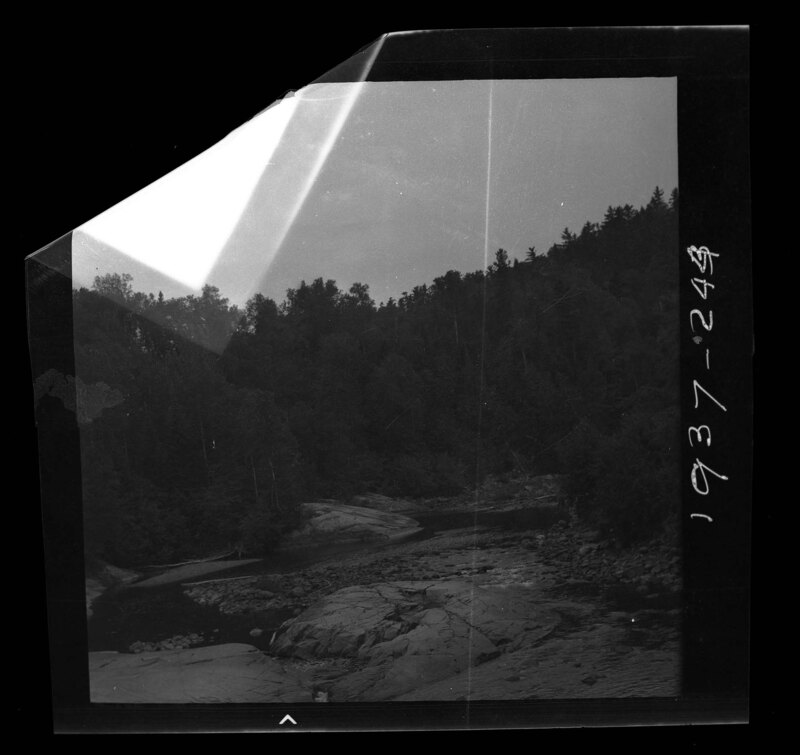
Photograph of a river. It is noted that the photograph has been date as 1937. Large portions of bedrock and boulders can be seen in the river. Stands of trees surround the river. Jefferson would often use the same negative to create a lantern slide as well as a mounted stereographic card. When possible we have indicated if it is a repeat image, however this is not always the case. As such, there may be a corresponding digitized glass lantern slide, and a mounted stereographic card associated with this stereographic negative within the Mark Jefferson Collection.
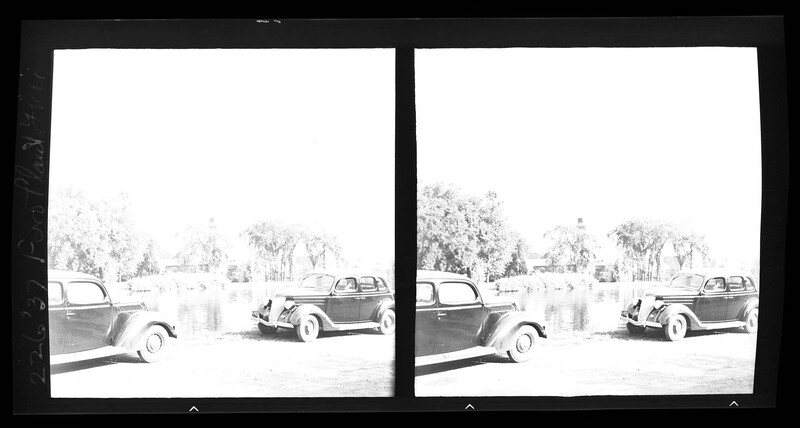
Photograph of cars parked on a dirt road. The cars stand in front of a small body of water. Trees and other vegetation can be seen in the background. Jefferson would often use the same negative to create a lantern slide as well as a mounted stereographic card. When possible we have indicated if it is a repeat image, however this is not always the case. As such, there may be a corresponding digitized glass lantern slide, and a mounted stereographic card associated with this stereographic negative within the Mark Jefferson Collection.
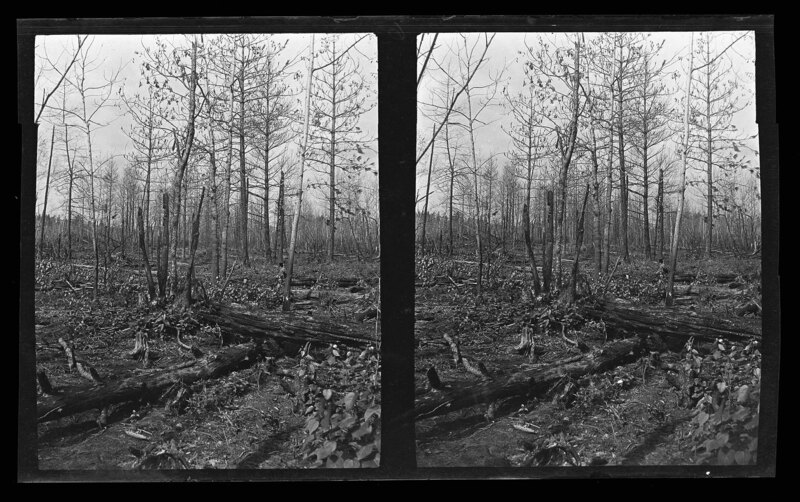
Photograph of a forested area. The trees are barren of foliage. Fallen trees can be seen on the ground. Jefferson would often use the same negative to create a lantern slide as well as a mounted stereographic card. When possible we have indicated if it is a repeat image, however this is not always the case. As such, there may be a corresponding digitized glass lantern slide, and a mounted stereographic card associated with this stereographic negative within the Mark Jefferson Collection.
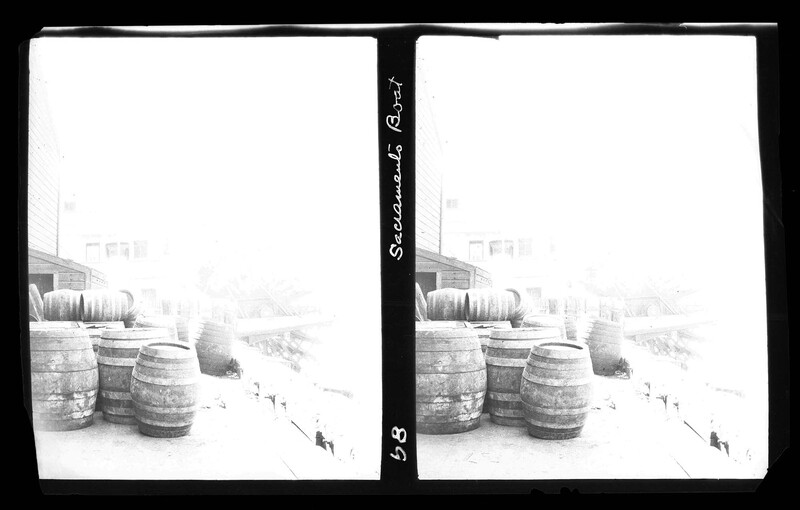
Photograph of wooden barrels. The barrels sit near a dock. Buildings with shiplap siding can be seen behind the barrels. Jefferson would often use the same negative to create a lantern slide as well as a mounted stereographic card. When possible we have indicated if it is a repeat image, however this is not always the case. As such, there may be a corresponding digitized glass lantern slide, and a mounted stereographic card associated with this stereographic negative within the Mark Jefferson Collection.
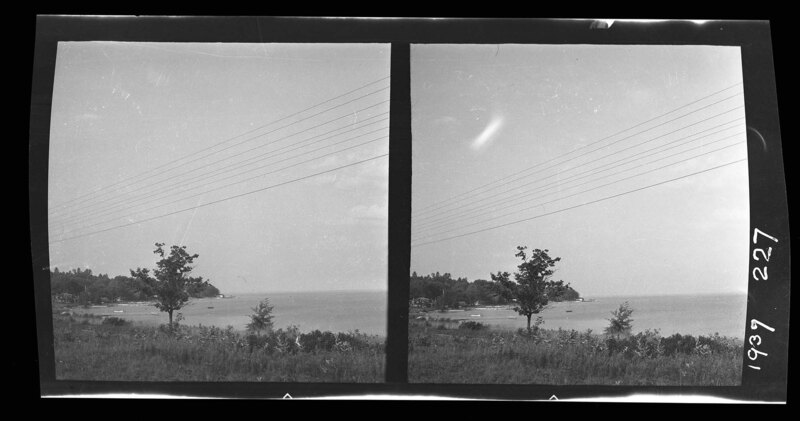
Photograph of a body of water. It is noted that the photograph is date as 1937. Stands of trees grow along side the water. Boats can be seen in near the shore near the background. Houses and buildings can be seen in the background. Jefferson would often use the same negative to create a lantern slide as well as a mounted stereographic card. When possible we have indicated if it is a repeat image, however this is not always the case. As such, there may be a corresponding digitized glass lantern slide, and a mounted stereographic card associated with this stereographic negative within the Mark Jefferson Collection.
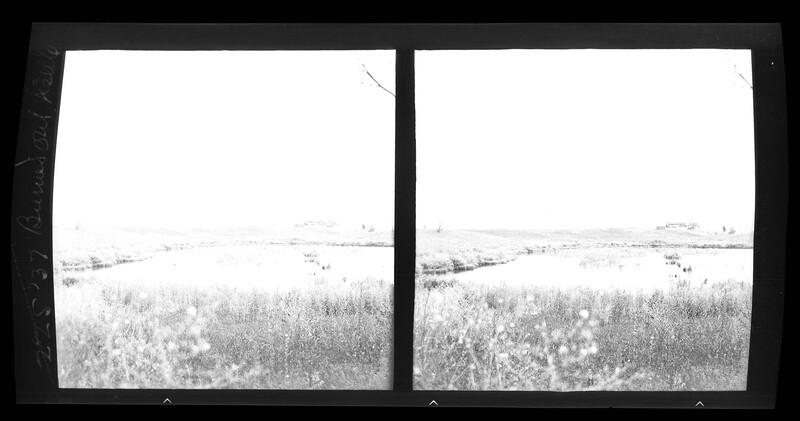
Photograph of an open field. The field is filled with grass and short vegetation. A body of water can be seen in the midground. Jefferson would often use the same negative to create a lantern slide as well as a mounted stereographic card. When possible we have indicated if it is a repeat image, however this is not always the case. As such, there may be a corresponding digitized glass lantern slide, and a mounted stereographic card associated with this stereographic negative within the Mark Jefferson Collection.
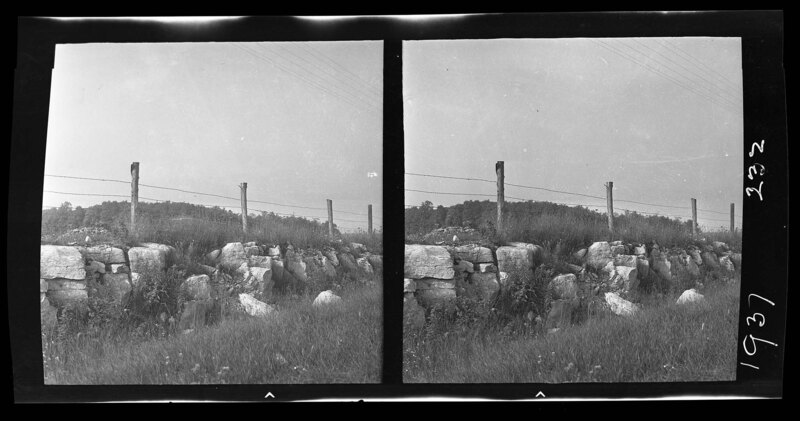
Photograph of a pile of rocks. The rocks are light in color and show signs of weathering. Grass and other vegetation grow around the rocks. A wooden post and wire fence can be seen above the rocks. Stands for trees can be seen in the background. Jefferson would often use the same negative to create a lantern slide as well as a mounted stereographic card. When possible we have indicated if it is a repeat image, however this is not always the case. As such, there may be a corresponding digitized glass lantern slide, and a mounted stereographic card associated with this stereographic negative within the Mark Jefferson Collection.
Photograph of what appears to be a street. Buildings can be seen in the background. This stereograph is highly exposed and shows signs of distortion making it difficult to see. Jefferson would often use the same negative to create a lantern slide as well as a mounted steregraphic card. When possible we have indicated if it is a repeat image, however this is not always the case. As such, there may be a corresponding digitized glass lanteren slide, and a mounted steregraphic card associated with this stereographic negative within the Mark Jeffereson Collection.
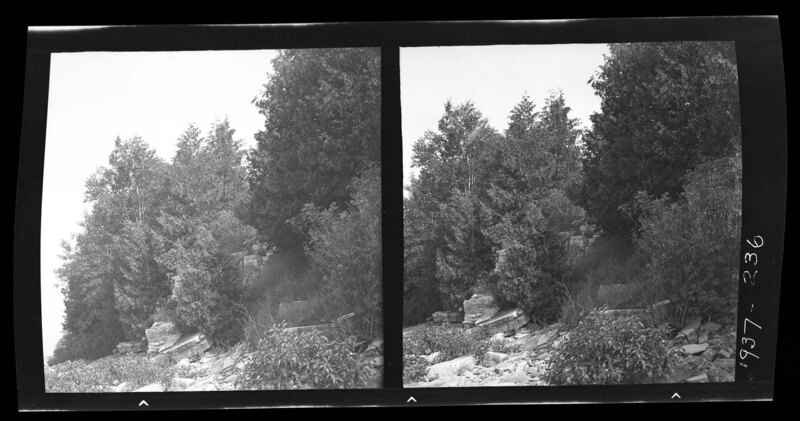
Photograph of trees. It is noted that this photograph was dated as 1937. The trees are both deciduous and pine trees. Large flat rocks can be seen beneath the stand of trees. Jefferson would often use the same negative to create a lantern slide as well as a mounted stereographic card. When possible we have indicated if it is a repeat image, however this is not always the case. As such, there may be a corresponding digitized glass lantern slide, and a mounted stereographic card associated with this stereographic negative within the Mark Jefferson Collection.
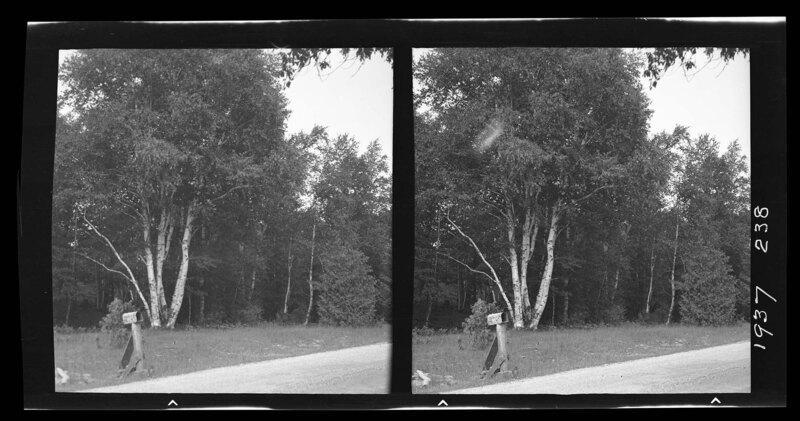
Photograph of a dirt road. It is noted that this photograph has been dated as 1937. Birch trees and other trees grow behind the road. A mail box can be seen to the left of the camera. Jefferson would often use the same negative to create a lantern slide as well as a mounted stereographic card. When possible we have indicated if it is a repeat image, however this is not always the case. As such, there may be a corresponding digitized glass lantern slide, and a mounted stereographic card associated with this stereographic negative within the Mark Jefferson Collection.
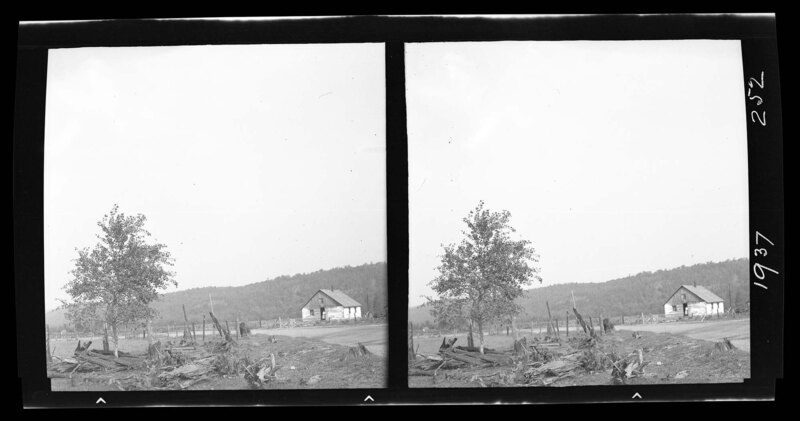
Photograph of a house. It is noted that this photograph has been dated as 1937. The house is square with a gable roof. The house was built by a dirt road. Large stands of trees can be seen in the background. Jefferson would often use the same negative to create a lantern slide as well as a mounted stereographic card. When possible we have indicated if it is a repeat image, however this is not always the case. As such, there may be a corresponding digitized glass lantern slide, and a mounted stereographic card associated with this stereographic negative within the Mark Jefferson Collection.