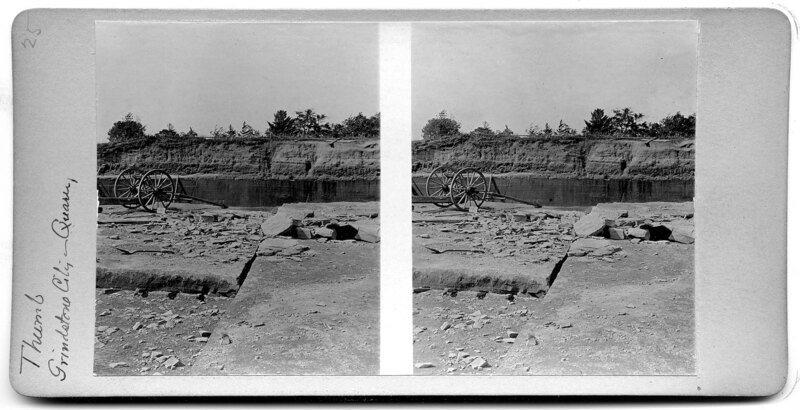
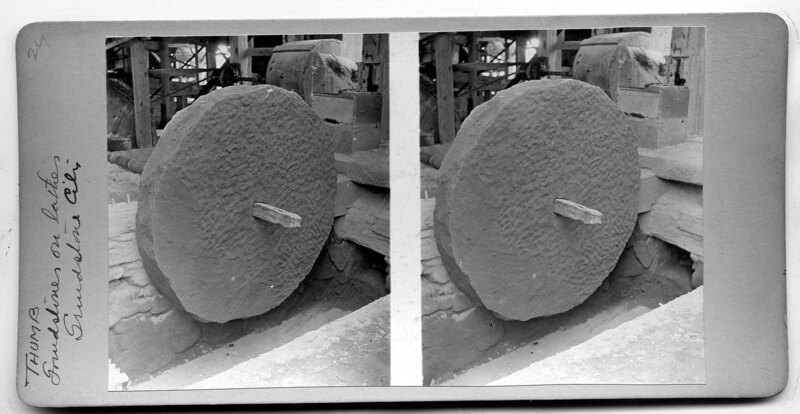
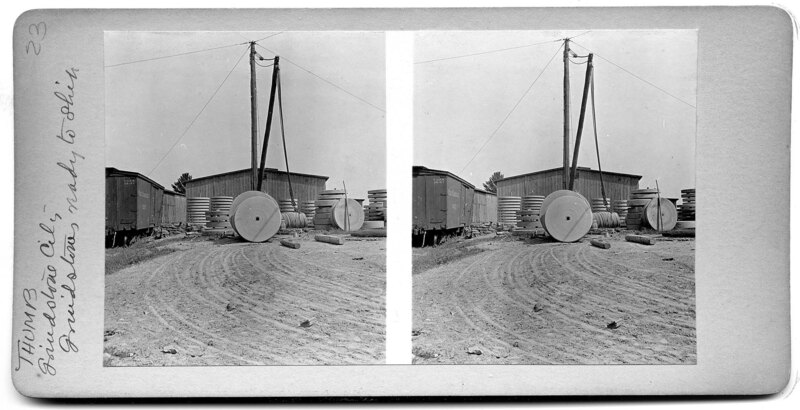
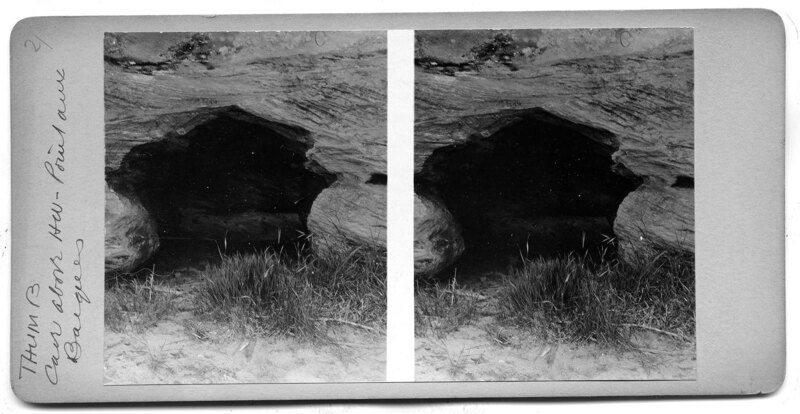
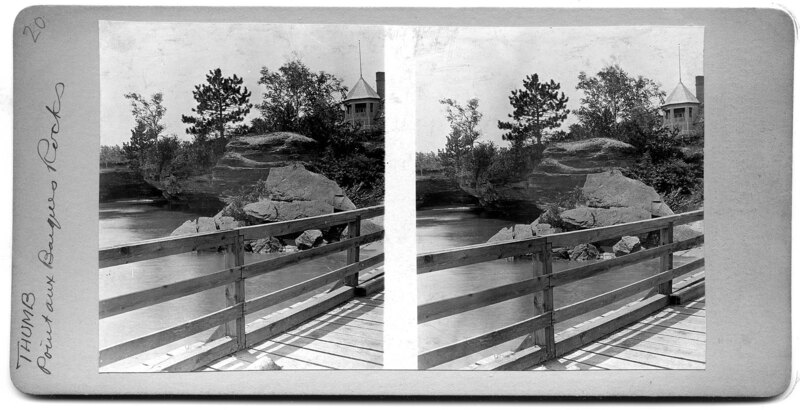
Stereographic duplicate of glass slide 010_MJ_84_016c. Jefferson would often use the same negative to create a lantern slide as well as a mounted stereographic card. When possible we have indicated if it is a repeat image, however this is not always the case. As such, there may be a corresponding digitized glass lantern slide, and a mounted stereographic card associated with this stereographic negative within the Mark Jefferson Collection.
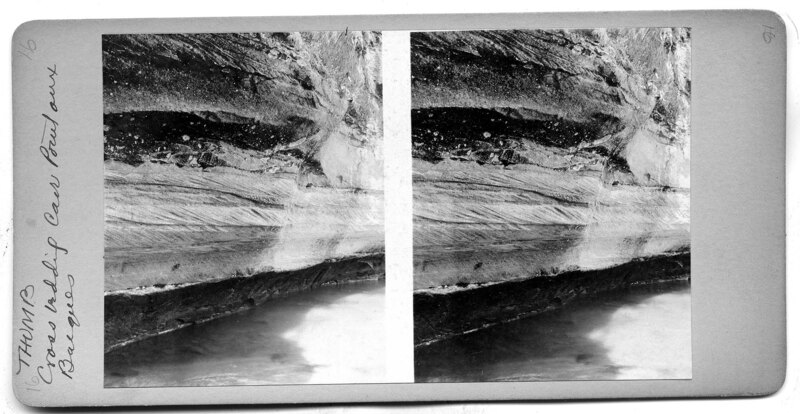
Stereographic duplicate of glass slide 010_MJ_84_012c. Jefferson would often use the same negative to create a lantern slide as well as a mounted stereographic card. When possible we have indicated if it is a repeat image, however this is not always the case. As such, there may be a corresponding digitized glass lantern slide, and a mounted stereographic card associated with this stereographic negative within the Mark Jefferson Collection.
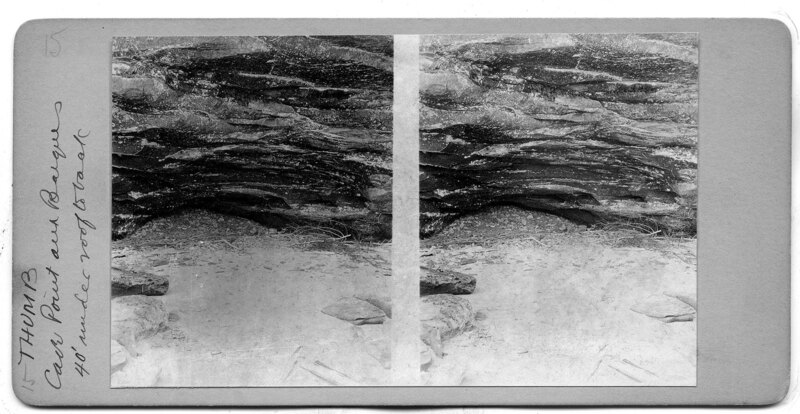
Stereographic duplicate of glass slide 010_MJ_84_011c. Jefferson would often use the same negative to create a lantern slide as well as a mounted stereographic card. When possible we have indicated if it is a repeat image, however this is not always the case. As such, there may be a corresponding digitized glass lantern slide, and a mounted stereographic card associated with this stereographic negative within the Mark Jefferson Collection.
Stereographic duplicate of glass slide 010_MJ_84_009c. Jefferson would often use the same negative to create a lantern slide as well as a mounted stereographic card. When possible we have indicated if it is a repeat image, however this is not always the case. As such, there may be a corresponding digitized glass lantern slide, and a mounted stereographic card associated with this stereographic negative within the Mark Jefferson Collection.
Stereographic duplicate of glass slide 010_MJ_84_008c. Jefferson would often use the same negative to create a lantern slide as well as a mounted stereographic card. When possible we have indicated if it is a repeat image, however this is not always the case. As such, there may be a corresponding digitized glass lantern slide, and a mounted stereographic card associated with this stereographic negative within the Mark Jefferson Collection.
Stereographic duplicate of glass slide 010_MJ_84_007c. Jefferson would often use the same negative to create a lantern slide as well as a mounted stereographic card. When possible we have indicated if it is a repeat image, however this is not always the case. As such, there may be a corresponding digitized glass lantern slide, and a mounted stereographic card associated with this stereographic negative within the Mark Jefferson Collection.
Stereographic duplicate of glass slide 010_MJ_84_006c. Jefferson would often use the same negative to create a lantern slide as well as a mounted stereographic card. When possible we have indicated if it is a repeat image, however this is not always the case. As such, there may be a corresponding digitized glass lantern slide, and a mounted stereographic card associated with this stereographic negative within the Mark Jefferson Collection.
Stereographic duplicate of glass slide 010_MJ_84_004c. Jefferson would often use the same negative to create a lantern slide as well as a mounted stereographic card. When possible we have indicated if it is a repeat image, however this is not always the case. As such, there may be a corresponding digitized glass lantern slide, and a mounted stereographic card associated with this stereographic negative within the Mark Jefferson Collection.
Stereographic duplicate of glass slide 010_MJ_84_001c. Jefferson would often use the same negative to create a lantern slide as well as a mounted stereographic card. When possible we have indicated if it is a repeat image, however this is not always the case. As such, there may be a corresponding digitized glass lantern slide, and a mounted stereographic card associated with this stereographic negative within the Mark Jefferson Collection.
Stereographic duplicate of glass slide 010_MJ_83_091c. Jefferson would often use the same negative to create a lantern slide as well as a mounted stereographic card. When possible we have indicated if it is a repeat image, however this is not always the case. As such, there may be a corresponding digitized glass lantern slide, and a mounted stereographic card associated with this stereographic negative within the Mark Jefferson Collection.
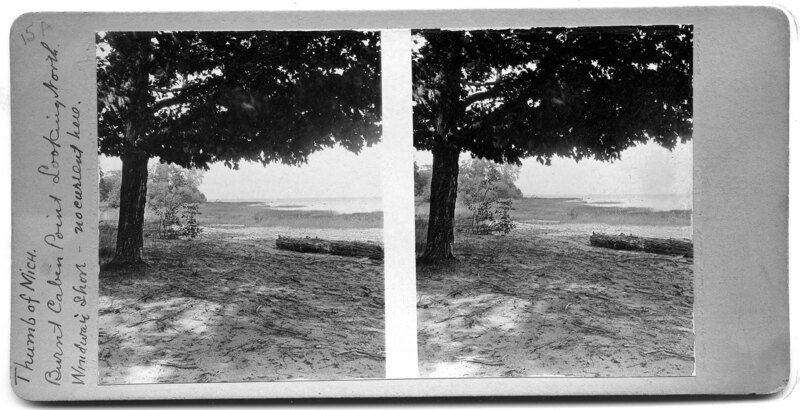
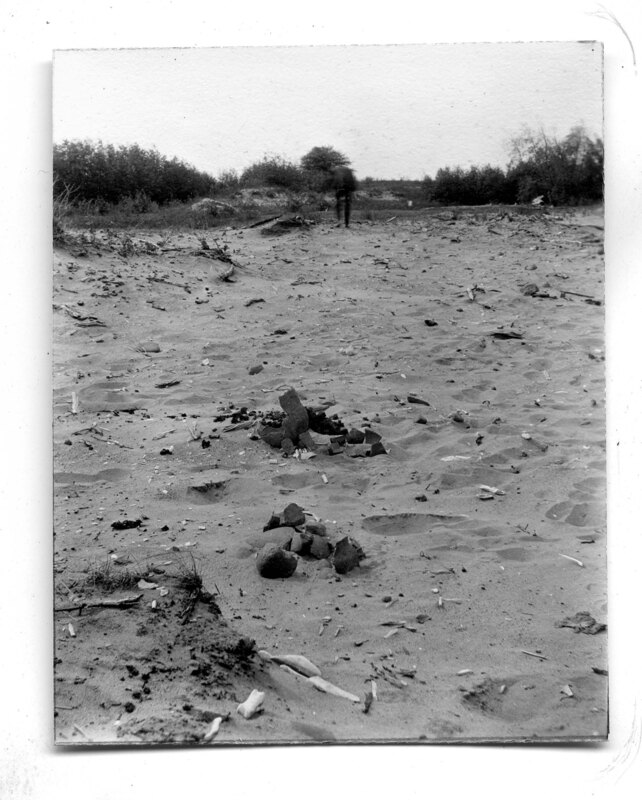
Photograph of a large oak tree stands on a beach identified as located in Lake Huron area of Michigan. It is noted that the picture was taken at Burnt Cabin Point, looking north along the lake, and there is no current here. A tree trunk lays on the beach, surrounded by vegetation debris and dune grass. A stand of trees can be seen in the background. Jefferson would often use the same negative to create a lantern slide as well as a mounted stereographic card. When possible we have indicated if it is a repeat image, however this is not always the case. As such, there may be a corresponding digitized glass lantern slide, and a mounted stereographic card associated with this stereographic negative within the Mark Jefferson Collection.
Stereographic duplicate of glass slide 010_MJ_83_090c. Jefferson would often use the same negative to create a lantern slide as well as a mounted stereographic card. When possible we have indicated if it is a repeat image, however this is not always the case. As such, there may be a corresponding digitized glass lantern slide, and a mounted stereographic card associated with this stereographic negative within the Mark Jefferson Collection.
Stereographic duplicate of glass slide 010_MJ_83_084c. Jefferson would often use the same negative to create a lantern slide as well as a mounted stereographic card. When possible we have indicated if it is a repeat image, however this is not always the case. As such, there may be a corresponding digitized glass lantern slide, and a mounted stereographic card associated with this stereographic negative within the Mark Jefferson Collection.
Stereographic duplicate of glass slide 010_MJ_83_085c. Jefferson would often use the same negative to create a lantern slide as well as a mounted stereographic card. When possible we have indicated if it is a repeat image, however this is not always the case. As such, there may be a corresponding digitized glass lantern slide, and a mounted stereographic card associated with this stereographic negative within the Mark Jefferson Collection.
Stereographic duplicate of glass slide 010_MJ_83_084c. Jefferson would often use the same negative to create a lantern slide as well as a mounted stereographic card. When possible we have indicated if it is a repeat image, however this is not always the case. As such, there may be a corresponding digitized glass lantern slide, and a mounted stereographic card associated with this stereographic negative within the Mark Jefferson Collection.
Stereographic duplicate of glass slide 010_MJ_83_079c. Jefferson would often use the same negative to create a lantern slide as well as a mounted stereographic card. When possible we have indicated if it is a repeat image, however this is not always the case. As such, there may be a corresponding digitized glass lantern slide, and a mounted stereographic card associated with this stereographic negative within the Mark Jefferson Collection.
Stereographic duplicate of glass slide 010_MJ_83_078c. Jefferson would often use the same negative to create a lantern slide as well as a mounted stereographic card. When possible we have indicated if it is a repeat image, however this is not always the case. As such, there may be a corresponding digitized glass lantern slide, and a mounted stereographic card associated with this stereographic negative within the Mark Jefferson Collection.
Stereographic duplicate of glass slide 010_MJ_83_076c. Jefferson would often use the same negative to create a lantern slide as well as a mounted stereographic card. When possible we have indicated if it is a repeat image, however this is not always the case. As such, there may be a corresponding digitized glass lantern slide, and a mounted stereographic card associated with this stereographic negative within the Mark Jefferson Collection.
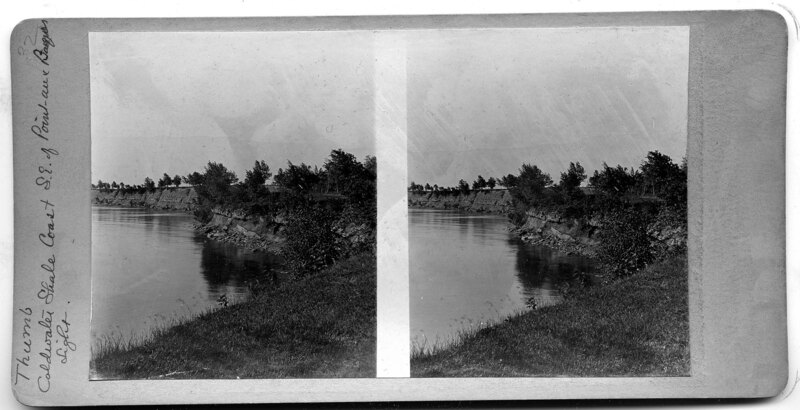
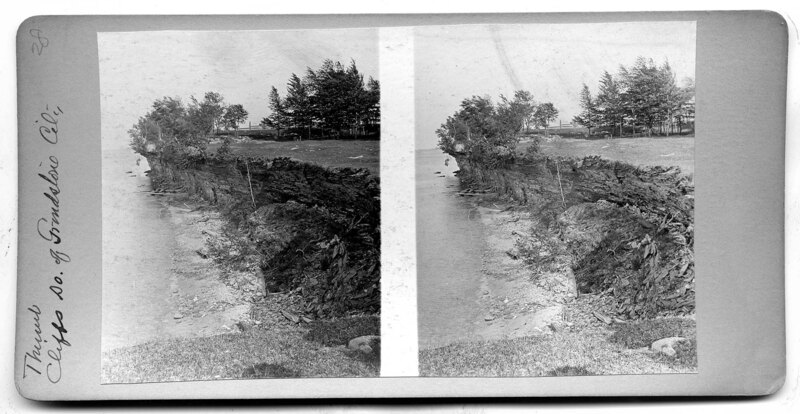
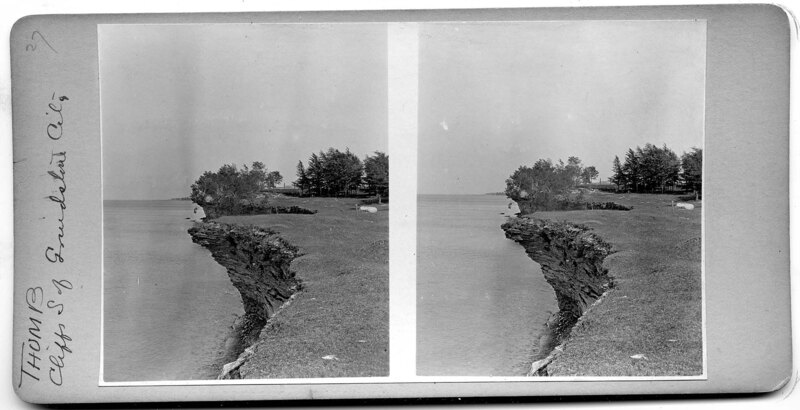
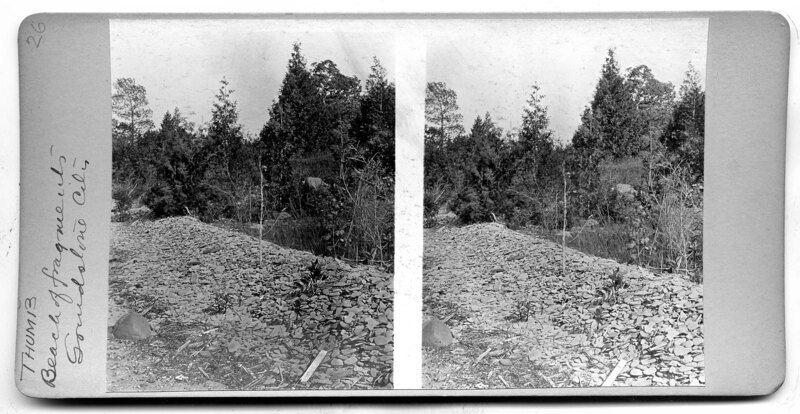
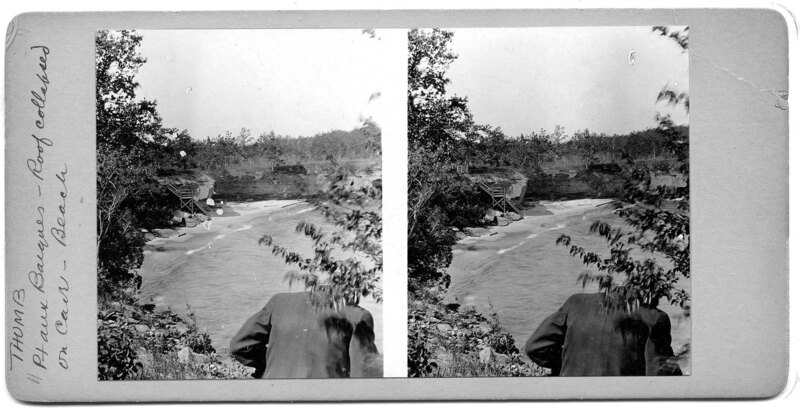
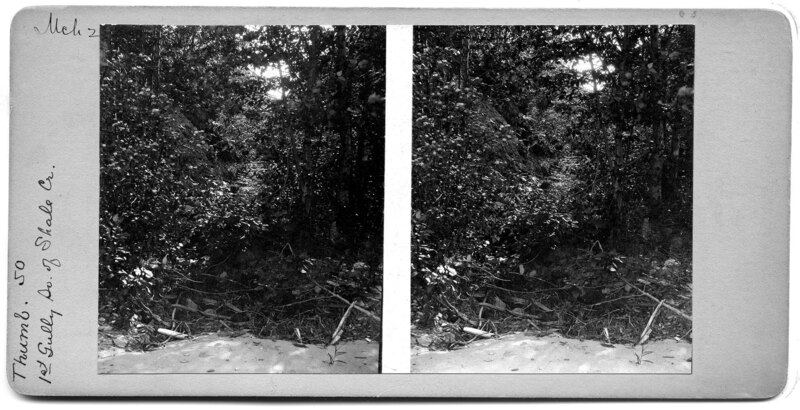
Photograph of a shallow gulley on a sandy beach identifed as located in the "Thumb" area of Michigan. Dense vegetation covers the gulley and debris is scattered at the bottom of the embankment on the beach. Coursed rock can be seen in between the vegetation. Jefferson would often use the same negative to create a lantern slide as well as a mounted stereographic card. When possible we have indicated if it is a repeat image, however this is not always the case. As such, there may be a corresponding digitized glass lantern slide, and a mounted stereographic card associated with this stereographic negative within the Mark Jefferson Collection.
Stereographic duplicate of glass slide 010_MJ_142_037c. Jefferson would often use the same negative to create a lantern slide as well as a mounted stereographic card. When possible we have indicated if it is a repeat image, however this is not always the case. As such, there may be a corresponding digitized glass lantern slide, and a mounted stereographic card associated with this stereographic negative within the Mark Jefferson Collection.
Stereographic duplicate of glass slide 010_MJ_85_005c. Jefferson would often use the same negative to create a lantern slide as well as a mounted stereographic card. When possible we have indicated if it is a repeat image, however this is not always the case. As such, there may be a corresponding digitized glass lantern slide, and a mounted stereographic card associated with this stereographic negative within the Mark Jefferson Collection.
Stereographic duplicate of glass slide 010_MJ_85_006c. Jefferson would often use the same negative to create a lantern slide as well as a mounted stereographic card. When possible we have indicated if it is a repeat image, however this is not always the case. As such, there may be a corresponding digitized glass lantern slide, and a mounted stereographic card associated with this stereographic negative within the Mark Jefferson Collection.
Stereographic duplicate of glass slide 010_MJ_84_022c. Jefferson would often use the same negative to create a lantern slide as well as a mounted stereographic card. When possible we have indicated if it is a repeat image, however this is not always the case. As such, there may be a corresponding digitized glass lantern slide, and a mounted stereographic card associated with this stereographic negative within the Mark Jefferson Collection.
Stereographic duplicate of glass slide 010_MJ_84_003c. Jefferson would often use the same negative to create a lantern slide as well as a mounted stereographic card. When possible we have indicated if it is a repeat image, however this is not always the case. As such, there may be a corresponding digitized glass lantern slide, and a mounted stereographic card associated with this stereographic negative within the Mark Jefferson Collection.
Stereographic duplicate of glass slide 010_MJ_84_060c. Jefferson would often use the same negative to create a lantern slide as well as a mounted stereographic card. When possible we have indicated if it is a repeat image, however this is not always the case. As such, there may be a corresponding digitized glass lantern slide, and a mounted stereographic card associated with this stereographic negative within the Mark Jefferson Collection.
Stereographic duplicate of glass slide 010_MJ_84_081c. Jefferson would often use the same negative to create a lantern slide as well as a mounted stereographic card. When possible we have indicated if it is a repeat image, however this is not always the case. As such, there may be a corresponding digitized glass lantern slide, and a mounted stereographic card associated with this stereographic negative within the Mark Jefferson Collection.
Stereographic duplicate of glass slide 010_MJ_84_080c. Jefferson would often use the same negative to create a lantern slide as well as a mounted stereographic card. When possible we have indicated if it is a repeat image, however this is not always the case. As such, there may be a corresponding digitized glass lantern slide, and a mounted stereographic card associated with this stereographic negative within the Mark Jefferson Collection.
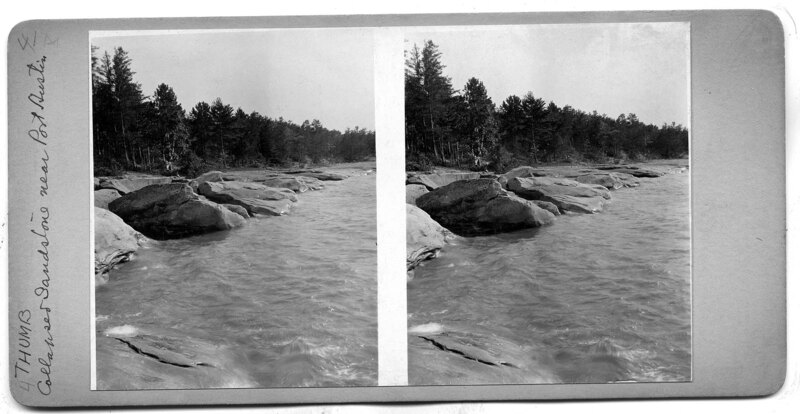
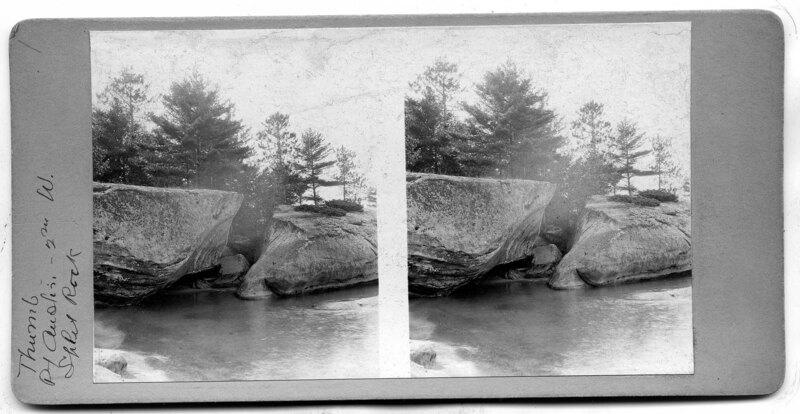
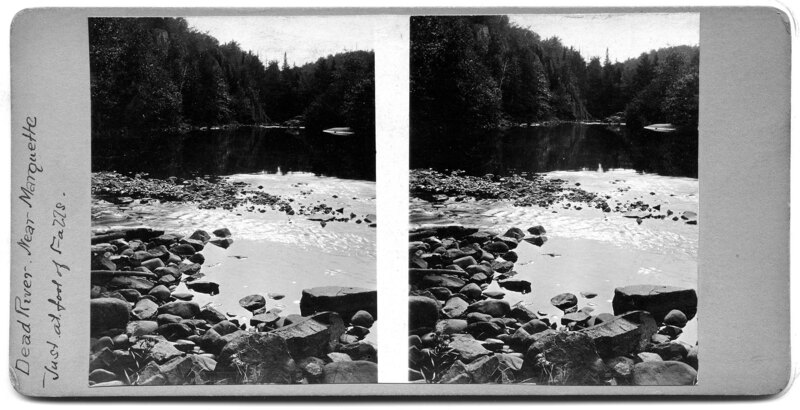
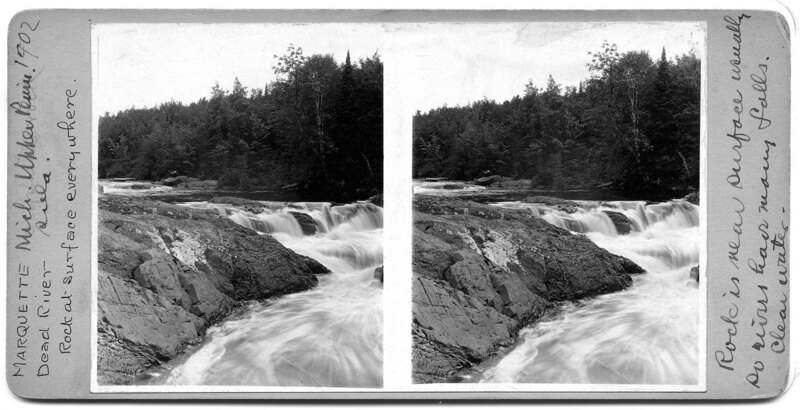
Photograph of the Dead River in Marquette, Michigan. It is noted this river is located in the Upper Peninsula. Eroded boulders and rocks stick up from the river bed. Dense vegetation covers the river bank in the background. Lichen grows on the rocks in the foreground. Jefferson would often use the same negative to create a lantern slide as well as a mounted stereographic card. When possible we have indicated if it is a repeat image, however this is not always the case. As such, there may be a corresponding digitized glass lantern slide, and a mounted stereographic card associated with this stereographic negative within the Mark Jefferson Collection.
Stereographic duplicate of glass slide 010_MJ_84_079c. Jefferson would often use the same negative to create a lantern slide as well as a mounted stereographic card. When possible we have indicated if it is a repeat image, however this is not always the case. As such, there may be a corresponding digitized glass lantern slide, and a mounted stereographic card associated with this stereographic negative within the Mark Jefferson Collection.
Stereographic duplicate of glass slide 010_MJ_85_054c. Jefferson would often use the same negative to create a lantern slide as well as a mounted stereographic card. When possible we have indicated if it is a repeat image, however this is not always the case. As such, there may be a corresponding digitized glass lantern slide, and a mounted stereographic card associated with this stereographic negative within the Mark Jefferson Collection.
Stereographic duplicate of glass slide 010_MJ_84_049c. Jefferson would often use the same negative to create a lantern slide as well as a mounted stereographic card. When possible we have indicated if it is a repeat image, however this is not always the case. As such, there may be a corresponding digitized glass lantern slide, and a mounted stereographic card associated with this stereographic negative within the Mark Jefferson Collection.
Stereographic duplicate of glass slide 010_MJ_85_045c. Jefferson would often use the same negative to create a lantern slide as well as a mounted stereographic card. When possible we have indicated if it is a repeat image, however this is not always the case. As such, there may be a corresponding digitized glass lantern slide, and a mounted stereographic card associated with this stereographic negative within the Mark Jefferson Collection.
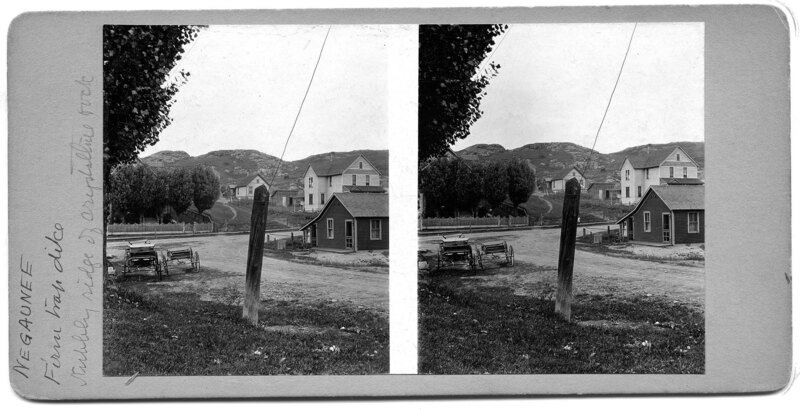
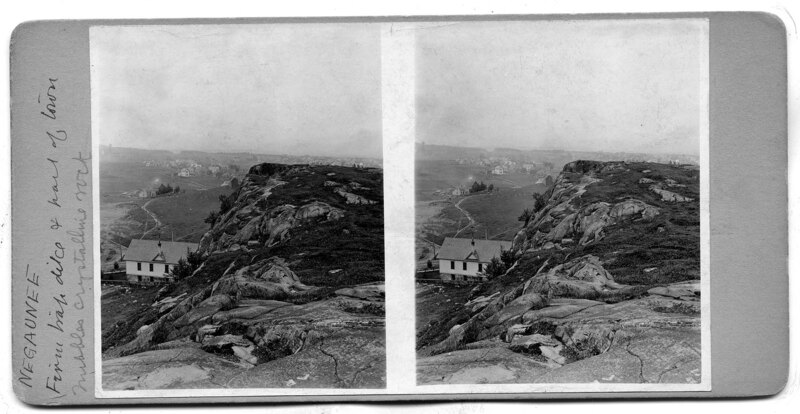
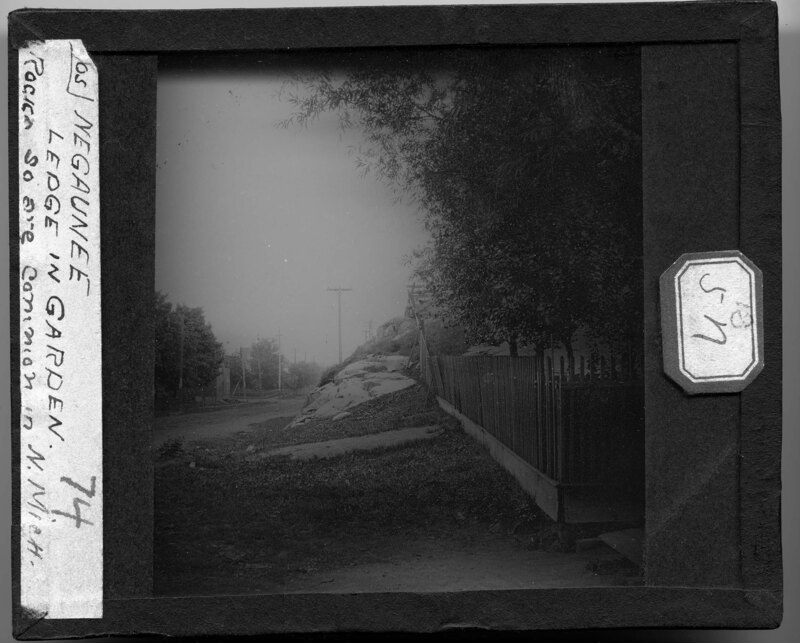
A rocky outcrop in a backyard in Negaunee, Michigan. A wooden picket fence surrounds a yard but has been built around and on top of a large rocky boulder that projects up from the ground. A dirt road runs next to the boulder.
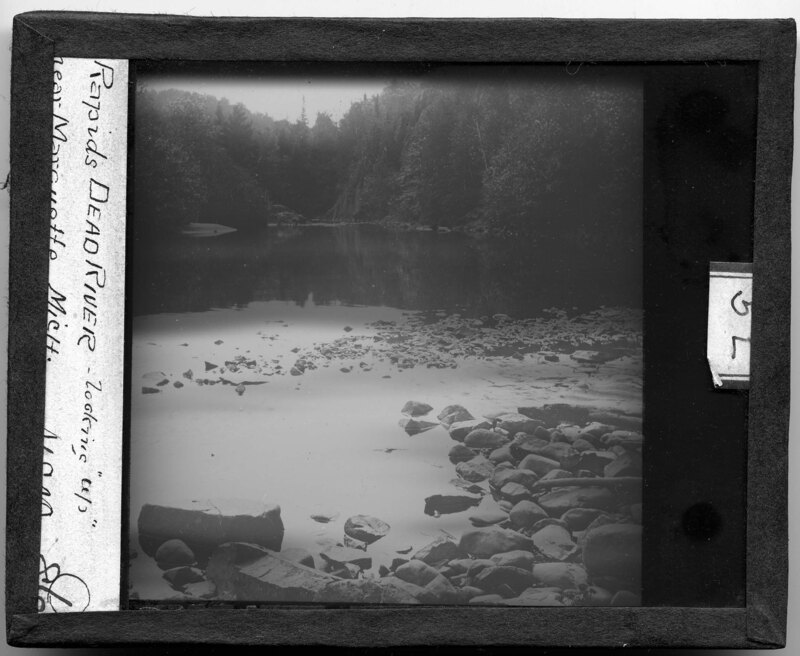
Dead River in Marquette, Michigan. Rocks have been piled in the riverbed by the stream and dense trees cover the banks of the river. The picture was taken looking down the river before the falls and shows the rapids before the drop off in the river.
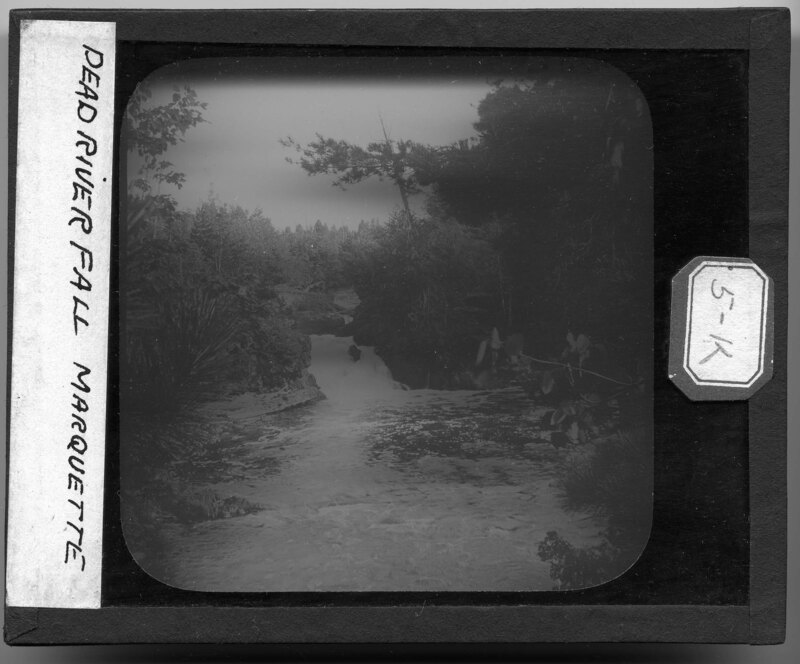
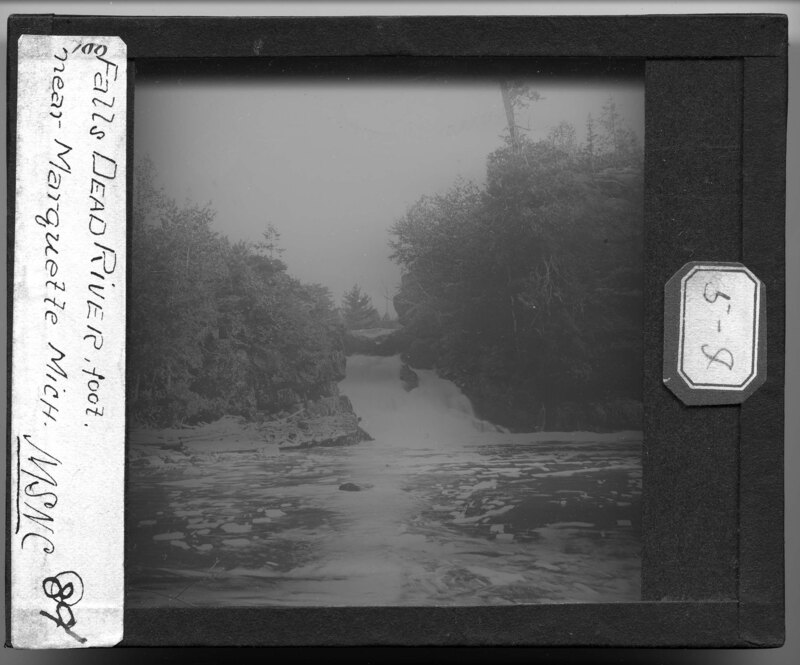
The base of the Dead River Falls in Marquette, Michigan. Dense trees grow along the rocky banks of the river and debris piles have formed at the base of the falls.
The base of the Dead River Falls in Marquette, Michigan. Dense trees grow along the rocky banks of the river and debris piles have formed at the base of the falls.
The base of the Dead River Falls in Marquette, Michigan. Dense trees grow along the rocky banks of the river and debris piles have formed at the base of the falls.
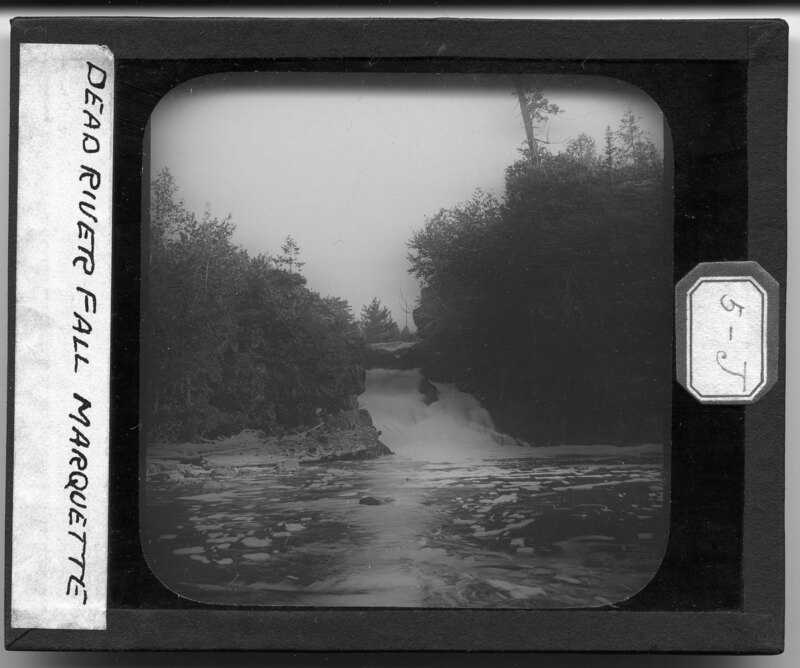
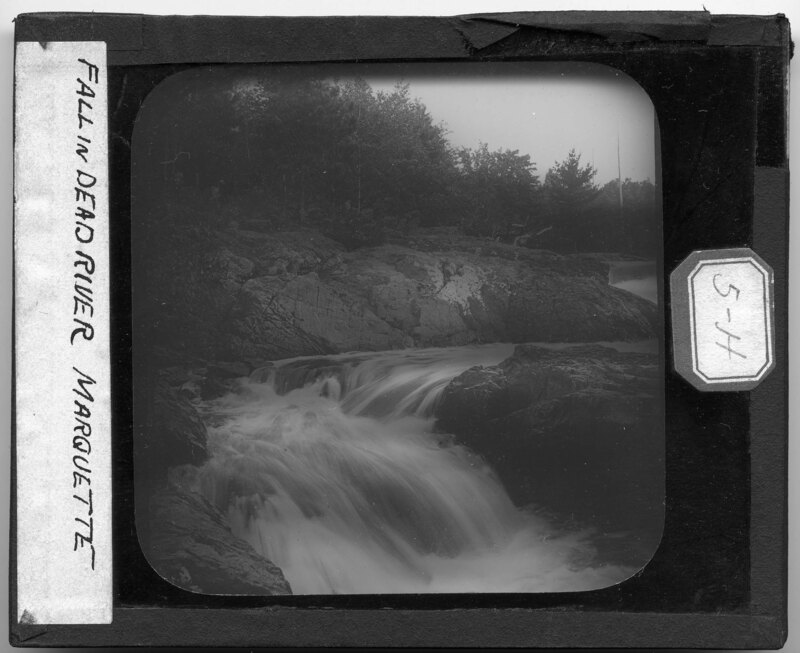
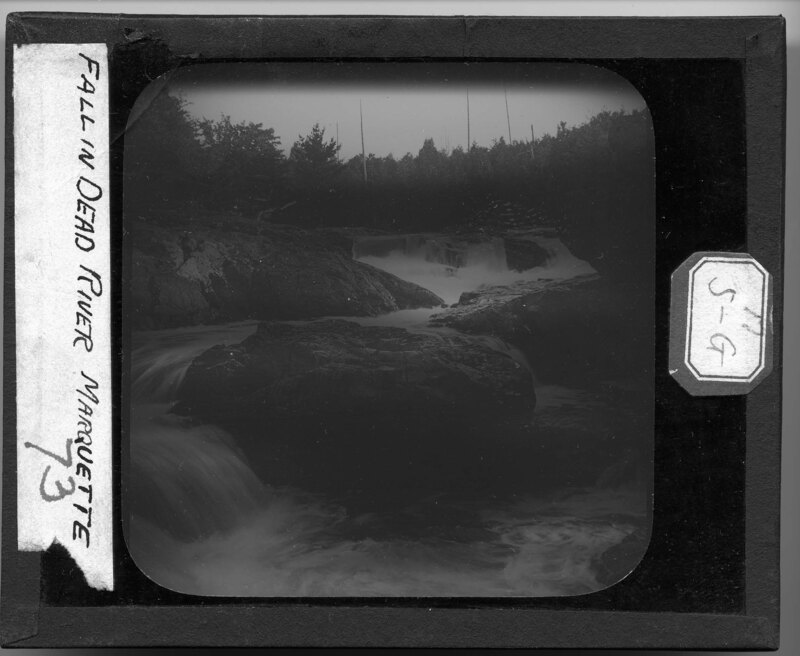
The Dead River Falls in Marquette, Michigan. The large boulders and rock faces that make up the river have been severely eroded, leaving layers of rock exposed. Dense trees grow along the rocky banks of the river.
The Dead River Falls in Marquette, Michigan. The large boulders and rock faces that make up the river have been severely eroded, leaving layers of rock exposed. Dense trees grow along the rocky banks of the river.
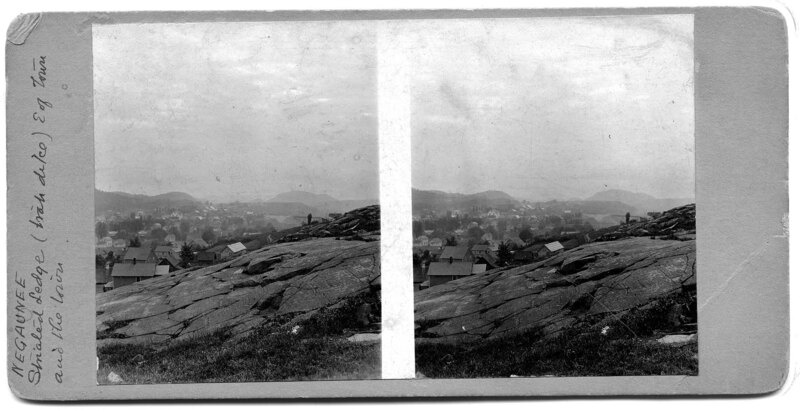
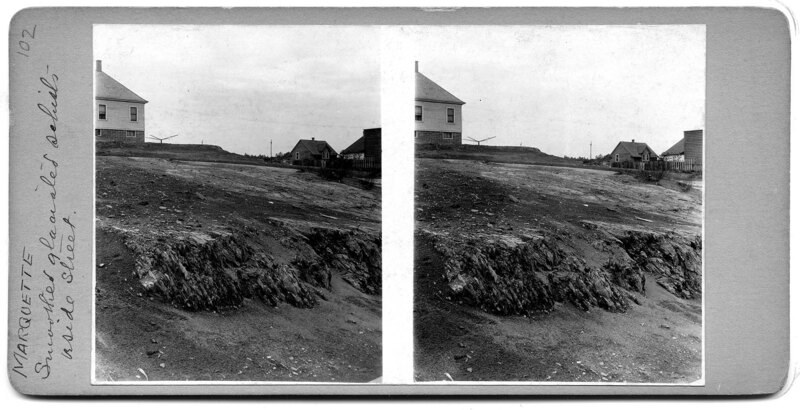
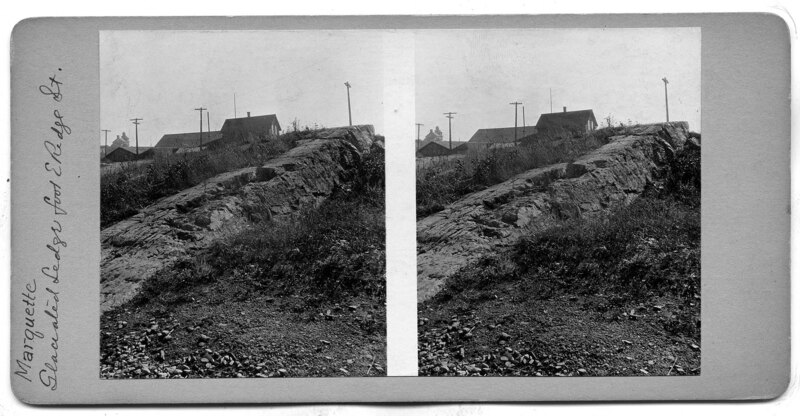
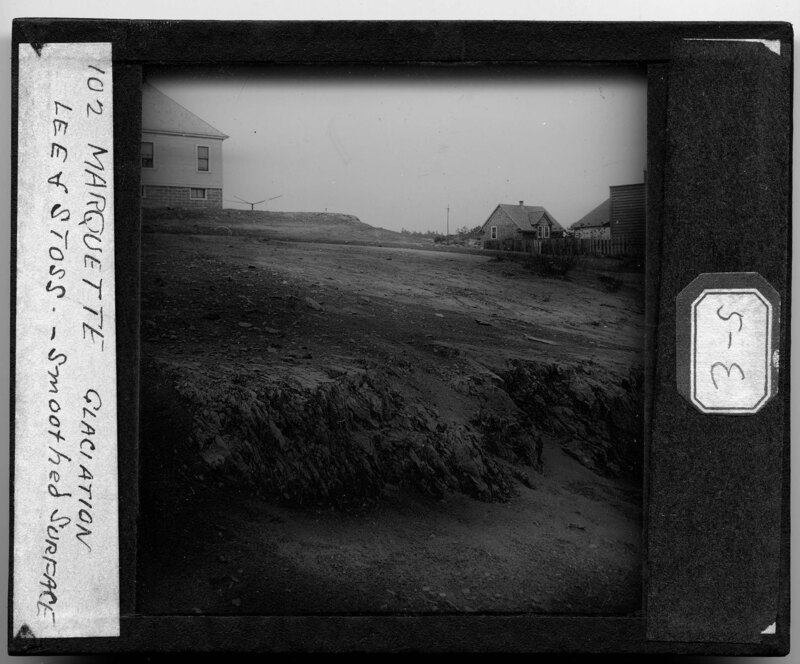
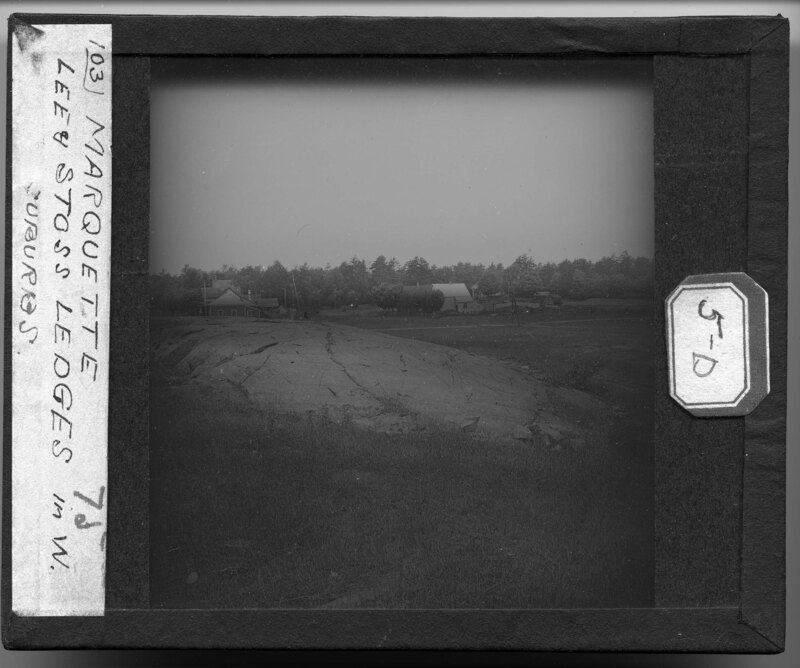
The glaciated landscape of the Lee and Stross ledge in Marquette, Michigan. The hills surrounding the houses are very rocky and smoothed over with a thin layer of dirt and rock debris. Erosion has exposed the disintegrating rock layers that are underneath the dirt layer of the landscape. Several houses can be seen in the background and make up a small town in this area.
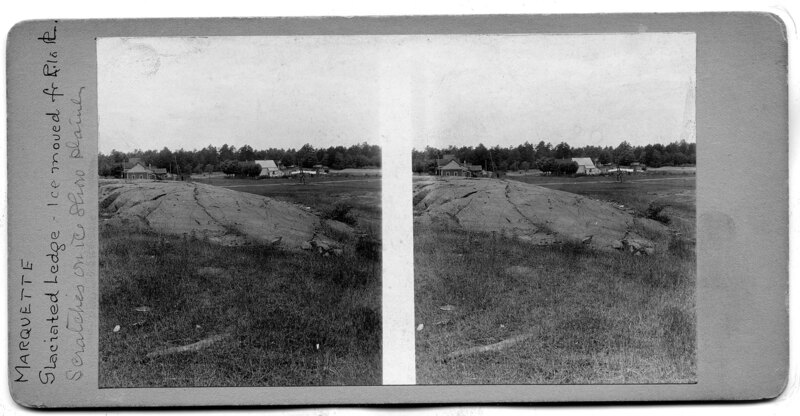
Landscape of Marquette, Michigan. It is noted that the rock formation in the foreground is called Lee and Stross ledge. Frame construction houses can be seen in the background. Trees and grass cover the landscape.
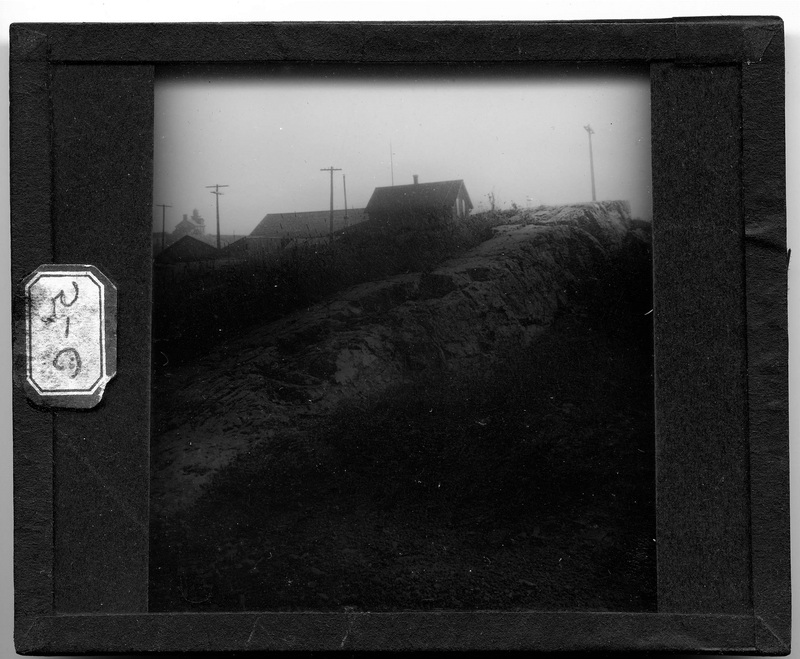
The Lee and Stross ledge near the Marquette, Michigan Lighthouse. It is noted the rock formation has been made by the glaciation process and is left jagged and exposed by erosion. Several frame construction buildings can be seen in the background along with the Marquette Harbor Lighthouse. Electrical poles stretch across the landscape.
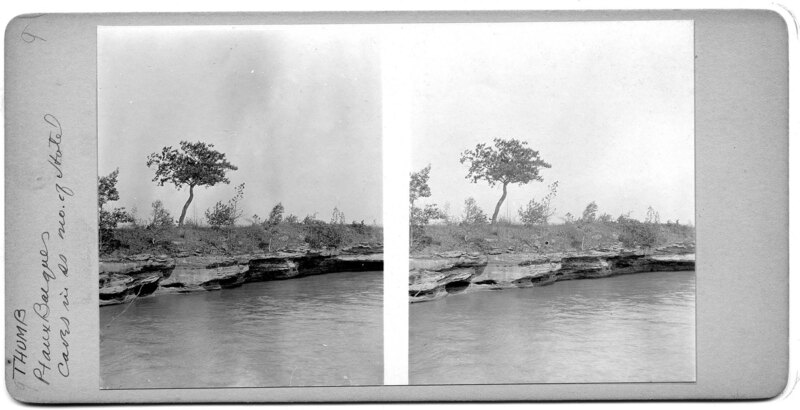
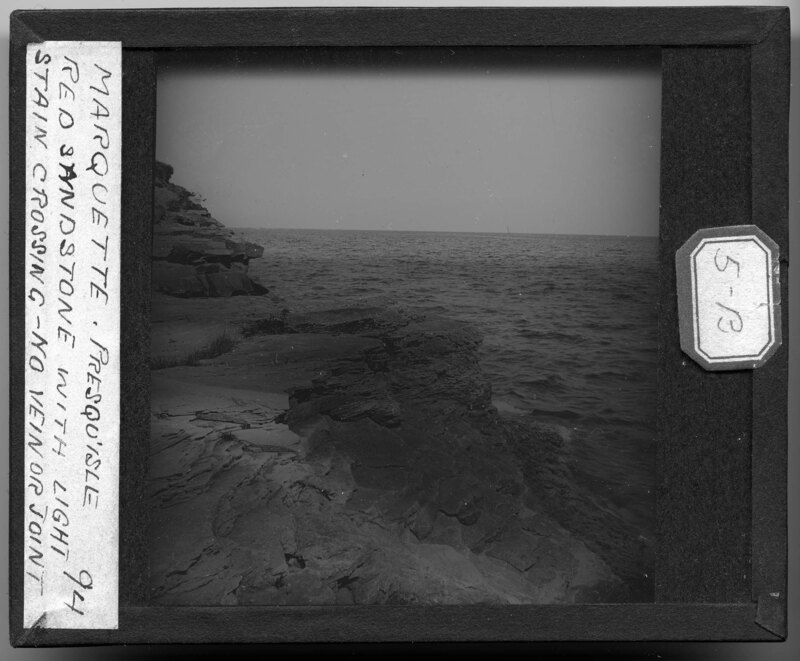
The rocky shoreline of Presque Isle along Lake Superior in Marquette, Michigan. It is noted the exposed rock is primarily red sandstone. Erosion has left exposed rock layers, forming a jagged cliff next to the lake. Short dune grass grows out of the rocks.
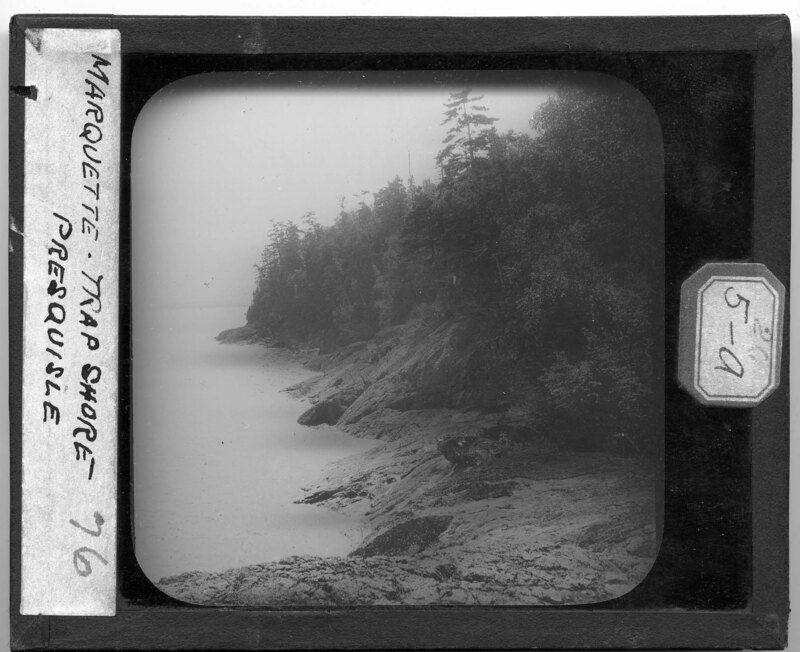
Rocky shoreline of Lake Superior in Marquette, Michigan. Dense trees cover the cliff which has been eroded and the rock layers have been exposed. Short grass covers the rock layers and there is no beach.
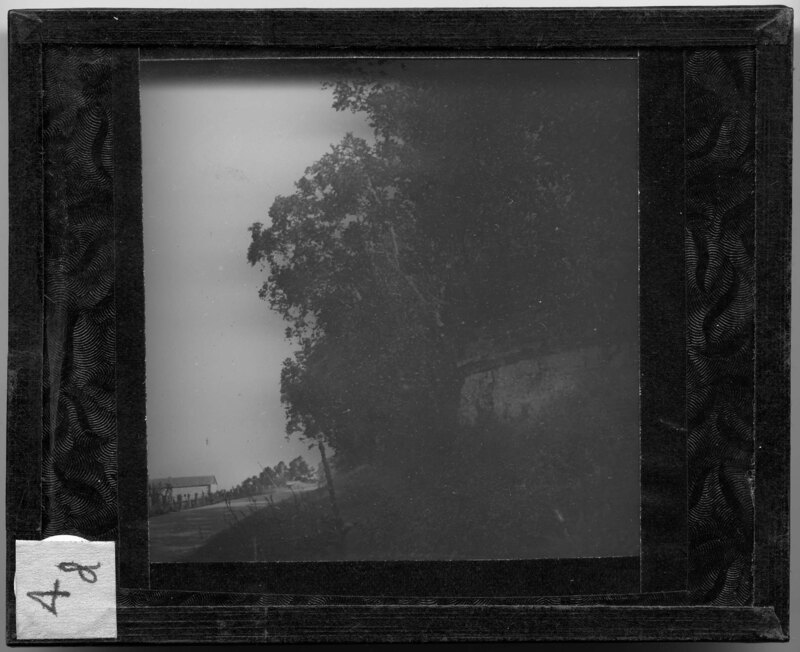
Near Bay de Noc on the Garda Peninsula in Fayette, Michigan. A steep rocky cliff face covered in trees and scrub bushes can be seen to the right and a dirt road with a gabled end stone house can be seen to the left. Slide labeled with text, "Made by G.R. Swain, 713 E. University Ave., Ann Arbor, Michigan." Swain was staff photographer at U of M from 1913 to 1947.
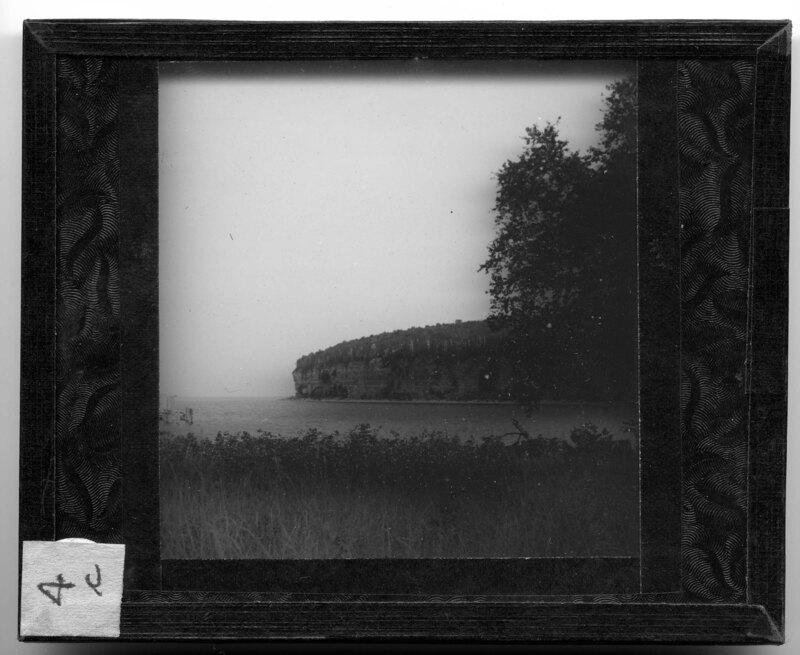
A large rocky cliff that faces Big Bay de Noc near Fayette, Michigan. Covered in trees, the large cliff peninsula juts out into Lake Michigan and has created a narrow beach surrounding the cliff. Dune grass and scrub bushes cover the landscape in the foreground. Slide labeled with text, "Made by G.R. Swain, 713 E. University Ave., Ann Arbor, Michigan." Swain was staff photographer at U of M from 1913 to 1947.
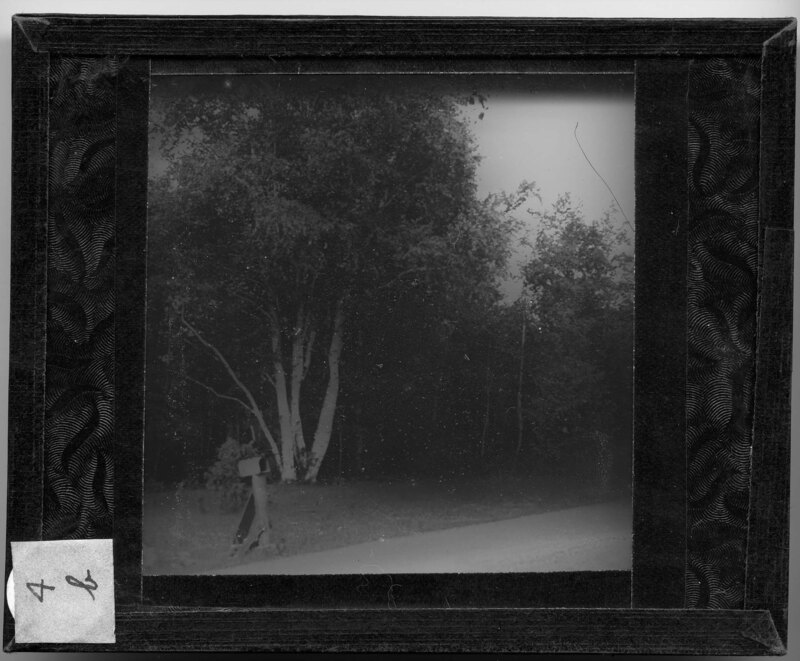
Landscape of the Garda Peninsula in Fayette, Michigan. A large birch tree is at the center of the picture and a dense tree grove can be seen in the background. A dirt road runs in front of the tree line and a mailbox sits next to the road. Slide labeled with text, "Made by G.R. Swain, 713 E. University Ave., Ann Arbor, Michigan." Swain was staff photographer at U of M from 1913 to 1947.
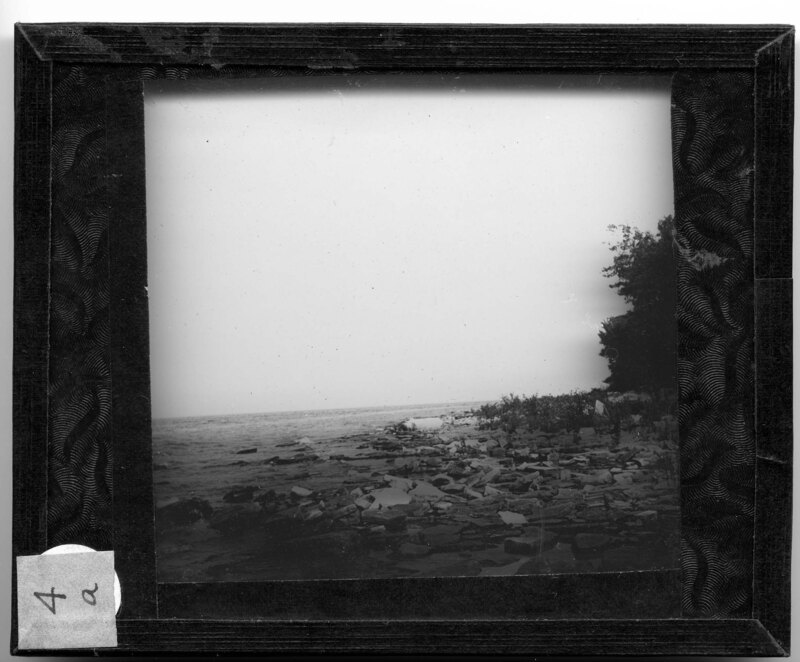
The rocky shoreline of Lake Michigan in Fayette, Michigan. Trees and dune grass grow on the rocky shore away from the lake and jagged rocks have been piled along the shoreline, creating the beach. Slide labeled with text, "Made by G.R. Swain, 713 E. University Ave., Ann Arbor, Michigan." Swain was staff photographer at U of M from 1913 to 1947.
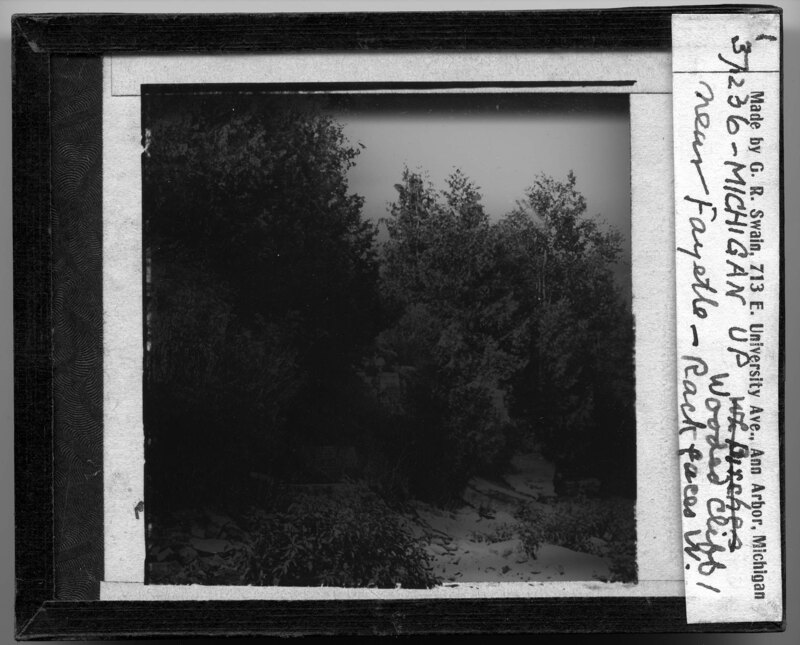
A rocky cliff wall with trees growing out of the cliff near Fayette, Michigan. It is noted the rock wall faces west. Erosion has exposed the different rock layers present in the cliff face and grass and scrub bushes cover the fallen rocks. Slide labeled with text, "Made by G.R. Swain, 713 E. University Ave., Ann Arbor, Michigan." Swain was staff photographer at U of M from 1913 to 1947.
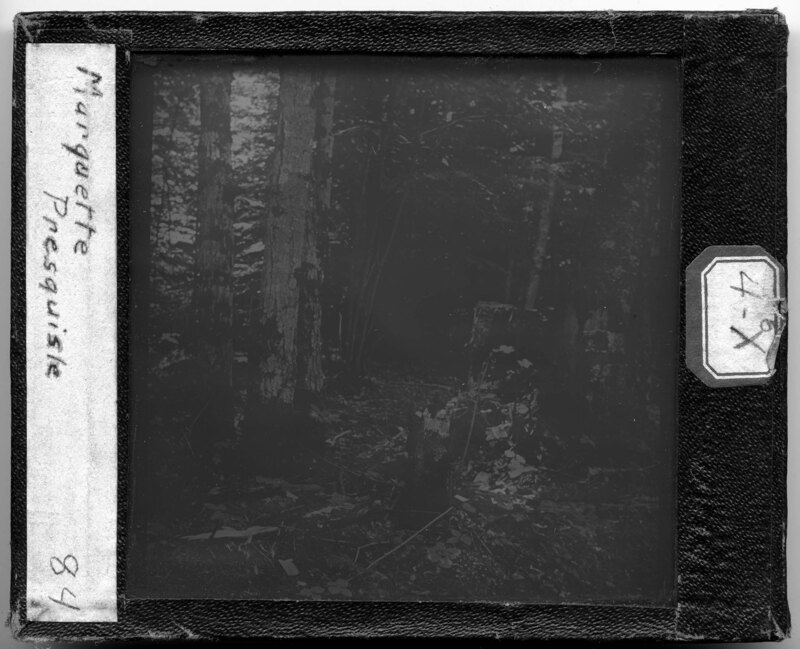
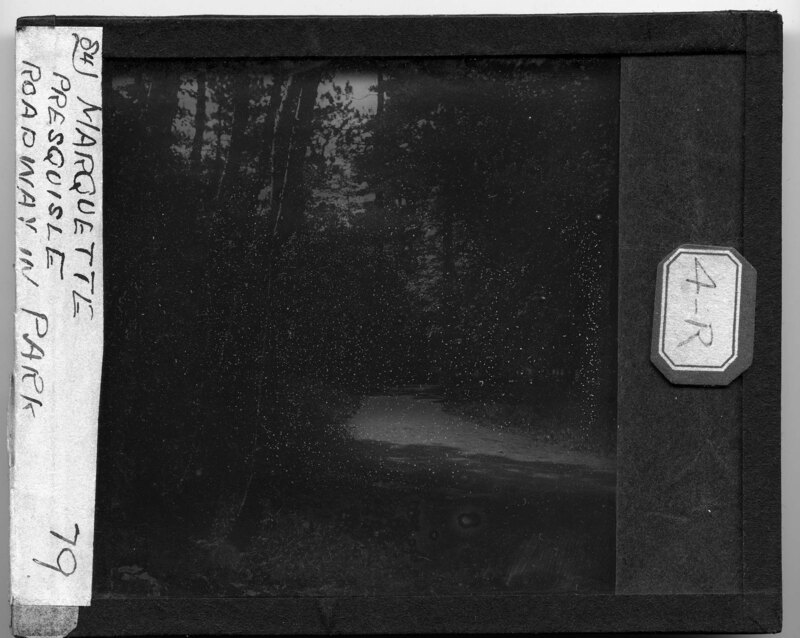
A closeup view of the forest floor cover on Presque Isle in Marquette, Michigan. Hardwood and pine trees can be seen in the image, along with decaying tree stumps and scrub bushes.
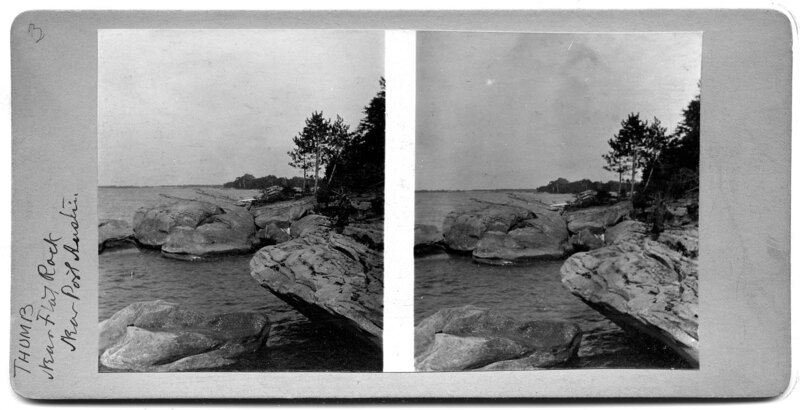
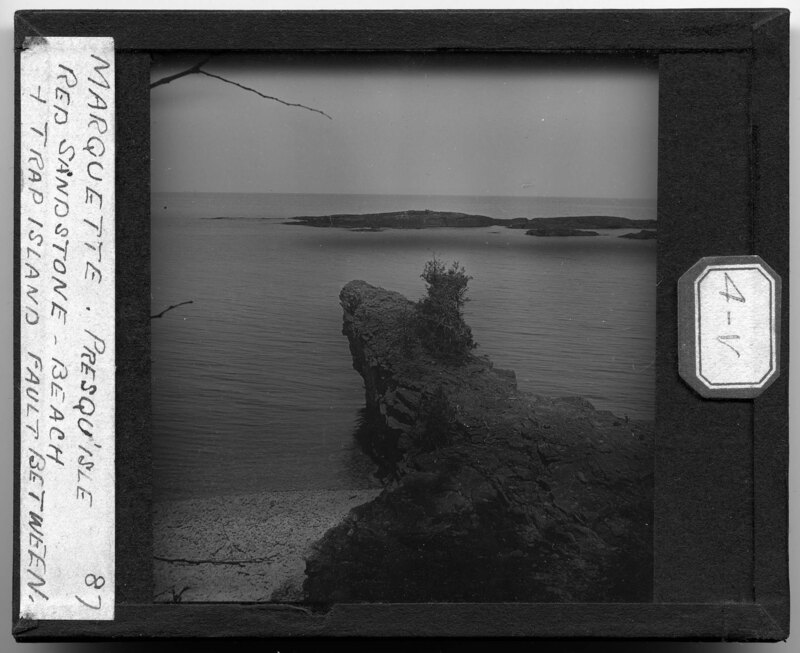
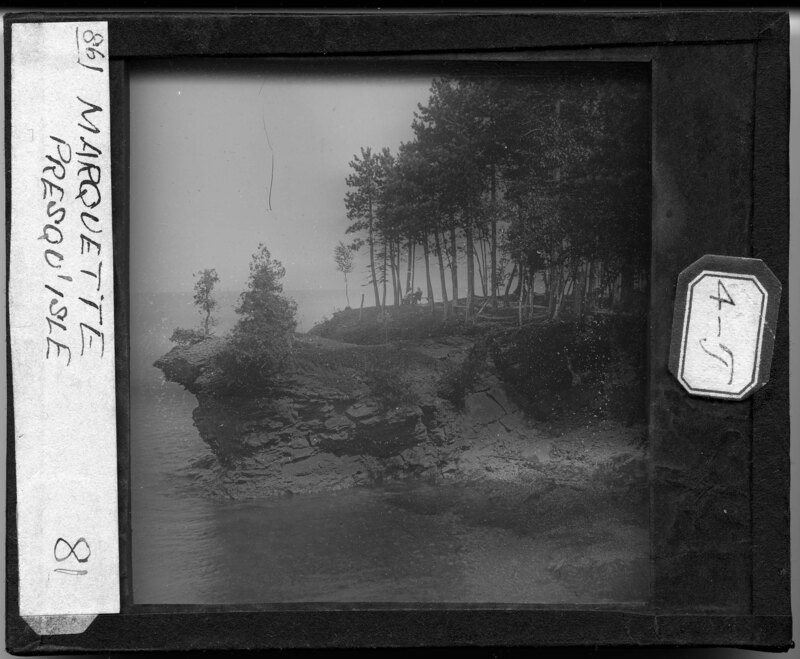
A red sandstone peninsula juts out into Lake Superior on Presque Isle, near Marquette, Michigan. Short rocks rise out of the lake in the background and a rocky beach has formed next to the peninsula from years of rock erosion.
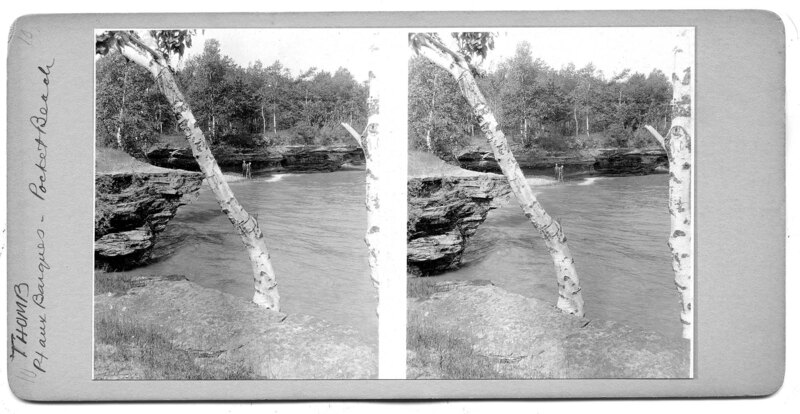
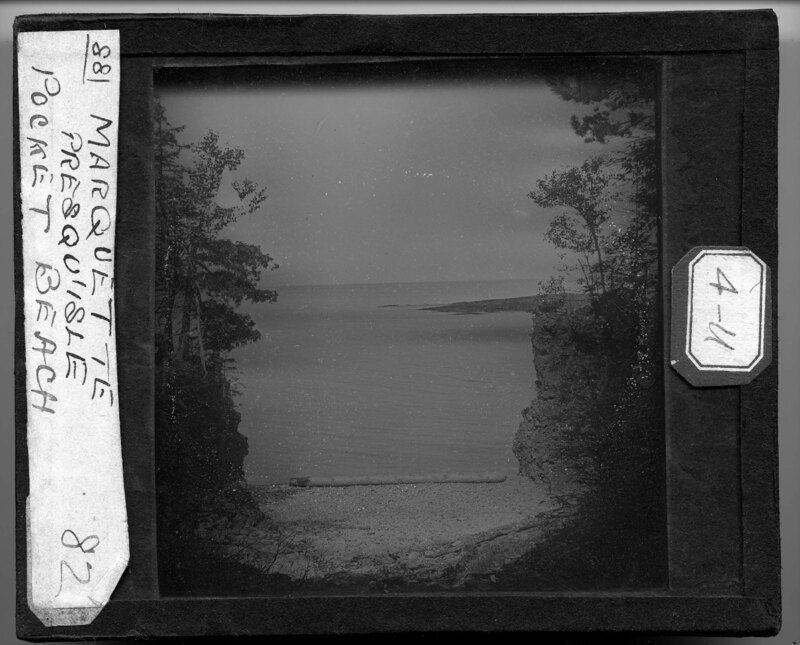
A rocky pocket beach on Presque Isle in Marquette, Michigan. A large drift wood timber has washed ashore and sits on the rocky beach, created after years of erosion of the surrounding shale cliff walls. Trees grow on the outcrops and scrub bushes cover the landscape.
Presque Isle in Marquette, Michigan. The rocky, shale shoreline has been eroded over time, leaving the different rock layers exposed. Pine trees grow on top of the rocky outcrops and piles of loose rocks have collected along the shoreline. A couple sits on a bench in the pine grove, looking out over the lake.
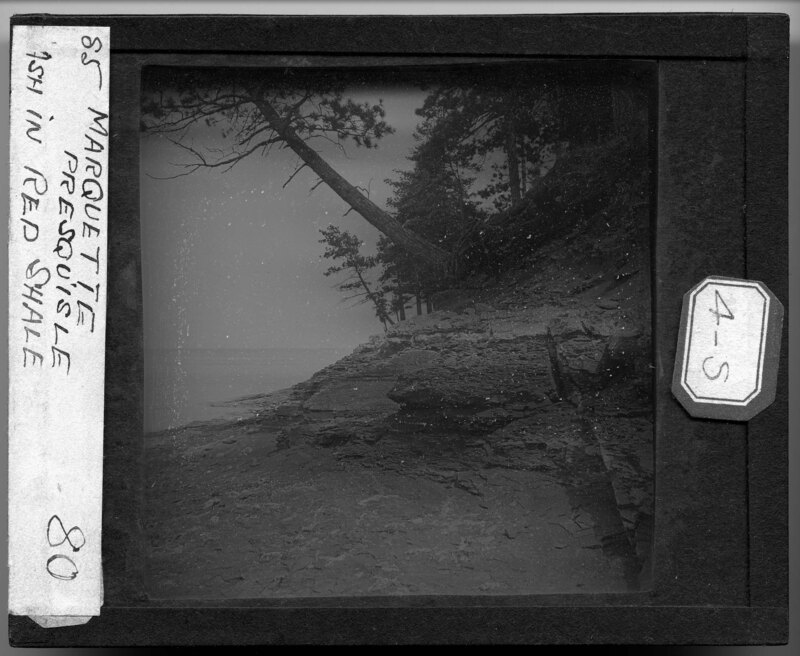
Shoreline of Lake Superior in Marquette, Michigan. The shale cliff has been eroded over time, leaving the different rock layers exposed. Pine trees grow out of the cliff face and on top of the outcrop. It is noted that there is ash in the shale, making it red.
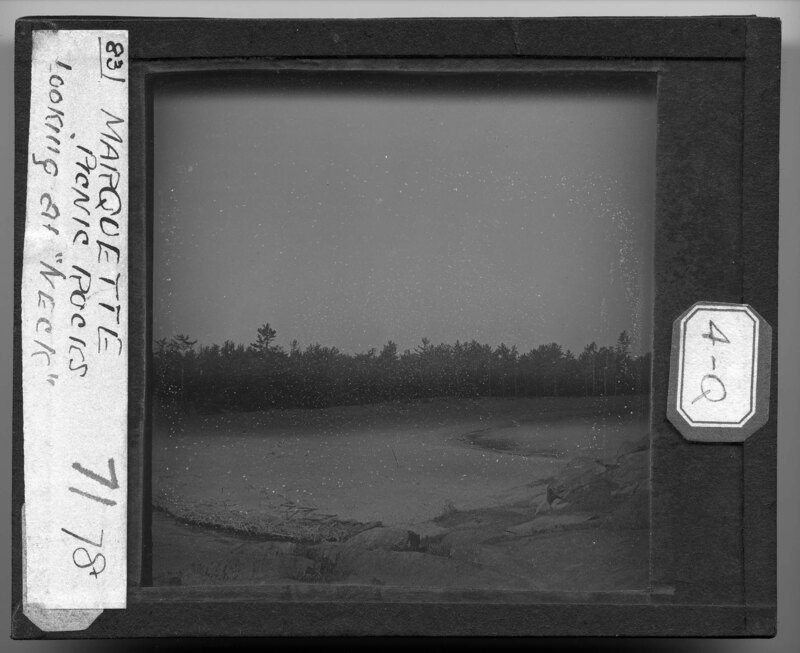
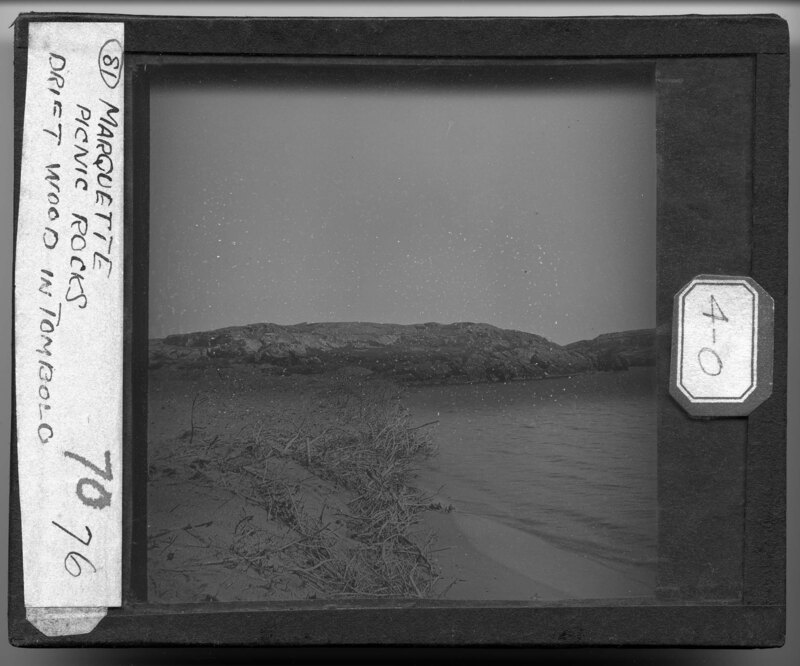
Picnic Rocks in Lake Superior of Marquette, Michigan. Looking back to the shoreline, a narrow sandy beach connects the rocks to the shoreline. Pine trees grow along the shore and debris litters the beach.
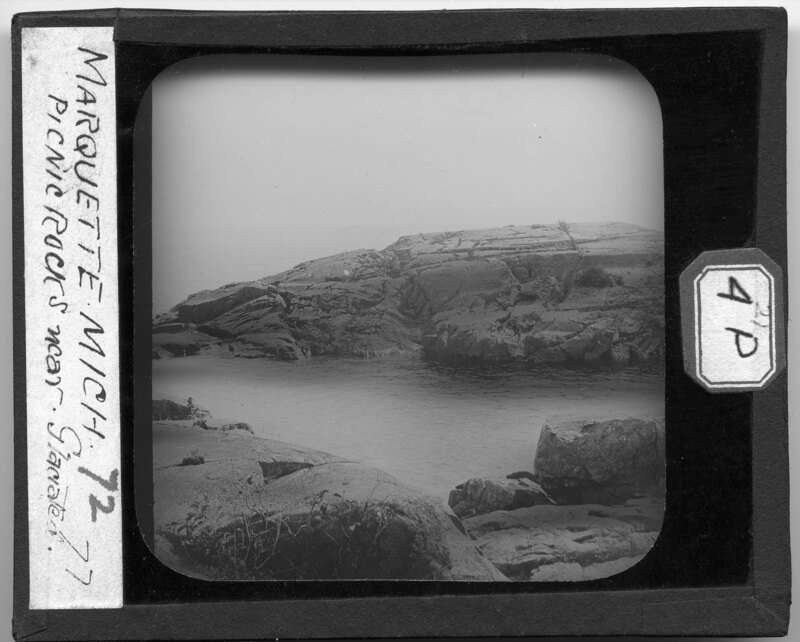
Standing on the Picnic Rocks of Marquette, Michigan. It is noted the rocks were part of the glaciation process. The rocks are very rugged and have been cut and cracked by erosion.
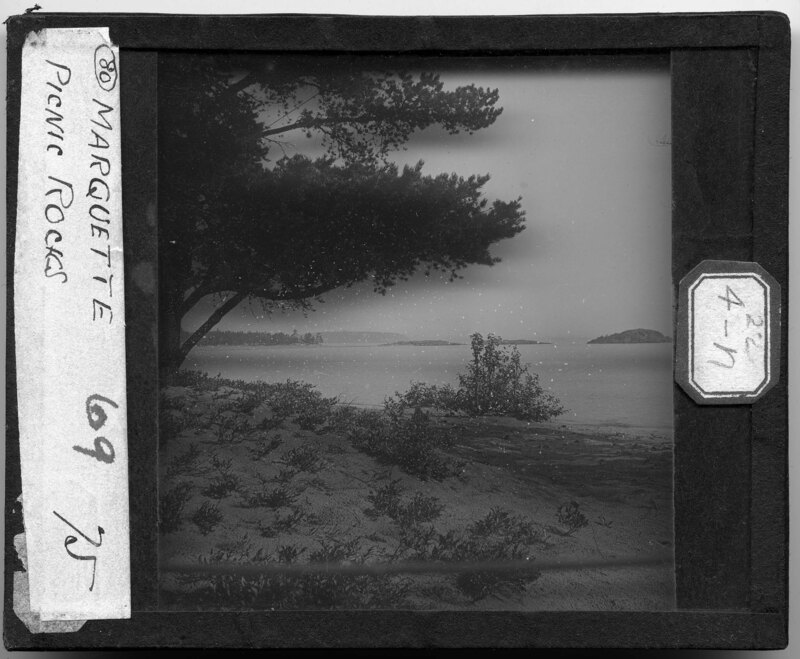
Landscape of the bay surrounding Picnic Rocks in Marquette, Michigan. The beach in the foreground is sandy and dotted with scrub bushes and a large pine. The Picnic Rocks can be seen in the background, rising out of Lake Superior.
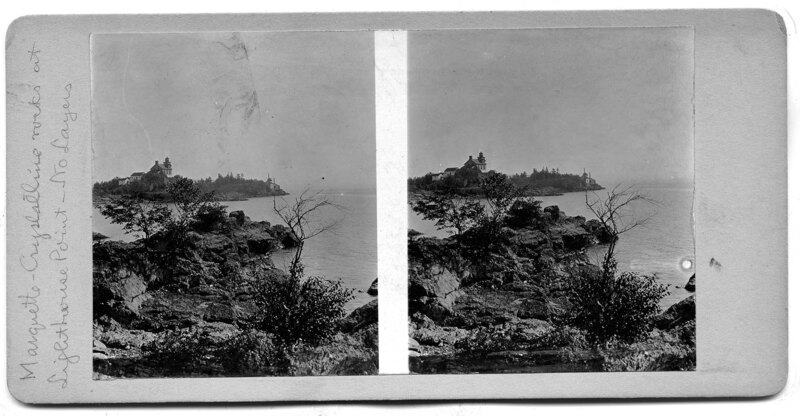
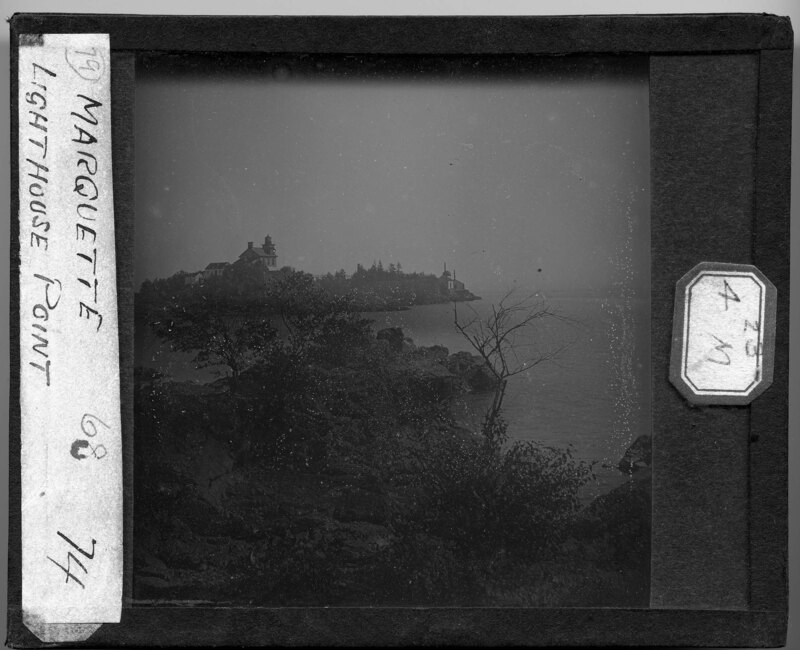
Lighthouse Point in Marquette, Michigan. The existing lighthouse was constructed in 1866 following the decommissioning of the original lighthouse which became outdated. Several barns and outbuildings surround the lighthouse and a whistle station can be seen at the end of the point. The landscape is very rocky and covered in dense foliage.
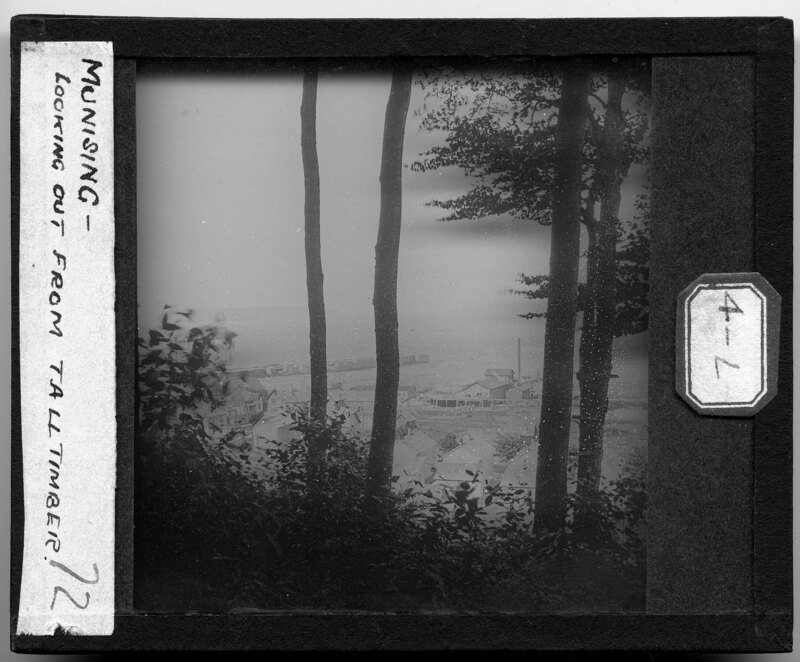
Landscape of Munising, Michigan. Looking out from a tall timber forest, below the hill is a town with houses and warehouse buildings. It appears to be winter time and Lake Superior is frozen. A pier extends into the frozen lake and has been stacked with shipping containers.
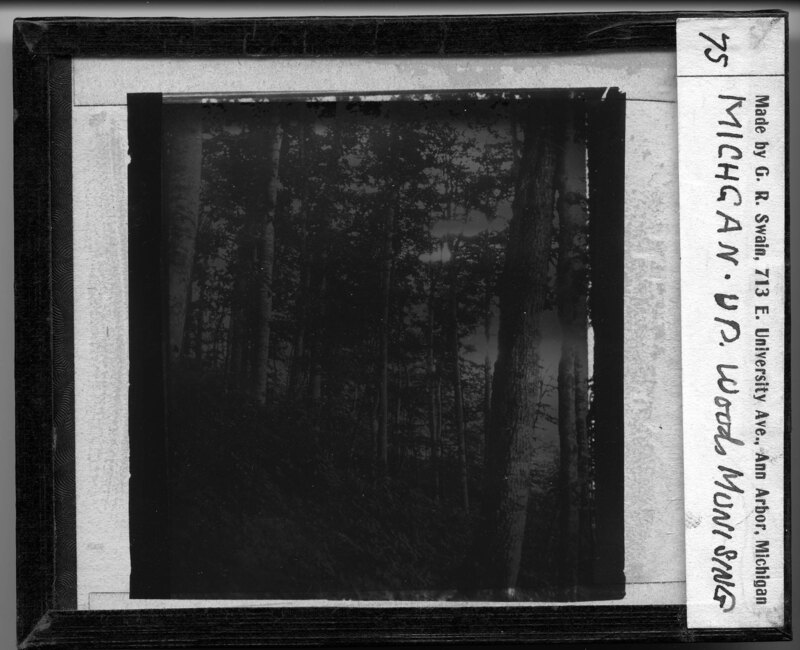
A hardwood and pine forest in the Upper Peninsula of Michigan, near Munising. Dense undergrowth covers the steep hillside. Slide labeled with text, "Made by G.R. Swain, 713 E. University Ave., Ann Arbor, Michigan." Swain was staff photographer at U of M from 1913 to 1947.
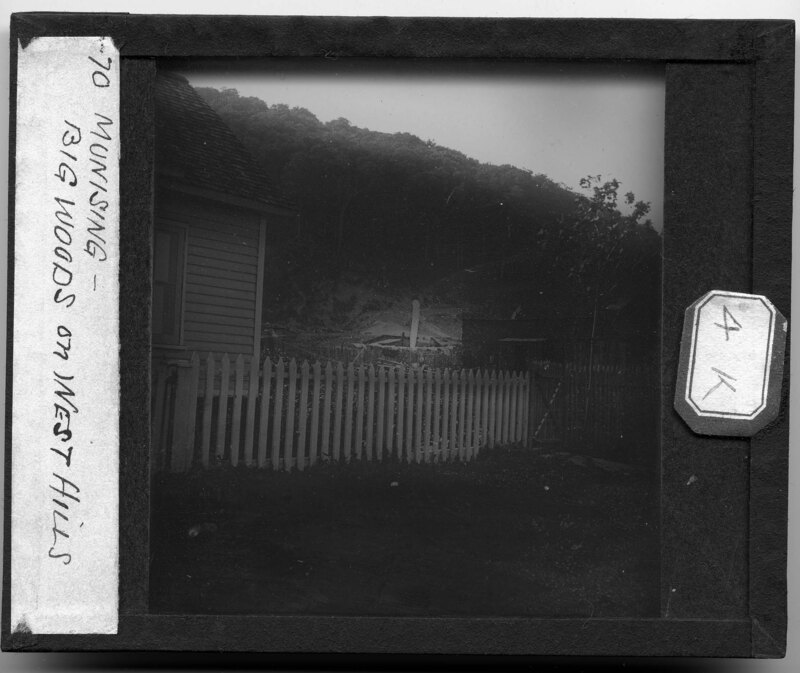
A land plot at the base of a large sand dune and dense forest in Munising, Michigan. A wood frame house with a white picket fence can be seen in the foreground and lean to buildings can be seen in the backyard. The sand dune is covered in dune grass and scrub bushes.
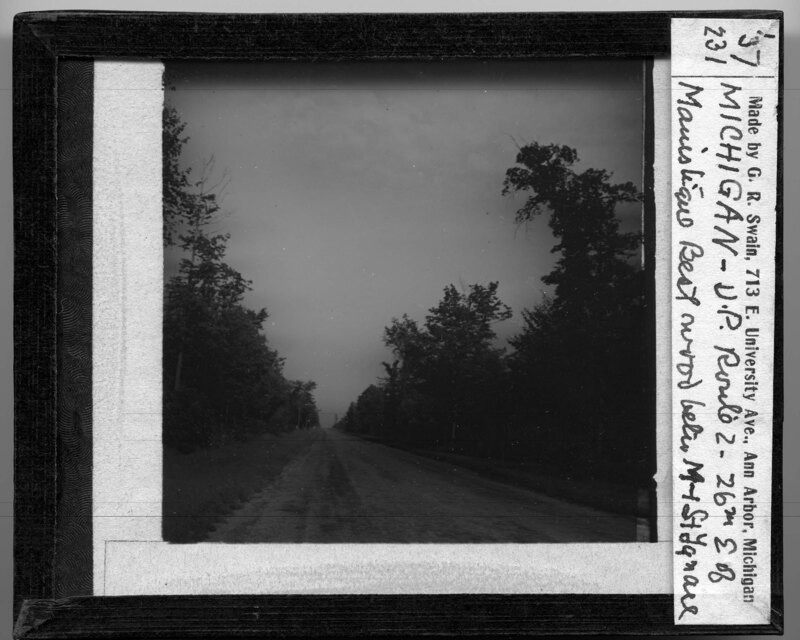
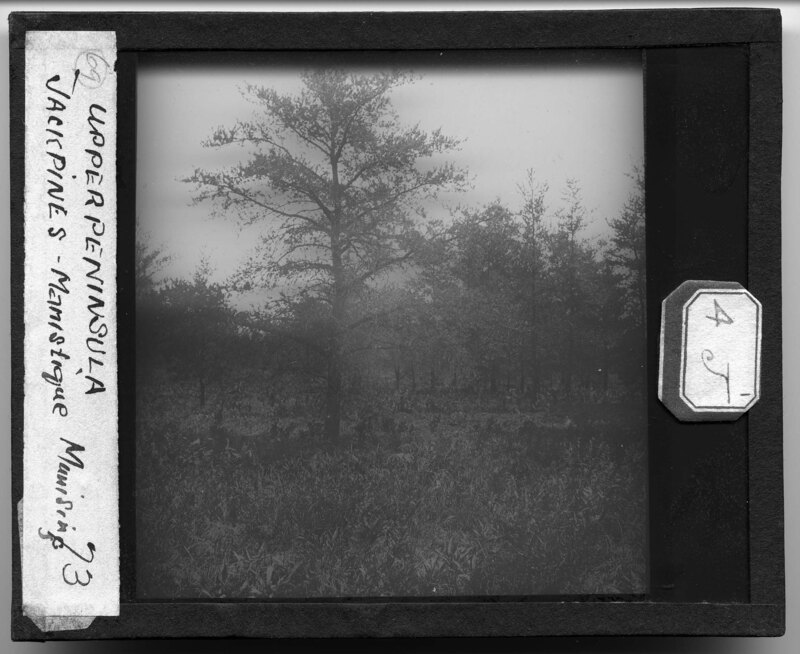
Route 2 of the Upper Peninsula of Michigan, near Manistique. The dirt road creates a corridor of trees on the side of the road and grass covers the landscape. Slide labeled with text, "Made by G.R. Swain, 713 E. University Ave., Ann Arbor, Michigan." Swain was staff photographer at U of M from 1913 to 1947.
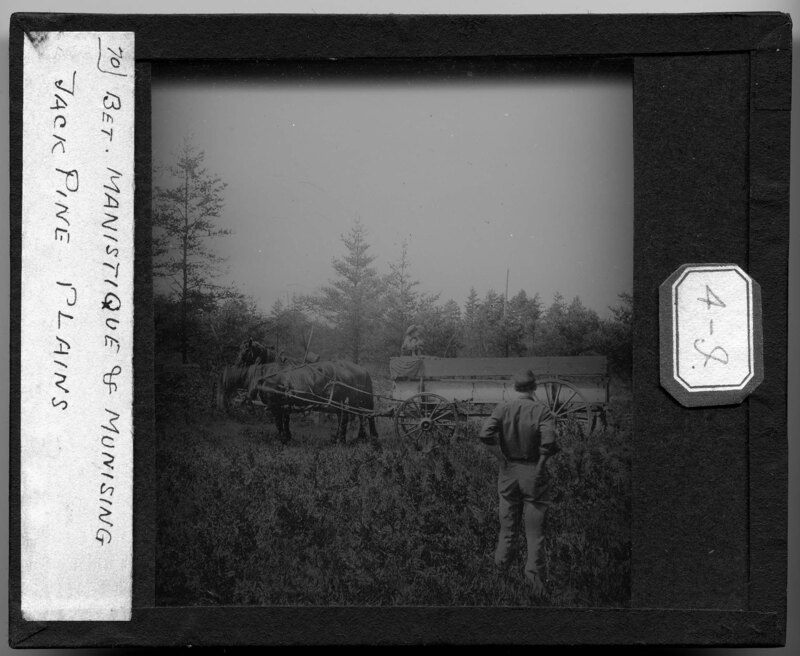
A team of horses is pulling a large wooden wagon as a boy sits in the wagon seat near Manistique, Michigan. A man stands in the middle of a field and it is noted that this area is called the Jack Pine Plains. Pine trees grow in the background and grass covers the landscape.
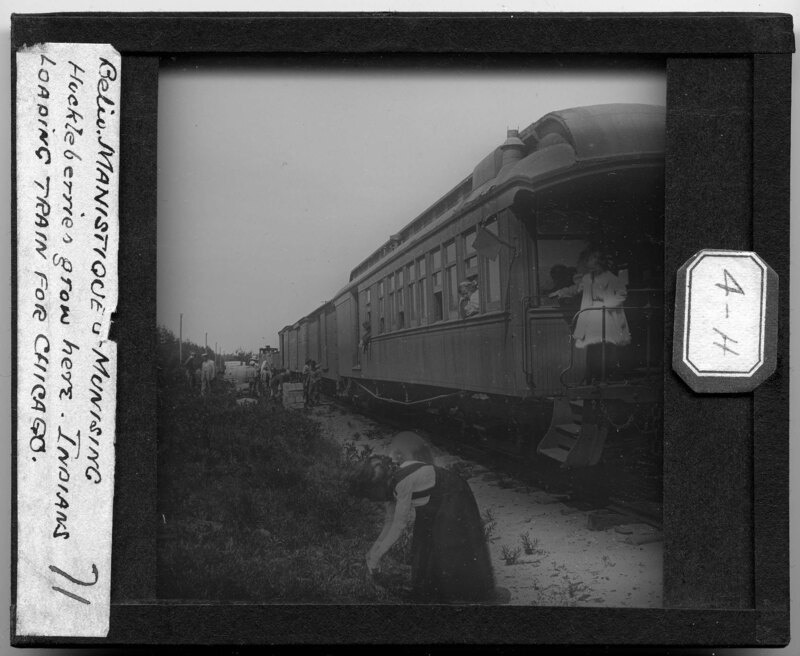
Rail passengers stop to pick huckleberries along the rail line in between Manistique and Munising, Michigan. Children wait on the train while their mothers stop to pick berries. Men unload train cars in the background.
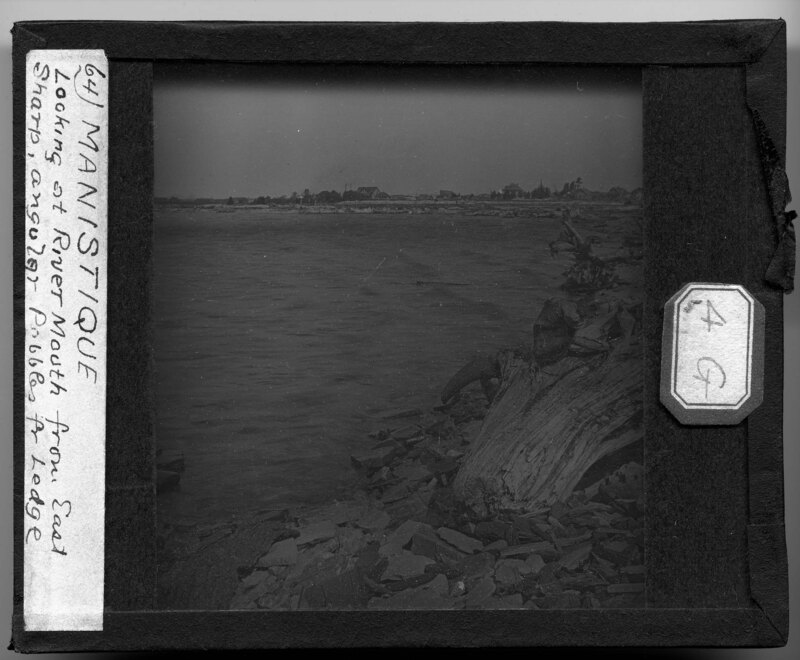
Rocky shoreline of Lake Michigan at Manistique, Michigan. It is noted that the picture is showing the river mouth where it meets the lake. Heavy driftwood has been washed onto the shoreline and houses can be seen in the background built along the lakeshore.
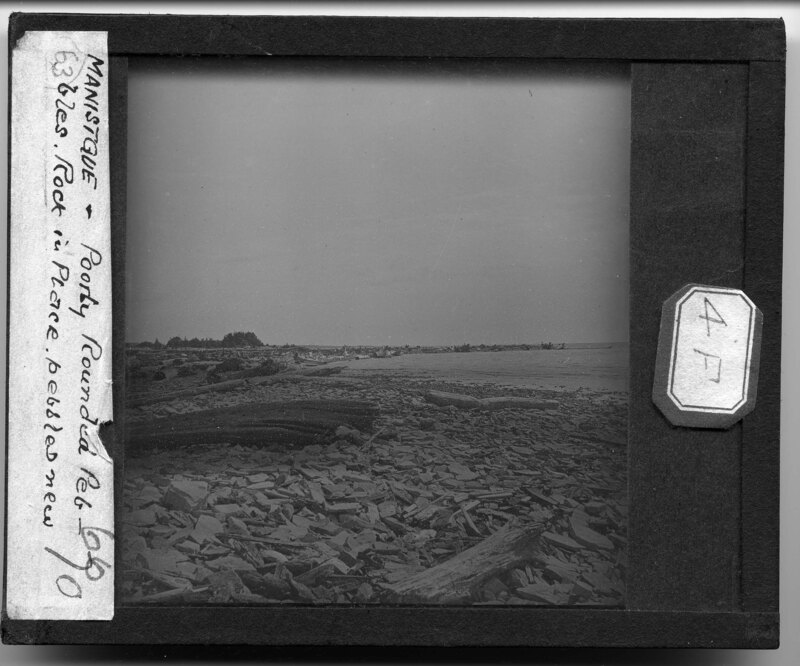
Rocky beach along the Lake Michigan shoreline at Manistique, Michigan. Flat rocks cover the landscape which is covered in debris from the lake and heavy drift wood timbers. Very little vegetation grows on the beach but trees can be seen in the background.
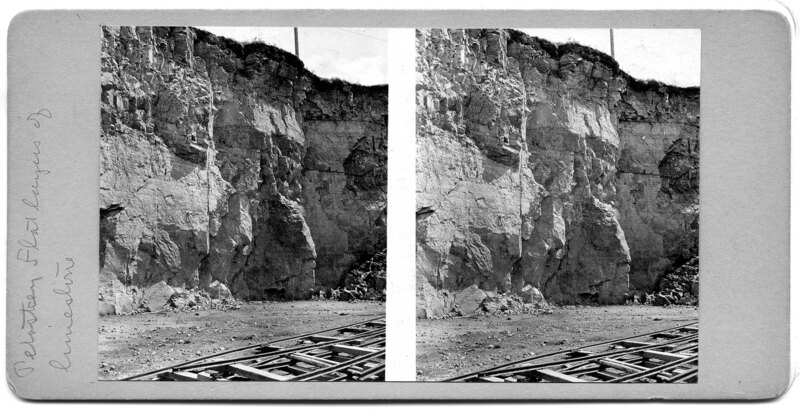
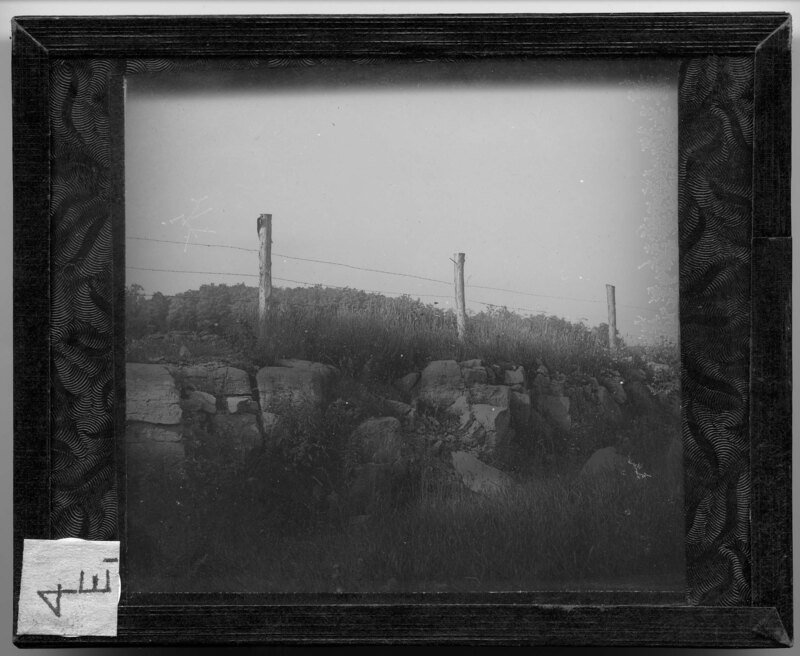
Limestone boulders exposed by erosion near Lake Michigan east of Manistique, Michigan. It is noted the best farms in the state are in this area. A barbed wire fence with wooden posts runs along the top of the outcrop and grass covers the landscape. A tree grove can be seen in the background.
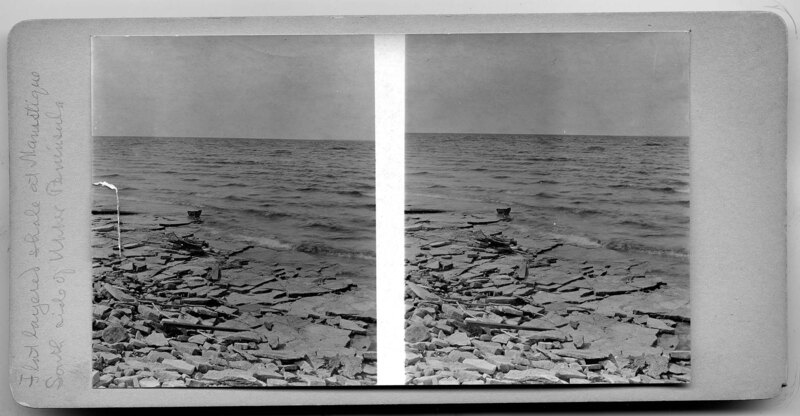
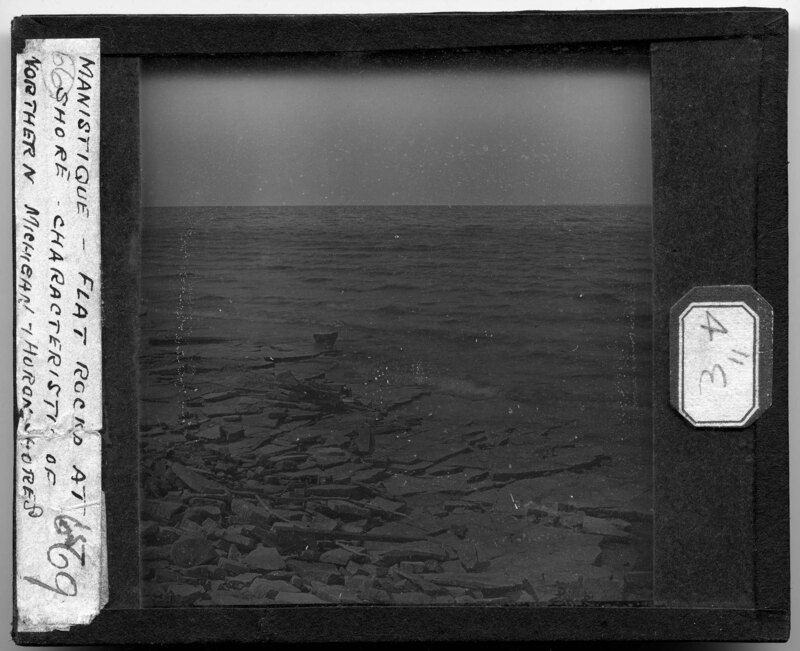
Crumbling flat rocks along the Lake Michigan shore at Manistique, Michigan. It is noted this is a common feature of northern Michigan shorelines. The slabs of flat rock have been cracked and eroded by the lake, leaving piles of rock along the shoreline.
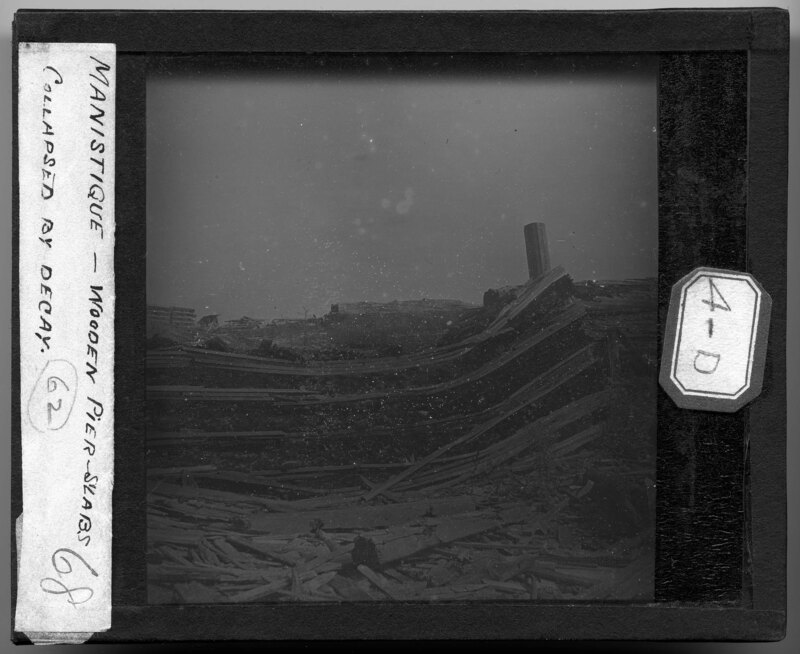
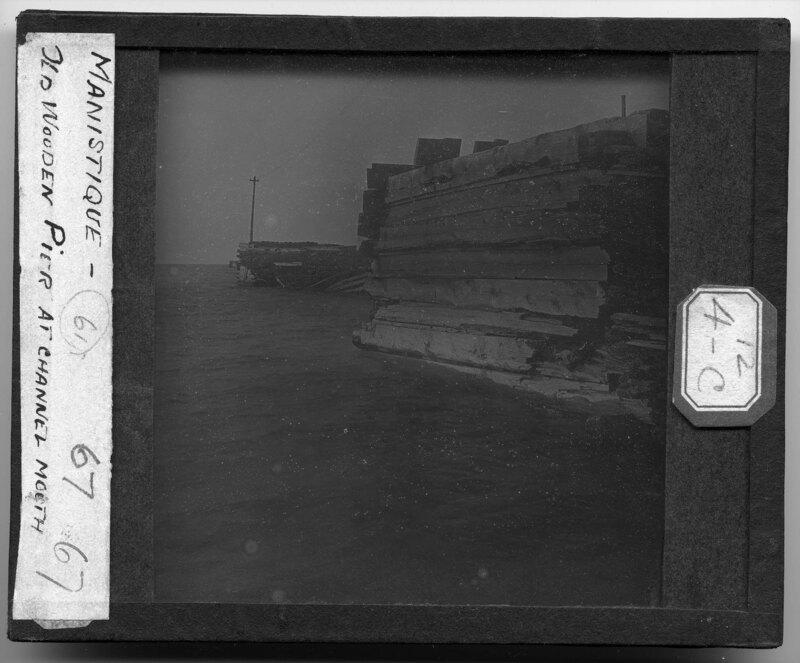
Collapsed wooden pier in Manistique, Michigan. Slabs of wood and stone have collapsed from weathering and decay, leaving piles of wood scattered around the pier.
Cut timber stacked construction pier at the channel mouth of Manistique, Michigan. The timbers have been weathered by the lake over time and were constructed using log construction techniques and stack methods. A single electrical line has been run to the end of the pier.
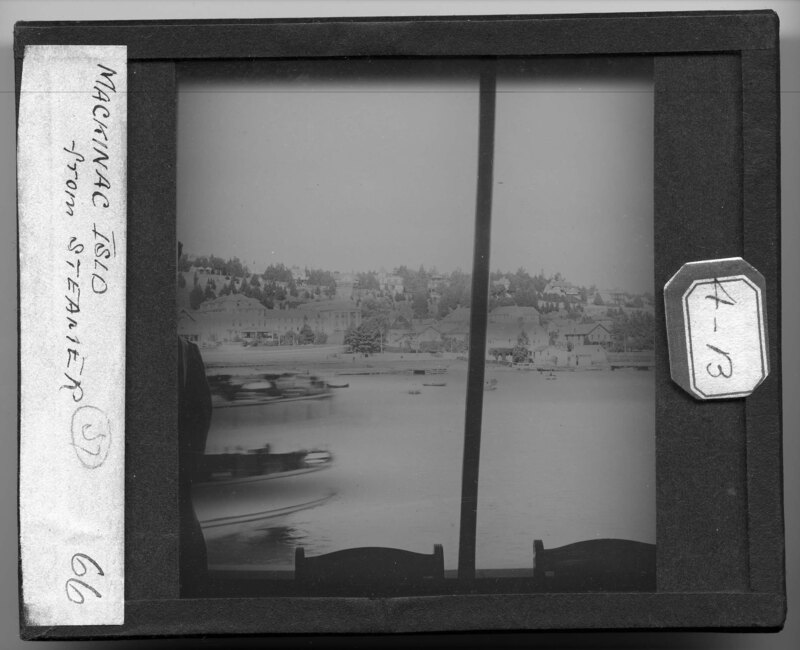
Mackinac Island from the deck of a steamer ship in Michigan. Large wooden framed houses and buildings can be seen covering the landscape of the island and a dock can be seen in front of the houses along the shoreline.
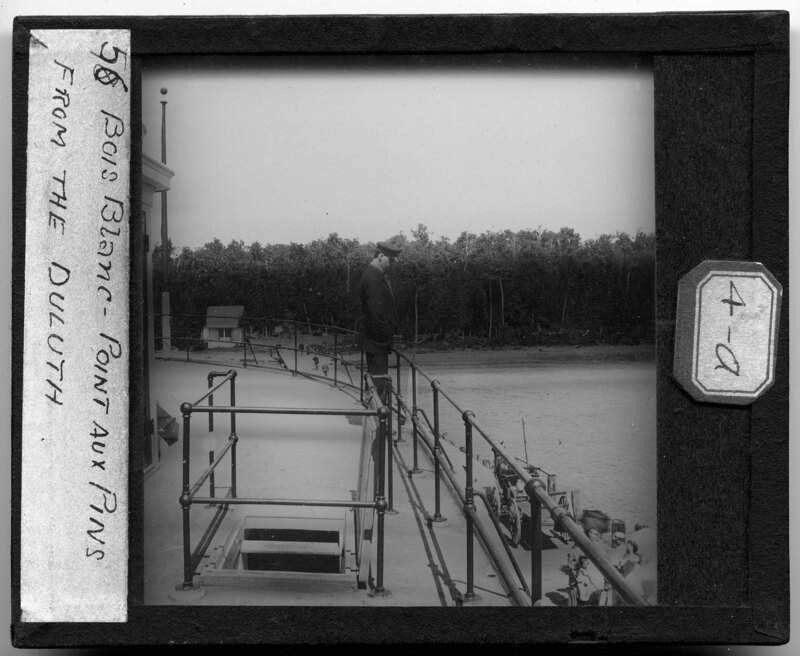
Shoreline of Lake Huron near Bois Blanc Island, Michigan, taken from the deck of the Duluth. The captain of the boat is standing on the deck looking out over the lake and the pier next to the boat. People can be seen on the pier either waiting to board the boat or are walking back to shore. The shoreline is sandy with dense trees and other foliage.