
Medieval Visual Power Influences on the Design of House Atreides by Joseph Jablonski
Introduction
The science fiction film Dune (2021), based on the first part of Frank Herbert’s book Dune (1965), follows the power struggle between conflicting factions that make up the Imperium, a collection of populated worlds throughout the known universe. When deconstructed, Dune’s universe is comparable to a medieval power structure, characterized by an emperor, dukes, heralds, and other medieval titles. The film builds a political landscape that effectively uses medieval power aesthetics, with entire planets functioning as feudal landholdings, as well as limited technology to establish the atmosphere.
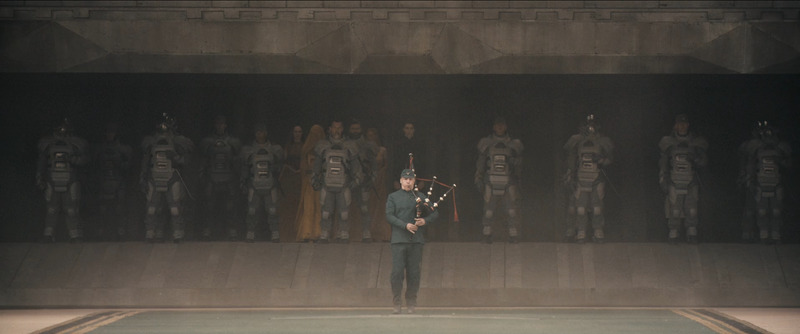
Medieval aesthetics are featured throughout Dune, but House Atreides is the most influenced by them and specifically incorporates European medieval visuals to define its identity and culture. Northern European bagpipes are included in the Atreides’ military tradition, and other influences from medieval Europe further develop this identity. Villeneuve’s Dune(2021) draws upon medieval aesthetics to portray the power and identity of House Atreides, imposing a striking design through banners, seals, and sculpture. This project intends to analyze Dune’s use of medieval aesthetics to visually convey the power and status of House Atreides.
The Imperial Banner
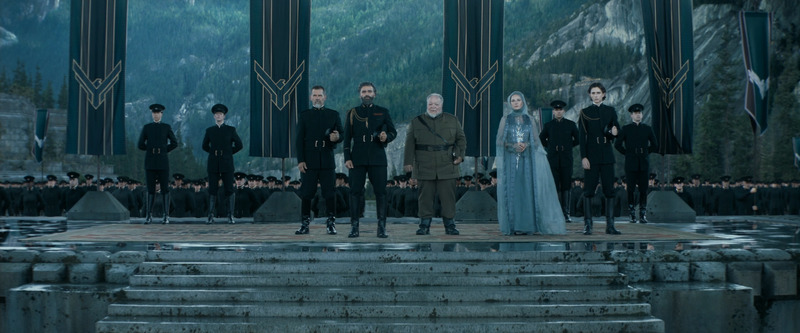
In Dune, banners are flown prominently, distinguishing battalions of Atreides warriors and coating the walls of Atreides command centers. Banners impose upon the viewer a visual representation of authority—a practical aesthetic. Symbolic canvases such as armor, shields, or banners exist to display the identity of individuals or houses in the medieval era. The Atreides banner proudly displays an angular, abstracted bird—a hawk—as their heraldic charge. Though the Atreides use the hawk as their heraldic charge, how they represent the figure draws heavily from the medieval use of eagles in heraldry (Fox-Davies 1909: 237). The aesthetic representation of the eagle is applied to the hawk in the Atreides design.
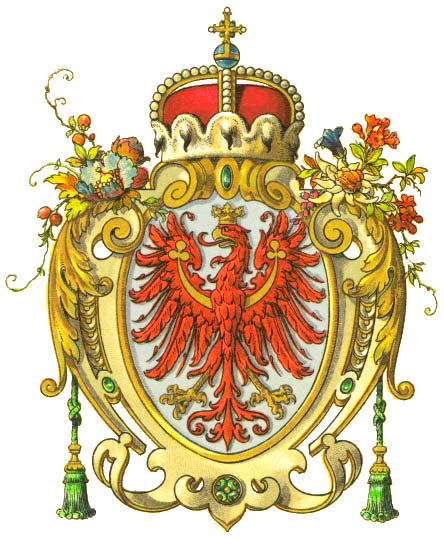
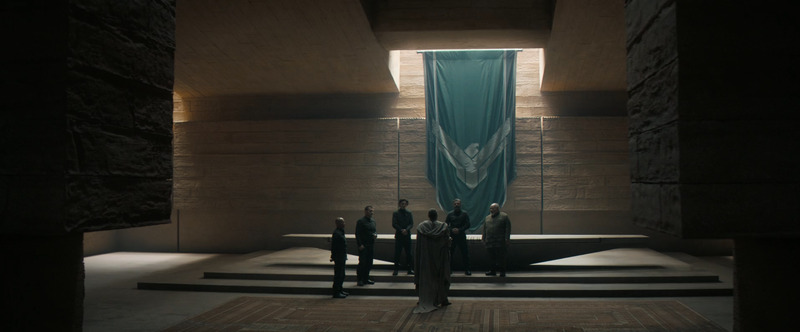
The shape and placement of the charge are very reminiscent of European medieval banners, in which the bird’s wings are outstretched in a position following the “eagle displayed” depiction, and the head is stylistically flattened. Behind the charge, the Atreides banner follows a “paly” style canvas design through the use of “pallets” (Fox-Davies 1909: 237). “Paly” simply refers to a shield, or banner in this case, that displays vertical lines running through the design. The Atreides banner is a generalization of European medieval design influences, not inspired by one specific source, but rather communicating the feeling of what a powerful banner should resemble and symbolize.
The Atreides wax seal
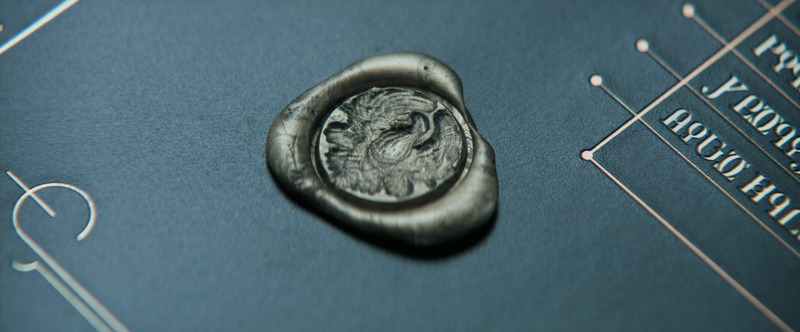
Seals were used to verify a document's legitimacy in the medieval period, but also to project power. For the medieval English, “a more powerful method of projecting the royal image throughout the land was by the use of seals” (Steane, 1993, 23). Where beauty and purpose are concerned, the wax signatures used by nobility in the medieval period are similarly used by authorities in Dune. Wax seals are a form of medieval art designed to be repeatable and reused on a large scale. Mass production of the design increases visibility, and in a world like the medieval one, where art was a rare sight, this impactfulness is leveraged as a political tool.
The world of Dune and its political hierarchy are heavily based on medieval power structures. The head of House Atreides, originally Leto Atreides, holds the title of duke within this system. Controlling their granted planet and serving under the emperor, the Atreides bear a ducal signet that serves as both a symbol of their legitimacy and a practical tool to stamp the Atreides seal onto official documents.
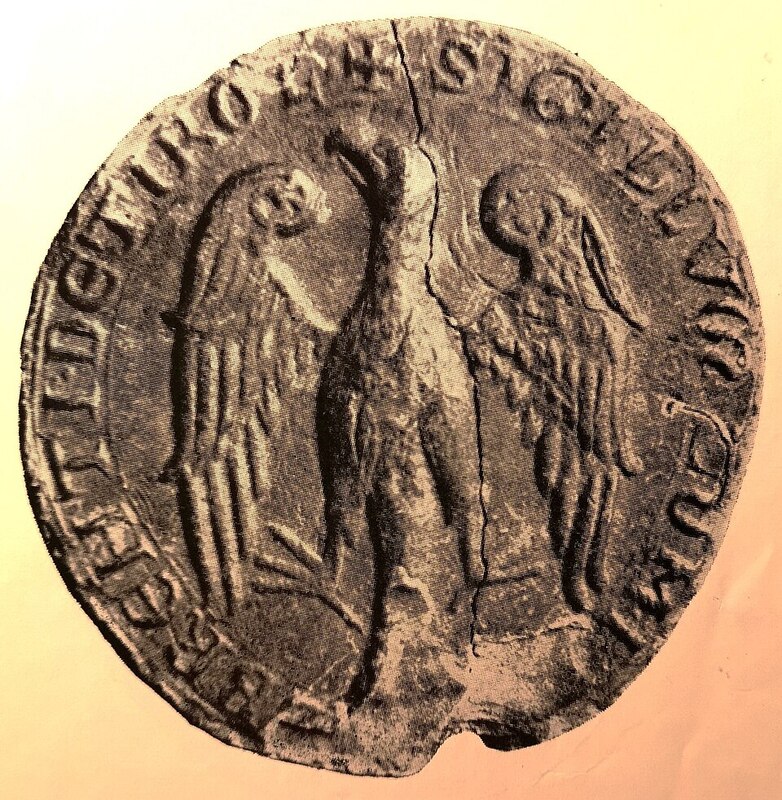
Once again returning to the Counts of Tyrol, both they and the Atreides continue the use of the feathered heraldic charge in the design of seals. Both follow the “eagle displayed” design, much like the banner, with the charge as the center of attention. The Atreides, like the Tyrol, have identified themselves with the charge and draw symbolic power from it to represent themselves. Like Tyrol in their other designs, House Atreides does not limit itself to representing itself exclusively by the hawk. Atreides culture is also visualized through medieval-style relief sculpture depicting men and other creatures to display their history and identity.
Immortal Sculpture
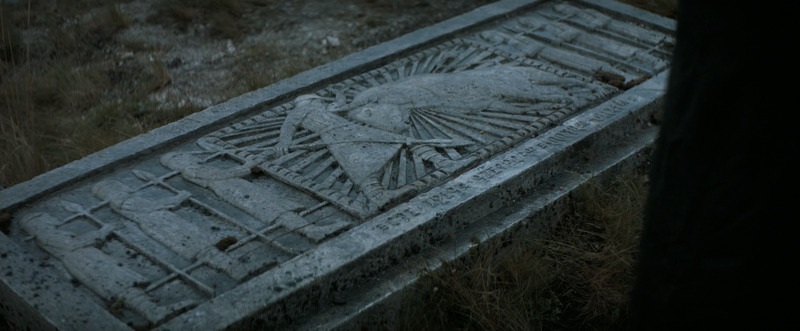
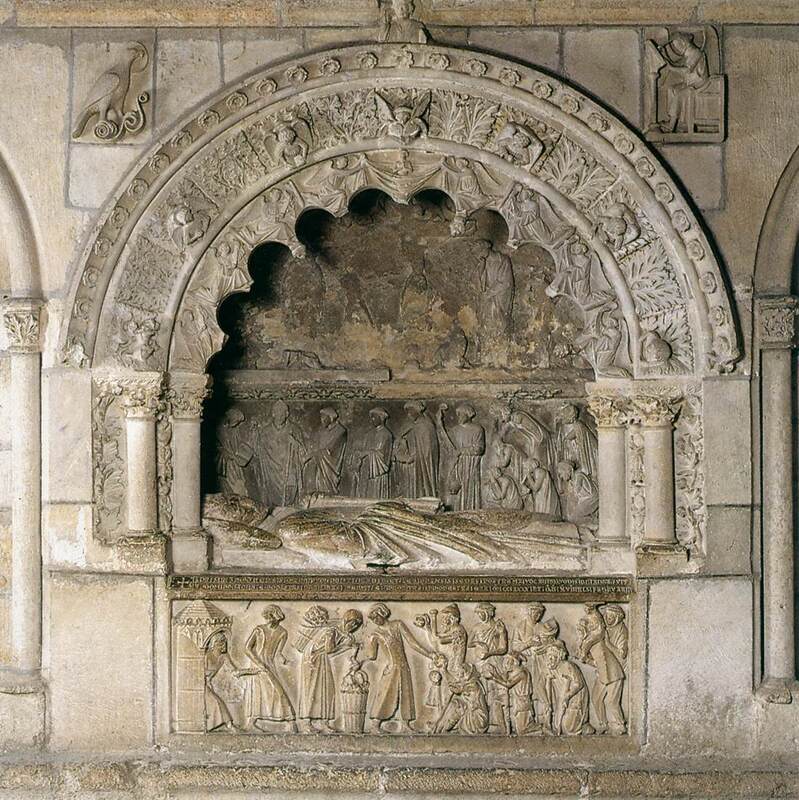
In Dune, sculpted works tell stories of the Atreides family and military. In the medieval era, relief sculptures decorated tombs and other places of religious significance, telling similar stories and assigning meaning (Kessler, 2019, 186). Dunerepurposes this medieval aesthetic and uses it to visualize Atreides ancestry. The stone relief sculpture shown on the face of Paul Atreides’ grandfather’s tomb is an example of how Dune uses medieval aesthetics in both visual design and contextual purpose. This grounds the Atreides in reality. Depicting one’s people in stone is a legitimizing effort that all powerful civilizations eventually achieve, medieval or otherwise. The Atreides utilize an enduring display of a perpetuating succession of power to communicate their status to the audience through association with ancient civilizations. Comparatively, the tomb of Bishop Martin II Rodriguez displays angels and mourning figures sculpted in stone, revealing the importance of the entombed bishop through dedicated artistry.
Closing
Dune’s universe was constructed to best utilize medieval visual power aesthetics. Limiting its sci-fi technology, alien life, and other elements creates the conditions necessary to meaningfully deploy the medieval. House Atreides is meant to be a familiar culture to Dune’s Western audience by design, using European medieval imagery. Using pre-established ideas and visuals that are already known in the West is an effective method of conveying thousands of years of Atreides history, along with their political standing, through medieval aesthetics.
Bibliography
Fox-Davies, Arthur Charles. A Complete Guide to Heraldry. Edinburgh: T. C. & E. C. JACK. 1909.
Steane, John. The Archaeology of the Medieval English Monarchy. New York: B.T. Batsford Ltd. 1993.
Kessler, L. Herbert. Experiencing Medieval Art. Toronto: University of Toronto Press. 2019