
Dungeons & Dragons: The Art of the 5e Players Handbook and the Bayeux Tapestry by Theodore Gryniewicz
Dungeons and Dragons (D&D) is a cooperative Tabletop Roleplaying Game (TTRPG) where players enter realms of fantasy and sci-fiction, working together with a game master or Dungeon Master (DM) to create and tell a fantastical story. It is characterized by a blend of real-time roleplay and the use of dice to dictate decisions, make choices, and determine if a course of action succeeds or fails, therein, potentially changing the fate of a game or campaign’s story forever. First published in 1974 by Tactical Studies Rules and later republished in 1997 by the popular gaming company Wizards of the Coast (WotC), D&D is beloved by generations of gamers. Published in 2014, the 5th Edition (5e) remains the dominant version of D&D played (Michaud 2020).
The fantasy genre, of which D&D is a prime example, is strongly associated with popular notions of the Middle Ages. This is a time period that bridged the collapse of the classical Roman Empire and early modernity (ca. 500-1500 CE). It is in the realm of fantasy where one is most exposed to the classic idea of the medieval world as one of violence, religion, and extreme class division. Included in these categories is the ‘fantastical,’ or more specifically, embellishments from mythology and the arcane such as monsters and magic. As a result, D&D has it all, depicting a world with knights and wizards, monsters and gods, peasants and kings, and elves and dwarves.
There are many parallels that can be drawn between D&D and other great medieval fantasy worlds, like Tolkien's beloved Lord of the Rings series (both the books and the later movies). But is the world D&D presents truly medieval? Or does D&D fall into the category of most modern fantasy depictions, where ideas of what we think the medieval was are utilized instead of reality? This is a concept referred to as neo-medievalism (Kears and Paz 2016: 42-49). Neo-medievalism in D&D is a vast topic, so the current exhibit is restrained to two main points of contention between the artistic representations of medieval stereotypes in D&D and the medieval reality presented in historic medieval art: exploring depictions of combat and warfare through (1) battleaxes and (2) clerics.
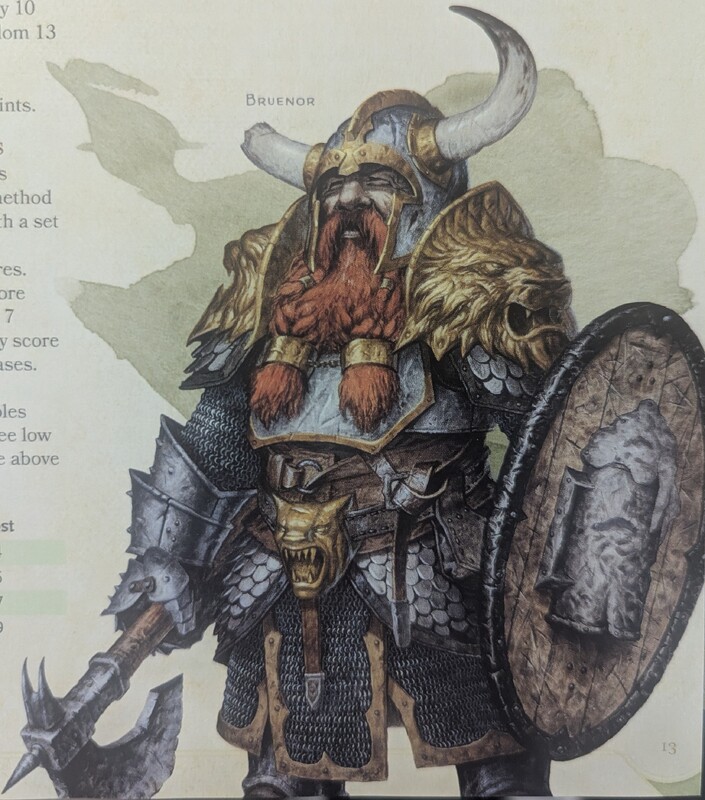
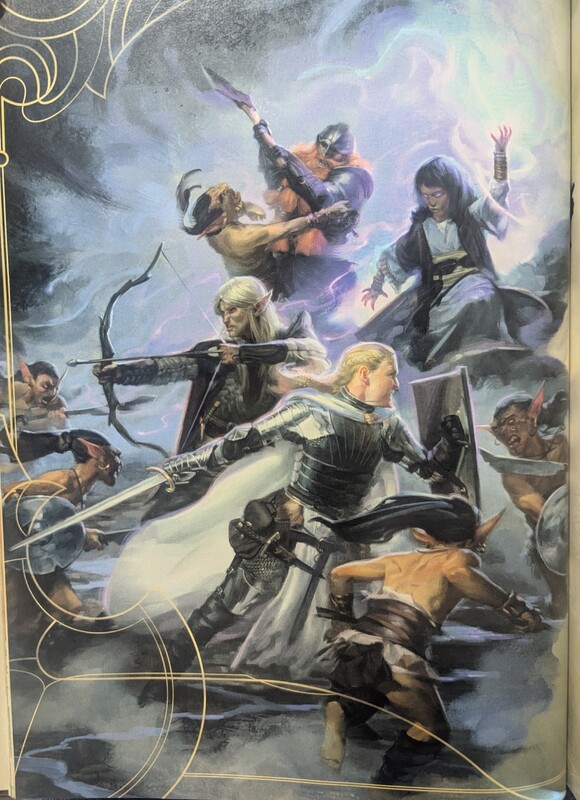
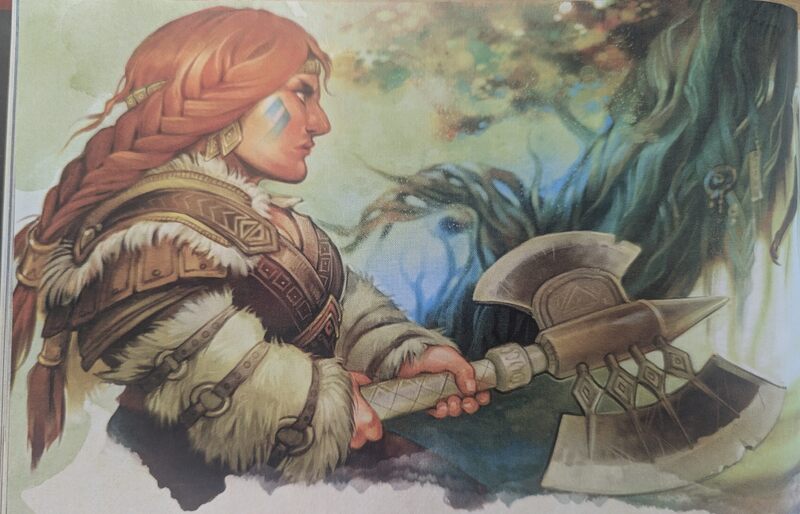
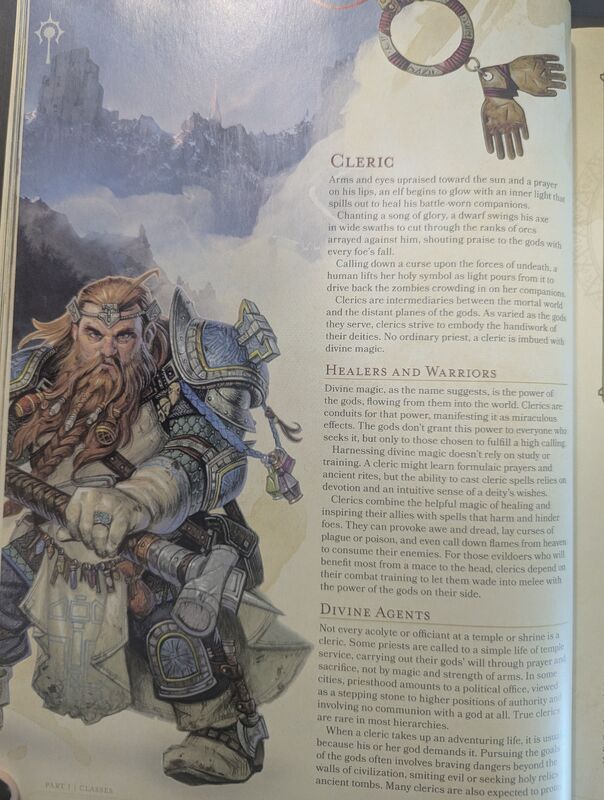
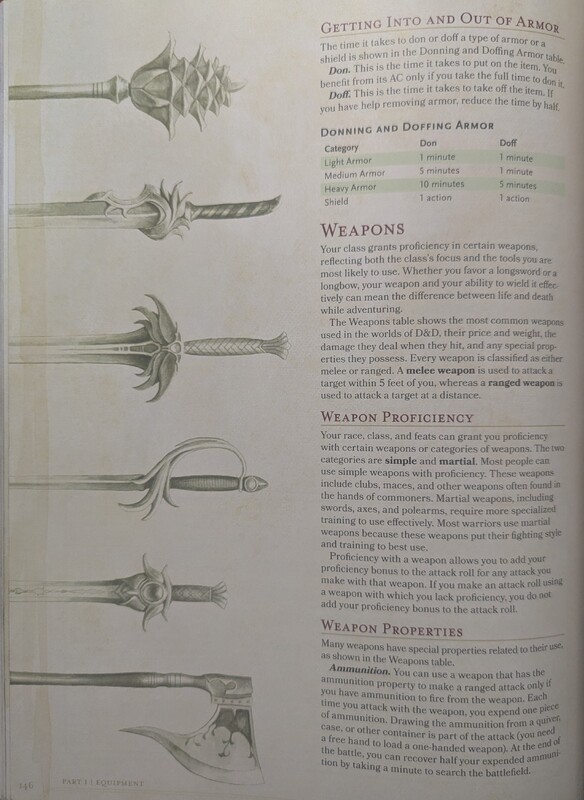
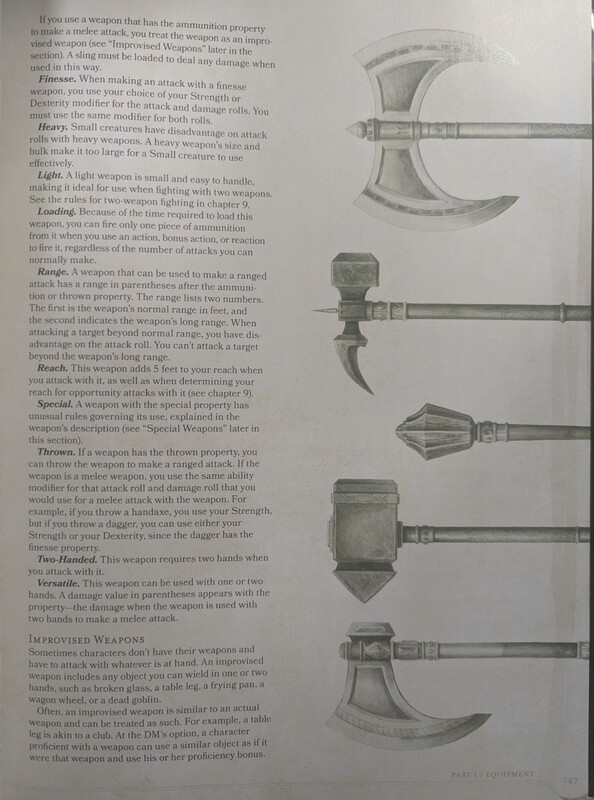
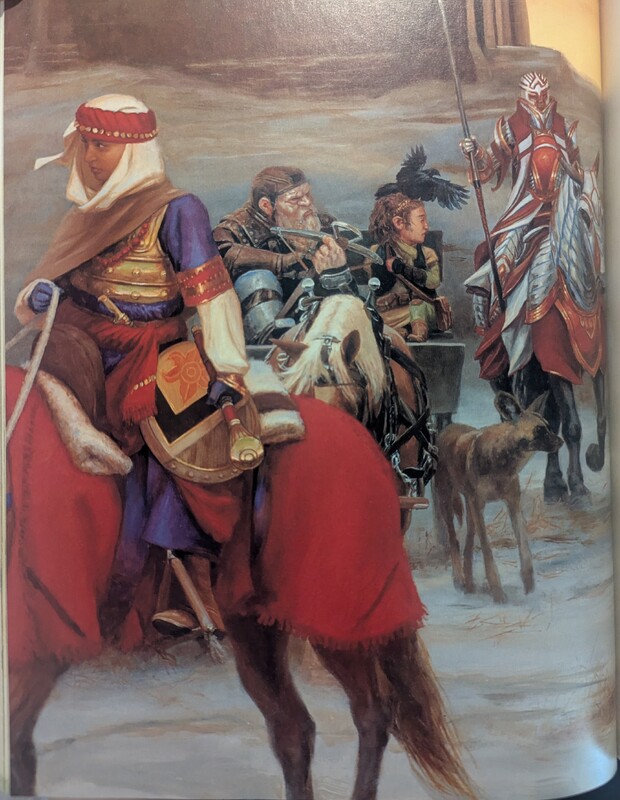
One of D&D's most unique attributes is that the game is not restricted to the base content (comprising three volumes: the Player’s Handbook, the Dungeon Master’s Guide, and the Monster Manual) and the many official game expansions that WotC has to offer. ‘Homebrew,’ or self-made content, is also common, from minor house-rules that concern how dice rolls are interpreted all the way to entire custom worlds with unique character classes, species, abilities, weapons, enemies, game mechanics, and more. Homebrew content by famous DMs, such as Matt Mercer of the live-play series Critical Role, have even been canonized and subsequently published by WotC.
When my interest in the art of D&D peaked, I was forced to attempt to boil down my focus to as small of a case study as possible. This led me to what I see as the ‘core’ of my D&D experience–the 5th Edition Players Handbook. The 5e Player’s Handbook (PHB) is a 316-page, beautifully illustrated volume that contains the core rules, mechanics, and essentials for character creation within the scope of 5eD&D. With the PHB alone, you could play D&D without needing anything else.
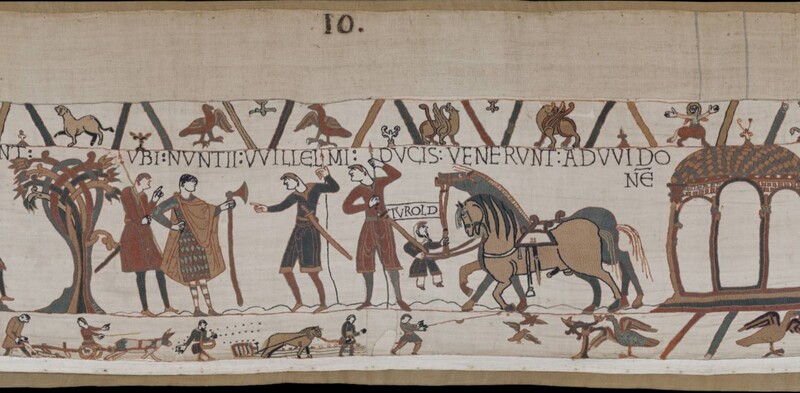
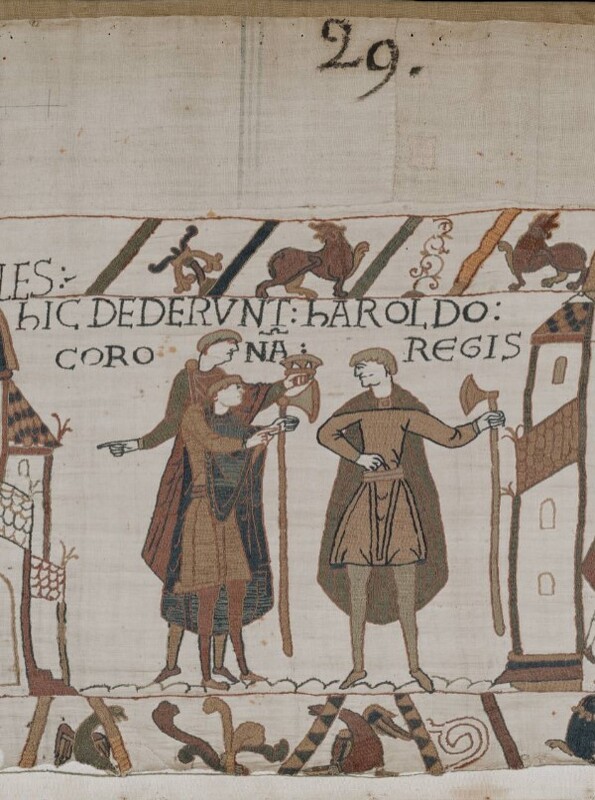
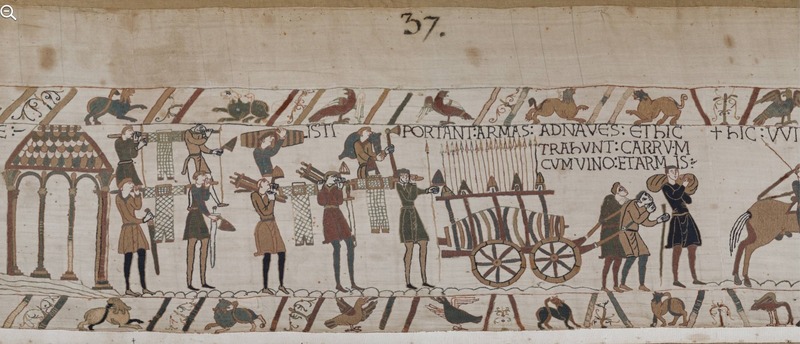
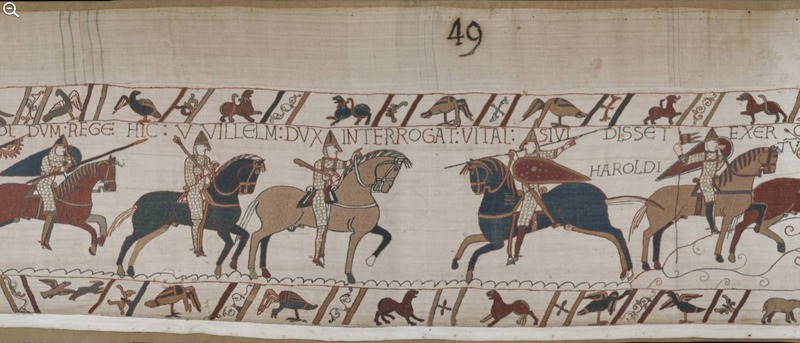
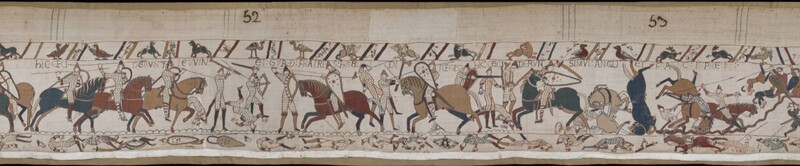
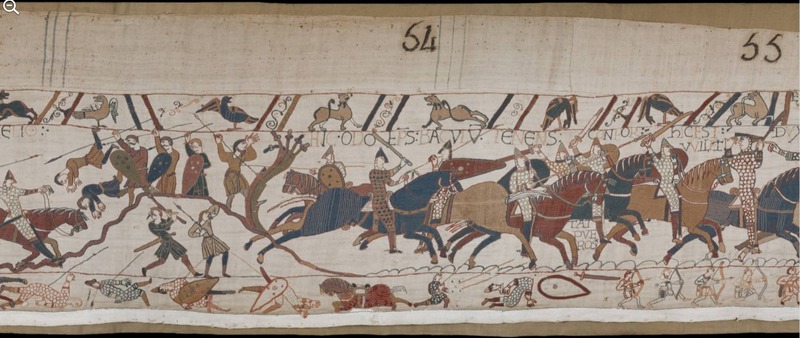
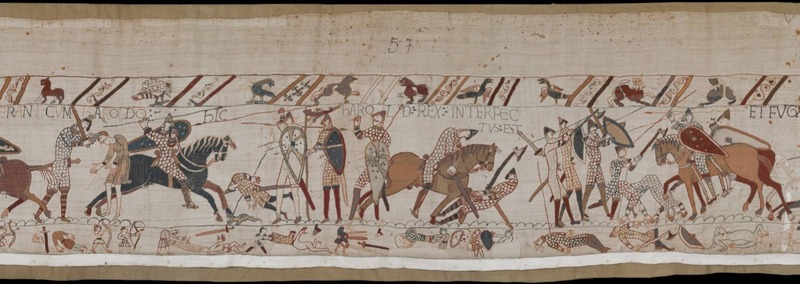
The Bayeux Tapestry: an artistic wonder of the medieval world
The Bayeux Tapestry is one of the wonders of the medieval world. At an over astounding 70 meters long, it depicts the entire story of the conquest of England in 1066 by Duke William of Normandy—better known by his moniker, William the Conquerer. The tapestry is a detailed chronicle of warfare, depicting clashing soldiers on horseback, clad in chainmail and armed with shields, axes, and spears. Through the tapestry, we get a glimpse of what combat in the medieval world really looked like, and it is nothing like combat in D&D.
The first thing one is likely to notice is the prominence of horses. Almost all the weapons depicted in the Bayeux Tapestry were designed for cavalry combat—mainly spears, shields, and long-handled battleaxes. Notable in the Bayeux Tapestry is the presence of Scandinavian Dane Axes—large two-handed, long-handled battleaxes that are also known as Long Axes. Dane Axes became widespread in Europe in the 10th century and were the predecessors to polearms such as the halberd and poleaxe (Projekt Forlǫg 2016). There is no equivalent to the Dane Axe in D&D. On paper, D&D’s battleaxe should include weapons like the Dane Axe; it is a versatile martial weapon, meaning the battleaxe can be used one-handed or two-handed, which is true of the Dane Axe. However artistically, D&D battleaxes are portrayed as short-handled, perhaps to differentiate them from the greataxe—a massive double-bladed, two-handed fantasy axe that has no real basis in historic weaponry and no equivalent in the Bayeux Tapestry.
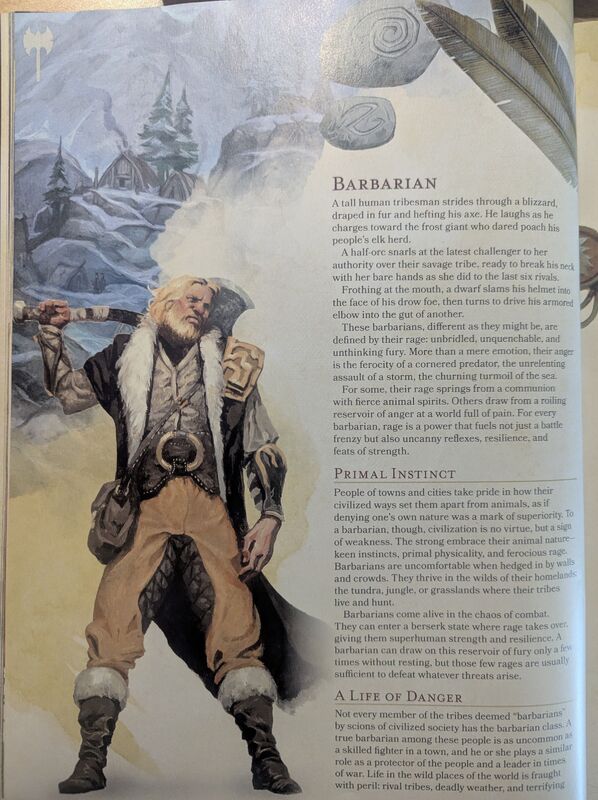
Barbarian, Player's Handbook 5th Edition.
It is also clear in the art of D&D that axes are associated with particular classes and species. The most notable association is with the barbarian class, characterized by reckless, powerful attacks and rage; in addition, is the connection with the dwarf species, typified by militant pride and stout, powerful builds. Dwarves are also frequently portrayed with warhammers, illustrated as massive-headed bludgeoning clubs; in reality, warhammers were long-handled and small-headed. When it comes to weapons, D&D experiences the same exaggeration as many modern fantasy media, wherein there is a trend of making everything larger, heavier, more unwieldy, and more visually impressive. Instead, reality focused far more on the practical concerns of effeciency and effectivness.
While the majority of battles and warfare depicted in the Bayeux Tapestry take place on horseback, all depictions of combat in the PHB occur on foot. There is only one artwork in the PHB that depicts horses at all. It is found adjacent to the table describing game mechanicas for travel distance and the cost for renting horses or wagons. This is accurate to how horses are presented in most real-play examples of D&D as well; horses occur almost exclusively in the context of travel. You might encounter non-player characters (NPCs) or enemies of high status or positions of command on horseback, but they will usually be solitary amidst a mass of servants, underlings, or foot soldiers. Depictions like these, of commanders on horseback and the rest of combatants on foot, fit more generally with the realities of logistics and warfare in the 18th and 19th centuries (for example, see The Passage of the Delaware or The Death of General Mercer at the Battle of Princeton). In contrast, on the Bayeux Tapestry, we see commanders and soldiers fighting side-by-side on horses. This is an example of how modern medieval fantasy fails to represent the importance of horses in medieval warfare and life. We of course have images of knights in shining armour on horseback, of jousters competing, or the common renaissance festival sight of a queen’s mount being led in a parade. But these sterotypes are rare. Rather, the weapons that D&D employs are for use on foot and designed with aesthetic in mind. It is important to keep in mind that this is a neomedievalism at its core. The reality is that efficacy tops aesthtic and effectiviness is valued in multipurpose use. Thus, the fantasy image of grand weapons should be tempered with the real image of effective utility.
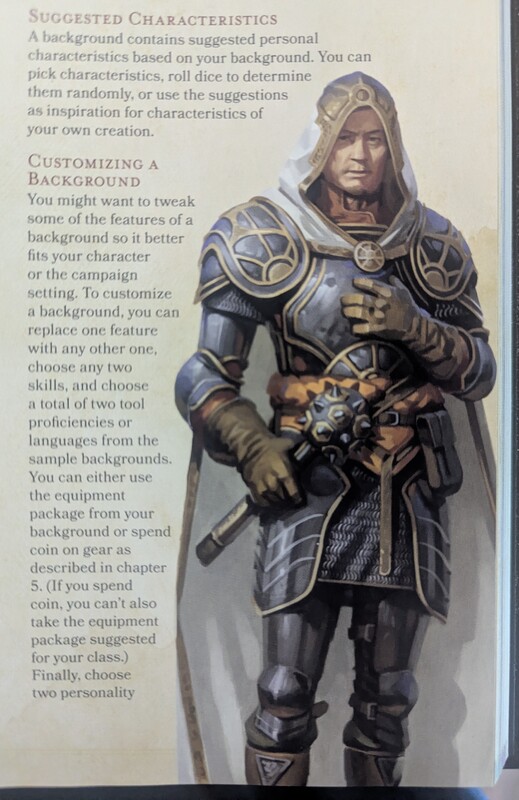
Holy Warrior with Morningstar Mace, Player's Handbook 5th Edition.
Another mistaken medieval stereotype D&D helps perpetuate is the image of the cleric or holy warrior, who is usually equipped with a club, mace, or similar bludgeoning-based weapon. In D&D, the cleric is one of the primary playable classes; they have a focus on healing, buffing allies, and tanking damage for less-armored party members. At their core, they are holy warriors who are religiously devout and experienced in combat. Each class in D&D gets starting equipment that is tailored to them. For the cleric, their starting weapon is a symbol of their identity: the mace or warhammer. Even the famous cleric Shadowheart, from hit videogame Baldur’s Gate 3, starts the game with a mace.
In addition to class and species, a D&D character also has a background, a choice with milder gameplay implications that helps embed a character’s skills and abilities into the context of their backstory. The background acolyte is a common choice for clerics, being the only religion-based background in the PHB. The acolyte is similarly represented in official art as a holy warrior with a powerful, heavy bludgeoning weapon. Unlike the battleaxes, these representations do have a basis in medieval art, but are the result of a mistaken interpretation on the depictions of clubs and maces in medieval warfare.
There are three main examples of a club in the Bayeux Tapestry: two portrayals wielded by William the Conqueror and one by Bishop Odo of Bayeux. Maces and clubs, often seen in the hands of historic holy warriors, were associated with holy restrictions of violence and bloodshed. It was believed that figures like Bishop Odo wielded bludgeoning weapons instead of swords and spears because their position forbade them from drawing blood in battle (Douglas and Greenaway, 1959: 1042-1189). Figures like Duke William challenge this idea, and it has been deemed more likely that the figures in medieval art who wield clubs were those in positions of authority and power, and bludgeoning weapons were more commonly associated with command than any holy restrictions (Oakeshott 1980: 42-49; Bates 1975:1-20). Still, as evident by media like D&D, the stereotype persists.
Neo-medievalism is inherent to modern fantasy and is clearly visible across mediums. D&D is an example of how our perceptions of the medieval world through digital media are at odds with the historic reality visible in medieval art like the Bayeux Tapestry. Warfare, weapons, and roles in society exist differently in digital media than they did historically. Depictions of combat and recognizable figures like clerics are more representative of our own time, culture, and perceptions of reality than that of the medieval. It is always important to keep this dichotomy in mind, as D&D and other digital medieval content may be the first experience of the "medieval world" that individuals in present day experience.
Bibliography
Bates, David R. “The Character and Career of Odo, Bishop of Bayeux (1049/50-1097).” Speculum, vol. 50.1, 1975, 1–20.
Bayeux Museum. “Explore the Bayeux Tapestry Online.” Bayeux Museum, 2017, www.bayeuxmuseum.com/en/the-bayeux-tapestry/discover-the-bayeux-tapestry/explore-online/
Douglas, David C., and G. W. Greenaway. English Historical Documents 1042–1189, London, 1959.
Kears, C., and J. Paz. "Introduction." Medieval Science Fiction. London, 2016.
Michaud, J. "The Tangled Cultural Roots of Dungeons & Dragons". The New Yorker. March 9, 2020.
Oakeshott, E. European Weapons and Armour: From the Renaissance to the Industrial Revolution, Boydell Press: Woodbridge, 1980.
“Two-Handed Axes.” Projekt Forlǫg, 5 July 2016, sagy.vikingove.cz/en/two-handed-axes/.
Wizards of the Coast. "Dungeons & Dragons | the Official Home of D&D." Dndbeyond.com, D&D Beyond, 2025, www.dndbeyond.com/en.
Wyatt, James et al. Player’s Handbook, 5th Edition, Wizards of the Coast, Hasbro, 2014.