
How Transformative Works Coincide with the Expansion and Nurturing of the Digital Medieval by Alina S.M. Levandowski
Transformative works have existed for far longer than the West’s invention of the Gutenberg Press in 1450. Consider, for example, The Divine Comedy (1321) by Dante Alighieri. The main character is a simulacrum of the author himself, who crafts an epic poem grounded in Christian theology and biblical writings. Transformative work—also known as fanwork—is defined by the user Retired Personnel (2016) from the Organization for Transformative Works (OTW) as something that “takes something extant and turns it into something with a new purpose, sensibility, or mode of expression” (see, Abrahamson 2020). The OTW further defines “transformative use” as adding something new with a different purpose or character, altering the source with new expression, meaning, or message (for further reading on transformative works, see: Montano 2013).
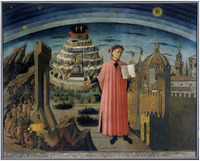
When asked, “Why do people write and/or read transformative works?” two of my peers responded that fans engage with such works for a variety of reasons. They suggested that readers and writers may want certain events to occur, or, as one peer put it, “to fill a hole,” or simply because of a lack of content from the original source material. The website associated with the OTW that provides a fanwork archive built on the principle of maximum inclusiveness is Archive of Our Own (AO3). AO3 is a non-profit, non-commercial archive for transformative works, running on open-source archiving software developed by the OTW. Transformative works include, but are not limited to, fanfiction, real person fiction, fan videos, and fan art. In simple terms, it is a legal framework for what is commonly called fanwork. Given the OTW’s definition, The Divine Comedy can be understood as a widely recognized and celebrated example of transformative fiction.
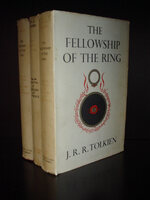
Engaging with fiction often requires a degree of suspension of disbelief, and fantasy is a subgenre that demands perhaps the most. With over 150 million copies sold worldwide, several animated adaptations, and an award-winning film trilogy, J.R.R. Tolkien’s The Lord of the Rings (LOTR) series stands as one of the most well-known examples of the fantasy genre. The narrative follows a young hobbit, Frodo Baggins, on his quest to destroy the One Ring and restore peace to Middle-earth. Along his journey, a fellowship of nine is formed to aid him in his task, aptly named the Fellowship of the Ring (or “the Nine Walkers” in the book). This group consists of four hobbits, one dwarf, one elf, a wizard, and two human men. The bonds formed within this fellowship endure far beyond the narrative itself.
Two such relationships within the Fellowship have particularly captured the attention of queer audiences: the bond between Samwise “Sam” Gamgee and Frodo Baggins, and that between Legolas Thranduilion and Gimli, son of Glóin. On page 652 of The Lord of the Rings (Tolkien, 1954), Sam watches Frodo as he sleeps in Ithilien:
“Then as he had kept watch Sam had noticed that at times a light seemed to be shining faintly within; but now the light was even clearer and stronger. Frodo's face was peace-ful, the marks of fear and care had left it; but it looked old, old and beautiful, as if the chiselling of the shaping years was now revealed in many fine lines that had before been hidden, though the identity of the face was not changed. Not that Sam Gamgee put it that way to himself. He shook his head, as if finding words useless, and murmured: "I love him. He's like that, and sometimes it shines through, somehow. But I love him, whether or no."
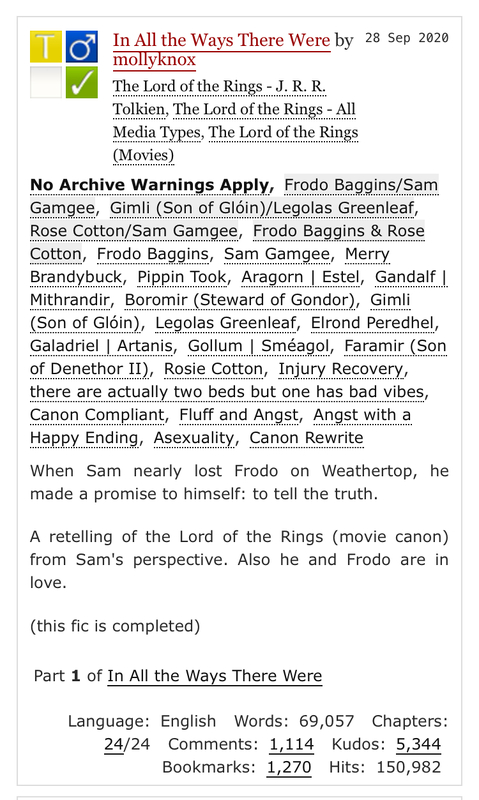
Sam and Frodo’s relationship has inspired many transformative works. In All the Ways There Were by mollyknox is currently the fanwork with the most “kudos” under the pairing “Frodo Baggins/Sam Gamgee” on AO3. Its summary describes it as a retelling of The Lord of the Rings (movie canon) from Sam’s perspective, in which he and Frodo are in love (Ostertag 2021).
Similarly, the relationship between Legolas and Gimli presents another compelling dynamic. As members of historically opposed peoples, their initial tension gradually evolves into deep companionship, often likened to the familiar trope of lifelong “roommates” whose bond suggests something more. This pairing is particularly compelling due to the popular “enemies-to-lovers” trope, as well as Legolas’s decision to delay his departure to Valinor. Instead of leaving Middle-earth immediately, he remains to accompany his companions through their mortal lives. Tolkien writes in Appendix B (p. 1098): “Then Legolas built a grey ship in Ithilien, and sailed down Anduin and so over Sea; and with him, it is said, went Gimli the Dwarf.” This passage has often been interpreted as implying Gimli’s unprecedented passage into Valinor, made possible through his bond with Legolas. Such a reading of the relationships between Tolkien's heroines has spawned a genre of literary studies itself (for example, Craig 2001; Smol 2004).
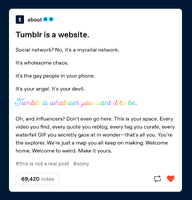
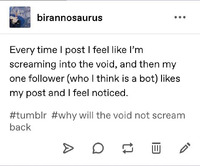
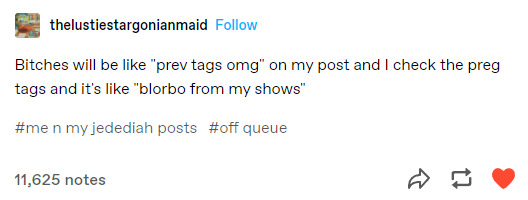
Transformative works are not confined to archives like AO3; they also flourish in modern fan spaces such as Tumblr, X (formerly Twitter), and Instagram. Tumblr, a microblogging platform, allows users to share fan art, text posts, and GIF sets, fostering a culture often described as “wholesome chaos,” where users “post into the void” and sometimes “the void yells back.” One Tumblr user, justgottafinishthischapter (JGFTC), has written extensively about crafting transformative works in historical contexts, particularly focusing on the nuances of courtship in historically informed romance. With a background in medieval history and an interest in queer relationships between men, JGFTC’s posts demonstrate how transformative works can blend historical accuracy with creative reinterpretation—much like Dante drew on religious texts and cultural values to shape his own work (for further reading, see: Björklund 2018).
Art serves as both a form of self-expression and experimentation, as well as entertainment. Creators of transformative fanworks take their beloved characters—their “blorbos”—and reimagine them outside their original contexts, playing with them like paper dolls. As of April 2, 2026, Archive of Our Own, which had been in open beta since November 2009, officially exited beta with 17.2 million fanworks and over 10 million registered users. The landscape of transformative works has evolved dramatically since 1321. The Lord of the Rings tag alone now contains over 62,000 works on AO3, alongside hundreds of thousands of followers and millions of posts across other platforms. Transformative works continue to evolve: just as Tolkien drew on religion, language, and culture to shape his legendarium, modern creators like mollyknox reinterpret existing narratives through new lenses, demonstrating the enduring and dynamic nature of fanwork.
Bibliography
Abrahamson, M. B. "Medieval Romance, Fanfiction, and the Erotics of Shame." Ph.D. Dissertation. University of Missouri, Columbia, MO. 2020.
Björklund, J. “Queer Readings/ Reading the Queer”. Lambda Nordica, Vol. 23.1/2, 2018, pp. 7-15.
Craig, David M. “‘Queer Lodgings’: Gender and Sexuality in ‘The Lord of the Rings.’” Mallorn: The Journal of the Tolkien Society, no. 38, 2001, pp. 11–18.
Montano, Natalie H. “Hero with a Thousand Copyright Violations: Modern Myth and an Argument for Universally Transformative Fan Fiction,” 11 Nw. J. Tech. & Intell. Prop. 689 (2013). https://scholarlycommons.law.northwestern.edu/njtip/vol11/iss7/6
Ostertag, Molly. “Queer Readings of the Lord of the Rings Are Not Accidents.” Polygon.Com, Polygon.com, 30 June 2021, www.polygon.com/lord-of-the-rings/22550950/sam-frodo-queer-romance-lord-of-the-rings-tolkien-quotes
Retired Personnel (username), “What Is A Transformative Work?” The Organization for Transformative Works, transformativeworks.org, 08 February 2016.
Smol, Anna. “‘OH... OH... FRODO!’: READINGS OF MALE INTIMACY IN ‘THE LORD OF THE RINGS.’”Modern Fiction Studies, vol. 50.4, 2004, pp. 949–79.
Tolkien, J.R.R. The Lord of the Rings. London, Harper Collins Publishers, 1954.
“Tumblr Can’t Stop Talking about Blorbo, so Here’s the Deal with the New Meme.” Elite Daily, 17 Jan. 2022, www.elitedaily.com/news/what-is-blorbo-tumblrs-latest-meme-trolls-fandom. Accessed 13 Apr. 2026.