
Neomedieval Costume Design in Game of Thrones by Yidl Niño
Although set in the realm of fantasy, HBO’s highly popular Game of Thrones, adapted from George R. R. Martin’s book series A Song of Ice and Fire, draws from many historical periods and cultures. Focusing on the show in particular, the series makes a deliberate effort to situate itself in a distant past, with a strong emphasis on the Middle Ages. This influence is especially evident in the fashion of its characters. The visual identities of the regions within the Seven Kingdoms are distinct, reflecting cultural identity, individual identity, practicality, and broader dynamics of wealth and power. Head costume designer Michele Clapton, who worked on all eight seasons of the show, has stated that medieval clothing served as a primary source of inspiration, helping to establish the story’s historical atmosphere while also accounting for the natural progression of trade during the period (Getty Museum 2016).
At the same time, creative liberties give the series a unique and modern sensibility through both storytelling and costume design, emphasizing its fantastical medieval setting. Through this neomedieval lens, the world feels authentic to modern audiences despite its fantasy elements, and it is often regarded as a “realistic” portrayal that has significantly influenced how other productions approach fantasy wardrobe.
The repurposing of medieval values and aesthetics to reflect modern ideologies is explored in the 1983 essay Dreaming of the Middle Ages by Umberto Eco. Medieval historian Rabia Gregory reiterates Eco’s concept of neomedievalism as the adaptation of medieval imagery to convey contemporary narratives, allowing audiences to more easily engage with the material (Rabia 2014: 125). These reimaginings of medieval history—or, in this case, fashion—often involve blending multiple cultures and historical periods.
The balance between “medieval fantasy” and “historical accuracy” in Game of Thrones ultimately depends on the internal logic of its regions, as explained by online fashion historian Bernadette Banner. Each region within the Seven Kingdoms possesses a distinct visual identity. Some adopt a more historically grounded approach, such as Winterfell and the Stark family, while others incorporate a broader mix of cultural and historical influences, such as King’s Landing under the rule of the Lannister and Baratheon families.
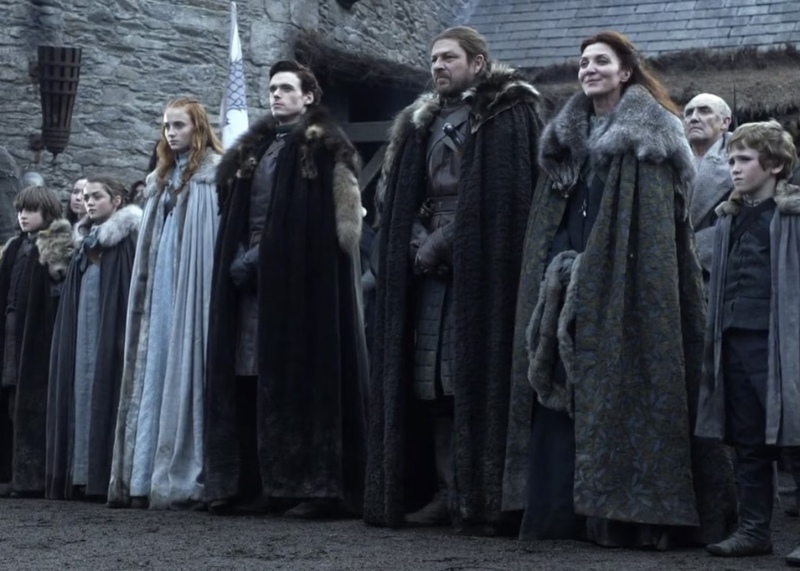
Winterfell, located in the North, endures harsh, cold temperatures. The Stark family, as well as its villagers, draw inspiration from Viking and Northern European clothing, with many wearing heavy furs, darker colors, and leather. This use of fur reflects the natural resources available to them, as hunting would have been a primary means of obtaining materials for clothing. It is both a practical and historically grounded method of sourcing garments.
Jon Snow is often depicted wearing heavy layers, and actor Kit Harington has expressed that his costume was uncomfortable to move in. Michele Clapton has explained that this use of heavier clothing was intended to make the characters move more realistically, reflecting how individuals would navigate such cold environments (Getty Museum 2016). It also serves to represent the weight of the narrative and its impact on Jon Snow as a character.
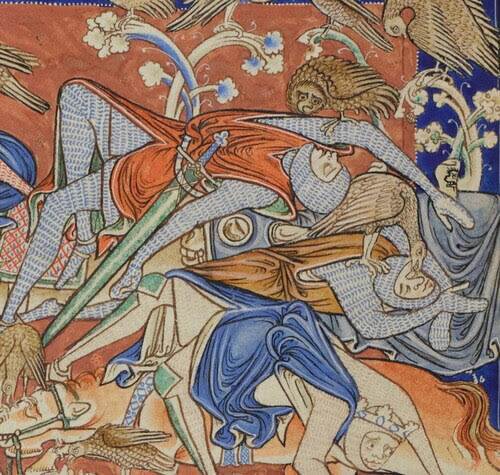
Originally, Clapton considered incorporating metal into Jon Snow’s armor but found it impractical for the climate. Instead, he is outfitted in padded armor, known as a gambeson (the Trinity Apocalypse, pictured here, shows examples of textile armor in medieval manuscripts). This type of garment, made from multiple layers of linen stitched together, is more consistent with armor worn by knights in the Middle Ages (Bennett 2023).
The people of the North favor a muted, gray color palette, and the Stark family, despite their noble status, does not dress significantly differently from those of the lower classes.

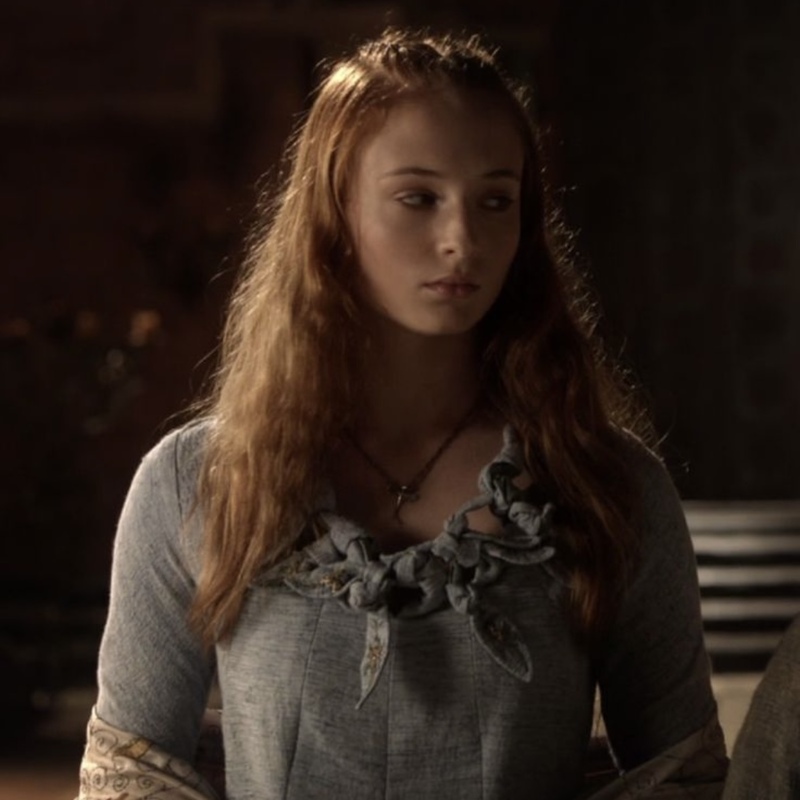
There are details that differentiate them, such as the knotted and embroidered collars worn by Catelyn Stark and her daughters. While subtle, this use of knotting replaces typical jewelry, which would conduct the cold. Their wealth is also reflected in their ability to devote time to creating more fitted and structured clothing despite the harsh climate (Banner 2022). Sansa Stark even explains that she makes her own clothing.
There is also a class distinction within the family. Jon Snow, as a bastard child, is not fully accepted and wears more cloth in comparison to the heavier leather layers worn by his Stark brothers. These portrayals reflect each character’s role within the noble family, as well as their individual complexity, while drawing from historical methods of clothing production and incorporating creative liberties to represent character in a way that feels natural.
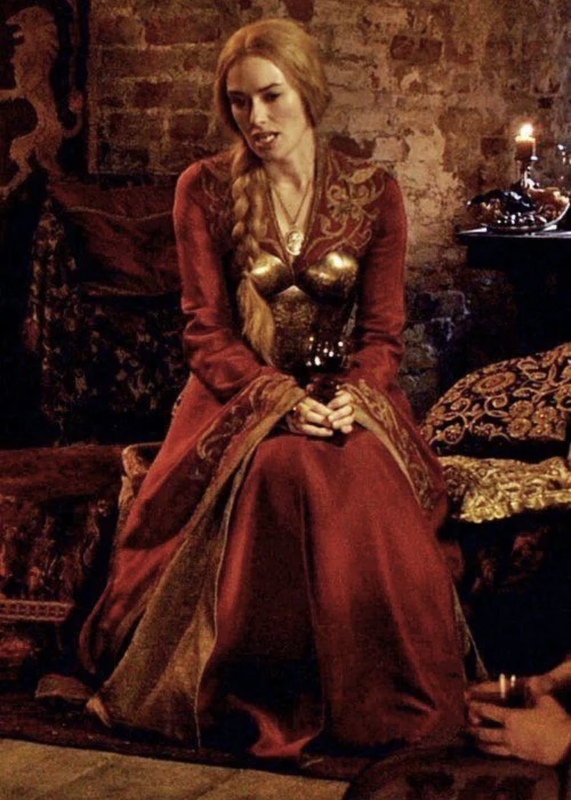
Located further south is King’s Landing, home to the Lannister and Baratheon families. Focusing on the noble Lannister family, their attire is most influenced by late medieval and early Renaissance Italy, as well as elements of Japanese design, incorporating structured gowns and gold embroidery. King’s Landing, situated centrally among the regions, suggests a dense hub for trade and imported goods (Banner 2022). As a result, this cultural exchange is reflected in a wider range of colors, more labor-intensive techniques such as embroidery, and more ornate armor that demonstrates high status and wealth.
The Lannisters also employ designers to tailor their clothing, while the peasants living below are dressed in plain, neutral fabrics that are loose-fitting, making class distinctions far more visible. Cersei Lannister, for example, in the earlier seasons is often draped in Japanese-inspired silk robes, typically in red—the signature color of her house—though she occasionally wears lighter colors, all featuring gold embroidery (Getty Museum 2016). Compared to the Stark family, her wardrobe changes more frequently throughout the seasons.
In one instance, she is shown wearing a gold armor bodice (pictured here), which, while impractical and historically inaccurate, serves to demonstrate her inner strength. Game of Thrones uses fashion as a storytelling device, often favoring symbolic representation over realism. This particular costume portrays her as a high-status royal figure who has not yet fully attained the power she will later wield. Art and armor historian Dirk H. Breiding notes, “A rare example of the influence that armor, or rather the implied privilege and status of wearing armor, could have on civilian costume is demonstrated by an Italian trend of the second half of the fifteenth century” (Breiding 2004). The Lannister family takes more artistic liberties in their dress than the Stark family, emphasizing narrative purpose and highlighting the contrast between practicality and aspiration.
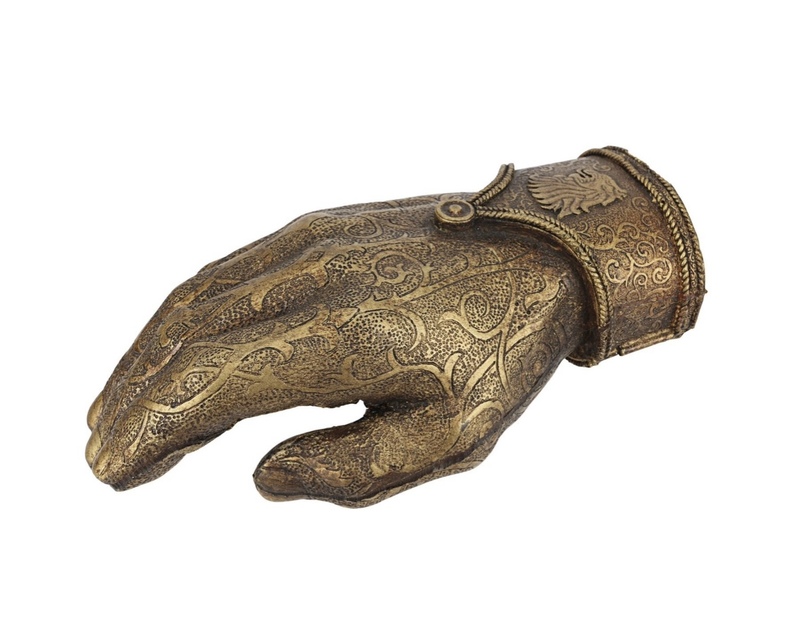
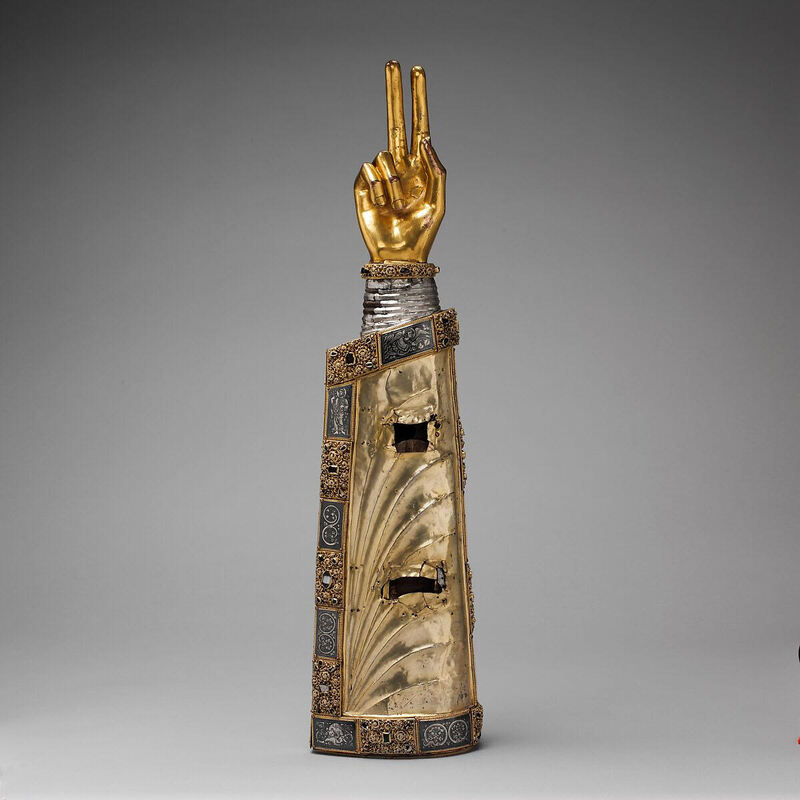
Another example of Lannister identity being conveyed visually is Jaime’s gilded hand. This serves as an attempt to maintain the family’s image of strength and wealth, while again remaining nonfunctional. Jaime Lannister’s gold hand is reminiscent of reliquaries. Metropolitan Museum of Art curator Barbara Drake Boehm describes reliquaries as precious, ornate objects that embody honor and privilege for their possessor (Boehm 2011), further emphasizing appearance over function.
As Cersei assumes the throne, her costumes evolve to reflect her growing power. They become darker—primarily black—and adopt a more militaristic aesthetic. While still not functional as armor, these designs mirror the increasingly dark tone of her rule. Her clothing begins to represent a hunger for power, and the use of gold becomes less necessary to convey authority. This darker aesthetic extends to Jaime as well, as his hair darkens and his overall appearance becomes more severe. Daenerys Targaryen undergoes a similar transformation, as do many other characters toward the conclusion of the series.
Game of Thrones is yet another example of medieval fantasy that continues to shape modern culture and has seen a rise in popularity in recent years. Its portrayal of multiple cultures across history reflects our current accessibility to a wide range of cultural influences and historical fashions that were not previously as interconnected. Through a logical approach to material use in clothing based on region, combined with creative liberties in symbolism to construct identity, the series presents a version of the Middle Ages that feels authentic, even when it is not historically accurate. Such accuracy can never be fully recreated, as many original methods of production are now obsolete or have significantly evolved. George R. R. Martin’s television adaptation of Game of Thrones brings an imagined world into a tangible visual form, translating fantasy into something that feels real to modern audiences.
Bibliography
Getty Museum. (2016). “Designing the Middle Ages: The Costumes of GoT” [Video]. YouTube.
Banner, Bernadette. (2022, June 10). Designing “Historically Accurate” Costumes for Fantasy: Game of Thrones Case Study [Video]. YouTube.
Bennett, Stephan. (2023). Under or Over (or Both)? Textile Armour and the Warrior in the High Middle Ages. Arms & Armour, 20(1), 35–53.
Boehm, Barbara Drake. (2011) Relics and Reliquaries in Medieval Christianity.” In Heilbrunn Timeline of Art History. New York: The Metropolitan Museum of Art, 2000.
Breiding, D. H. (2004) “Fashion in European Armor, 1400–1500.” In Heilbrunn Timeline of Art History. New York: The Metropolitan Museum of Art, 2000–. http://www.metmuseum.org/toah/hd/afas15/hd_afas15.htm(October 2004)
Gregory, R. (2014). “Citing the Medieval: Using Religion as World Building Infrastructure in Fantasy MMORPGs.” In Playing with Religion in Digital Games, ed. Campbell H. A. and G. P. Grieve, 134–153. Bloomington, IN: Indiana University Press.
Martin, G. R. R. (1996) A Song of Ice and Fire. New York. Bantam Books